
Content note: this page was written by Claude (AI) for Pensacola Locksmith.
What rekeying is and what it is not
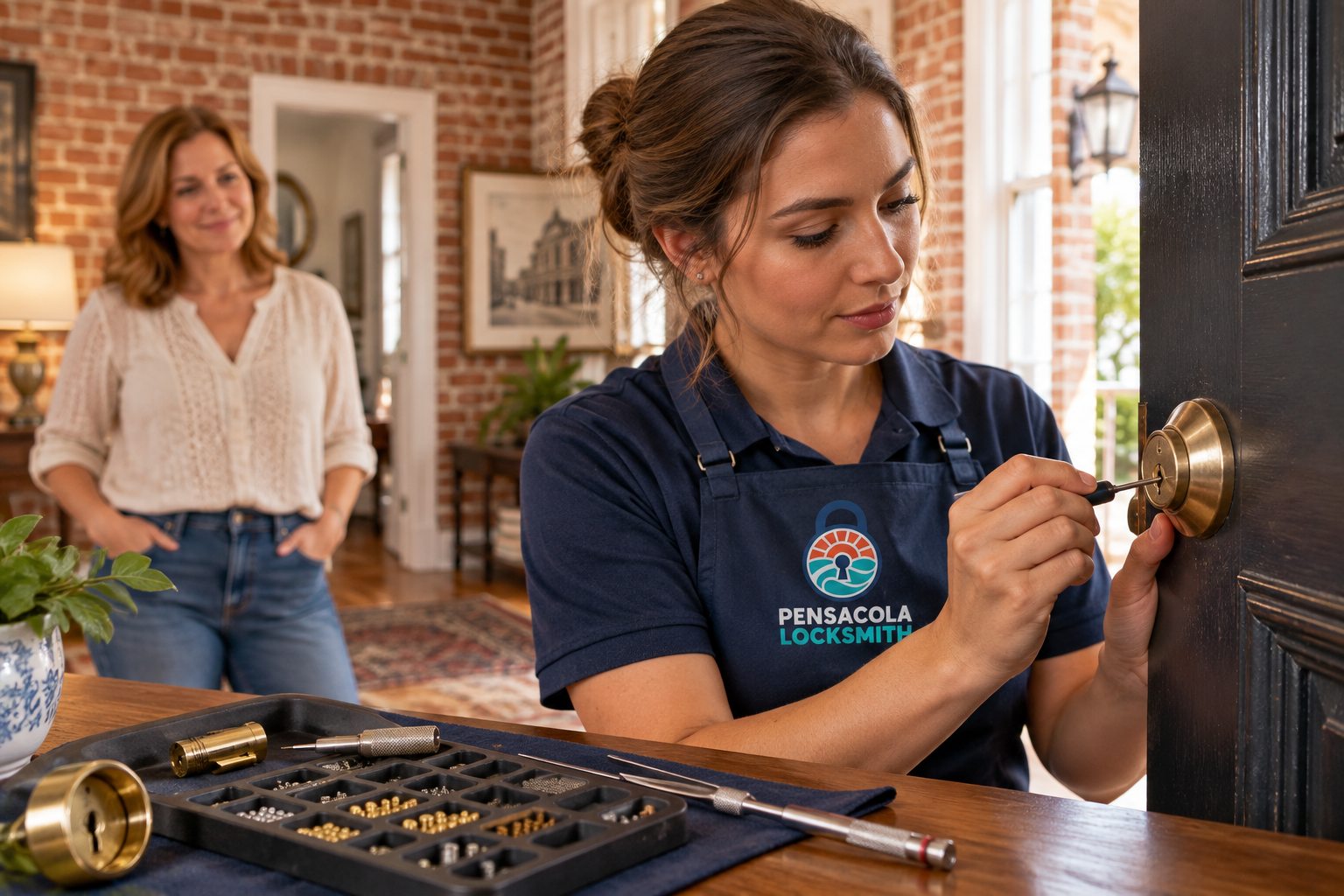
Rekeying changes the inside of a lock so a different key works and the old key does not. The lock body stays on the door. A technician removes the cylinder, replaces the small pins that match the key cuts, and reassembles it. The result is a lock that looks the same but responds to a new key. Anyone holding an old key can no longer use it.
It is not a repair. A rekey will not fix a lock that sticks, a latch that does not catch, or a door that sags. It also does not make a lock stronger. If the existing hardware is basic, rekeying leaves it basic. The goal is key control: deciding who can open the door, not improving how the door resists force.
Rekeying is common after buying a home, a rental turnover, losing keys, or ending a living arrangement. Because the work changes who can enter the property, the locksmith will confirm that you own the home or have authority over it before starting. That check is a normal part of responsible service and protects the people who actually live there.
What replacing a lock involves
Replacement means removing the old hardware and installing a new lock set. The new lock may be the same style or a different one: a standard deadbolt, a handle set, a keypad, or a smart lock. Replacement lets you change appearance, upgrade security level and add features. It also resets key control, since the new lock comes with new keys.
Installation depends on how well the new lock fits the door. Most modern doors use standard bore holes, so a like for like swap is simple. If the new lock has a different size, a different backset, or a different latch design, the technician may need to adjust the door or the strike. Older doors with unusual hardware may need extra preparation.
Replacement also gives a chance to inspect the door and frame. A technician can spot loose strike plates, worn latches and weak screws, and fix them while on site. If the door itself is damaged, the lock is not the only issue. In that case, replacing the lock alone may not solve the real problem, and it is worth discussing the door as a whole.
When rekeying is the sensible choice
If the lock is in good working condition and you are satisfied with its quality, rekeying is usually the more economical route. It addresses the real concern, which is who has keys, without discarding hardware that still works. This makes sense after a move, after a key is lost, or when former tenants, roommates or contractors held copies.
Rekeying also lets you key all your locks to one key, so you carry a single key instead of a ring. If a house has a front door, back door and garage entry, each with a different key, a locksmith can often rekey them to match, provided the brands and keyways are compatible. This simplifies daily life.
It works best when the locks are from a reputable maker and still smooth. If the hardware is common and standard, rekeying is simple. If the lock is a rare or obsolete model, parts may be hard to get and replacement may be easier. A technician can tell by looking at the lock, and a call to describe the brand and age can often settle the question.
When new locks are the better choice
Replacement makes sense when the lock is worn, damaged, or poorly made. A lock that sticks, spins loosely, rusts from salt air, or fails to hold the bolt firmly should not be rekeyed. The money spent on rekeying a failing lock is better applied to a new one. Gulf Coast humidity can speed corrosion, so older exterior hardware may be past its useful life.
It also makes sense when you want a security upgrade. Basic builder grade locks are common in many homes. If you want a sturdier deadbolt, a longer bolt, a reinforced strike or a different style, replacement is the route. Similarly, if you want a keypad or smart lock, you will be replacing hardware in any case.
Finally, replacement can be the better path when the locks are mismatched, when a key is stuck or broken in the cylinder, or when the hardware has been tampered with after an attempted break-in. After a burglary attempt, inspect the lock and door. Damage may not be visible. A technician can check for bent latches, cracked housings and weakened parts, and recommend replacement where needed.
The main factors that shape cost
Cost depends on a handful of variables, and understanding them helps you compare quotes sensibly. The number of locks matters, since each cylinder takes time. The type of lock matters, since a standard deadbolt is simpler than a handle set or a multipoint lock. The brand and keyway affect parts availability. The condition of the lock affects how smoothly the work goes.
For replacement, the cost of the new hardware is a major factor. Basic locks and high security or smart locks sit far apart. Finish, grade and features change the price of the hardware itself. Installation time also varies with the door and the complexity of the lock. A like for like swap is quicker than a conversion that requires drilling or door repair.
Other factors include the time of day, the distance the technician travels and whether the situation is an emergency. Quotes are given by phone. If a job is complicated, a technician visits and the service call charge is explained before dispatch. Always ask what is included so that the quote you receive covers the work you expect. Call us to describe your doors and we will explain how the work would be priced.
- Number of locks and cylinders
- Lock type, brand and keyway
- Condition of existing hardware
- Cost of any new hardware chosen
- Door and frame condition
- Timing, travel and the service call charge
Rekeying several locks to one key
Many households want a single key for all doors. This is called keying alike. It is possible when the locks use compatible keyways, which usually means the same brand or a compatible system. Rekeying them to match involves resetting each cylinder to the same pin pattern so one key operates all.
When brands differ, keying alike may not be possible without replacing some locks. In that case, a locksmith might suggest swapping the odd ones out for matching hardware. It is worth thinking about when you plan to replace anything anyway. Buying several new locks keyed alike from the start is simple and convenient.
Keep in mind the tradeoff. A single key for everything is convenient, but a lost key affects every door. For shared spaces such as a business or a rental with multiple units, decide which doors should share a key and which should not. A locksmith can design a simple key system with a master key and separate keys for different areas, if that is helpful.
Hidden costs of waiting and doing nothing
It can be tempting to delay after moving in or after losing a key. But old keys can be anywhere: former owners, agents, contractors, cleaners, neighbors. Unknown copies of keys are one of the most common reasons homes are entered without force. Rekeying removes that uncertainty at a modest effort compared with the peace of mind it brings.
Delaying repairs on worn locks can also lead to emergency calls. A lock that gradually becomes stiff may fail on a rainy night or when you return from a trip. Dealing with it on your schedule is calmer than dealing with it after it fails. Preventive maintenance and timely replacement save trouble over time.
Consider also insurance and rental obligations. Some policies and leases have expectations about locks and key control. Check yours. If you are a landlord, rekeying between tenants is standard good practice, because it ensures that a former tenant cannot return. A well documented process also helps if there is a later dispute.
Coastal wear and what it means for your decision
In Pensacola and the surrounding Gulf Coast, salt air and humidity wear on exterior hardware. Finishes pit, springs weaken and cylinders collect moisture. Locks that are near the water or exposed to rain may age faster than those inside. This makes inspection more important than age alone when deciding between rekeying and replacement.
If an exterior lock shows corrosion, rough turning or a loose handle, replacing it with a model built for coastal weather is usually wiser than rekeying. Look for corrosion resistant finishes and sealed parts. A good technician will recommend appropriate options without pushing unnecessary upgrades.
Interior locks such as bedroom or closet locks usually last longer and are often good rekey candidates. Garage entry doors and gates sit in between, since they face moisture and dust. The principle is to judge each lock on its condition, not to apply one rule to the whole house. A short inspection at the start of a visit makes the decision clear.
What to expect during the visit and how to prepare
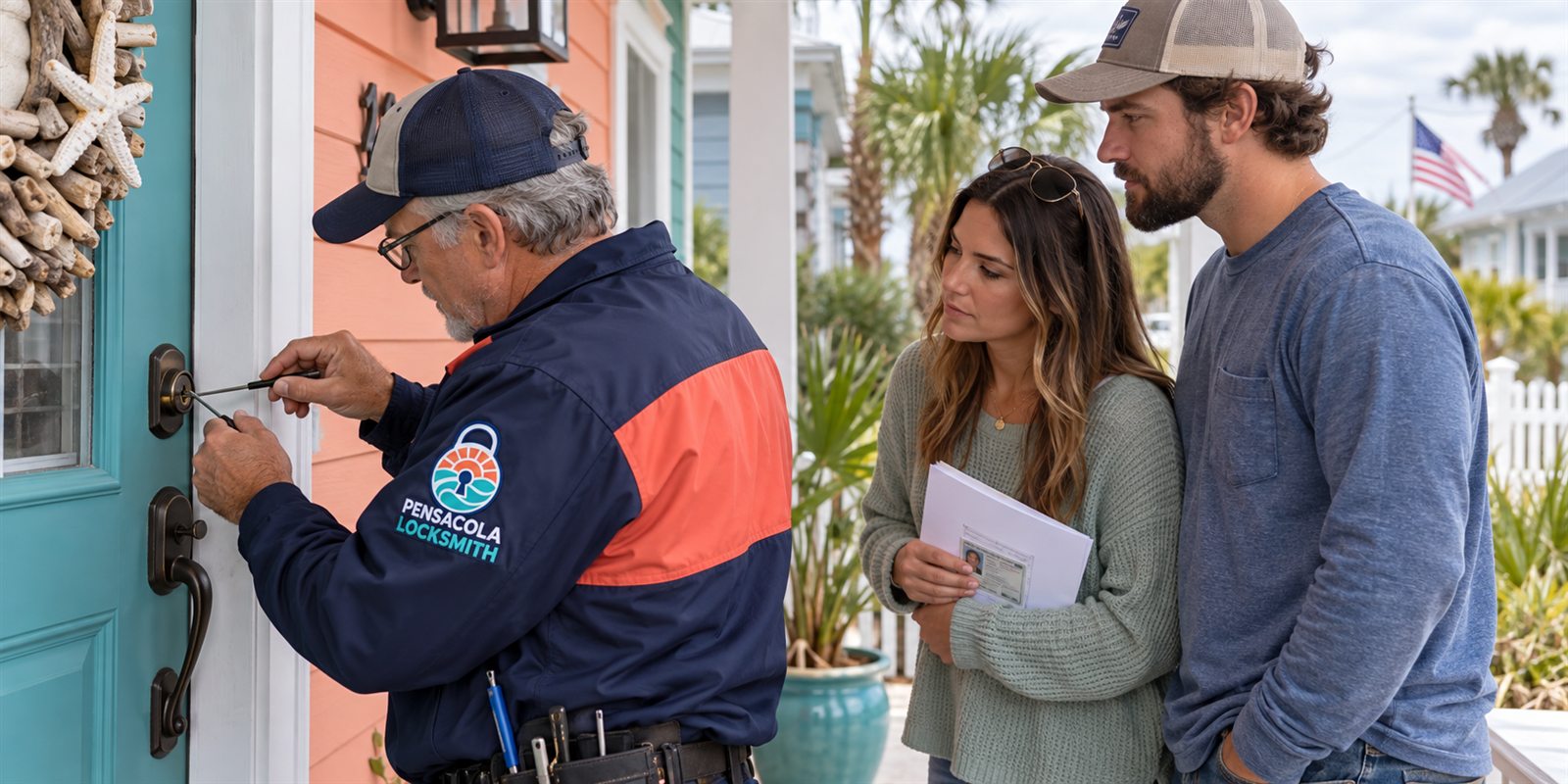
Before the technician arrives, have proof that you own or occupy the property, such as a lease, deed or utility bill, and a photo identification. Gather any existing keys, since the locksmith may need one to disassemble and recreate the cylinder. List every lock you want addressed, including doors, gates and sheds. This makes the visit efficient.
During the work, the technician will inspect each lock, explain whether rekeying or replacement fits, and quote the work before starting. Ask questions if anything is unclear. After the job, test every key in every lock, from both sides, and confirm that the old keys no longer work. A thorough technician will welcome this check.
Keep the new keys in a safe place and give copies only to people you trust. Note who has each one. If your situation changes, rekeying again is straightforward. Call us to discuss your locks, and we can say whether rekeying is likely enough or whether replacement makes more sense, and explain how the visit and quote work.
Business and rental properties: a different calculation
For a landlord or a business owner, the question changes. Keys pass through many hands, tenants turn over, and employees come and go. Rekeying between occupants is standard practice, and it usually makes sense to keep a key record. A property manager may prefer a system where a master key opens all units while each tenant has a separate key, which a locksmith can set up with compatible locks.
For commercial doors, hardware is often heavier and uses different cylinders, such as interchangeable core systems that let a technician swap the cylinder in seconds without disassembling anything. If a building has this system, rekeying can be quick and flexible. If it does not, a gradual move to a better key system might be worth considering when locks are replaced anyway.
Rental properties near the beach or the base often see frequent turnover, short stays and seasonal use. Combination or keypad locks with changeable codes can reduce the need to rekey each time, though they have their own maintenance needs. Whatever the system, the locksmith will check that the person ordering the work is the owner or has authority, such as a property manager acting for the owner.
Questions to ask any provider before work begins
Ask what the quote covers: the labor, the parts, the service call, and any additional charges. Ask whether rekeying includes new keys and how many. Ask how long the work will take and whether the locks will be tested. Ask what happens if something unexpected turns up, such as a damaged cylinder. A responsible provider explains this before starting, not after.
Ask also about the hardware. If replacement is proposed, ask the brand, the grade and the finish, and whether it suits a coastal environment. If rekeying is proposed, ask whether the locks are in good enough shape to last. A provider who recommends the cheaper route when it suits you, and the more thorough route when it does not, is giving honest advice.
Finally, ask about your records. A good technician leaves you with working keys, tells you which key opens which lock, and explains how to order more. Keep that information. If your key system includes a restricted keyway, note that copies need authorization. A little organization at this stage prevents confusion later, and it makes any future change quicker and simpler.
A simple decision path
If you can answer yes to three questions, rekeying is probably enough. Is the lock smooth, undamaged and of reasonable quality? Are you happy with how it looks and how strong it is? Is your main concern who holds keys? In that case, a rekey solves the real issue with the least disruption and keeps your existing hardware in service.
If you answer no to any of them, think about replacement. A rough, worn or corroded lock deserves to be retired. A lock you consider too basic for the door deserves an upgrade. A lock that does not match your other hardware may be worth swapping for convenience. Replacement is the cleaner answer when the hardware itself is the problem.
When unsure, describe the situation to a locksmith and ask for a recommendation. A trustworthy one will say plainly which route fits and why, and will not insist on the bigger job. If the two options are close, the decision can rest on timing, preference and how many doors are involved. We are happy to talk it through by phone before anyone is sent.
Common questions
Does rekeying make a lock more secure?
It improves key control, because old keys stop working, but it does not make the lock physically stronger. If you want greater resistance to force, a sturdier lock or a reinforced strike plate is the fix. Many people combine a rekey with a hardware upgrade.
Can all locks be rekeyed?
Most common pin tumbler locks can. Some very old, damaged or unusual models cannot, or parts are hard to obtain. A technician can tell from a look at the lock or a description of its brand. In that case, replacement is the practical path.
Is it worth rekeying after buying a house?
Yes, in nearly all cases. You cannot know who holds copies of the old keys. Rekeying makes them useless without changing the whole lock set. The locksmith will confirm that you own or have authority over the home before starting.
How do I get a quote?
Call us and describe the doors, the lock types and how many you have. Quotes are given by phone. If the job is complicated, a technician visits and the service call charge is explained before dispatch. Call to confirm availability.
Can I use one key for every door?
Often yes, if the locks are compatible, and a locksmith can key them alike. If the brands differ, some locks may need replacing with matching hardware. Remember that a single lost key then affects every door, so keep a spare in a safe place.