
Content note: this page was written by Claude (AI) for Pensacola Locksmith.
Working in a city with many ages of housing
Pensacola has a mix of housing that stretches across many decades. Some neighborhoods near downtown have older homes with original doors, deep frames and hardware that has been repaired, painted and replaced more than once. Other parts of the city have newer subdivisions with standard doors and modern deadbolts. A locksmith has to be comfortable with both, because the right approach differs sharply.
In an older home, the first question is usually what is already there. Doors may be solid wood that has swollen and shrunk through many humid summers. Mortise locks, which sit in a pocket cut into the edge of the door, appear in some older houses. Repairing or rekeying a mortise lock is a different craft from swapping a modern cylinder, and the parts are not always on the shelf.
Many owners of older homes want to keep the character of their doors. That is reasonable. A good locksmith can often upgrade security without removing a handsome original knob or plate, by adding a quality deadbolt, a reinforced strike plate or a rekeyed cylinder that fits the existing hardware. We discuss these choices honestly, including when replacement is the better answer.
Newer homes bring their own issues. Builder-grade locks often come keyed to a master pattern used across many doors, and the previous owners, contractors and neighbors may all have had copies. If you have just moved in, rekeying is an easy way to start with a clean slate, and it can be done on all the doors so one key opens everything.
Downtown buildings and shared entrances
Downtown Pensacola includes buildings with apartments over shops, offices with shared lobbies and doors that serve several tenants. These arrangements raise questions that single-family homes do not. Who controls the main entry, who is allowed to change a lock, and who needs a key to what? A locksmith cannot answer those for you, but we can ask the right ones before touching a cylinder.
For a tenant, the lock on your own unit is usually the part you can discuss. Many leases require that you ask the landlord or property manager before any change, and some require that a copy of the new key be provided. We recommend asking before you call, and we will want to see that you have authority to approve the work on the door in question.
For landlords and managers, the most common request is a rekey between tenants. A rekey changes the pin pattern inside the cylinder so old keys no longer work, without replacing the lock itself. It is a sensible way to keep control when a tenant moves out, especially in buildings where several people have held a key over time.
Commercial doors in older storefronts can be tricky as well. Narrow aluminum frames, glass doors with thin stiles and older panic hardware all need specific parts. If your door is a store-front type, tell us what it looks like when you call, and send a description of the lock case if you can. That helps us bring the correct hardware.
Lockouts: what we do and what we avoid
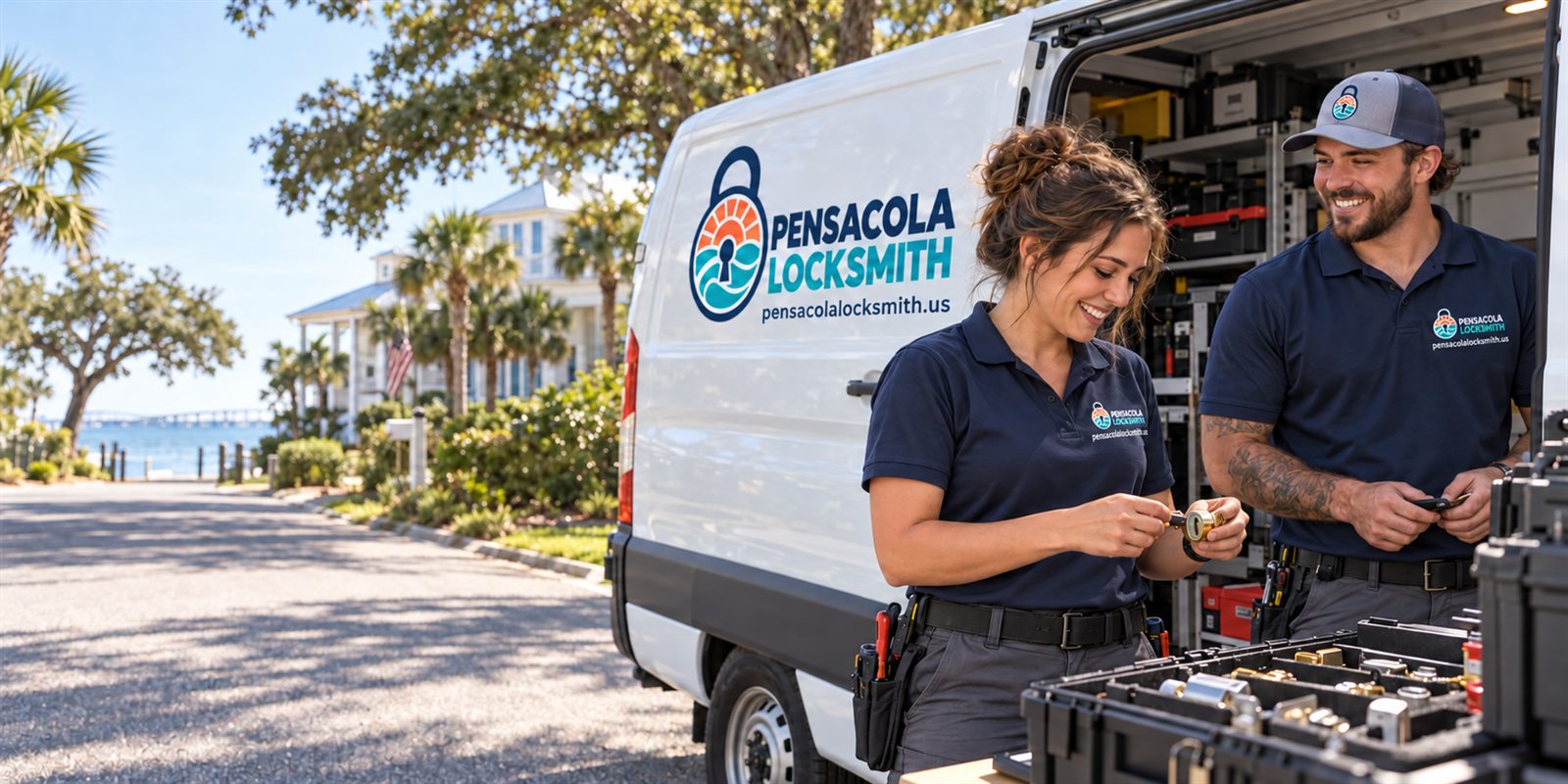
A lockout is the most common reason people search for a locksmith, and it always feels more urgent than it is. The first step is to stay calm and check the simple things: a back door, a window you can open safely, or a family member with a key. If none of those work, a locksmith can open most doors without damage.
The technique depends on the lock. Many residential locks can be opened with picking tools or bypass tools that never touch the paint or frame. A deadbolt that is latched can often be defeated by working on the cylinder itself. We try the least destructive approach first, because the door is yours and we would like to leave it as we found it.
Before opening, we check that you live there or have authority. A photo identification with an address, a lease, a utility document or a mail item can all help. This can feel awkward when you are standing outside in a hurry, but it is the same check that protects you from someone claiming your front door.
Afterward, we often suggest a few follow-up steps. If a key was lost, a rekey makes sure whoever finds it cannot use it. If the lock was worn or stiff, replacement may be better. If the lockout happened because a latch was sticking, a small adjustment to the strike plate can prevent a second call next month.
Coastal weather and what it does to locks
Pensacola sits on the Gulf Coast, and the climate shapes every lock in the city. Humidity is high through most of the year, salt in the air reaches well inland, and storms bring wind-driven rain. Over time, these conditions corrode metal, swell wood and gum up the fine springs inside a cylinder.
Signs of weather damage are easy to miss until they become a problem. A key that needs a jiggle, a deadbolt that has grown slow, a knob that sticks halfway or a latch that does not quite catch are all signals. Corroded parts do not heal themselves. Sometimes cleaning and a dry lubricant buy another year. Sometimes replacement is the honest answer.
Material choice matters here. Solid brass and stainless components resist corrosion better than cheap plated steel, and some finishes are built for outdoor exposure. If your door faces the weather, ask for hardware rated for it. We will explain the options available and the trade-off between appearance, strength and upkeep.
Hurricane season adds another consideration. After a storm, doors may have shifted in their frames or been struck by debris. A door that no longer closes cleanly can fail to engage the deadbolt, leaving the home less secure than it looks. We can check alignment, adjust strike plates and test the hardware once things dry out.
Rekeying, new locks and smart devices
Rekeying and replacement are not the same thing, and the difference affects cost and security. Rekeying keeps your existing lock hardware but changes the internal pattern so a new key works and the old one does not. Replacement installs a different lock entirely. Rekeying is a smart choice when the lock is in good shape, and replacement when it is worn or inadequate.
Many Pensacola homeowners ask about smart locks, which use a keypad, a phone or a fob. They can be convenient for families, short-term guests and people who hate carrying keys. They also depend on batteries and sometimes on wireless networks. We help you pick something suitable and explain what happens if the battery dies or the network drops.
A smart lock is only as strong as the door it sits in. A flimsy frame, a short strike plate screw or a hollow door can undo expensive hardware. When installing a new device, we check the door's thickness, the bore holes and the frame, and we recommend reinforcement if it is needed. Often a longer screw in the strike makes a big difference.
If you want one key for the front door, back door and garage entry, we can set the cylinders to match. This simplifies life, particularly for households with several drivers. It is also worth deciding at that time who actually needs a copy. Fewer keys in circulation mean fewer risks, and it is easier to keep track.
Car keys for Pensacola drivers
Car key problems are a large part of the work here. A lost key to a modern vehicle is not as simple as a visit to a hardware counter. Most cars today have a transponder chip inside the key, and many use a smart fob. Both need electronic programming so the car recognizes them, and that requires specialized tools.
We come to the vehicle. That matters in a city where a tow can mean crossing a bridge or sitting in traffic, and where cars are often stranded at work, at a restaurant or at a launch ramp. After checking ownership, we read the vehicle number, cut a blade if needed and program the key at the curb.
Students, visitors and people stationed nearby often face this problem far from home. If you cannot get to your title, a photo of your registration along with identification is sometimes enough, depending on the situation. We will explain what is acceptable when you call. We do not take shortcuts on ownership checks, even for a sympathetic story.
A spare key is cheap insurance in the form of time, not money. Having a second key made before the first is lost saves the most trouble. If one key is already gone, tell us when you call, so we can plan the right equipment. And if you suspect a key was stolen, ask about removing it from the car's memory.
Business doors and busy corridors
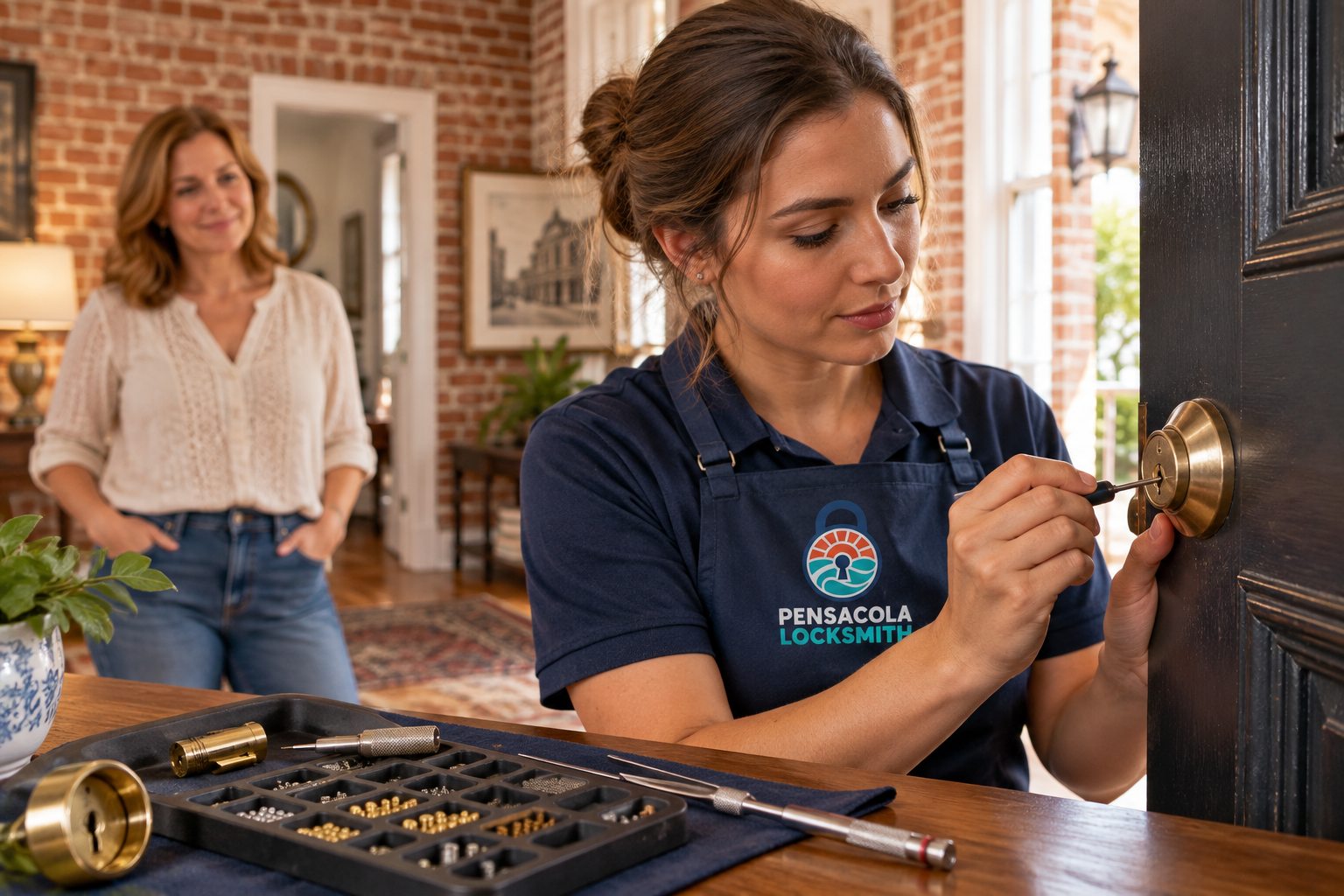
Pensacola has shopping streets, restaurant rows, medical offices and small businesses of every kind. Each has doors that are used all day, and heavy use wears hardware. Door closers lose their tension, panic bars loosen from the frame, and locks that were fine last year start to bind. A short inspection can prevent a stuck door at closing time.
Many businesses need more than one key system. A front door may need to be accessible to everyone on a staff, while a back office, storage room or cash area should have a smaller set of keys. A master key system arranges this in a layered way, and a locksmith can plan one without replacing every lock in the building.
Security and safety need to work together on commercial doors. A door that is locked tight for burglars but cannot be opened quickly from the inside during a fire is a hazard. Exit hardware must meet local fire and building rules, and a locksmith should respect that. If a rule applies to your building, we will not suggest anything that violates it.
Ownership checks apply here too. We need to know the person asking is the owner, manager or an authorized representative. A lease, a business document or a letter from the owner may be needed, especially if the building is leased and the landlord controls the main entry. Calling ahead gives us time to explain what to bring.
Students, renters and short stays
Pensacola has a university, a state college, a military presence and a steady flow of visitors, so a large share of the people who need a locksmith are not long-term owners. Students rent rooms and apartments, service members move in for assignments, and tourists stay in rentals. Each situation has its own lock concerns, and each begins with the question of who has authority over the door.
Renters should read the lease before asking for any change. Some landlords welcome a rekey at move-in, some require a copy of every key, and some prohibit changes. If you get permission, keep the message or the signed note on your phone. We will want to see that you can approve work on the door, and a landlord's written approval is the clearest way to show it.
Roommates add another wrinkle. If several people share a unit, decide who holds keys and what happens when someone moves out. A departing roommate who keeps a key is a real problem when the others are still living there. Rekeying after a change of roommates is a sensible, low-drama way to reset the situation without any argument.
Short-term guests who are locked out should contact their host first. The host can usually supply a code, a spare or authorization for a locksmith. If the host is unreachable, we can talk through what else might work, though we will not open a door unless someone with real authority has signed off. It is the same rule we apply to every door in the city.
Preparing for a visit
A few small steps make any visit run smoothly. Clear a path to the door, move pets to another room, and put away anything fragile near the entry. If the work is on a car, move it, if safe, out of tight spaces and away from busy lanes so the technician has room and you are safe from traffic.
Gather your documents ahead of time. Photo identification and something that connects you to the property or the vehicle are the basics. If you are a tenant, have your lease or a message from the manager authorizing the work. If you are a business owner, have a document that shows your role. Those few minutes of preparation prevent delays.
Think about what you want from the job. Do you need one key or five? Do you want all doors on the same key? Do you want a different finish? Make a short list before calling. It also helps to look at the doors from both sides and note anything unusual, such as a door that sticks in humid weather.
Be ready to ask questions. A good technician explains what is wrong, what the options are and what each one involves. Quotes are given by phone, and if a job is complicated, a technician visits first and the service call charge is explained before dispatch. Call us to confirm availability, since we do not promise arrival times.
How to decide between repair, rekey and replacement
Repair is the right choice when a lock is basically sound and one part has worn or shifted. A loose handle, a latch that needs adjusting or a spring that has gone weak can often be fixed. Repair keeps your existing hardware and your existing keys. It is usually the least disruptive option, but it only makes sense if the underlying lock is still good quality.
Rekeying fits when the lock is fine, but the keys are not trustworthy. Someone moved out, a key was lost or you simply do not know who has copies. The hardware stays, the pattern changes, and old keys stop working. It is a clean way to reset control of a door without the cost and mess of new locks.
Replacement is for locks that are worn out, damaged, not secure enough or no longer suited to the door. A deadbolt that spins freely, a cylinder that has been drilled, or a knob that is too loose to hold are all candidates. Upgrading at the same time to something stronger or more convenient is a reasonable decision.
We try to be honest about which route fits. If a repair is enough, we say so. If a lock is beyond repair, we explain why and what the alternatives are. You are the one who lives with the door, so the decision is yours, and our job is to put the facts in front of you plainly.
Common questions
Do you serve all of Pensacola?
We serve Pensacola and the surrounding Escambia County area, including neighborhoods near downtown and the suburbs. Because we travel to you, the best step is to call, tell us where you are and confirm availability. We do not promise arrival times, but we will be honest about what to expect.
Will you check who I am before opening my door?
Yes. Before opening, rekeying or programming, we check that you own the property or vehicle or have authority over it. Photo identification and a document connecting you to the address or car are usually enough. This step protects you as much as it protects anyone else.
Can you work on older doors and original hardware?
Often yes. Older doors may have mortise locks or solid wood frames that need careful handling. We can rekey, repair or upgrade many of them while keeping the original look. If a part cannot be repaired, we will explain the options. Describe the door when you call so we bring the right parts.
How does pricing work?
Quotes are given by phone after we understand the job. If the job is complicated, a technician visits first and the service call charge is explained before dispatch. We do not publish amounts on this page, so please call us and we will walk through the work.
Do salt air and humidity really shorten lock life?
They do. Moisture and salt corrode metal and gum up internal parts, so locks near the coast can wear faster than those inland. Using corrosion-resistant hardware, cleaning with a dry lock lubricant and replacing worn parts early all help. We can inspect your doors and tell you what we see.