
Content note: this page was written by Claude (AI) for Pensacola Locksmith.
A seasonal place with year-round lock needs
Perdido Key has a rhythm. Winter brings quieter streets and long-term visitors, spring and summer fill the buildings, and fall slows down again. Many units sit empty for stretches, then host a different family every few days. Locks designed for a household that comes and goes twice a day are now being used by dozens of strangers a season.
That pattern wears hardware in particular ways. Keypads are pressed constantly, and the same buttons see the most use. Deadbolts are thrown by people unfamiliar with the quirks of a particular door, and handles are yanked by guests who do not know that the door needs a gentle lift. Over a season, even good locks show strain.
Properties that sit empty also develop problems. Seals dry out, mechanisms stiffen and batteries in smart locks run down. An owner who returns after a month away may find a lock that will not turn or a keypad that is dead. Checking hardware before the season begins, not after the first guest is stuck outside, is a sensible habit.
We encourage owners to plan lock work around their calendar. A rekey or hardware swap done in a quiet week is easier for everyone than a rush on a Saturday check-in. Call us to talk through timing, and we will explain what to expect, including that we cannot promise arrival times and that you should call to confirm availability.
Turnover rekeys: how and when
Rekeying is the standard tool for resetting access in a rental. The locksmith removes the cylinder, changes the internal pins to a new pattern and returns it to the door. New keys work, and every old key becomes useless. The lock itself stays, so the job is usually faster and more modest than replacing every deadbolt.
When should you rekey? After any lost or unreturned key, after a long-term guest or tenant leaves, when you change property managers or cleaners, and as a regular practice once a year. Some owners rekey at the start of each season. It depends on how many people have had access and how comfortable you feel about it.
A well-planned rekey makes life easier for you. If every lock on the property is set to the same key, you carry one instead of five. If a unit has a front door, a balcony door and a storage closet, they can all share. If a manager needs access, a second set can be cut and logged. We arrange these combinations by asking how you use the place.
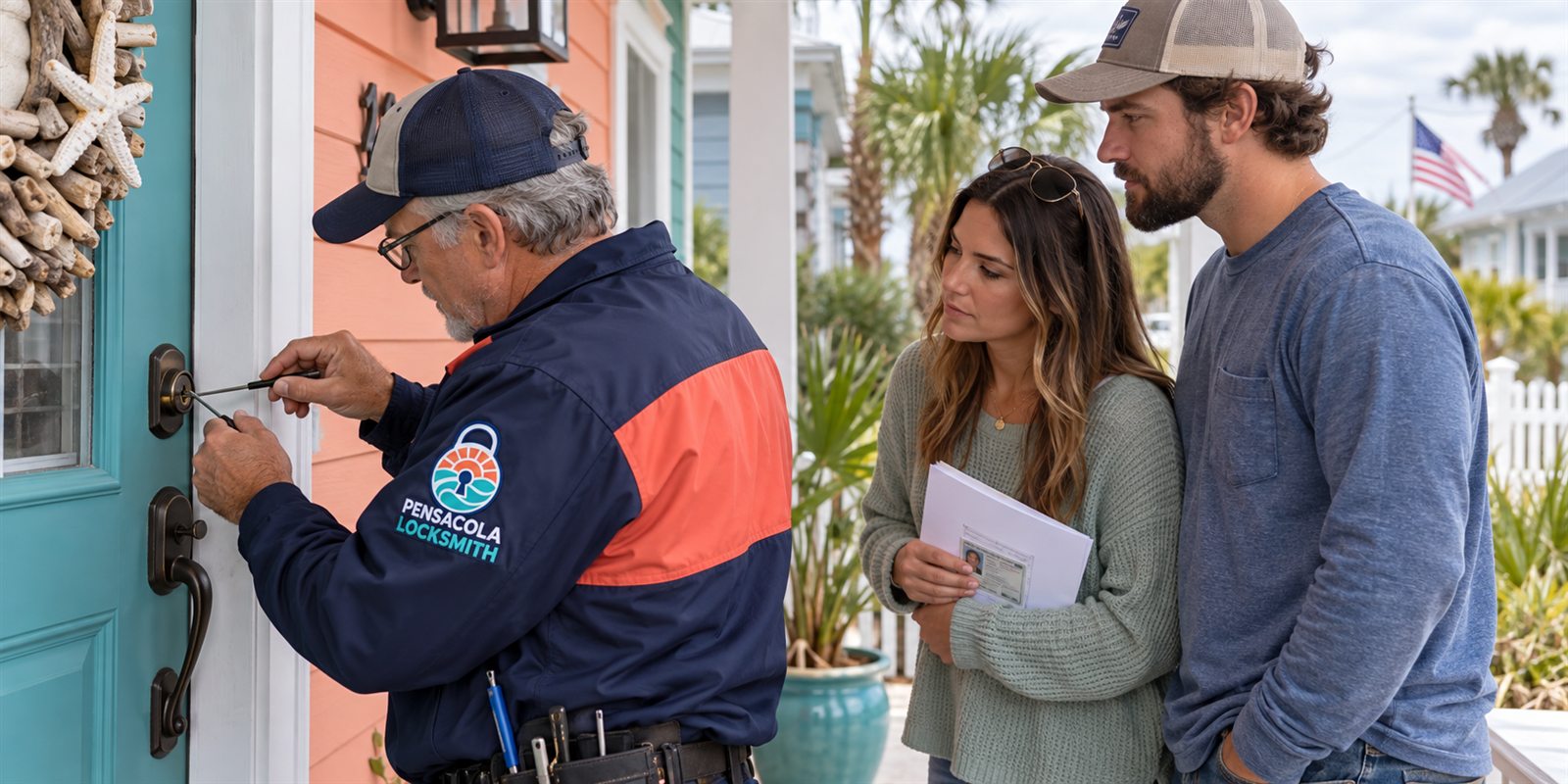
Rekeying does require us to confirm that you own or manage the property. For owners, a deed, tax bill or photo identification with the address can help. For managers, a management agreement or a letter from the owner works. If the unit is in a building with rules, you may need association approval as well.
- Rekey after a lost or unreturned key
- Rekey when management or cleaning staff change
- Match all doors to one key for simplicity
- Keep a written list of who holds each copy
Corrosion on the Gulf: reading the warning signs
Salt is relentless. On a barrier island, it arrives with every breeze, lands on handles and hinges, and works into the smallest openings. Even locks mounted on a covered balcony see damp salty air. A deadbolt that was smooth in March may be rough by August and seized by the following spring.
The warning signs show up in the key first. If it needs a wiggle, drags on its way in or out, or leaves a dark residue on the metal, there is corrosion or debris inside. A latch that sticks halfway, a thumb-turn that grinds and a handle that feels gritty all point the same way. Catching these early gives you options.
Cleaning can help at the start. A dry lubricant applied to the keyway and the latch, followed by working the key a few times, clears light buildup. Avoid spraying oil, which collects sand and turns into paste. A wipe of exterior hardware with a damp cloth removes salt crust. If the problem returns quickly, parts are wearing out.
Replacement is often the best answer when corrosion has set in. Choose hardware designed for coastal use, such as stainless or solid brass with a protective finish. These cost more, yet they resist the salt better. We can explain the differences by phone and help you pick something that matches the look of the door.
Condo doors, balcony doors and association expectations
Most Perdido Key buildings are condominiums, with common areas run by an association. The unit door is usually yours, but it may sit in a fire-rated frame and carry rules about hardware. Some associations require all units to use a certain brand or finish. Others want a master or emergency key on file. Find out before you order anything.
Balcony doors face the Gulf and take the worst of the weather. Sliding glass doors with thin latches are common, and the aluminum frames can corrode. A latch that fails to catch because of grit or a bent keeper is one of the most frequent complaints. A technician can clean, adjust or replace the parts, and add a secondary lock for security.
Elevator lobbies, garage gates and mailboxes are not part of the unit. They are controlled by the association, and a locksmith needs written permission before touching them. If you have a problem there, contact the manager. We are glad to help if the association hires us, but we will not alter shared hardware at an owner's request alone.
Because many owners live elsewhere, we often coordinate by phone with an owner, a property manager and a front desk. We ask each to confirm what they know. This can feel slow, but it keeps things honest. A door in a condo building affects neighbors and safety systems, and we respect that.
Lockboxes, keypads and smart locks for rentals
Many Perdido Key rentals use lockboxes or electronic locks so guests can arrive late without meeting anyone. Both can work well, and both come with habits to build. A lockbox needs a code that changes between guests, and it should be mounted solidly. A keypad lock needs fresh batteries and a code list that is updated, not left alone for years.
Smart locks offer more features. Some let you create temporary codes for each guest, set start and end times, and see when a code was used. They are convenient for managers. They also depend on batteries, and some rely on a wireless connection. Ask what happens if the battery dies or if the network drops, because a lock that fails closed can lock out a guest.
Mechanical backups matter. Even an electronic lock should have a way to open if the electronics fail. A key override, a battery terminal for a quick boost or a mechanical lock paired with a keypad are all possible. We explain the backup for the product you are considering and help install it correctly.
Installation quality is as important as the product. A smart lock fitted in a door that is out of square will wear fast and jam. A technician checks the bore, the door edge and the frame, fits the lock and tests it through many cycles. We also teach you how to reset codes and replace batteries so you are not dependent on us for routine tasks.
Locked out on a vacation: what to try first
A lockout on vacation is stressful. The kids are tired, the groceries are melting and the host is not answering. Start with the host or manager, since they often have a code, a spare or an alternate way in. Many rentals have a lockbox that the guest was told about, so recheck the arrival message.
If that fails, a locksmith can step in, but we need to know who has the right to authorize the work. A guest is not the owner, so we typically ask the owner or manager to confirm by phone or message. This is not an obstacle for the sake of it. It protects the property, and in the end it protects the next guest.
Our methods depend on the lock. Many doors can be opened without damage by picking or bypass techniques. Sliding doors can sometimes be released from outside if the latch is simple. We avoid forcing anything, because a broken door costs everyone more. If drilling is needed, we explain it first.
After you are in, tell the host what happened. A lock that fails often points to hardware that needs attention. A guest who loses a key may mean a rekey is due. Sharing the details helps the owner fix the underlying issue, and we are glad to hear back if you have follow-up questions.
Vehicles and keys on the island
Cars on Perdido Key spend time in salt air, sand and heat. Fobs wear out faster than they would inland. The rubber over buttons cracks, the plastic case warps, and the battery contacts corrode. If your fob has become temperamental, a new battery or a replacement shell may solve it, and we can check which one is right.
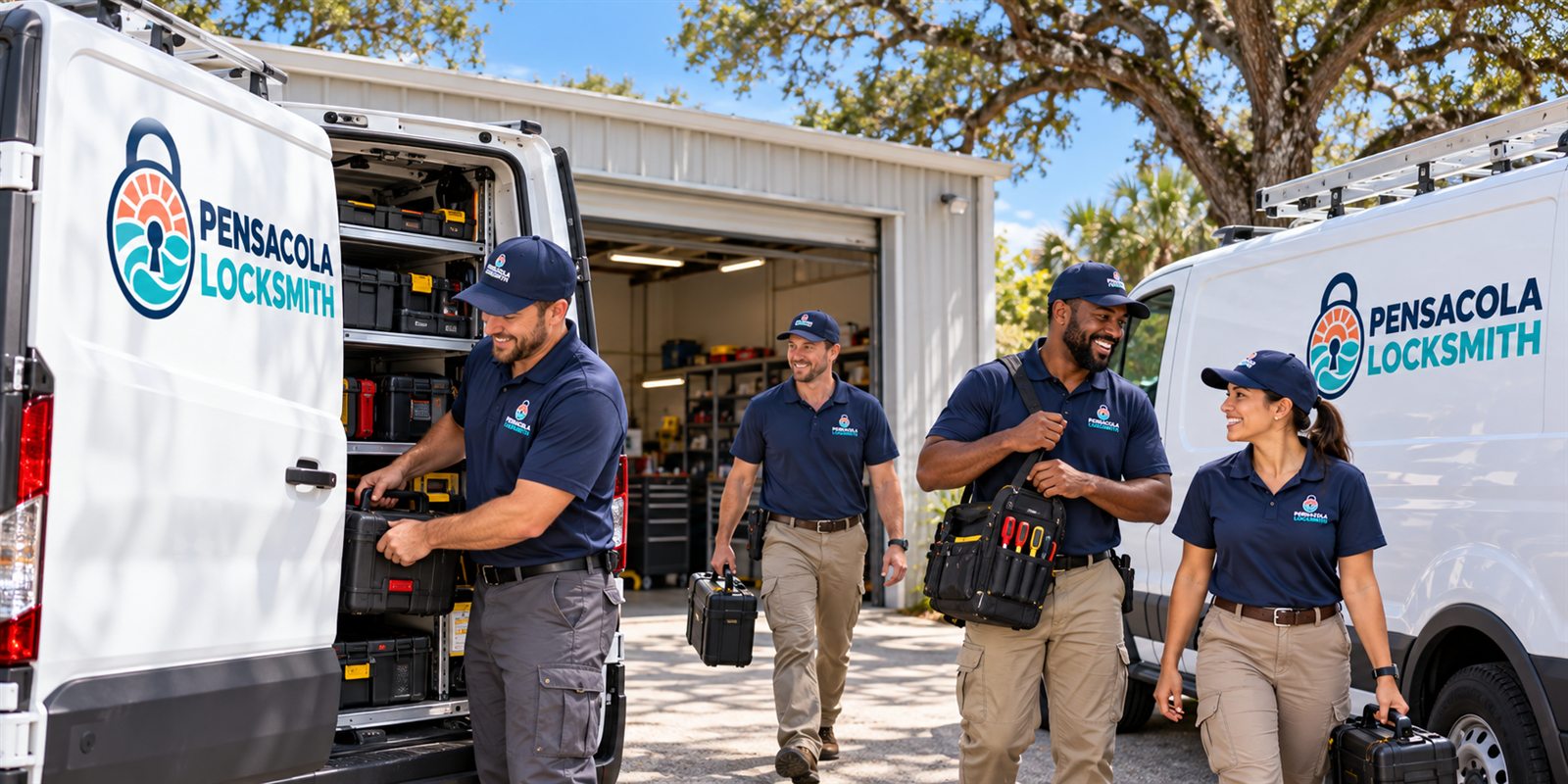
If a key is lost, a mobile visit saves the trouble of towing a car off the island. We confirm ownership, read the vehicle number, cut a blade if needed and program the key at the vehicle. This works for chip keys, remote head keys and proximity fobs. Tell us how the car starts when you call.
Parking is often tight near beach access points and condo lots. We need room to open doors and work safely. If you are in a crowded lot, tell us the exact spot. If the car can be rolled to a quieter location safely, that helps, though we never ask anyone to move a car in a way that is risky.
Rental cars deserve a note. The rental company may have its own procedure for lost keys, and they own the vehicle. A rental agreement is a valid document for authority, but the company may need to approve. Call them first, then call us if they direct you to a local locksmith.
Storm readiness for doors and locks
Hurricane season is part of life on the Gulf. Owners often board up, leave or ride out storms in place. Before any of that, make sure every exterior lock turns freely and every door closes snugly. If a deadbolt is stiff, it is better to find out now than at the last minute.
Storm surge, flooding and high winds can damage locks and frames. After a storm, check each door before using it. Water-soaked wood may swell and refuse to latch. Sand and debris may jam tracks and keyways. Do not force a stuck lock. Clean it gently and let it dry, then try again.
If a door or frame is damaged, temporary security can be added while repairs are arranged. A hasp, an extra deadbolt or a brace can keep a property closed. We can discuss these, though we do not rebuild frames or install windows. We focus on locks, hardware and keys.
Keep ownership paperwork where you can reach it. In an emergency, you may be away from home with no easy way to prove you own a unit. A photo of your deed or lease on your phone, plus identification, lets us verify quickly. That small bit of preparation can save hours after a storm.
Cleaners, maintenance crews and who gets a key
Every rental on the island depends on a chain of helpers: cleaners who turn over a unit between guests, maintenance workers who fix a leaking faucet, linen services and sometimes a pool or pest service. Each one needs a way in. The simplest solution is to hand out copies of the key, and the result, over a few years, is a growing pile of keys nobody has counted.
A more careful approach is to decide who truly needs access, how often and for how long. A cleaner who works every turnover may need a standing key or code. A plumber who visits once may only need a temporary arrangement. Keypad and smart locks make this easier because you can add and remove codes without cutting anything, and a record shows when each code was used.
If you prefer mechanical keys, consider a restricted keyway. These systems make it harder for anyone to have a copy made without your permission, since the blanks are controlled and the cutting needs authorization. They cost more in effort and parts than a standard lock, but they are a real step up for owners who manage several units and want to know where the keys are.
Whichever route you choose, keep a short written log: who has a key or code, when it was issued and when it should be returned or removed. When someone leaves the team, change the code or rekey the lock. We can help with the hardware side, and we will confirm that you own or manage the property before we change anything.
How to work with us
Call and tell us what you need, where the property is and what kind of door or vehicle is involved. We ask a few questions and explain the likely steps. Quotes are given by phone. We do not promise arrival times, particularly on busy weekends or when the roads are affected by weather. Please call to confirm availability.
For simple jobs such as a standard rekey or a lockout, a technician can usually finish in one visit. For more complicated problems, such as a seized cylinder, a damaged door or a security fault in a car, a technician visits first, and the service call charge is explained before dispatch.
On site, the technician checks ownership or authority, looks at the lock or vehicle and explains the work. You decide whether to proceed. When the job is done, we test every key and function, clean up and show you how to handle routine care, such as lubrication and battery changes.
Afterward, keep records. Write down how many keys exist and who holds them. If something feels off in the days that follow, let us know. A well-done lock job should feel unremarkable, and if it does not, we want to hear about it so we can make it right.
Common questions
Do you come to Perdido Key?
Yes, Perdido Key is within our service area. We travel to condos, houses and vehicles. Because roads, weather and other calls affect timing, we do not promise arrival times. Please call to describe the job and confirm availability.
How often should I rekey a vacation rental?
There is no single rule. Many owners rekey after a lost key, when staff changes, or at the start of each season. The more people who have had keys, the more sense it makes. We can discuss your pattern by phone and suggest a schedule.
Can you work on condo doors?
Yes, for the unit door, once we confirm you own or manage it. Associations may have rules about hardware, so check them first. We do not alter shared areas such as lobbies or garage gates without written permission from the association.
My lock sticks near the Gulf. Is it ruined?
Not necessarily. Salt and moisture cause stiffness that sometimes clears with cleaning and dry lubricant. If corrosion is deep, replacement with corrosion-resistant hardware is the better answer. A technician can look at it and tell you which applies.
How are quotes given?
Quotes are given by phone once we understand the work. If a job is complicated, a technician visits first and the service call charge is explained before dispatch. Call us and we will go through it with you.