
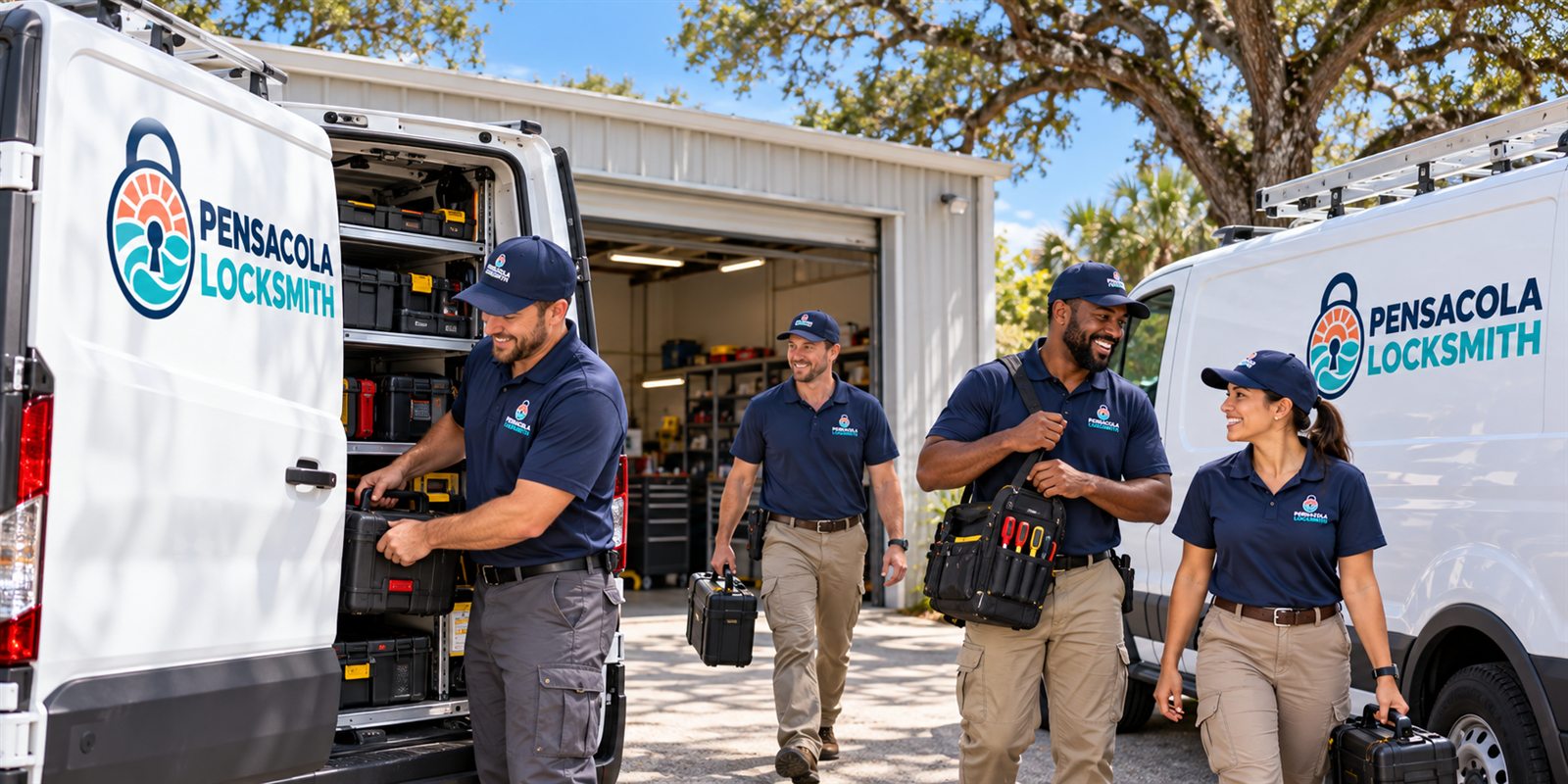
Content note: this page was written by Claude (AI) for Pensacola Locksmith.
Whether you are standing beside a locked car, staring at a door that will not turn, or planning a lock change for a shop, this page explains how to reach Pensacola Locksmith and what to expect. We cover what happens on a first call, what to have ready, why we check ownership, and how quotes and visits work, so you can start calm.
How to get in touch
The simplest way to reach Pensacola Locksmith is to call us. A lock problem is rarely something people want to describe in a long written message, and a short conversation tells us more than a form ever could. The phone number is being added to this site, so if you do not see it yet, check back shortly. Once it is posted, it will appear on this page and in the header, so you will not need to hunt for it when you are already stressed.
When you call, you will speak with someone who understands locks and keys, not a script. We ask a handful of plain questions: where you are, what has happened, and what you are trying to get done. Please call to confirm availability, because our schedule depends on where technicians are working and on the kind of job you describe. We will tell you honestly what we can do and what we cannot.
If you cannot talk freely, for example because you are in a loud parking lot or a quiet workplace, say so at the start. We can keep the questions short and focus on the essentials. Written messages are fine for planning work that is not urgent, such as a scheduled rekey of a rental or a quote request for several doors, but anything involving a person locked out or a safety concern is best handled by voice.
What happens on a first call
A first call follows a simple order. We begin with your location, because a mobile locksmith needs to know where the work is before anything else makes sense. Then we ask what kind of lock or key is involved and what went wrong. A key snapped in an ignition, a deadbolt that spins freely, a transponder key that no longer starts the engine, and a storeroom door that will not latch are all different problems, and the right answer depends on which one you have.
Next we talk through the options in plain language. Sometimes the job is a straightforward opening with no damage to the lock. Sometimes the better answer is a repair, a rekey, or a replacement, and we explain why. We will also mention anything that could change the plan, such as a high security cylinder, a worn mechanism, or a vehicle that needs special programming equipment. You decide what you want before we move.
Before dispatch, we explain how the visit will work, including the ownership check that happens at the door or at the vehicle. If the job is simple enough to quote by phone, we do that. If it is not, we say so, and we describe the on-site assessment and the service call charge so nothing surprises you. You are never pushed to say yes. If you want to think it over or compare, that is a reasonable thing to do.
What to have ready for a car job
For a vehicle, the most useful details are the make, the model and the approximate year, plus the color and where the car is parked. If the car is at a beach lot, a grocery store or a hotel, mention the name of the place so we can find you without a long back and forth. Tell us what you can see through the window: keys on the seat, a phone, a child or a pet. That changes how we prioritize the call.
Next, describe the key. A traditional metal key, a key with a plastic head that contains a chip, a remote with buttons, and a push button start fob are different categories, and each needs different tools. If you lost every key, tell us that plainly, because creating a new key from nothing is a larger job than copying one that still works. If a key broke, tell us whether part of it is still in the lock or the ignition.
Have the vehicle identification number if you can reach it. It is usually visible through the windshield at the lower corner on the driver side, and it also appears on your registration and insurance card. Keep your photo ID and proof that you own or are authorized to use the vehicle nearby. A registration or title in your name, or a rental or lease paper with your name, is the usual proof. Having these ready makes the visit smoother and shorter.
- Make, model, approximate year and color
- Exact location, including the lot or business name
- Key type: metal, chipped, remote or push button start
- VIN, registration or title, and photo ID
- Whether any key still works
What to have ready for a home job
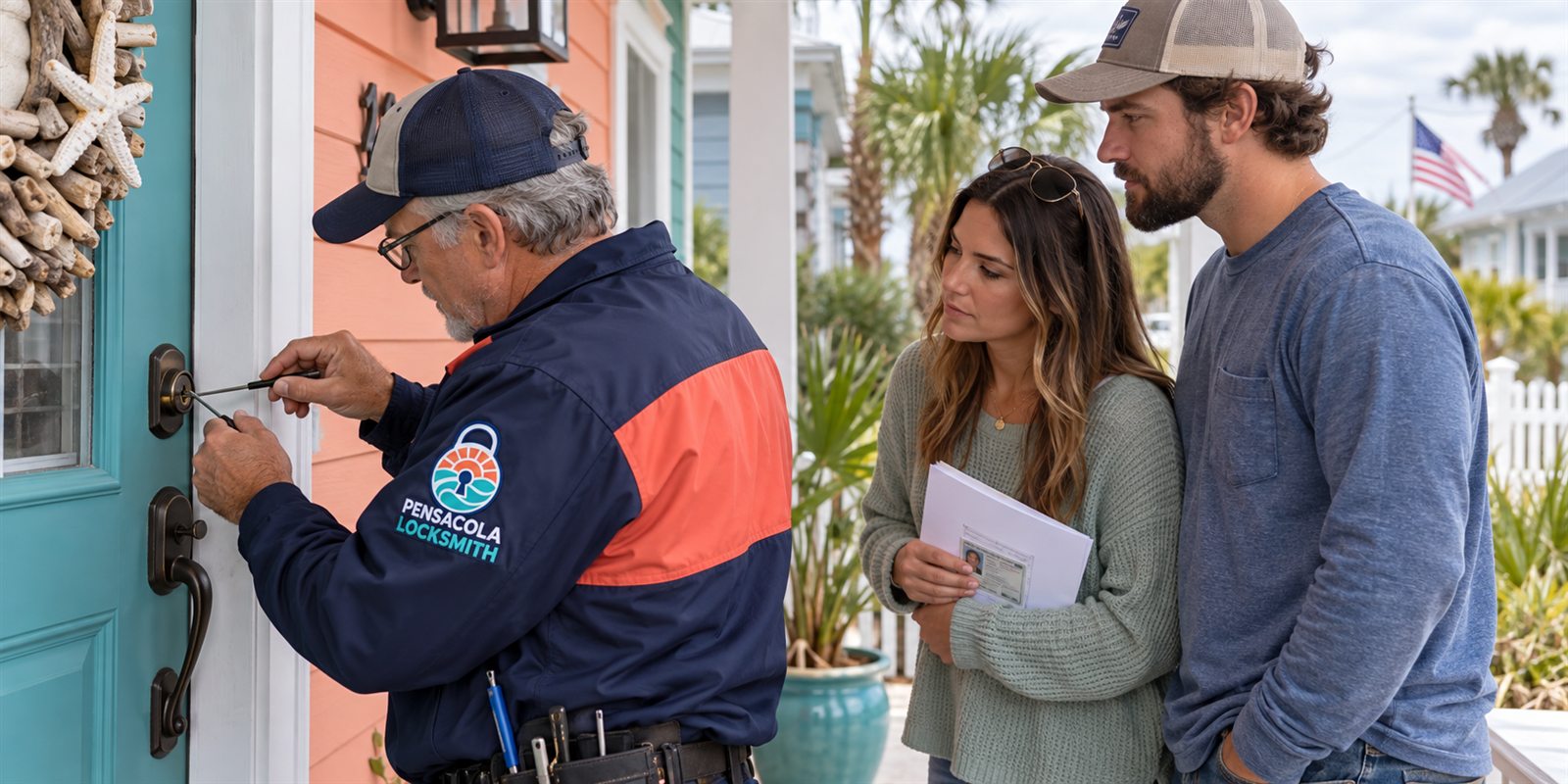
At a house or apartment, tell us which door is the problem and what the lock does or does not do. A knob that turns but will not retract the latch is different from a deadbolt that jams halfway, and both differ from a lock that works perfectly but needs new keys after a move. Mention whether the door is a front door, a patio slider, a garage entry or a side gate, because the hardware and the approach vary.
Describe the lock if you can. Is it a standard deadbolt, a keypad lock, a lever handle, or a smart lock with an app? In older Pensacola homes you may find mortise locks or decorative hardware that deserves careful handling, and the age and finish of the door may affect what we recommend. Gulf Coast humidity and salt air can stiffen or corrode lock parts, so tell us if the lock has been getting harder to turn for a while.
Plan to show proof that you live there or have authority over the property. A lease, a utility bill, a mail piece with your name and the address, or a photo ID that matches the address all help. Landlords and property managers can show a management agreement. If you are a guest or a short term rental host, let us know your role when you call so we can explain what documentation will satisfy the check.
What to have ready for a business job
Business locks come with extra questions, so a little preparation helps. Tell us what kind of space it is, such as an office, a retail counter, a storage unit or a restaurant back door, and which doors or cabinets are involved. If there are many doors, a count helps us plan. Mention whether the locks are keyed alike, whether there is a master key system, and whether any doors have panic hardware or electronic access.
Authority matters more here, because several people may hold keys and not all of them can approve changes. We need to speak with someone who can authorize the work: the owner, a manager, or a property manager with written authority. If a former employee still has keys, say so, since rekeying may be the right answer. A short written note from the owner naming the person on site can speed things up.
Finally, think about timing and access. Some jobs are best done before opening or after closing so customers are not disturbed, and some buildings have rules about contractors. Tell us if you need an alarm panel or camera considered. A complicated business job often calls for an on-site assessment, and the service call charge for that visit is explained before a technician is dispatched.
- Type of space and number of doors or cabinets
- Whether locks are keyed alike or on a master system
- Who has authority to approve the work
- Any panic hardware, electronic access or alarm links
- Preferred timing and any building rules
Proof of ownership and why we require it
Before we open, rekey or program anything, we check that you own the property or have authority over it. This is not a hurdle placed in front of honest people. It is the reason a locksmith can be trusted at all. A locksmith who opens any door for anyone who asks is a risk to every neighbor, every tenant and every car owner in town, including you on the day your own spare is lost.
For a vehicle, the proof is usually a photo ID plus a registration, title, or lease or rental agreement that connects you to the car. For a home, it is an ID together with something that ties you to the address, like a lease or a utility bill. For a business, it is authority from the owner or manager. We look at the documents at the site, not over the phone, so they match the person standing there.
If you cannot produce paperwork right away, tell us. Some people lock their papers in the very car or house they cannot open. We will explain what other evidence may be acceptable, such as a call back to a known contact or a mobile photo of a document. There are limits, and we will not bend them, but we will work with you honestly. If proof cannot be established, we will not open the lock, and we will tell you why.
How quotes work
For many common jobs, we can give you a quote by phone once we understand the situation. A simple lockout, a standard rekey of a known lock, or a duplicate of a straightforward key often falls in that group. We ask the questions that matter, tell you what the job involves, and give you the figure before we dispatch anyone. We do not put amounts on this page, because the right number depends on the specifics of your case.
Other jobs cannot be priced honestly from a distance. A vehicle with a lost key and unknown immobilizer type, a lock with signs of forced entry, a door that has warped, or a commercial system with several moving parts may need a technician to look first. In those cases we arrange an on-site assessment. The service call charge for that visit is explained before dispatch, so you know what it covers before anyone drives out.
Once the technician has examined the work, you receive a clear explanation of what is needed and what it will cost, and you can accept or decline. Declining after the assessment is allowed, and you would only owe what was explained at the start. We prefer that you understand every step. If a quote ever changes because the situation turned out different from the description, we stop and talk it through before continuing.
Safety first when you are locked out
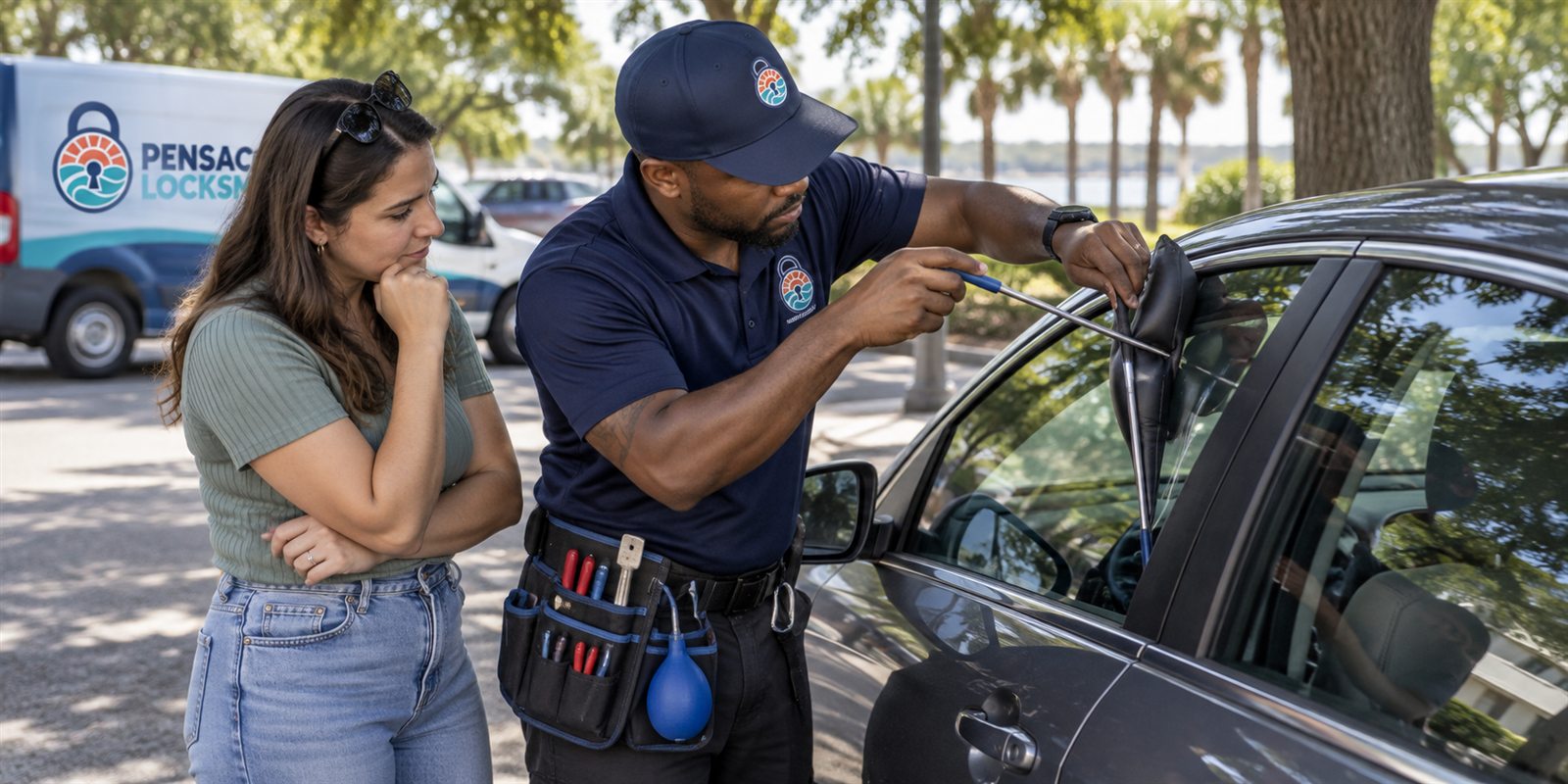
If anyone is in danger, call emergency services first. A child or a pet locked inside a car is an emergency, and so is a medical situation or a fire. Locksmiths are not first responders, and the quickest help in those cases is the one that already has the authority and tools to act. Once everyone is safe, call us for the lock itself. We would much rather hear from you after an emergency call than before it.
Being locked out at night is a different kind of risk. Stand in a lit area, keep your phone charged if you can, and tell someone where you are. Do not walk away from a vehicle in an unfamiliar parking lot if you feel unsafe, and do not accept help from strangers who offer to force a door. At home, stay near a neighbor or inside a lit entry until help arrives. Mention any concerns on the call so we can plan accordingly.
Heat is a real hazard on the Gulf Coast. A car locked at the beach in summer can become dangerous quickly, and so can standing on an asphalt lot with no shade. If you are waiting for a technician, find shade, drink water, and keep your phone with you. Tell us if anyone is feeling unwell. For storms, hurricane season brings power outages and flooding, which can affect electronic locks, so plan ahead with a physical key.
What happens during the visit and after
When the technician arrives, the first thing is a quick ownership check, as discussed above. Then they look at the lock or vehicle before touching anything, confirm the problem you described, and explain the plan. If the plan differs from what was said on the phone, they tell you why and wait for your agreement. You are welcome to ask questions as they work, and a good technician will explain each step in plain language.
During the work, we aim to protect your property. That means opening a lock without damage when possible, using covers or pads on paint and trim, and cleaning up metal shavings or packaging. If damage is unavoidable, for example when a lock is seized or has been tampered with, we tell you before proceeding. After the job, we test the lock several times, with the door open and closed, so you are not surprised later.
Before leaving, the technician hands over every new key, explains how to use any new hardware, and answers last questions. If the job involved a vehicle, we confirm the key starts the engine and the remote functions work. We recommend making a spare right away rather than waiting for the next problem. If something feels off in the days after, such as a sticky lock or a key that behaves strangely, contact us and describe what happened.
Where we work
Pensacola Locksmith is a mobile service for Pensacola and the surrounding communities in Escambia County. We come to your car, your home or your business rather than asking you to bring the lock to us. That matters for vehicles, because a car with no working key cannot be driven to a shop, and it matters for doors, because a door cannot be carried anywhere. Mobile service means the work happens where the problem is.
Coverage can depend on where technicians are working and on the distance involved. Pensacola neighborhoods, the areas around the bay, the beach communities, and the areas near the naval air station and the university are all places people ask about. Some outlying areas may be reachable and others may not on a particular day. The best way to find out is simply to ask when you call, and we will answer honestly.
When you ask whether your area is covered, give the nearest cross streets or a landmark and the town or neighborhood name. If you are at a rental, a hotel or a campus building, tell us the name of the property. If we cannot reach you, we will say so right away instead of leaving you waiting. Please call to confirm availability, since the answer depends on the day and on the kind of job.
How to prepare your keys, VIN and ID
A few minutes of preparation can shorten the visit considerably. Gather every key you have for the lock in question, even the ones that no longer work well, because worn keys still carry useful information. If you have a spare at home or with a family member, mention it. A working key can often be duplicated or used as a pattern, which is usually simpler than building a new key from the lock itself.
For a car, find the VIN before the technician arrives. It is printed on the registration, on the insurance card, on the lower corner of the windshield on the driver side, and inside the driver door frame. Take a photo of it on your phone so you have it even if the paperwork is locked inside. The VIN helps identify the exact key blank and the correct programming method for your vehicle.
Have a government photo ID ready, and make sure the name matches the paperwork. If you are renting or leasing, keep the agreement handy. If you are acting for someone else, such as a family member or an employer, bring a written note and a way to reach the owner. Take a moment to clear the area around the door or car so the technician has room to work, and keep pets and children out of the way.
- Every key you have, including worn ones
- A phone photo of the VIN and registration
- Government photo ID with a matching name
- Lease, utility bill or written authority
- A cleared work area
If you are not sure what service you need
Plenty of people call without knowing the right word for the problem, and that is perfectly fine. Describe what you see and hear instead. Does the key go in but not turn? Does the door close but not latch? Does the car start only sometimes? Did a lock get cold, wet or stuck after a storm? Those details help us sort the issue into opening, repair, rekey, replacement or key programming, even if you could not name any of them.
If you are unsure whether you need a rekey or a new lock, think about the goal. A rekey changes how the lock works so old keys no longer fit, while keeping the same hardware. A replacement swaps the hardware itself, which makes sense if the lock is damaged, outdated or does not match the look of the door. We explain the tradeoffs in plain terms, and we do not recommend more work than the situation calls for.
If the problem is more complicated, say a car that has lost all its keys or a business with several doors and mixed hardware, we may suggest an on-site assessment before committing to a plan. The service call charge is explained before anyone is dispatched. Calling to ask questions does not obligate you to anything. When you are ready, contact us, describe what you can, and we will help you work out the next step.
Common questions
How do I reach Pensacola Locksmith?
The best way is to call us. The phone number is being added to the site, so if it is not showing yet, please check back soon. When you call, we ask where you are, what kind of lock or key is involved, and what happened. Please call to confirm availability, because it depends on where technicians are working and on the type of job.
Why do you ask for proof of ownership?
We check ownership or authority before opening, rekeying or programming anything on a vehicle, home or business. It protects you and everyone else, because a locksmith who opens doors for anyone is a danger to the whole community. A photo ID plus a registration, lease, utility bill or written authority from the owner is usually enough.
Can you give me a quote over the phone?
For many common jobs, yes. Once we understand the situation, we give you the quote by phone before dispatch. For complicated work, such as lost keys on a vehicle with unknown security or a commercial system, a technician visits first for an on-site assessment, and the service call charge is explained before anyone is sent.
Do you come to my area?
We serve Pensacola and nearby communities in Escambia County as a mobile service. Coverage can vary by day and by distance, so the simplest way to find out is to ask when you call. Give us the nearest cross streets or the name of the place you are at, and we will tell you plainly whether we can reach you.
What should I do if I do not know what service I need?
Just describe what is happening, such as a key that will not turn, a door that will not latch, or a car that will not start. We will help sort it into opening, repair, rekey, replacement or programming. If it is complicated, we may suggest an on-site assessment first. Calling to ask questions does not commit you to anything.