
Content note: this page was written by Claude (AI) for Pensacola Locksmith.
Understanding who actually owns and controls each lock
In a single-family home the owner decides everything. In an association, ownership is split. The unit owner usually controls the lock on their own front door, though the governing documents may place limits on what can be changed. The association controls common areas such as lobbies, mailrooms, pool gates, fitness rooms, stairwells and shared storage.
Governing documents decide the gray areas. In some communities the entry door of a unit counts as a common element, so the association sets the hardware and holds a master key. In others the owner has full control but must give the association an emergency key. Before any lock work, it helps to know which rule applies, because the locksmith needs to confirm authority before opening, rekeying or programming anything.
Misunderstandings here cause most of the friction. A resident who rekeys a door without telling the board may find the association cannot enter during a leak. A board that changes a lock without notice may lock out a resident who did nothing wrong. Taking a few minutes to read the rules, or to ask the manager, avoids both problems and makes any later locksmith visit simple.
How a locksmith confirms authority in a shared community
When a call comes in, the locksmith asks who is requesting the work and what door it concerns. For a resident's own unit, the technician will ask for identification and some proof that the person lives there or owns it, such as a lease, a utility bill, or a document from the association. For a common area, the person must be able to show they act for the board or the management company.
This is not red tape for its own sake. A locksmith who opens the wrong door for the wrong person could expose a resident to a break-in or an association to liability. Properly done, the check takes a few minutes. Boards help by naming one or two authorized contacts and sharing that information with the manager and with residents, so a technician arriving at a gate knows exactly whom to deal with.
Tenants are a common source of confusion. A renter usually cannot approve changes to a lock without the landlord's consent. If a tenant is locked out, the technician may need the owner or the manager to confirm that the opening is approved. Call us with the details, say who you are in relation to the unit, and have your documents ready. That preparation shortens the visit considerably.
Master key systems and emergency access
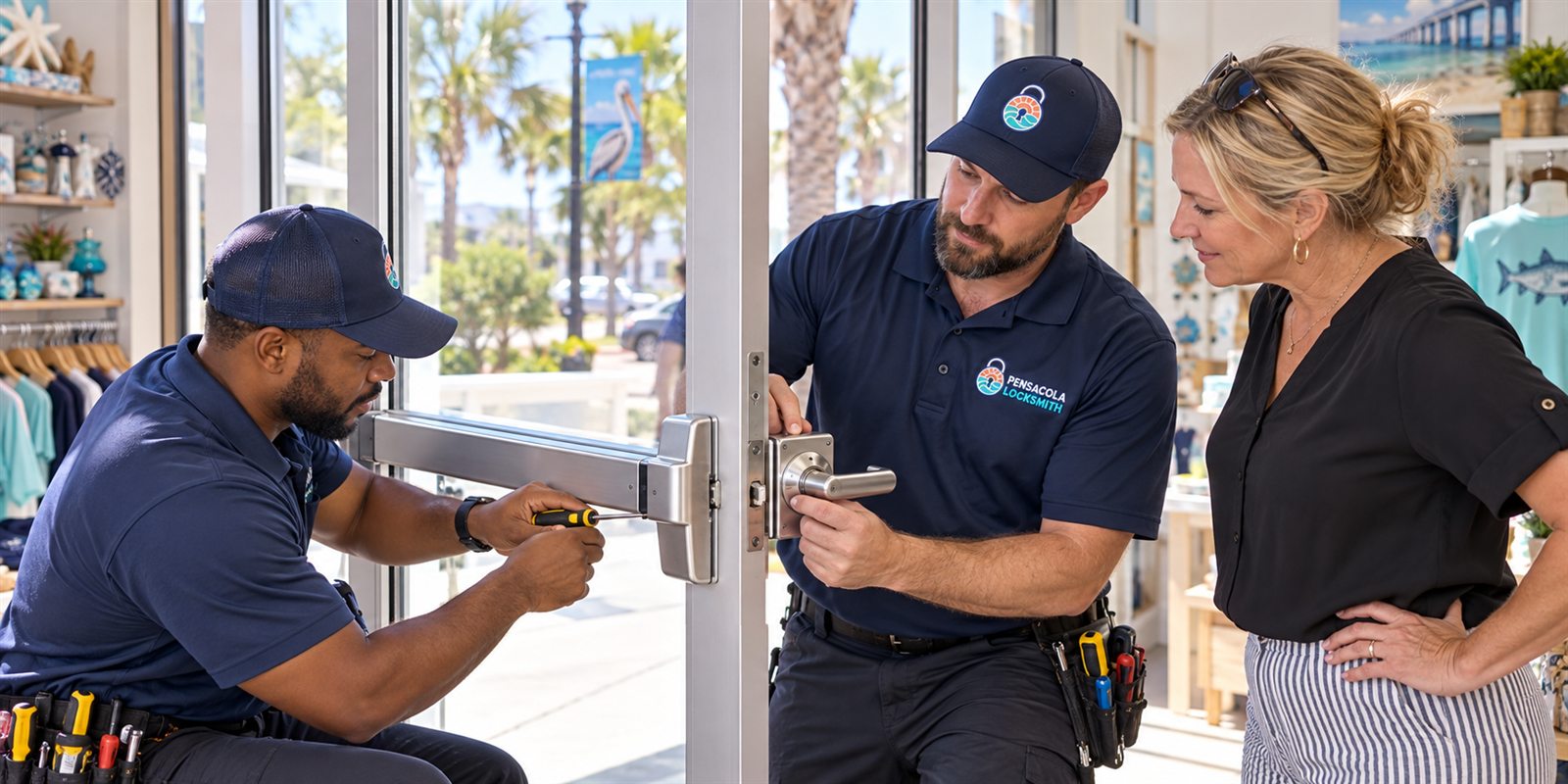
Many condo buildings keep a master key arrangement so the association can enter units in an emergency, such as a water leak, a fire alarm or a welfare check. This works through a lock design in which each unit key opens one door and a master key opens a set of them. The design is worked out in advance and recorded, so it remains understandable over time.
The weakness of a master system is the master key itself. If it is lost or copied without control, it opens many doors at once. Good associations limit how many master keys exist, store them in a secure place, record who signs them out and rekey the system if one goes missing. A locksmith can help you plan the structure and can rekey the whole set if control has slipped.
Some communities replace physical keys with lockbox or electronic systems for emergency access. These are convenient and keep an audit trail, though they have their own failure points. A battery that dies or a software problem can leave a door unreachable. Whatever you choose, keep a documented backup method. If you are reviewing a system, call us and describe what you have so we can talk through the realistic options.
Common areas: gates, mailrooms, pools and fitness rooms
Common area locks see far more traffic than private doors. Pool gates are slammed by children and soaked with chemicals. Fitness room doors are opened by every resident every day. Mailroom locks protect other people's mail, and failure there can become a real problem. Because so many people touch these doors, wear is quick and complaints follow.
Pool and gate hardware deserves special care in the Pensacola climate. Humidity, rain and salt air corrode ordinary hardware. Chlorine vapor adds more damage. Choosing hardware rated for outdoor and pool use, such as corrosion-resistant latches and keypads, pays off in fewer service calls. Self-closing and self-latching gates may be required in some places, and the board should check that the hardware actually closes fully every time.
Keypad and fob systems are popular for common areas because access can be changed without collecting keys. When a resident moves, their credential can be disabled. A locksmith can install and service many keypad locks and can advise on which are suited to heavy use. Programming of proprietary systems may sit with the vendor, and we will tell you if that is the case before anyone drives out.
Key rules and policies that actually work
A written key policy saves arguments. It should say who may have keys, how many copies are allowed, how a lost key is reported, and what happens when a resident sells or moves out. It should also state whether the association keeps a spare of each unit key, and under what conditions it may use it. Residents are far more comfortable with an emergency key when the rules are clear.
Enforcement matters as much as the wording. Keys marked do not duplicate are a deterrent, not a barrier, because many shops will copy them anyway. Restricted keyways, where duplication requires authorization, offer real control, though they require planning at the start. A locksmith can explain the options and the tradeoffs, including how restricted systems affect convenience and cost when residents need extra keys.
The policy should also cover changes of ownership. When a unit sells, the new owner usually wants the lock rekeyed, since the previous owner and any visitors may hold keys. Building that expectation into the process, with a simple form and an approved locksmith procedure, keeps the building consistent. Quotes are given by phone, and complicated multi-door jobs begin with a technician visit and an explained service call charge.
- Who may hold keys and how many copies are allowed
- How lost or stolen keys are reported
- Whether the association keeps an emergency key and who can use it
- What must happen when a unit is sold or tenants change
Lockouts, lost keys and after-hours problems for residents
Residents lock themselves out like anyone else, and the first question is usually who to call. Some associations have a management office with a spare key, though offices keep limited hours. After hours, a resident may need a locksmith. The technician will confirm that the person is the legitimate occupant before opening the door.
Having the right documents on hand speeds this up. Identification showing the address, a lease, a recent bill or a letter from the association can all help. If you cannot produce any of that, the technician may ask the manager or owner to confirm. This feels slow when you are standing in the hallway, though it protects you, since the same step would stop someone else from entering your home.
Lost keys raise a separate issue. If a key is lost and could be found by a stranger, rekeying the lock is the safe answer. In a community with a master system, the association should be told, since a replacement cylinder must match the system. Do not install a lock of your own choice without checking the rules. Call us, explain the situation, and we can help you do it in a way that the association accepts.
Rental units, tenant turnover and landlord-owners in associations
Many associations include investor-owned units rented to tenants. Every turnover is a chance for keys to wander. A tenant who moves out may keep a key, hand one to a friend or lose it. The owner has the right and the responsibility to rekey between tenants, and the association often benefits when they do.
Associations differ on how rentals work. Some require tenant registration, others limit short-term rentals, and some charge for access devices. These rules affect locks because they decide who is entitled to a key or a fob. A locksmith who knows the community can rekey a unit and make sure the new keys fit within the building system.
For the owner, a practical approach is to rekey at every turnover and keep a record of when it was done. Tell the association when you do, if the rules require it. If the tenant is locked out, the technician will usually need the owner or the manager to confirm the work. Call us to confirm availability and share what you know about the unit and the building.
Older buildings, coastal wear and planning replacements
Pensacola has a mix of older condo buildings and newer developments, many of them near the water. Older buildings may have original lock hardware that is decades old, with worn cylinders and discontinued parts. Salt air speeds up the aging. A board that waits for each lock to fail ends up with a stream of emergency calls instead of a planned upgrade.
A reasonable approach is to survey the common area locks once a year. Test each door, note anything sticking or loose, and record the brand and age. A locksmith can walk the property with a manager, identify the hardware most likely to fail and suggest a replacement schedule. Spreading the work across budget periods is easier than facing a long list of urgent repairs at once.
Standardizing on one or two lock types simplifies everything. Spare parts become easier to stock, technicians learn the system, and keys become interchangeable where intended. When the board chooses new hardware, check the finish for coastal exposure and ask how repairs are handled. If you want a second opinion on what to replace first, call us with a list of doors and conditions.
Garage doors, parking gates and package rooms
Parking areas and delivery spaces create their own lock questions. A gated garage depends on a mix of keypads, remote openers, card readers and mechanical backups. When any one of these fails, residents are stuck outside or cars are stuck inside, and the board hears about it quickly. Knowing which parts are mechanical and which are electronic helps you decide who to call.
Package rooms have become common as online shopping grew. They hold other people's property, so access control matters. Some use a code shared by delivery drivers, others a locker system. Codes that never change become public knowledge, so a regular code change is sensible. A locksmith can service the lock hardware on the room door and advise on access changes, though locker software usually belongs to the vendor.
Storage cages, bike rooms and trash enclosures are easy to overlook until a lock fails. Padlocks on outdoor enclosures rust fast in coastal air, and a seized padlock can block access for the people who need it. Replace them with weather-rated models before they fail, and keep a record of which key fits which. If a lock does seize, avoid forcing it, call us, and describe the lock and its location.
Hurricane season and emergency planning for associations
Hurricane season affects associations in particular ways. Boards must be able to secure common areas, reach utility rooms and enter units if damage occurs. That means knowing where every key is, who holds the master set and how to reach that person if a storm disrupts normal communication. Plan before a storm is in the forecast.
After a storm, damaged doors and frames may no longer latch. Garage gates and entry systems may lose power, which leaves access devices dead. Mechanical backup becomes valuable at that point. A keyed override on a keypad gate or a spare key to a service door can save a lot of trouble when the electronics are out.
Demand for locksmith help can rise sharply after a storm, so early preparation helps. Keep an updated list of doors, hardware and key holders. Know which doors you could secure with a temporary measure if needed. If damage occurs, call us, tell us which doors are affected and which person on the board can authorize the work, and we will confirm availability and plan the visit.
Preparing a clean request for the locksmith
A well-prepared request moves faster. Give the community name, the exact door or gate, and a description of the problem. Say who you are and what authority you have, whether you are a board member, a manager or a resident. If you can, identify the lock brand and say whether it is part of a master system.
Have the authorizing person reachable by phone. If the work concerns a common area and the person on site is a maintenance worker, the technician may call the manager to confirm. If it concerns a unit, the owner or the occupant with documents should be available. Without that, the technician cannot proceed, and the visit may need to be repeated.
Quotes are given by phone based on what you tell us. If the job is complicated, such as a multi-door rekey or a master system change, a technician visits to assess and the service call charge is explained before dispatch. After the work, ask for a short summary of what was changed and keep it with your association records. That note will help the next board member who has to deal with the same doors.
Common questions
Can a resident rekey their own condo door without telling the association?
It depends on the governing documents. In some communities the entry door is a common element and changes need approval, and many require an emergency key to be left with the association. Read the rules or ask the manager first. A locksmith will check that you have authority before starting.
Who can authorize a locksmith to open a common area?
A board member or the property manager acting for the association. The technician may ask for a way to confirm that. Associations help by naming one or two authorized contacts and sharing that information with residents and staff, so a visit does not stall over who can approve the work.
What if the master key is lost?
Treat it seriously, since it can open many doors. The usual remedy is to rekey the affected locks and issue new master keys under tighter control. A locksmith can assess the system and explain how much needs to change. Tell the board and record what was done.
Do keys marked do not duplicate really stop copying?
Not reliably. The stamp is a request, and some shops will still copy the key. Restricted keyways offer real control because duplication requires authorization, but they are planned in advance. A locksmith can explain whether a restricted system suits your community.
Can tenants call a locksmith if locked out?
Yes, though the technician will check authority first. A tenant with a lease and identification may be enough for their own unit, and sometimes the owner or manager must confirm. Having documents ready makes the visit quicker. Call us to confirm availability and explain your situation.