
Content note: this page was written by Claude (AI) for Pensacola Locksmith.
Your safety comes before the door
The first question at night is not how to get inside, it is where you can safely wait. Look around. Are you in a well lit spot, with other people nearby, or somewhere isolated? If anything about the surroundings feels wrong, move to a safer place, such as a lit entrance, a neighbor you know, an open business or a locked car if you still have access to it.
Think about who knows where you are. Send a message or make a call to someone you trust, and tell them your location and the situation. This is especially important if you are alone, if you have been drinking, if you are carrying valuables or if you are with children. A simple check-in changes how exposed you are, and it gives someone a reason to come looking if you go quiet.
Keep your phone charged and in your hand. If the battery is low, reduce screen brightness and close apps. Avoid wandering around the property in the dark, which risks tripping, stepping on something sharp or startling an animal. Staying put in a visible, safe place while you sort things out is usually the wisest choice.
Check the simple options first
Before you call anyone, take two minutes to rule out the easy fixes. Try every door, including the garage entry, a side door and a back door, because it is surprisingly common to find one unlocked. Check whether a household member is inside who could open the door, and call or knock gently, keeping in mind that someone asleep may not hear you.
Think about where a spare key might be. A neighbor, a relative nearby or a friend with a copy may be the fastest solution, and it costs nothing to ask. If you live in a rental, the landlord or property manager may have a key or an emergency contact. Keypad locks may have a backup code or a mechanical key override that you can reach.
Do not try to force anything. Prying a door, kicking it or breaking a window turns a minor problem into an expensive repair, and it can injure you. Climbing to an upper window or balcony in the dark is among the most dangerous things people attempt. A door can be repaired or opened by a professional, but a fall may not have such an easy fix.
Risky shortcuts to avoid
Several popular shortcuts do more harm than good. Credit cards slipped into latches work on very few locks and often break the card or damage the latch. Hairpins and paper clips make a mess of a cylinder and can leave a broken piece inside. Videos online make lock picking look easy, but it takes practice, and an unskilled attempt can ruin a lock.
Breaking a window is another temptation, especially if a child or pet is inside. In a real emergency, such as a child in danger, call emergency services first. In an ordinary lockout, a broken pane costs more time and money than most lockouts, leaves the home open to the weather and may harm someone with broken glass. Glass can also hurt you in the dark.
Be cautious about unknown helpers who appear offering to open the door. A stranger who happens to be nearby with tools is not a reliable solution, and your door is valuable. It is far better to wait for someone you have chosen to call. Take your time, even if it feels uncomfortable, and do not hand over any money or personal information to anyone you did not contact.
When you should call emergency services instead
Some situations are not lockouts. If a child, an elderly person or someone who is ill is inside and cannot open the door, or if you can smell gas or smoke, hear an alarm or see signs of a fire, call emergency services immediately. They have the equipment and authority to enter and the training to handle danger. Do not wait for a locksmith in these cases.
If a pet is in a hot or cold car, call for help right away. In the Gulf Coast heat, even a short time in a closed vehicle can become dangerous, and the same is true in cold snaps. Emergency services or local authorities can respond and open the vehicle. A locksmith can also help, but a true emergency should be reported first.
If you suspect someone has been in your home or the door has been tampered with, do not go in. Step away, go to a safe place and contact the authorities. Locks can be repaired or replaced afterward, but your safety matters more. Let the right people check the home before you enter, and ask a locksmith to secure the door once it is safe.
Calling a locksmith at night
If the easy options are exhausted and you are safe, a locksmith is the next call. Describe your situation clearly: the address or the nearest intersection, the type of lock, whether a key is inside, and whether anyone is with you. For a vehicle, give the make, model and where the car is parked. The more precise you are, the better the technician can prepare.
Availability at night varies, so call to confirm availability instead of assuming anyone is available. We give a quote by phone, so you know what to expect before a technician comes. If the job turns out to be complicated, such as a broken key in the cylinder, a jammed deadbolt or a damaged lock, a technician visits and the service call charge is explained before dispatch.
Be wary of anyone who refuses to give clear information over the phone. Ask who you are speaking with, what the quote covers, and what identification the technician will carry. A reputable company is comfortable answering these questions. If something does not sound right, hang up and call another company. You are not obligated to accept a visit you do not understand.
Proving the home or car is yours
Every responsible locksmith asks you to show you have the right to open the door. At night this can feel like an annoyance, but it protects you. The same story you tell, that this is my house and I lost my key, could be told by anyone, and the technician has no way to know who is who without checking.
For a home, a photo ID with the address, a utility bill, lease or mail addressed to you usually does the job. If you are staying with someone, the owner or tenant can confirm by phone. For a vehicle, the registration or title, matched with your photo ID, is what the technician needs, and the documents may be in the locked car, so it helps to have photos on your phone.
A good habit is to keep a photo of your registration and insurance card, plus a photo of your ID and a recent bill, in a secure folder on your phone. Then a lockout at night does not turn into a documentation problem. Never leave the original documents only inside the home or car you may be locked out of.
Locked out of the car at night
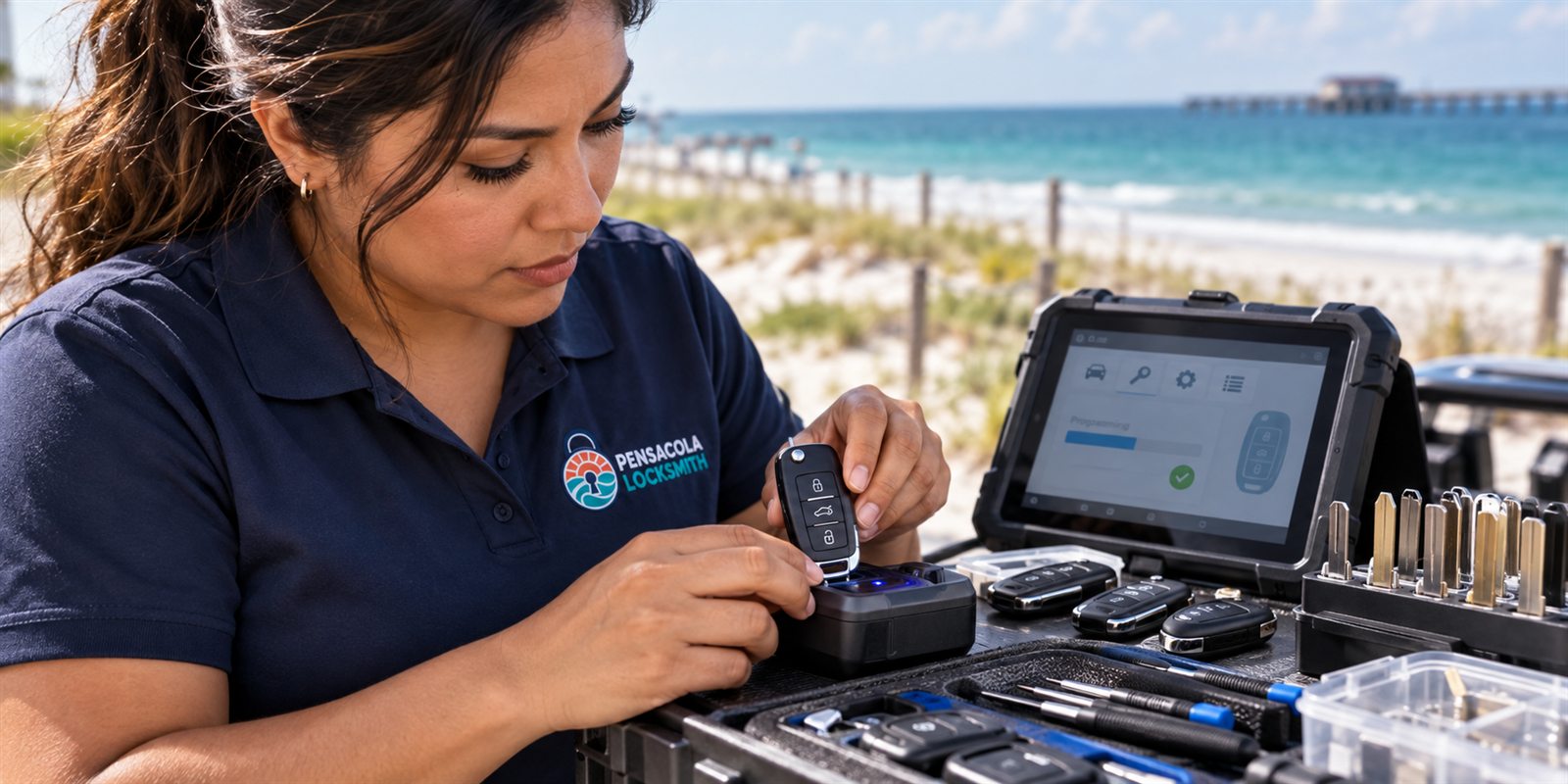
Car lockouts at night add risks, particularly in parking lots, near roads or in unfamiliar areas. If the car is in a poorly lit or isolated place, move yourself, not the car, to a safer spot and stay visible. If your phone is locked inside, find another way to call, such as asking someone nearby or going into an open business to use theirs.
Check whether any door is unlocked, including the trunk, which sometimes opens from a key fob or a separate release. Some cars have a keypad on the door, a smartphone app, or a roadside service available through your insurer or vehicle maker. Try those routes first if you have them set up. Avoid wedging tools into the door, which can damage seals, wiring or airbags.
A technician can usually open a vehicle without damage using the correct tools, and will confirm ownership first. Tell us the make, model and approximate year, and whether the keys are inside with the engine running. Do not try to break a window to reach a key unless there is a true emergency. Replacing a window costs far more than opening a door.
Weather, heat and cold while you wait
The Gulf Coast climate adds its own considerations. In hot, humid months, even a night wait can be uncomfortable, and standing in the open invites mosquitoes. In cooler months, particularly with damp wind off the water, you can get chilled quickly. During a storm or heavy rain, the risks rise, with lightning, flooding and falling branches.
If possible, wait somewhere with shelter, such as a covered porch, an open store or a neighbor's home. Carry water, wear layers, and do not shelter in a car with the engine running in a closed garage. If it is storming and you cannot enter your home, call the right services. Never take unnecessary risks to avoid a short wait.
Think about who is with you. Children, older relatives and pets feel the weather more than you do. Make them the priority. If the delay may be long, consider arranging a short stay with a friend or family nearby, and deal with the lock the next morning. Sometimes the best solution at midnight is a safe place to sleep, and a technician in daylight.
What happens when the technician arrives
The technician will first confirm your identity and your authority over the property or vehicle. Then they will examine the lock and the door before starting. A calm assessment often shows the least damaging way in. Many lockouts can be solved without damaging the lock at all, using proper tools and techniques for the specific door.
If the lock is damaged or worn, you may need a repair or a replacement. The technician explains the options and the associated costs before beginning, and you decide. A lockout is an opportunity to look at whether the lock should be rekeyed, especially if the keys were lost rather than locked inside. A lost key means an unknown person might have access.
Once the door is open, ask to test the lock with a key in your hand, so you know it works. Get any new keys cut and check that they turn smoothly. If you are unsure about the security of the door afterward, say so. The technician can often add a simple improvement, such as a longer strike plate screw, while on site.
Lockouts involving apartments, hotels and shared buildings
At night, a lockout in a shared building follows different rules. In an apartment complex, the management office or an after-hours maintenance number may handle lockouts and can verify who lives where. Check your lease or the notice posted in the leasing office for the right contact. Management often holds a key and can open your door once they confirm who you are.
In a hotel or short-term rental, the front desk or the host controls the access. Hotel doors use electronic card systems that a locksmith generally should not touch, so go to the front desk with identification. For a vacation rental, contact the host first. They can send a new code, a different key or approve a locksmith visit, which is often the fastest route.
If you have your own deadbolt on an apartment door and it is the one that has failed, the landlord may need to approve a locksmith. Be honest about the situation, and keep any broken parts. In shared buildings, never prop or force common doors, which can compromise everyone's security. Rely on the people who control the building to help you in.
Information to have ready before you call
A short, clear call gets help moving sooner and gives the technician what they need. Know your exact location, including the street address or a nearby landmark, since a parking lot near the water can be hard to describe. Say whether you are outside a home, a business, a rental or a vehicle, and mention anything about access, such as a gate or a locked parking area.
Describe the lock. Is it a standard key deadbolt, a keypad, a knob lock or a sliding door latch? Is the key inside, lost or broken? Did the lock stop working suddenly or was it getting stiff for weeks? Details like a bent key or a spinning thumb turn point toward different causes and different tools, and they help the technician arrive prepared for the likely problem.
Tell us who you are in relation to the property, and have your proof of authority ready to show. Mention anyone inside, any pets and any urgent needs, such as medication or a child. Write down the name of the person you spoke to and the quote you were given. Having these basics at hand keeps a stressful night as orderly as possible.
Preventing the next night lockout
Most night lockouts come from habits. Create a fixed place for your keys at home, such as a hook by the door, and a fixed pocket when you go out. Patting your pocket before the door closes behind you is a cheap and effective habit. A porch light on a timer or a sensor makes it easier to find your keys and to feel safer.
Plan a spare key properly. Give a copy to a trusted neighbor or relative who lives nearby and can be reached at night. Avoid hiding a key under a mat or in a planter, which is the first place a thief looks. Consider a keypad lock or a lockbox if you need to share access with several people, and change the code regularly.
For cars, learn your fob features, keep a spare key somewhere safe and not in the vehicle, and check your fob battery. If you use a keypad door lock, replace the batteries on a schedule. A few small steps lower the chance of standing outside after dark, and if it does happen, you will know exactly whom to call and what to do next.
Common questions
Is it safe to wait outside for help at night?
Only in a safe place. Choose a well lit area with people nearby, tell someone you trust where you are, and keep your phone charged. If the location feels unsafe, move to an open business or a neighbor you know. Safety always comes before the lock.
Should I try to climb in a window?
No. Falls and broken glass cause serious injuries, especially in the dark. A professional can open most doors without damage. If someone inside is in danger, call emergency services right away instead.
What will the locksmith need from me?
Proof that you own or have authority over the home or vehicle, such as photo ID with a matching address, a bill, a lease, or registration. Photos on your phone work well. Without proof, a responsible technician may decline to proceed.
How do I know the quote is honest?
Ask for the quote by phone before anyone is sent. We give quotes by phone, and if the job is complicated, a technician visits and the service call charge is explained before dispatch. Call to confirm availability, and ask questions if anything is unclear.
When should I call emergency services?
Call them if a child, ill person or pet is trapped, if you smell gas or smoke, or if you think someone has broken in. These are emergencies, not ordinary lockouts, and emergency responders come first. A locksmith can help afterward.