
Content note: this page was written by Claude (AI) for Pensacola Locksmith.
Safe exit comes first
Every door that children use must open from the inside without a key, a special tool or advanced knowledge. In a fire, seconds matter, and a child or a staff member should be able to push a handle or a bar and leave. Any hardware that slows that exit is a hazard, no matter how secure it makes the room feel.
This is why locks that require a key on both sides are a poor fit for occupied rooms. Such locks can trap people if the key is missing. Hardware that locks from the outside but always allows easy exit from the inside is the standard approach for classrooms, and it is widely used because it respects both security and safety.
Building and fire codes govern how doors must function in schools and childcare facilities, and the rules differ by building type and use. A locksmith is not a code inspector. Confirm your requirements with the fire marshal or licensing office, then bring that guidance to us so the hardware we install matches what you must follow. Call us to discuss your building.
Classroom function locks and lockdown readiness
Many schools use a classroom function lock, which lets a teacher secure the room from the inside with a key or a turn, while the handle from the outside stays locked until unlocked by a key. A person inside can always leave by turning the handle. This design supports a quick lockdown without sending a teacher into the hallway to lock the door.
Some newer systems offer a push button or a thumb-turn inside the room, which locks the door without a key. This helps when seconds count and when a teacher is stressed. Whatever you choose, make sure staff are trained and that the procedure is practiced. Hardware only helps if people know how to use it.
Remember that the door, frame and glass matter as well. A strong lock on a weak door offers little. Narrow windows beside a door can allow someone to reach through to the handle. A technician can walk the building with you, identify weak spots and explain what is practical, without suggesting changes that would compromise exit safety.
Controlling who enters during the day
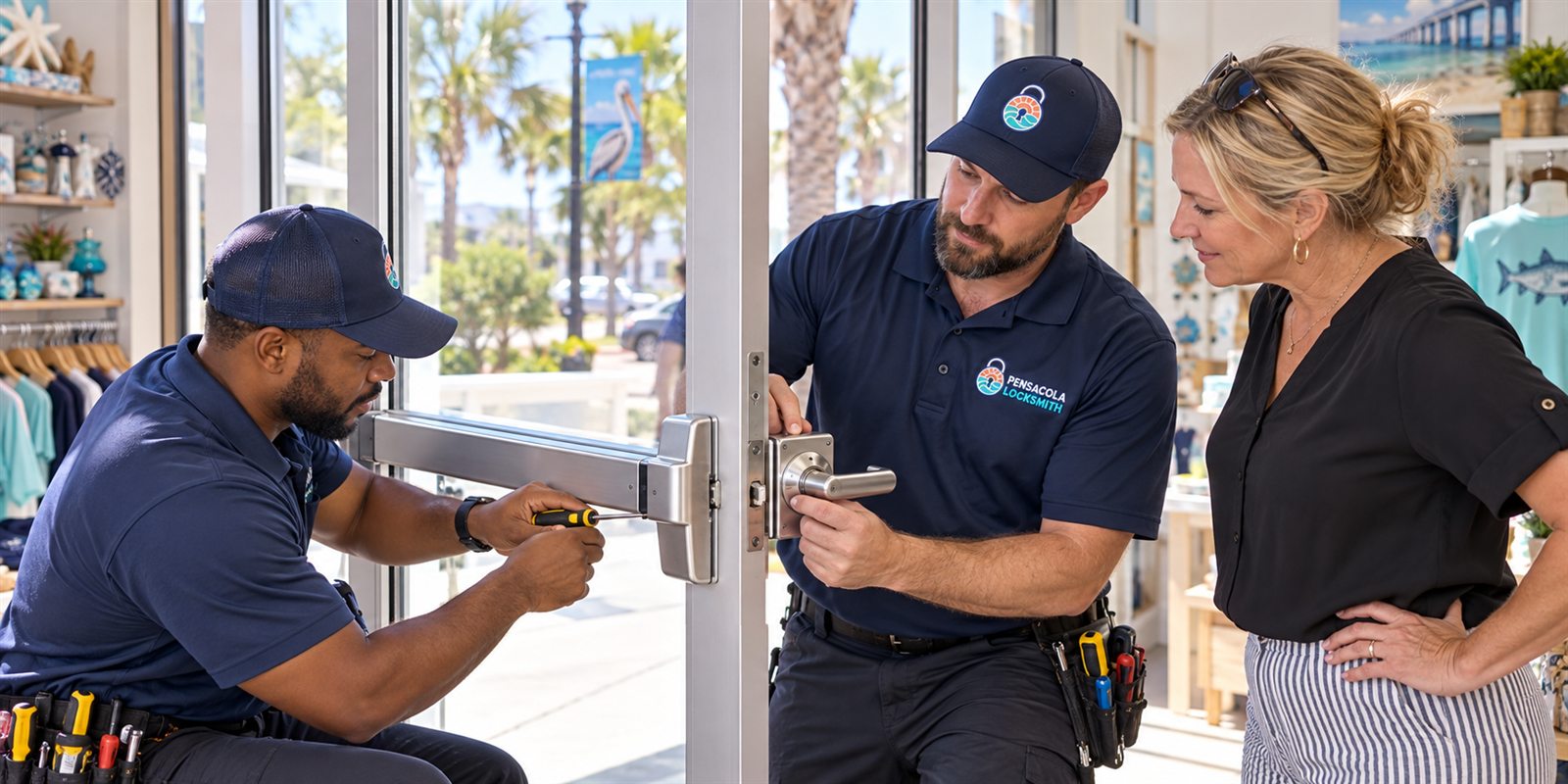
The front entrance is the most important door. Many schools and daycares use a single point of entry, where visitors must be let in by staff after identifying themselves. A buzzer, intercom or camera with an electronic strike allows the front office to release the door without leaving a desk. Other doors stay locked from the outside and open only from inside.
Back doors and playground gates need as much attention. A door propped open for convenience undoes the whole system. Door closers that return doors to a latched position, alarms that sound when a door is held open, and clear staff rules reduce the risk. Make it easy to do the right thing and harder to do the wrong one.
For daycares, drop-off and pickup times create busy traffic. Plan how parents will be recognized, how authorized adults are verified, and how the entry door will be managed during those times. Hardware supports the plan but cannot replace trained, attentive staff. Call us to describe your layout and we can discuss options that fit your routine.
Key control for staff, teachers and substitutes
A school can have dozens of staff members, substitutes, contractors and volunteers who need access to different places. Handing out the same key to everyone is easy but risky. A keying plan assigns different levels: a teacher may open their own classroom and shared spaces, a custodian opens most rooms, and administrators hold a higher level that opens nearly everything.
This is accomplished with a master key system, where each door has its own key and certain keys also open groups of doors. Done well, it keeps the number of keys manageable and limits damage if one is lost. Done poorly, one lost master key can force the rekeying of the entire building. Plan the structure before cutting a single key.
Keep a written key log with the number stamped on each key, the holder, the date issued and the date returned. Require signatures. Collect keys at the end of employment or a contract. When a key is lost, report it right away. A rekey of affected doors is a normal and sensible response, and it protects children and staff alike.
Daycare homes and small centers
Many childcare providers run out of a home or a small converted space. The same safety principles apply, even if the scale is smaller. Exterior doors should lock against outside entry but open easily from within. Gates around play areas should have latches placed above the reach of toddlers, but not so high that adults struggle with them.
Check interior doors too. Bathroom doors should have a way for an adult to open them from the outside in an emergency. Cabinet doors with cleaning products or medications need child-resistant latches or small locks. A technician can recommend lock types suited to those uses and install them securely so they do not come loose.
Licensing agencies set requirements for childcare settings, so ask your licensing contact about expectations before changing hardware. Bring the guidance to us and we will work within it. We check ownership or authority before any work. If you rent your space, have your landlord's approval ready so there is no confusion at the time of the visit.
Playgrounds, gates and perimeter locks
Playground fences and gates keep children inside and unwanted visitors out. The gate latch should close automatically, and it should be at a height that prevents small children from opening it but still allows adults to open it easily. Self-closing hinges help ensure the gate never stays open by mistake.
Padlocks on gates need to withstand humidity, rain and salt air. A lock that corrodes shut can trap staff outside or, worse, make it hard to get in during an emergency. Choose weather-resistant models and check them regularly. Lubricate the mechanism with a lock-specific product, not heavy grease that collects dirt.
Outdoor storage sheds hold balls, mowers, chemicals and tools. Keep them locked, and make sure children cannot reach the key. For shared use, consider keyed-alike padlocks so staff carry one key for several locks. Do a weekly walk around the perimeter to confirm that locks and latches are working and gates are closing completely.
Supply rooms, offices and records
Files with student information, medical forms and contact lists are sensitive. A lockable cabinet or office is a baseline expectation. Make sure the door has a sturdy deadbolt or lock, and keep the key with a limited number of people. If records are on a computer, the room that houses the server or equipment deserves the same care.
Medications held at a school or daycare require special storage. A lockable cabinet or refrigerator for medicines helps ensure that only authorized staff can reach them. Choose a lock that staff can operate quickly, since access may be needed in an emergency, and keep a spare key with a second responsible adult.
Supply closets, craft rooms and janitorial rooms contain items that can harm children if misused. Cleaning chemicals, tools and sharp objects should be behind a locked door at all times. A simple closer and a lock that engages automatically on closing prevents an unlocked door from being forgotten during a busy day.
Electronic access, fobs and cards
Card readers and key fobs make it easy to give staff entry and remove it later. A lost card can be deactivated in minutes, which is a big advantage over a metal key. Many systems also keep a log, showing which card opened which door and when. That record can help answer questions after an incident.
These systems are only as reliable as their power and their administration. A power outage may affect electric strikes or magnetic locks, so confirm how each door behaves when power fails. Doors on exit routes must remain exit-capable in every state. Plan for batteries, backup power and a mechanical override key stored securely.
Choose a system that someone on staff can manage. Adding and removing users, reviewing logs and updating schedules take time and attention. If no one in your organization has that time, plan for support from the installer. Ask what training is included, and keep a written record of the settings so a new administrator can take over.
Visitors, volunteers and pickup procedures
Hardware is only one layer of protection for children. The sign-in desk, the badge for visitors, the list of approved adults for pickup and the habit of checking identification all matter just as much. A locksmith can install a door that locks properly, but a front office that lets anyone in without a question defeats the purpose. Build the procedure first, then choose hardware that supports it.
Volunteers such as parent helpers, coaches and field trip chaperones need a way to enter, but they should not receive building keys. A sign-in sheet, a visitor badge and an escort or check at the front desk is usually enough. For regular volunteers, a keypad code or a card limited to certain doors and hours is a more careful choice than a metal key that could be copied.
Make sure every adult in the building knows the rules about holding doors for strangers. A friendly habit of holding a door open for a person carrying boxes can let in someone who does not belong. Gentle reminders, signs near the entrance and consistent follow-through by leadership help staff feel comfortable asking people to check in at the front.
Maintenance habits that keep doors working
Doors in a school or daycare get opened and closed thousands of times a week. Closers wear out, hinges loosen, latches stop catching and strike plates shift. A door that looks fine but does not latch fully is a security gap and a safety concern. Build a regular check into your maintenance routine, perhaps monthly, and have a staff member push on every exterior door to confirm that it latches.
Look for signs of trouble: a door that needs a shove to close, a handle that wobbles, a lock that needs jiggling or a key that sticks. Each is an early warning. Fixing them early is usually a small adjustment or a part replacement, while ignoring them leads to failed locks and emergency calls. Humidity swells wood doors and corrodes metal parts, so Gulf Coast buildings need extra attention.
Keep a simple log of problems and repairs. Note the door, the issue, the date reported and the date fixed. Over a year, the log shows which doors cause repeated trouble and may need replacement. Call us when you spot a pattern and describe what is happening. A quote is given by phone, and a technician can visit to inspect the door in person.
Special events, after-school programs and shared campuses
Evening concerts, weekend sports, community meetings and summer camps put a building to use outside normal hours. Each activity brings people who may not be familiar with the layout. Decide in advance which doors will be open, which will stay locked and who will supervise. Lock off wings and classrooms that are not part of the event, so visitors cannot wander into them.
If outside groups rent or borrow your space, treat their access the same way a church or community hall would. A keypad code for the event, collected keys afterward and a walk-through before and after reduce problems. Do not hand over a master key to anyone outside your core team, and keep a record of who had access and on what date.
On shared campuses, where a daycare, a preschool and a church or community group use one property, coordinate locks and keys carefully. Each tenant should control its own areas, and shared spaces need a clear policy. A technician can set up separate key groups for each user so that one group cannot open another's rooms.
After a storm, a break-in or a staff change
Hurricane season can disrupt schools and childcare centers. After a storm, check every door and lock before reopening. Wind, water and debris can bend frames, jam latches and corrode cylinders. A door that no longer latches puts children at risk, so repair it before children return.
After a break-in or attempted entry, do not wait. Have a technician inspect doors, frames and locks, and repair or replace anything damaged. Consider rekeying if keys could have been compromised. Document the damage for insurance and for any investigation, and keep receipts from the repairs.
When a staff member leaves, especially in difficult circumstances, collect their keys and cards immediately. If there is any doubt about copies, rekey the affected doors. Do this quietly and without blame. It is a standard step that protects the organization, and a well-run school or daycare treats it as routine.
Working with a locksmith on a school or childcare project
Call us with a description of the building, the number of doors and the problems you want to solve. A quote is given by phone for simple jobs. For larger projects, a technician visits, walks the building with your team, and explains the options. The service call charge is explained before dispatch, so there are no surprises.
Expect questions about ownership or authority. Schools may need a letter from the governing body, and daycares in rented space should have the landlord's approval. This check is a normal part of every job and protects the building and the children in it.
Schedule work around the school calendar. Many projects are best done during breaks or after hours so children are not disrupted. Call to confirm availability, because timing depends on the job. Keep a record of the work completed, the keys issued and the settings of any electronic system, so your team has a clear reference later.
Common questions
Can classroom doors lock from the inside and still allow exit?
Yes. Classroom function locks let staff secure the room from the inside while the inside handle always allows exit. Confirm your local requirements with the fire marshal or licensing office, then bring that guidance to a technician who can install matching hardware.
How should a daycare manage keys for staff?
Use a written log with a number on each key, the holder, the date issued and the date returned. Keep copies to a minimum and collect keys when someone leaves. If copies may be missing, rekey the affected doors.
Do electronic card systems work during a power outage?
It depends on the type of lock and how it is installed. Doors on exit routes must always allow exit. Ask the installer how each door behaves when power fails and keep a mechanical backup key stored securely.
Who can authorize lock work at a school or rented childcare space?
Someone with clear authority, such as an administrator with a letter from the governing body, or a tenant with the landlord's approval. A locksmith checks ownership or authority before rekeying or changing locks.
How do I get a quote for a larger project?
Call us with the number of doors and the problems you want to address. A quote is given by phone for simple work. If the project is complicated, a technician visits and the service call charge is explained before dispatch.