
Content note: this page was written by Claude (AI) for Pensacola Locksmith.
What salt air does to door hardware
Anyone who lives near the water learns that metal does not last the way it does inland. On Santa Rosa Island, the air carries fine salt even on a calm day, and it settles on every handle, hinge and keyway. Moisture then pulls that salt into the small gaps inside the lock, where it begins to corrode springs, pins and the cylinder walls.
The first signs are subtle. A key that used to slide in now catches. A deadbolt takes two tries. A knob turns, but the latch lags behind. By the time a lock refuses to turn at all, the corrosion has usually spread into parts that cannot be cleaned. A locksmith can often tell by feel and by looking at the keyway how far along the problem is.
Cleaning helps when caught early. A dry lock lubricant, such as a graphite or PTFE product, works better than oil, which collects sand and gums up. Wiping the exterior hardware with a damp cloth removes salt before it bonds. We suggest doing this a few times a year if you live or rent on the island.
When parts are too far gone, replacement is the honest answer. We discuss hardware made for harsh conditions, such as solid brass, stainless steel and finishes designed for marine exposure. These cost more at the start and last longer in the salt. We explain the trade-offs by phone so you can decide what suits the property.
Rental turnover and the key problem
Vacation rentals are a major part of life on the beach. Guests arrive, stay for a few days, and leave. Over a season, many people may have held a key or a code, and some will forget to return one. Owners and managers often ask the same question: how do I know who can still get in?
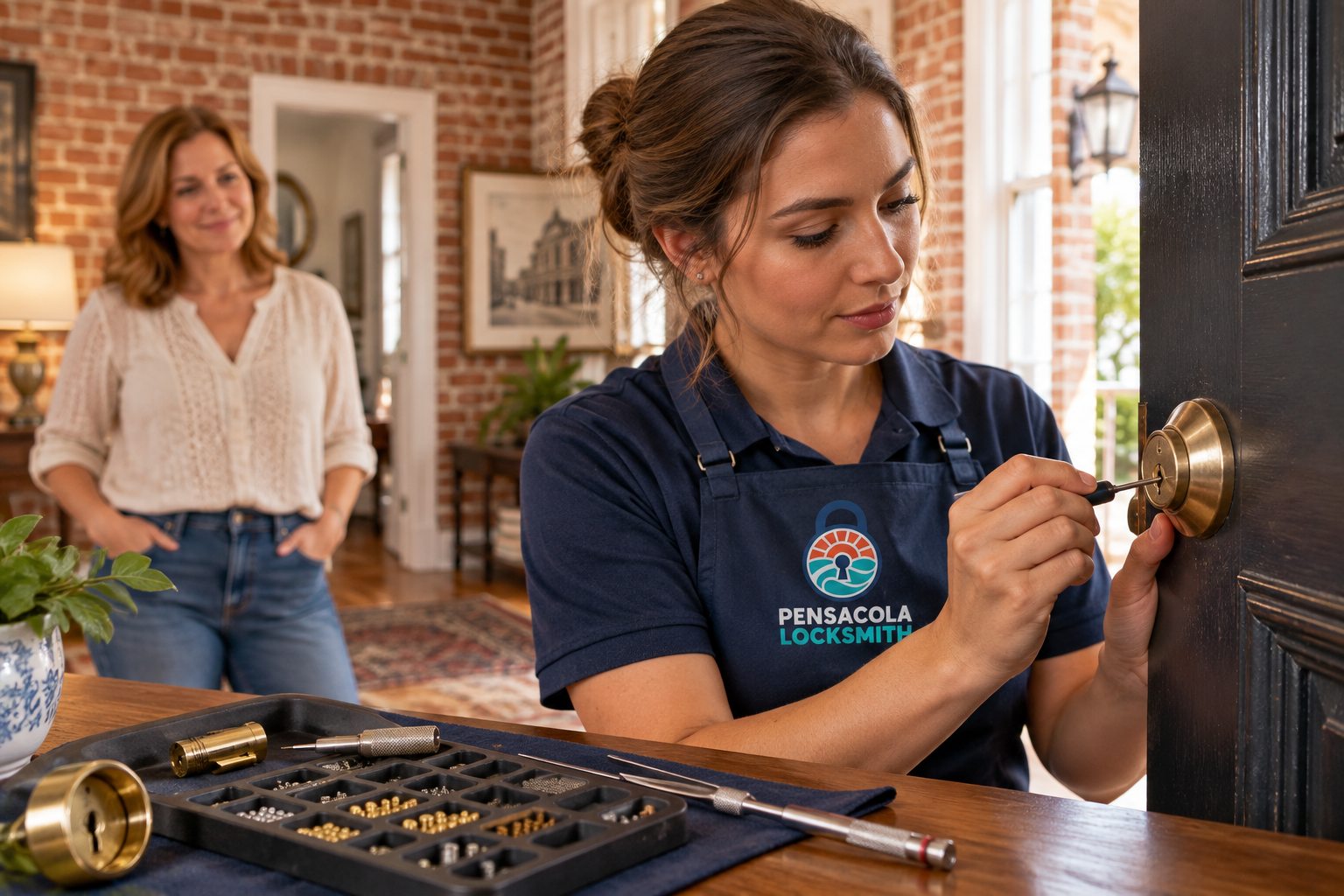
A rekey answers it. The locksmith changes the internal pattern of each cylinder so old keys no longer open the door. The hardware stays in place, the new keys work, and anything lost or kept by a past guest becomes useless. Many owners rekey between seasons, after a long-term tenant leaves or whenever a key goes missing.
If your property uses keypad locks, codes can be changed without a locksmith, but the same discipline applies. Change codes between stays, remove old ones and keep a record of who has access. We can help install a keypad or smart lock, set up user codes and explain the battery habits that prevent a dead lock during check-in.
Managers handling several units should think about a key system. A matched set of locks, where each unit has its own key and a master key opens all, saves time and reduces the number of keys to carry. We plan these layouts by asking how many units you have, who needs access and how they are used.
- Rekey between seasons or when a key goes missing
- Change keypad codes between stays
- Keep a simple list of who holds each key
- Replace worn locks before the busy season
Lockboxes and how to use them sensibly
Lockboxes are common on the island. A small box holds a key and opens with a code, allowing guests, cleaners and maintenance workers to enter without meeting an owner. They are handy, but they are only as secure as the habits around them. A code that never changes, or a box left unfastened, defeats the point.
Where you mount the box matters. It should be fixed to something solid, such as a railing post or a masonry surface, and not left hanging from a handle where it can be pulled off. Salt and sand also affect lockboxes. The dials stiffen, the shackle corrodes and the door of the box sticks. A rinse with fresh water and a dry lubricant keeps it working.
Think about the key inside. If it is the only copy, a stuck lockbox becomes a lockout. Keep a spare somewhere separate, and make sure the person managing the property knows where it is. A locksmith can open or replace a stuck lockbox, and if the owner is not present, we will want to confirm authority before working on it.
Consider whether a lockbox is the right tool at all. For frequent turnover, a keypad deadbolt may be easier and safer, since there is no key to lose and codes can be changed quickly. For occasional use by a trusted helper, a lockbox is fine. We can talk through which fits your pattern.
Lockouts on the island
Lockouts at the beach have their own flavor. People walk to the shore with a towel, leave a key in a bag, and return to find a locked door. Or a guest steps onto a balcony, the slider swings shut and the latch drops. These are easy mistakes, and a locksmith has seen all of them.
Sliding glass doors are common in coastal condos and homes. Many have a simple latch that can be lifted from the outside if the door is not secured with a bar or pin. We try gentle, non-damaging methods first. If the door has a secondary lock, we explain what that involves before we begin and avoid forcing the track or breaking the glass.
Before opening any door, we check that you are the owner, a guest with authority or a manager. A guest may be asked to contact the owner or the rental manager and have them confirm the situation. This can slow things down, but it protects the property and everyone who relies on it.
After a lockout, think about prevention. A hide-a-key under a flowerpot is a poor idea, but a lockbox mounted properly or a keypad lock can give you a way back in. Some people keep a spare key with a trusted neighbor. Make the choice that fits how you use the property.
Doors, sliders and frames in a windy place
Wind and salt affect more than locks. Hinges loosen, weatherstripping hardens, and frames shift. A door that no longer closes cleanly may not engage the latch fully, and a deadbolt that is slightly misaligned will drag in the strike. Beachfront properties see these problems earlier because the air is constantly in motion and constantly damp.
A strike plate adjustment is one of the quickest fixes. If the bolt hits the edge of the hole, enlarging the opening or moving the plate a few millimeters can restore smooth action. Replacing short screws with longer ones that reach the framing also strengthens the door against a push. These are small steps that make a real difference.
Sliding doors need their own attention. The track collects sand, the rollers wear and the latch loosens. A sliding door that can be lifted off its track or jiggled open is easy prey. A secondary bar or pin lock adds a second line of protection, and we can fit one that suits your door.
Entry doors on stilted homes and upper-floor condos are exposed to the full wind. Look for gaps along the edges and for any rattling when the door is closed. A technician can adjust hinges, replace worn weatherstrips and align the latch. Where wood has swollen or rotted around the lock, repair of the door itself may be needed before a lock will hold.
Storm season and getting ready
Hurricane season is a fact of life on the Gulf Coast. Beach properties often prepare by securing windows and doors, and sometimes by leaving for a few days. Before a storm, make sure every exterior lock turns smoothly and every door seats properly. A sticky deadbolt can be a real problem when you are packing the car in a hurry.
After a storm, the situation changes. Sand and debris blow into tracks and keyways, doors may shift in their frames, and moisture soaks into hardware. Once it is safe to return, check that doors latch, locks turn and sliders close. If something binds, do not force it. A cleaned and lubricated lock often recovers, but a forced one can break.
If a storm has damaged a door or frame, you may need to secure the property until repairs can be made. Temporary measures, such as a hasp or additional deadbolt, can be installed while the main repair waits. We can talk through options, though we do not replace structural work like framing or windows.
Keep a spare key somewhere off the island if you evacuate. A key left only in a lockbox on a flooded porch is not helpful. Also keep documents showing ownership or authority in a place you can reach, whether in a folder or on your phone. We will need them to work on a property after an emergency.
Car keys at the beach
Cars and beaches are a hard combination. Keys go into pockets and bags that get wet, sand collects in fobs, and the whole assembly rides in a hot car. Fobs corrode, buttons stop responding, and cases crack. If your fob has stopped working after a beach day, drying it and replacing the battery is a sensible first step.
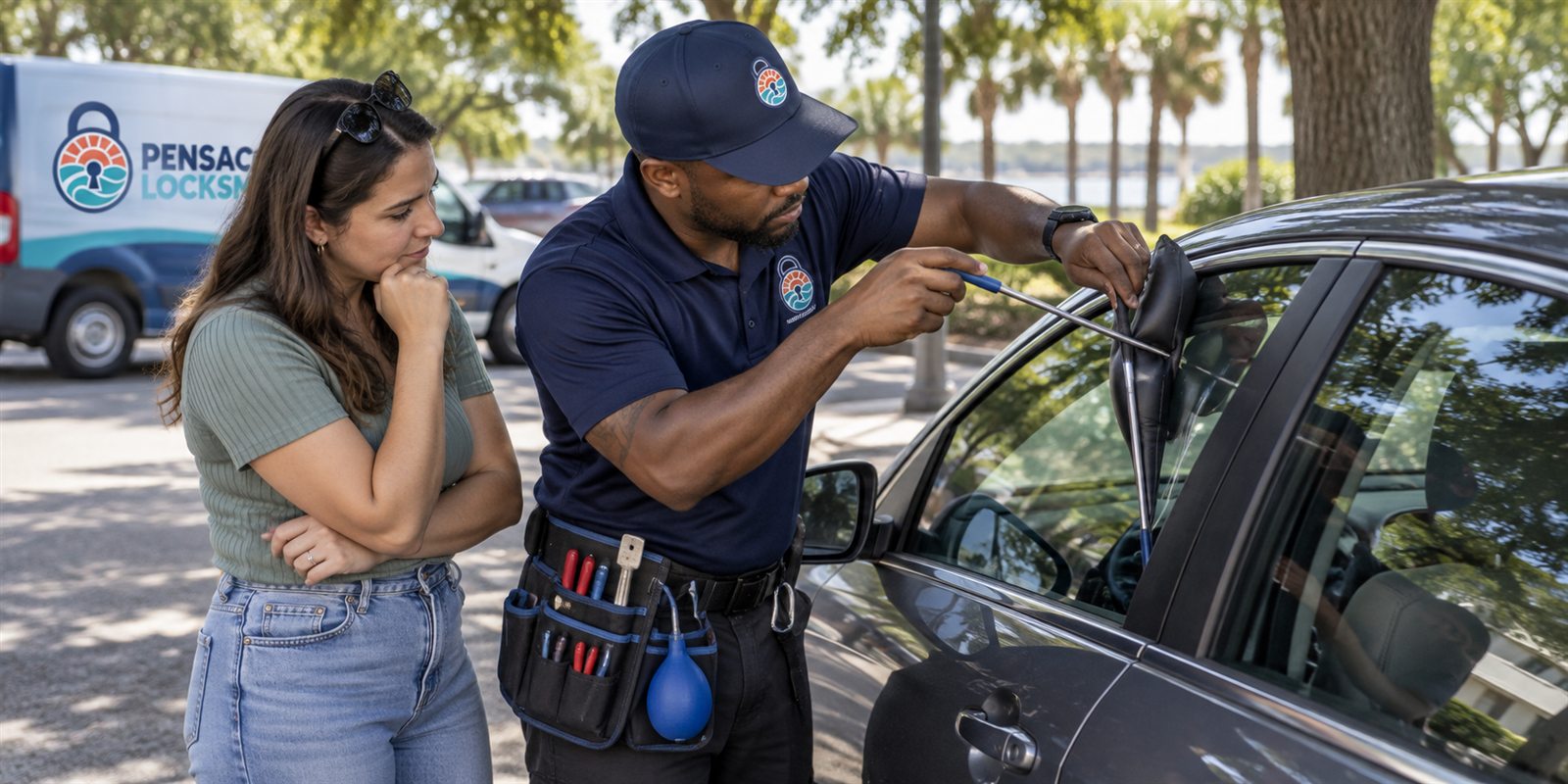
Lost keys happen too. A key slips out of a pocket in the surf, or gets left on a towel and swept away. Without a working key, a modern car needs a new one made and programmed. We come to the vehicle, check ownership, and work on site, which saves a tow off the island.
Parking can be tight at popular beach access points. When we work on a car, we need enough space to open doors and stand safely, away from traffic. If the vehicle is in a crowded lot, tell us when you call, and we will plan around it. If it can be moved to a quieter spot safely, that helps.
Hide-a-key magnets under bumpers are common at the beach, because people do not want to carry keys into the water. They also fall off in sand and rain, and thieves know the trick. A better habit is to leave the key in a sealed pouch or a waterproof case on your person, or in a secured place.
Condo buildings, common doors and association rules
Many buildings on the island are condominiums, and condo living adds layers of rules that a house does not have. The unit door is usually yours to maintain, but the lock may need to match a standard set by the association, and the building entry, garage gate and mail room are controlled by someone else. Before any change to a unit door, read your governing documents or ask the manager.
Some associations require a copy of every unit key to be kept on file for emergencies such as a water leak or a fire inspection. Others prohibit certain hardware finishes or require a specific brand of deadbolt so that the building looks uniform from the walkway. A locksmith cannot override those rules, and a good one will ask about them before ordering parts.
Fire doors and balcony doors need special thought. A unit door in a multi-story building may be part of a fire-rated assembly, and drilling extra holes or swapping in the wrong hardware can affect that rating. We keep changes within what the door was designed for. If a question touches on building code, we will tell you to confirm with the association or the local authority.
When we work in a condo, the technician will want to confirm that you own or lease the unit. A deed record, a lease or a letter from the owner works, along with photo identification. If you are a manager, a management agreement or a note from the owner is helpful. Having these on your phone before we arrive saves time in a hallway.
Beach days, parking and the practical side of keys
A day at the beach is hard on keys in ways people rarely think about. Sand scratches fobs and gets into key rings, sunscreen makes plastic slick and brittle, and heat in a parked car can warp cases and drain batteries. Rinse the key ring, wipe the fob and keep it out of direct sun on the dash. These small habits extend the life of a fob.
Many people leave valuables and keys in the car while swimming, which is a poor idea for any vehicle. A key left inside an unlocked car invites trouble. A waterproof pouch worn on a lanyard or kept in a bag you carry is safer, and it lets you lock the car and keep going. If you have a proximity fob, remember that it still unlocks when carried close.
Beach parking lots are busy, and many lots have their own rules about towing and blocking. If you are locked out of a vehicle in one, tell us the exact spot, because we need to approach the car from a safe angle and park nearby without blocking others. If you can move the car to a quieter area without damage, it makes the job easier.
If you rent a car while visiting, call the rental provider first, since they may have their own process for lost keys. We can help when the provider directs you to a local locksmith, or when you have your own vehicle. Either way, we check authority before touching the car, and a rental agreement is a valid document.
How we work with owners, managers and guests
Because so many properties here are managed on behalf of absent owners, we meet many different kinds of customers. An owner who lives out of state, a manager acting for several owners, and a guest locked out of a rental all need different handling. The common thread is that we confirm authority before touching a lock.
For managers, we suggest keeping paperwork handy that shows the relationship with each owner, whether that is a management agreement or a written note. Owners who are not on site can often confirm by phone with the manager or with us. We will tell you what we need when you call, and we will not work on a door when authority is unclear.
Guests who are locked out should contact the host or manager first. They can often supply a code, a spare or authorization. If they cannot, a locksmith can step in once the host confirms. It can feel like a roundabout path, but it prevents a stranger from entering a property that is not theirs.
Quotes are given by phone. If a job is complicated, such as a damaged lock cylinder or a door that must be repaired, a technician visits and the service call charge is explained before dispatch. We do not promise arrival times, particularly during busy summer weekends and storm periods, so please call to confirm availability.
Common questions
Do you come out to Pensacola Beach?
Yes, we serve Pensacola Beach and the rest of Santa Rosa Island as part of our Pensacola area coverage. Call us with the location and type of job and confirm availability. We do not promise arrival times, particularly during busy beach weekends, so it helps to call early.
Can you rekey a vacation rental between guests?
Yes. Rekeying changes the internal pattern of the lock so old keys no longer work, while the hardware stays in place. We confirm that you own the property or manage it before starting. Many owners schedule a rekey between seasons or after a lost key.
Why do my locks stick so often near the water?
Salt air and humidity corrode the small metal parts inside a lock and leave residue that makes keys catch. A dry lock lubricant and regular wiping of exterior hardware help. If parts are badly corroded, replacement with corrosion-resistant hardware is usually the better answer.
What if I am a guest and locked out?
Contact your host or the rental manager first, since they can often provide a code or spare key. If that does not work, we can help once the owner or manager confirms authority. We check this before opening any door.
How do I get a quote?
Quotes are given by phone. Describe the door, the lock and the problem, and we will explain what the work involves. If the job is complicated, a technician visits first and the service call charge is explained before dispatch.