
Content note: this page was written by Claude (AI) for Pensacola Locksmith.
Why locks need special attention in rentals
In an owner-occupied house, the same few people hold the keys for years. In a rental, the list of people who have ever held a key grows with every tenant, every contractor, every cleaner and every showing. Nobody can say for certain how many copies exist. The lock may be perfectly good, but the key situation is out of your control the moment a tenant leaves.
That uncertainty has real consequences. A former tenant with a key can walk back in, whether through bad intent or simple confusion. A contractor's copy can circulate. Even without any bad actor, a tenant who feels that a previous occupant could still enter may not feel safe, and that affects their experience and your reputation as a landlord.
Locks in rentals also see more wear. Doors are opened by people who do not own the hardware and may be less careful. Salt air and humidity along the Gulf Coast add corrosion on top of ordinary use. Planning for these realities with a regular schedule of inspection and rekeying keeps small problems from turning into emergency calls.
Rekeying at tenant turnover
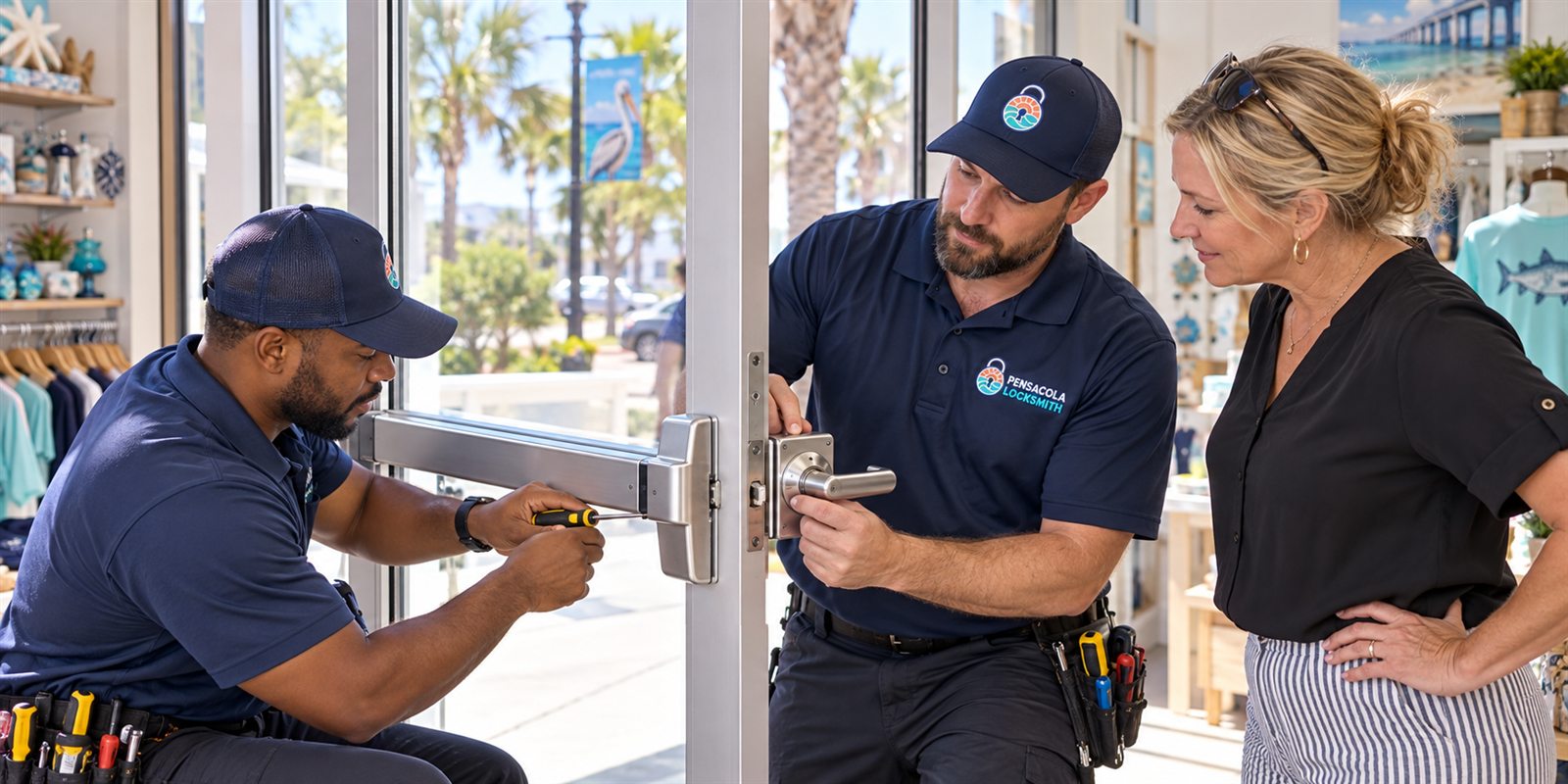
The standard good practice is to change the keys every time a tenant leaves. Rekeying does this without replacing the hardware. The technician removes each cylinder, changes the internal pins so they match a new key and tests the lock. The old key stops working, and the new key operates the lock. The door hardware, finish and handles stay exactly as they were.
Rekeying is generally quicker than replacing a lock, and it keeps your hardware consistent across units. If you own several properties, you can use the same type of lock throughout so the technician knows what to expect. It also means fewer parts to dispose of and less variation to manage.
Timing matters. Schedule the rekey after the old tenant has returned all keys and moved out, and before the next tenant arrives. Leaving a gap risks a surprise visitor. Before any rekeying, the locksmith confirms that you own the property or are authorized to manage it, so bring a lease, management agreement or similar proof. Quotes for standard rekeys are given by phone.
Keeping a key record that actually works
A key log is a simple record of every key that exists for every door. For each unit, note how many keys were cut, who received them and the date. When a tenant moves out, record which keys came back. A spreadsheet or a notebook is enough. The point is consistency, not sophistication.
Number or label keys discreetly, using a code that does not reveal the address. A tag with the unit number written in plain view helps a finder walk straight to the door. A neutral code that only you can decode is safer. Keep the master list in a secure place, separate from the keys themselves.
Review the log at regular intervals. Check it against the current tenants, the staff who work on the property and any contractors with access. If you cannot account for a key, treat it as lost and plan a rekey. The few minutes spent on record keeping can save much larger costs later and give you facts to rely on if a dispute arises.
Master keys and restricted keyways for multiple units
When you manage many doors, carrying a separate key for each becomes impractical. A master key system lets one key open a group of locks while each tenant's key opens only their own. For a building of units, a sub-master might open the common areas and mechanical rooms, and a grand master might open everything.
The convenience comes with responsibility. A master key that goes missing may require rekeying every lock it opens. Limit how many people hold master keys, store spares securely and record who has which. Poorly planned systems can cause one tenant's key to open a neighbor's door, so the design should be done carefully with a written keying chart.
A restricted keyway adds another layer by controlling who can make copies. If tenants frequently duplicate keys, a restricted system makes unauthorized copies harder, and new keys come through an authorization process. It costs more and takes planning. Many landlords start with simple rekeying at turnover and add these features as they grow.
Tenant lockouts: who pays and who calls
Lockouts are a fact of rental life. A tenant comes home and cannot find the key, or locks it inside. The first question is what the lease says about it. Some leases make the tenant responsible for lockout costs, others have the landlord handle access. Clear language in the lease prevents arguments later.
If you agree to handle lockouts, decide in advance how. Will you keep a master key and let the tenant in yourself? Will you call a locksmith and bill the tenant? Be consistent. If the policy is different for each tenant, resentment builds. Writing it in the lease and repeating it at move-in avoids confusion.
When a locksmith is called to open a door at a rental, the technician must confirm that the person asking lives there or has authority to enter. A tenant can show identification and a lease. A landlord can show ownership or a management agreement. The locksmith is protecting everyone, including the person who actually lives behind the door. Call us to describe the situation and confirm availability.
Showings, repairs and contractor access
Vacant units and units under repair involve many visitors. Contractors, inspectors, cleaners and prospective tenants all need entry. Handing out the same key to all of them creates exactly the key sprawl you want to avoid. Better options exist, such as a lockbox with a code that you change after each use or a temporary key that you collect.
A keypad deadbolt can work well here. Each visitor receives a code valid for a certain time, and you remove it afterward. This avoids cutting extra keys and gives you a more reliable record of who was there. It requires attention to batteries and a mechanical backup, but it saves a great deal of key handling.
Whichever method you choose, make sure the unit is secured again when the work is done. Check that the door latches, the deadbolt engages and the windows are closed. Some owners rekey after major renovations, when many people have had access. The cost is small compared with the uncertainty of leaving old keys in circulation.
Short-term and vacation rentals along the coast
Pensacola's beaches and tourism bring many owners into the vacation rental business. Guest turnover is rapid, sometimes weekly, and each stay raises the chance of a lost or unreturned key. Rekeying between every guest is rarely practical, so many owners look for alternatives.
Keypad and smart locks suit short stays well. A unique code per guest can be set to expire at checkout, with no physical key to lose. The owner or manager keeps a mechanical override key for emergencies. Weather rated hardware is a sensible choice near salt air, and batteries should be checked on a schedule.
Hurricane season adds one more point. Owners should plan how to secure the property if a storm approaches, and how to reach it afterward. Doors and frames can be damaged by wind and water, and lock mechanisms can corrode quickly in wet conditions. A post-storm inspection helps catch problems early. A technician visit allows the doors and hardware to be checked together.
Evictions, abandoned units and legal limits
Some of the trickiest lock situations involve tenants who refuse to leave or units that appear abandoned. In these cases, a landlord's rights and the proper procedure are governed by law, not by what is practical. Changing locks without following the required process can create serious legal trouble. Get legal advice for your particular situation before acting.
A locksmith cannot decide who has the legal right to enter. The technician checks that the requester has authority, but the landlord remains responsible for following the law. If a court order or official process gives you possession, keep the documents with you when you call so the locksmith can see that authority.
For routine matters, such as a tenant who has left and returned the keys, no special process is involved. Rekey the lock, update the log and prepare for the next tenant. The difference between routine turnover and a contested situation is important, and it is wise to know which one you are in before you start.
Inspecting locks between tenants
Turnover is the best moment to look closely at each lock, because the unit is empty and nobody is waiting for the door. Test every exterior lock with the door open first, then closed. Turn the key several times in each direction. A key that feels gritty, hesitates or needs wiggling is telling you that the cylinder is wearing or has collected residue, and it is better to deal with it now than during a tenant's first week.
Check the latch and bolt next. The latch should spring out fully and retract smoothly when the knob or lever turns. The deadbolt should throw all the way into the frame with no dragging. If the bolt scrapes the strike or stops short, the door may have shifted. Swollen doors are a regular problem in humid months, and a small adjustment to the hinges or strike plate often fixes it.
Look at the frame around the strike plate for cracks, and test the screws. Short screws hold only the thin trim of the jamb, so replace them with long screws that reach the framing behind. Examine the hinges, the door edge and any glass near the lock. Note the condition of each door so you have a record if a tenant later reports a problem.
Finally, check secondary locks such as sliding door latches, pin locks, window locks and garage entry doors. These are easy to overlook. A broken sliding door lock is one of the most common weak points in a rental, and replacing it is often simple and worthwhile.
Handling lost keys and unreturned keys
Sooner or later a tenant will lose a key, or move out and fail to return one. The correct response is almost always to rekey. Keys do not expire, and a lost key is a key that someone else might find. If the key was labeled with an address, the risk is higher. Rekeying the affected lock closes the gap quickly and cleanly.
Decide ahead of time who pays. Many leases allow the landlord to charge the tenant for rekeying when keys are lost or not returned, and a clear clause helps. If your lease is silent, you may need to absorb the cost. Either way, send a short written notice that explains what happened and what you are doing.
Treat the event as information. If keys frequently go missing in a particular building, consider whether the hardware is awkward, whether tenants have enough keys or whether a keypad lock would suit that property better. A pattern tells you something about the system, not just the tenant.
For urgent cases, such as a tenant who reports a key stolen or a suspicious person with access, rekey promptly. The locksmith confirms your authority before working, and quotes for a standard rekey are given by phone. If the situation is more complicated, a technician visit comes first.
Accessibility, safety and code points to keep in mind
Locks in a rental are not just about security. Tenants need to get out quickly in an emergency, and local fire and building rules shape what hardware is allowed on certain doors. In multi-unit buildings, exit doors from common areas often have special requirements. A locksmith can advise on what is typical, but the owner remains responsible for compliance, so check with the proper local office when in doubt.
Accessibility matters too. Lever handles are easier than round knobs for people with limited hand strength, and many landlords choose levers for that reason. Thumbturns that are easy to operate help older tenants. These small choices improve daily life and may reduce complaints.
Finally, think about safety around double-cylinder deadbolts, which need a key on both sides. They can trap people inside during a fire and are restricted or discouraged in many settings. For most residential doors, a thumbturn on the inside is the better option. Ask the technician what suits each door in your property.
Building a simple routine you can repeat
A good routine makes lock work easy. At each move-out, collect keys, check them against the log, inspect the locks and note any problems. Then schedule a rekey for the turnover window. At move-in, hand over the new keys, record them and show the tenant how to contact you in a lockout.
Once or twice a year, walk through your properties and check each exterior door. Look for loose handles, sticking deadbolts, worn strike plates and doors that no longer close squarely. Replace short strike plate screws with longer ones, and clean and lubricate cylinders with a dry product made for locks. Small maintenance prevents emergency calls.
If you manage more than a few doors, talk with a technician about standardizing hardware and keying. A consistent system saves time at every turnover. Call us to discuss your properties, get a phone quote for routine work and arrange a visit for anything more involved. The service call charge is explained before dispatch, and availability is confirmed when you call.
Common questions
Should I rekey or replace locks between tenants?
Rekeying is usually enough. It changes which key works while keeping the existing hardware, and it is quicker than replacement. Replace the lock only if it is worn, damaged or you want to upgrade. The locksmith confirms your ownership or authority first.
How many keys should I give a tenant?
It depends on the household, but record the number you issue and keep it small. Fewer keys are easier to account for. Ask for all keys back at move-out and check them against your log. If any are missing, plan a rekey.
Can a locksmith open a tenant's door for me?
Only with proper authority. The locksmith checks ownership or management documents, and may consider the lease and local rules. Entry to an occupied unit has legal limits, so check your obligations before calling.
Are keypad locks a good idea for vacation rentals?
Often yes, because codes can be changed per guest without cutting keys. Keep a mechanical override, use weather rated hardware near the coast and check batteries regularly. A technician can help choose and install suitable locks.
How do I get a price for rekeying several units?
Describe the number of doors and lock types by phone and a quote can be given for straightforward work. Larger or unclear jobs begin with a technician visit, and the service call charge is explained before dispatch. Call us to confirm availability.