
Content note: this page was written by Claude (AI) for Pensacola Locksmith.
The first few minutes: staying calm and checking the easy options
Before calling anyone, take a slow walk around the house. Many lockouts end with a door or window that was left unlatched, a garage side door that is not locked, or a key hidden with a neighbor. Check whether someone else in the household is home or can bring a key. A few minutes of looking can save a visit.
Resist the urge to break a window or force the frame. A broken pane costs more to replace than a lockout visit, and it leaves the house open and unsafe until it is fixed. Forcing a door can split the jamb or bend the strike plate, which turns a quick opening into a carpentry repair.
Also think about safety. If it is dark, stay in a well-lit spot near the front, and tell someone where you are. If it is hot, find shade and keep water with you. If you suspect someone is inside who should not be, step away and call emergency services first. A locksmith is for locked doors, not for dangerous situations.
Proving that you live there
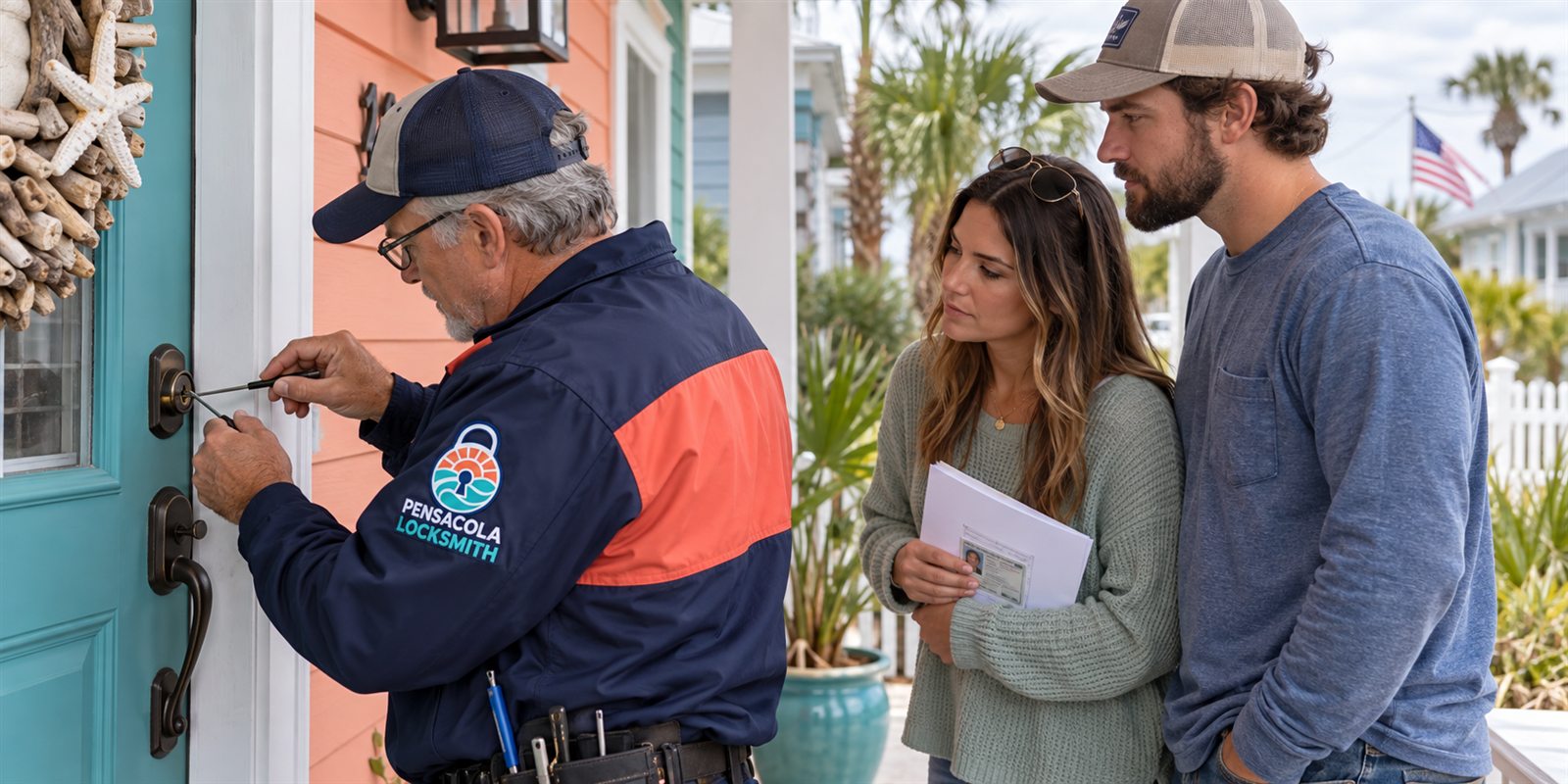
A locksmith should never open a home door for someone who has not shown a right to be there. The usual proof is a photo ID with the address of the house, or an ID plus something that ties you to the property, such as a utility bill, a lease, a piece of mail visible in a mailbox, or a mortgage statement on your phone.
Renters and guests face a slightly different situation. A renter can often show a lease and an ID. A person staying with a friend or family member may need the owner on the phone to authorize entry. For short-term rentals, the host or manager typically needs to give permission, and the technician may speak with them directly.
If you have no paper ID on you, tell us right away. There are other ways to show a connection, such as a neighbor who can vouch, a photo ID that matches a name on the mailbox, or a call from the owner. The technician decides what is enough. This step is not an insult, it is what protects you from the same request being made by a stranger.
What to tell us on the phone
Describe the door and lock. Is it a front door with a deadbolt, a knob lock, a smart lock or a keypad? Is there a second lock on the same door? Is the door metal, wood or fiberglass, and does it open inward or outward? These details let the technician choose tools and expect what they will find.
Tell us whether the door is only latched or fully locked. A door that is merely closed with a spring latch can often be opened with a thin, flexible tool. A deadbolt that is thrown is a different task. Also mention any security features, such as a chain, a security bar, an alarm system or a camera, since each changes the approach.
Quotes are given by phone once we understand the situation. For simple lockouts, the quote is plain. If the door is unusual or the problem looks bigger, a technician visits and the service call charge is explained before dispatch. Please call us to confirm availability, and give us the address and a clear way to find the home.
How a door is opened without damage
For a spring latch, the technician may slide a thin shim or a latch tool between the door and the frame to push the latch back. This works on many knob locks and some lever sets that lack a protective guard. It takes a light hand, and it leaves no marks if done correctly. Doors with a tight fit or a guard plate need other methods.
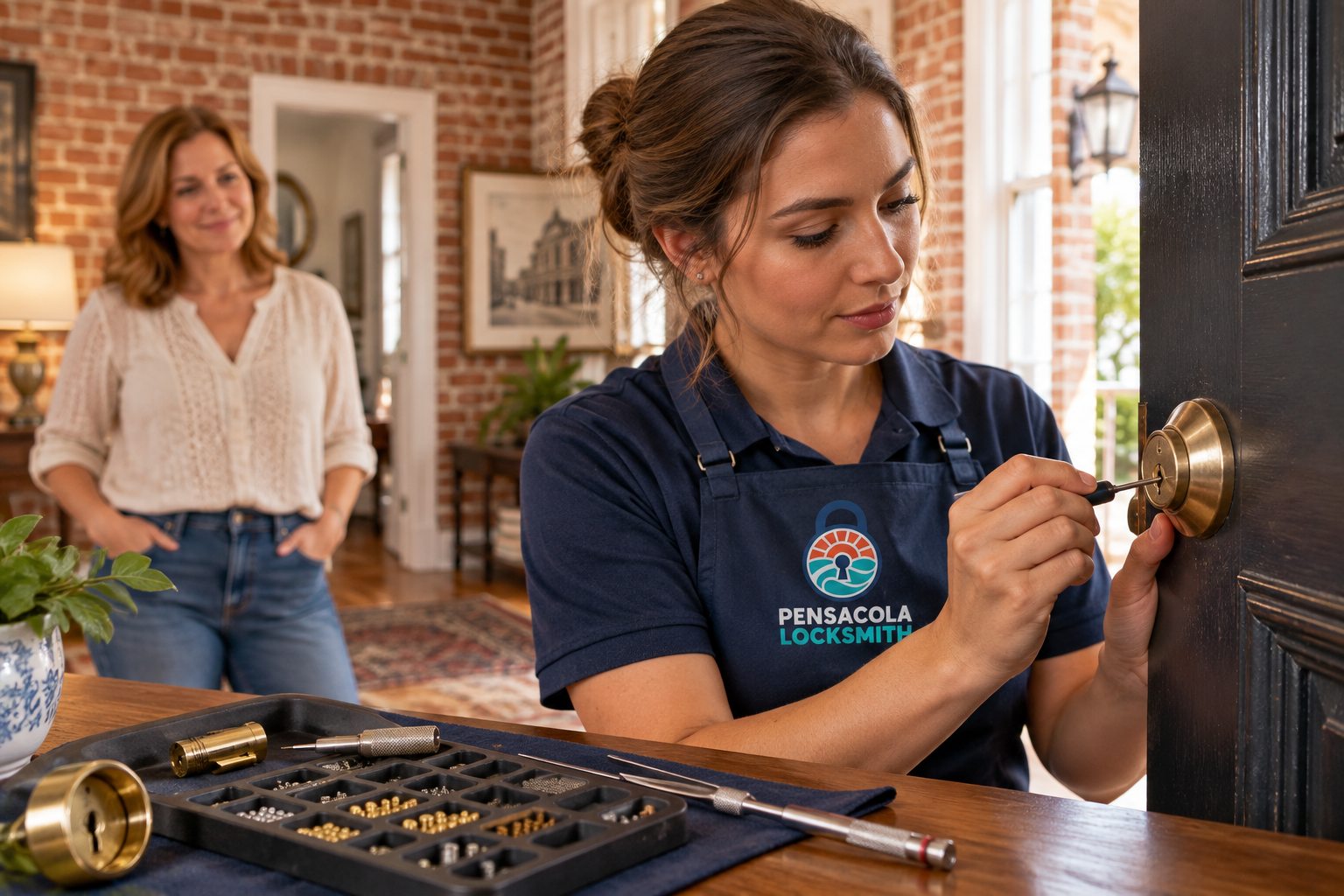
For a deadbolt, the technician uses picking and bypass tools designed for pin tumbler cylinders. Picking involves lifting each pin to the shear line with fine tension and pressure, which turns the cylinder as if the key had been used. It can take a few minutes and requires patience. It leaves the lock intact and usable with your own key.
Some locks resist picking, whether because of security pins, a poor condition or an unusual design. The technician may then choose a different non-destructive tool or, as a last resort, drill the lock. Drilling is destructive and is only used when all other options fail or when the lock is so worn that it will be replaced anyway. You are told before that happens.
Smart locks, keypads and electronic deadbolts
Electronic locks add a twist. A keypad that has lost power because of dead batteries can leave you outside even if you know the code. Many models have a hidden key cylinder or a terminal for a nine-volt battery to wake the lock. Check the exterior of the lock for a small cover and try the battery trick.
Smart locks tied to a phone app may fail when the phone dies, the app loses connection or the lock's internal battery is exhausted. If you can reach the app on another device, or have a household member who can open it remotely, that may be the fastest answer. A technician can also work on these locks mechanically when they have a key cylinder.
Some electronic locks have no key cylinder at all. In those cases, bypassing may be difficult or impossible without damaging the lock. A technician will tell you so, and may suggest entry through another door. Afterward they can help with replacing batteries, resetting codes or swapping the lock for one with a physical key backup.
Older homes, humidity and stubborn locks
Pensacola has many older homes and historic neighborhoods, where doors have been repainted, rehung and reworked over decades. Original hardware may be mortise locks set deep into the door, and these behave differently from modern deadbolts. A mortise lock has several moving parts and may take more time and skill to open without harm.
Humidity swells wood. A door that closed easily in winter may bind in summer, pressing the bolt against the strike plate. A lock that cannot throw freely is harder to open, because the bolt is under tension. The technician may relieve the pressure by pushing or lifting the door slightly while working the lock.
Salt air corrodes exterior hardware, especially near the water. A lock exposed to years of coastal weather may feel rough, and sometimes a key will not turn even when it is the right one. If your lockout is really a lock that has seized, the technician will explain the cause and discuss cleaning or replacement.
What the technician checks after the door opens
Getting inside is only half the task. The technician checks that the lock still works smoothly with your key, that the door latches and the deadbolt throws fully, and that the strike plate and frame are undamaged. A small adjustment now can prevent trouble later.
They also look at the overall state of the door's security. Is the deadbolt long enough to reach into the frame? Are the strike screws short and loose? Is the door fitted with a basic lock that anyone could defeat? You are not obliged to fix anything, but you will be told what they see, and why it matters.
If the lockout resulted from a lost key, the conversation turns to what to do next. A key that is gone may be in someone else's hands. Rekeying the lock or replacing it removes that risk. We cover this on our rekeying page. The technician will help you decide whether it is worth doing today or can wait for a calmer moment.
When the lockout means a lost key
If you lost your key outside the house, you face a security question as well as a door question. Anyone who finds the key and knows where you live could use it. The risk may be small, but peace of mind is worth something. Think about whether your address was on the key ring or in the same bag.
Rekeying changes the inside of the lock so that the old key no longer works, while keeping the same hardware. It is quick and usually a sensible response to a lost key. A new set of keys is cut, and the lost one becomes useless. For homes with several locks, all can be keyed alike so you carry just one key.
In some situations, replacing the lock is the better choice, for example if the lock is damaged, very old or already loose. The technician can advise on which makes more sense. Both options are covered in more detail on our rekeying and lock change pages, and they can often be done during the same visit as the lockout.
Garage doors, side doors and sliding doors
Not every home lockout involves a front door. Sliding patio doors have latches and sometimes a secondary pin or bar. A garage entry door may have a standard deadbolt. A side door might be solid with a basic knob. A technician will pick the access point that is easiest and least risky to open, which may not be the one you tried.
Sliding doors are common in Gulf Coast homes, and their track hardware suffers from sand and moisture. A latch may be worn so that it slips or sticks. In many cases, the door can be opened by lifting or adjusting it slightly, with no harm. Bent frames or broken latches usually need repair after entry.
An automatic garage door has an emergency release on the inside, so there is usually no way to use it from outside unless you have a code or remote. Some garages have a small keyed release at the exterior. If you have one, check it. A technician can advise, and help you decide whether a side door lock deserves attention.
Rentals, apartments and shared buildings
Tenants have extra layers to think about. In many buildings, the property manager holds a master key or can authorize a locksmith. Calling the manager first can solve the problem quickly. If management is unreachable, a locksmith can help, but may need written permission, since the lock belongs to the owner.
Short-term and vacation rentals are common in the Pensacola area. Guests often find themselves locked out in the evening, far from the host. A keypad or lockbox code that does not work is typical. Contact the host first. If they authorize a locksmith, we can speak to them directly to confirm before work begins.
Students and military families renting near the university and the naval air station often move in and out frequently. If you have just moved in and cannot be sure who else has keys, consider rekeying after your first week. It is a simple precaution, and it ensures the only keys that work are the ones you hold.
Hurricane season, evacuations and unexpected lockouts
Hurricane season changes how people use their homes. Doors are opened and closed constantly during preparation and after a storm, keys are packed into bags, and families scatter between relatives and shelters. A lockout in that environment is more likely, and it can be more stressful because roads, power and phone service may be unreliable.
If you return after an evacuation and find a door swollen, a lock jammed by moisture or a frame shifted by wind and water, do not force it. Tell the technician what happened. A door that has taken on water may bind, and the lock may be corroded. Opening it carefully avoids further damage to a frame that may already be weakened.
After a storm, securing the home matters. If a door or lock was damaged, a technician can help restore it to a locking condition, even if full repair has to wait. Keep proof of residence handy, because storm conditions sometimes mean a neighbor, a manager or a family member is needed to confirm that you belong at the address.
Preparation helps. Before storm season, make sure each household member has a key, store a spare outside the home with someone trustworthy, and check that locks turn smoothly. Call us to confirm availability when conditions allow, and tell us about road or access problems so the technician can plan sensibly.
Preventing the next house lockout
The best protection is a spare key kept in a safe, deliberate place. A trusted neighbor, a family member or a secure lockbox are all reasonable. A key under a doormat or a rock is not. Those spots are the first places anyone looks, and they turn a convenience into a risk.
A keypad or smart lock can reduce the chance of a lockout, since you no longer depend on carrying a key. Choose a model with a physical key backup, and keep fresh batteries on hand. Test the backup key occasionally so you know it works, and avoid sharing codes more widely than necessary.
Habits help too. A hook by the door, a loud keychain and a quick pocket check before pulling the door shut prevent most accidental lockouts. If you have children or older family members who come and go, agree on a plan for what to do when someone is locked out, including who to call and where the spare is kept.
Finally, treat a lockout as a prompt. If you were locked out because a key was lost, a lock was sticking or a door was hard to latch, fix the underlying issue while it is fresh. A short follow-up visit is far easier than another lockout on a day when you have somewhere else to be.
Common questions
What proof do I need to show before you open my door?
You need to show you live at or have authority over the property. A photo ID with the address works best, or an ID plus a lease, utility bill or similar document. If you rent or are a guest, the owner or manager may need to authorize entry. We tell you what to have ready when you call.
Will opening my door damage the lock or frame?
In most cases, no. Technicians use shims, latch tools and picking tools that work without marking the lock. Drilling is only used as a last resort, for example when a lock is badly worn or resists every other approach. You are told beforehand if damage is likely and what replacement would be needed.
My smart lock or keypad stopped working. Can you help?
Often yes. Many electronic locks have a hidden key cylinder or a battery terminal for emergency power. If the lock has no mechanical backup, entry may be harder, and we will tell you honestly. Afterward we can help with batteries, codes or replacing the lock with one that has a physical key.
Should I change my locks after losing a key?
Consider it, especially if your address was with the key. Rekeying makes the lost key useless while keeping the same hardware. Replacement is another option if the lock is old or damaged. The technician can explain both during the lockout visit, and you can decide whether to do it right away.
How do I get a quote for a house lockout?
Quotes are given by phone once we know the door, lock and situation. If the job is complicated, a technician visits and the service call charge is explained before dispatch. Call us to confirm availability and have your address and proof of residence ready for the technician.