
Content note: this page was written by Claude (AI) for Pensacola Locksmith.
Before you call: gather the basics
Take a few minutes before you pick up the phone to collect the facts a locksmith will ask about. What is the problem: a lockout, a broken key, a lock that will not turn, a lost set of keys, a security upgrade? Where is the lock, such as a front door, a back gate, a car door or an office? How many locks are involved, and what brand are they if you can see a name on the hardware?
Write down the address or cross street where you will meet the technician, and note any landmarks that make the spot easy to find. For a vehicle, note the year, make and model, the color, and whether you have a regular key or a push-button start. For a home or business, note whether the door is a single entry, a double door or a gate, and whether there is a deadbolt, a handle set, or both.
Have your phone charged and a way to take calls. If you are locked out of a home, your phone may be your only tool, so keep it charged and with you. If you have been trying to get in, note what you have already tried so the technician does not repeat steps that may have caused damage. The clearer your description, the better the quote and the plan.
Proof of ownership or authority
A responsible locksmith confirms that you have the right to open, rekey or program the lock or vehicle in question. This is not a sign of suspicion. It is a protection against someone gaining access to a place that does not belong to them. Expect to be asked, and have documents ready before the technician arrives so the check is quick.
For a vehicle, bring a driver license and one of these: the registration, the title, a lease or rental agreement, or insurance paperwork showing the vehicle. For a home, bring a license plus something showing your address or ownership, such as a utility bill, a lease or a mortgage statement. For a business, bring identification and documents that show you manage or own the place, such as a business license or a letter from the owner.
If you are a renter, a property manager or an employee acting for someone else, explain this at the start. The technician may need to contact the owner or manager to confirm. If you cannot show any proof, the technician may decline to proceed. That is a sign the process is working, and it protects whoever really owns the property. Keeping copies of important documents on your phone can help in an emergency.
Choose a safe place to meet
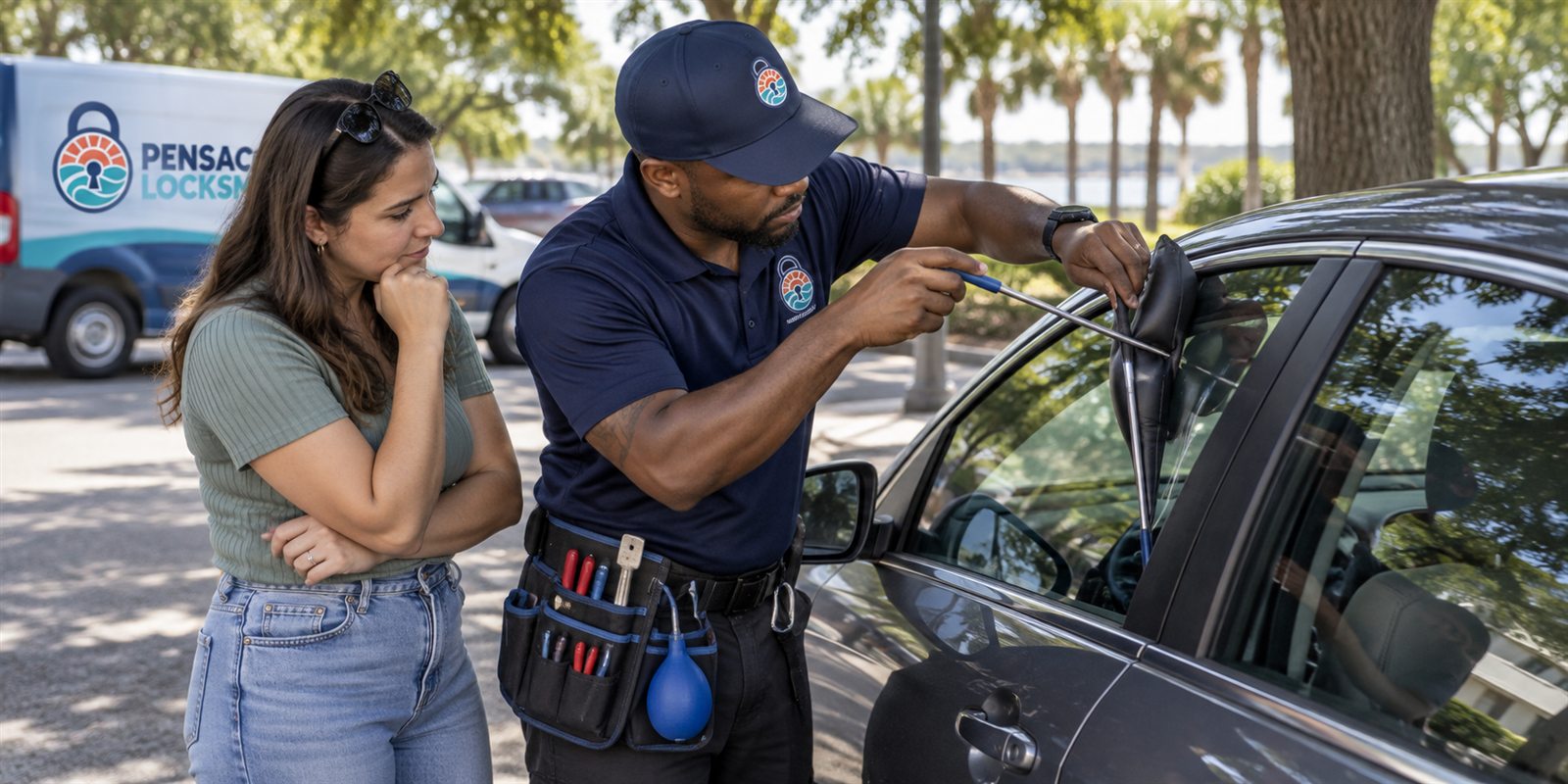
Safety goes both ways. You should feel comfortable meeting a service provider, and the technician should be able to work safely. If you are locked out of your car at night, wait in a lit place with other people around, such as a store entrance or a well-lit lot, and tell the technician exactly where you are. If you are at home, make sure the area around the door is clear and lit.
Share your location clearly. Give a street address, the name of a business or a landmark, and say which side of the building you are on. For large parking lots, describe where in the lot the car is, such as near a specific entrance. For rural or waterfront spots, mention landmarks and how to reach the place. Keep your phone on so the technician can reach you.
If you feel uneasy, you can ask a friend or neighbor to be with you. It is also reasonable to confirm the technician's name and the vehicle they are arriving in when they call. Do not hesitate to ask for identification when they arrive. A legitimate technician will understand. If anything seems off, say so and call us again to confirm the visit.
Describe the problem the way a technician needs to hear it
A good description saves time. Say what happened in order: when you last used the key or lock, what you did, what the lock did, and what you have tried since. For example, the key goes in but will not turn, the deadbolt spins without catching, the lock is stuck halfway, or the key broke off. Each of those points to a different cause and a different set of tools.
Mention anything unusual: recent weather, a recent repair, a change in the door or frame, a move to a new home, a recently lost key or an attempted break-in. If a door has shifted because of humidity, it may bind against the frame, which can mimic a lock problem. If a vehicle has had a battery replaced, that may have affected the fob.
Be honest about what has been done. If you sprayed oil into a lock or tried to pry something open, say so. It helps the technician to know whether the lock is clogged with lubricant or damaged. Do not worry about embarrassment. Technicians see all kinds of situations, and the goal is to solve the problem without causing more damage.
Questions to ask when you call
You are entitled to a clear picture of what is going to happen. Ask whether the technician can give a quote by phone based on your description. Ask what the process involves and whether anything could change the plan. Ask whether the technician will need to visit before giving a firm answer. For complicated jobs, a technician visits and the service call charge is explained before dispatch.
Ask whether the technician checks ownership or authority, and what they would like you to have ready. Ask how the technician will identify themselves when they arrive. Ask whether you should expect any damage to the lock, the door or the vehicle, and whether replacement parts are likely. Ask how the payment works, and what forms of payment are accepted.
Ask about availability and timing in plain terms. Call us to confirm availability, and understand that no arrival time can be promised in advance. Ask whether the technician can call when they are on the way. A professional will answer these questions without pressure and will not hurry you into a decision.
- Can you give a quote by phone for this job
- What will you need to see to confirm I have the right to the lock
- Will a visit be needed before a firm answer
- How will you identify yourself when you arrive
- What forms of payment do you accept
What to do with pets, children and the space itself
Think about the people and animals in the area. If a dog is loose in the yard or barks at strangers, secure it before the technician arrives. If small children are present, keep them away from the work area, because tools and small parts can be hazardous. If you have an elderly family member inside who cannot get to the door, tell the technician so the plan can account for that.
Clear a path to the door or vehicle. Move bikes, planters, mats and furniture out of the way. If the lock is on a gate, make sure the gate is accessible, and note any water, mud or uneven ground nearby. In the Gulf Coast climate, afternoon storms can arrive quickly, so having an umbrella or a dry place to stand is useful for both of you.
If the visit is at a business, let staff know a technician is coming and who should meet them. Consider whether customers will be affected, and whether you need a manager present to confirm authority. If the lock involves a safe, alarm or access control system, mention it in advance so the technician can plan. Tell the technician about any cameras on site, since it is good practice to be transparent.
Gather your keys, remotes and old hardware
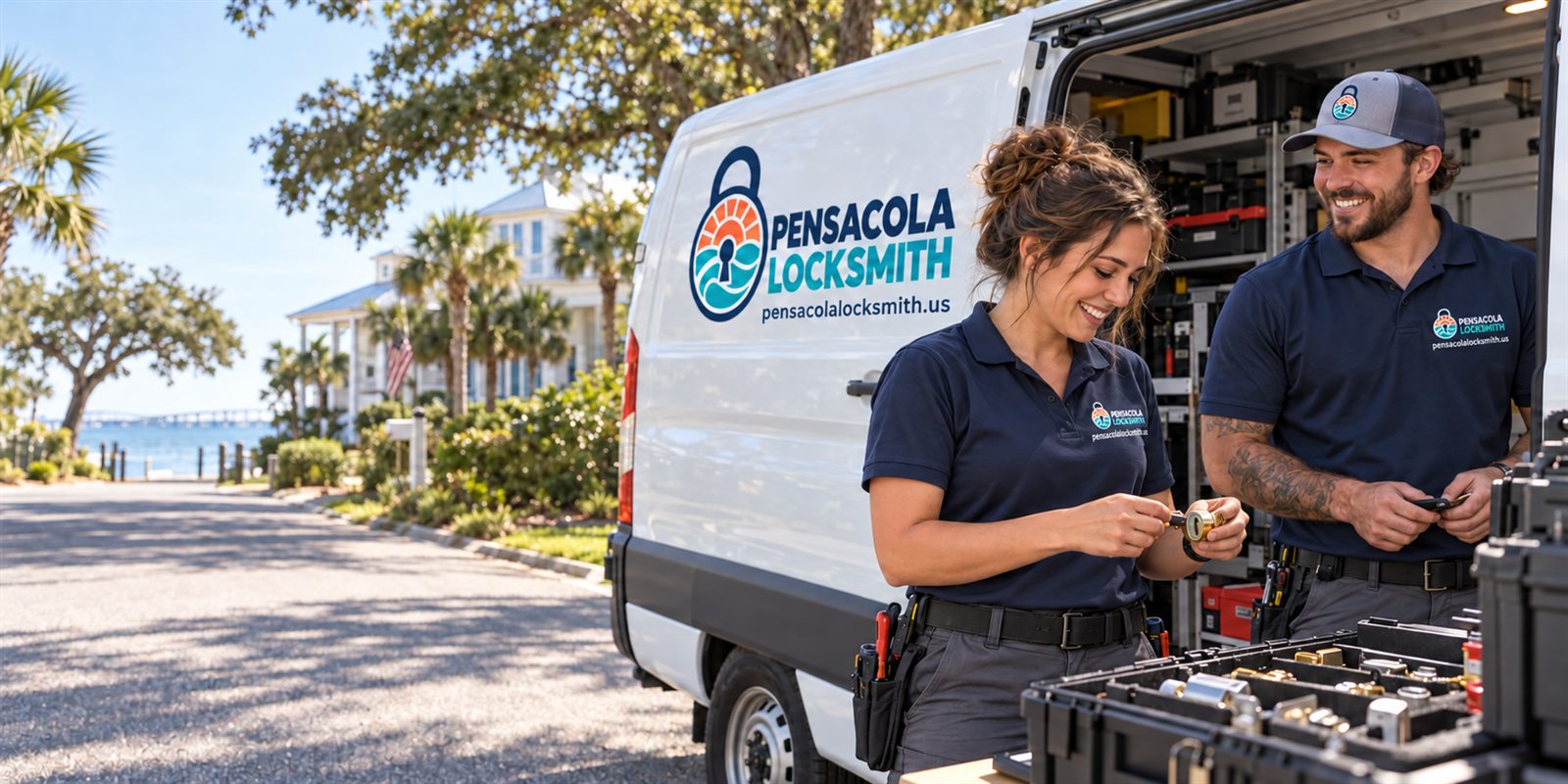
If you have any keys for the lock, bring them, even broken or worn ones. A key that no longer works may still show the original cut pattern, which helps the technician identify the lock. If the lock is on a car, bring every fob and key you have, since programming a new key often requires at least one working key or, in some cases, none at all.
If you plan to replace or upgrade hardware, have the old pieces nearby. Hold on to packaging from previously installed locks, since model numbers and brands can speed up identification. If you bought hardware yourself, keep it unopened until the technician looks at it. Some products are not suitable for particular doors, and returning an opened box can be difficult.
Think about what you need afterward. Do you want extra copies of the key? Do you want all locks keyed alike so one key opens the front door, back door and garage? Do you want to keep the old key from working by rekeying? Decide this in advance, or be ready to discuss it, so the technician can bring the right supplies.
Documents and details for vehicle visits
Vehicle work has its own checklist. Besides identification and proof of ownership, find the vehicle identification number, which appears on the dashboard near the windshield and on the registration. This number helps the technician look up the correct key blank and the programming method. Photograph it so it is on your phone.
Tell the technician what kind of key you have: a plain metal key, a key with a plastic head, a flip key, a smart fob with a push-button start. Say how many working keys you have, and whether the vehicle has an aftermarket alarm or remote starter. If the car is a rental or is leased, mention that and be prepared to contact the owner for permission.
Check the basics in advance. Make sure the car battery is healthy, since a weak battery can affect programming. Try replacing the battery in the fob if it is old. Park somewhere safe with room to open the doors and the hood. If your vehicle is being towed or stored, tell the technician where it is. Call us to confirm availability and talk through the plan.
Rentals, short stays and shared properties
Pensacola has many vacation rentals, student apartments and shared homes, and each brings its own wrinkles. If you are a guest or tenant, the lock may belong to the owner or property manager, and you may not have the authority to change it. Contact the manager first. A locksmith will normally want to hear from the person responsible for the property before rekeying or replacing hardware.
If you manage a rental, keep a simple log of who has keys and codes, and have a plan for what happens between guests. Smart locks with changeable codes can simplify turnovers, while mechanical locks may need rekeying after a lost key. Think about how you will prove your role to a technician, such as a lease, a management agreement or a letter from the owner.
For student housing near the university or college, roommates often share a single key set. Decide beforehand who will meet the technician and who has the authority to approve changes. Be ready to show a lease listing the occupants. For military families with base housing or off-base rentals, check lease rules about changing locks, since some properties require approval first.
What to expect when the technician arrives
A professional arrives, introduces themselves and asks to see your identification and documents. They look at the lock or vehicle, confirm the problem and explain what they recommend. They should describe the steps, the likely result and any risks. For a simple lockout, the work may take only a short time. For rekeying, lock replacement or key programming, it may take longer.
Be present during the work if you can, and ask questions. If the plan changes, expect to be told before anything is done. The technician should test the result with you, such as trying the key several times or checking that the door latches properly. If a part needs ordering, they should explain the next steps and timing in general terms.
At the end, review what was done. Ask for a receipt or written summary. Check that all keys work, including spares, and that you understand how to use any new hardware. If you have questions later, ask them. Keep the paperwork with your important documents, since it may help if you need follow-up service.
After the visit: keep your keys and records tidy
Once the problem is solved, take a few minutes to prevent a repeat. Store a spare key in a safe place that is not obvious, and consider giving one to a trusted friend or relative. Avoid hiding keys under mats, in plant pots or inside electrical boxes, since those are the first places a person looks. Think about whether a lockbox or a keypad lock would suit your situation.
Keep records of the work: the date, what was done, and the type of lock installed. If you rekey or replace locks at a rental property or business, note which keys have been issued and to whom. A simple list helps if a key is lost or someone leaves. Update the list whenever things change, and ask for return of keys when people move on.
Finally, schedule a quick check of your other locks. Gulf Coast humidity, salt air and storms wear on hardware over time. Test deadbolts, gates and car doors now and then, and replace anything that feels rough or loose. A small maintenance habit costs little and reduces the odds of a stressful call at an awkward hour.
Common questions
What documents should I have ready for a locksmith?
Have a driver license plus proof you have the right to the lock or vehicle. For a car, that is the registration, title, or lease or rental agreement. For a home, a lease, mortgage statement or utility bill with your address works. For a business, bring paperwork showing you own or manage the place.
Why does the locksmith need to check ownership?
The check protects the true owner. Without it, anyone could claim a lock or car that is not theirs. A professional verifies ownership or authority before opening, rekeying or programming. If you cannot show proof, the technician may decline, which is the process working as intended.
Where should I wait for the technician?
Choose a safe, well-lit spot with other people nearby, such as a store entrance, and give a clear address or landmark. Keep your phone on so you can be reached. If you feel uneasy, ask a friend or neighbor to wait with you, and ask the technician for identification when they arrive.
Can I get a quote before anyone is sent?
Yes. Call us and describe the problem, the location and the lock or vehicle. Quotes are given by phone. If the job is complicated, a technician visits first and the service call charge is explained before dispatch. Call us to confirm availability before you plan your day around a visit.
What should I do after the work is finished?
Test every key, including spares, and ask for a receipt. Store spares in safe places that are not obvious, and keep a short record of who holds keys. Check your other locks periodically, since coastal humidity and salt air can wear hardware over time.