
Content note: this page was written by Claude (AI) for Pensacola Locksmith.
Life with frequent moves and what it means for keys
Military life involves moving, often on short notice. Families arrive, settle, and leave a few years later, while the houses stay and a new family takes over. Each handoff creates a key problem. Over the years, a house may have had many occupants, and each of them may have kept a key, lost a key or given one to a friend, a babysitter or a contractor.
That is why rekeying at the start of a stay is so useful. A rekey changes the internal pattern of each lock so the old keys stop working and new ones take over. The hardware stays in place, so the job is quick and the look of the door does not change. It gives you control of access from the first day.
Moving out matters too. If you hold the only set of keys when you leave, handing them to a landlord or a new occupant is simple. If you have given out copies, think about whether to collect them. A rekey just before you leave is not usually needed, but a short list of who has a copy is a useful habit.
We understand that timelines are tight. Between orders, house hunting, packing and setting up utilities, a lock appointment is easy to forget. When you call, tell us your dates, and we will explain what we can do. We cannot promise arrival times, so please call early and confirm availability around your schedule.
Rentals, housing rules and getting permission
Many people near the base rent their homes from private landlords, property managers or housing providers with their own rules. Before changing any lock, read your lease or ask the landlord. Some require a copy of any new key, some prohibit changes altogether, and some are happy to approve a rekey if you ask first.
A rekey is generally less invasive than replacing a lock, because the hardware stays the same. That often makes landlords more comfortable. If you get approval in writing, even by message, keep it on your phone. We may ask to see it, since we need to confirm that you have authority to approve work on the door.
When a landlord handles the lock work, we are happy to work with the landlord directly. For example, a manager with several units may want all of them rekeyed between tenants, with a master key held by the office. We plan these layouts by asking how many units and who needs access.
Keep in mind that you may be responsible for returning all keys at the end of your stay. Know how many you were given, and keep a record of any copies you made. If a key goes missing, tell the landlord, since a rekey may be appropriate. Handling it openly avoids disputes when the lease ends.
A practical move-in checklist for your locks
Moving into a new home is busy, and it is easy to skip the locks. A short check on day one pays off. Walk to every exterior door and try the key. Count how many keys you were given. Look for doors you did not know about, such as a side entry, a garage door or a gate. Note any that stick or feel loose.
Check the hardware. Does the deadbolt extend fully into the frame? Is the strike plate held by long screws? Does the door close firmly without being pulled? Are windows latching? A few small fixes at the start can raise security a great deal. Many can be done by the resident, and we can handle those that cannot.
Decide on keys. Do you want every door to share one key? Do you want a separate key for a garage or storage room? Do you want a spare to keep with a trusted friend or relative? Planning these things before the locksmith arrives makes the job smoother, and it means you only pay attention to this task once.
Finally, talk about smart locks if you are interested. A keypad or smart lock removes the need to carry keys and lets you set codes for guests or family. It does depend on batteries, and a rental may limit what you can install. Ask your landlord first, and ask us how the product handles power loss.
- Try every key on every exterior door
- Count the keys you were handed
- Check deadbolt throw and strike plate screws
- Decide who needs a copy and who does not
Deployments, travel and leaving a home empty
When a service member deploys or a family travels for a long stretch, a home may sit empty for months. A vacant house raises its own lock concerns. Doors and windows need to latch firmly, spare keys need to be in trusted hands, and someone should be able to check the property. A locksmith can help with the first part of that plan.
Before leaving, test every lock and look for any sticking. A deadbolt that is stiff in good conditions will be worse after months of closure in humid weather. A little dry lubricant in the keyway and on the latch helps. Make sure sliding doors have a bar or pin in the track and that garage entries close tightly.
Think about who will have a key. A relative, a neighbor or a property manager might need access to water plants, collect mail or check for storm damage. Give each one a key you can account for, and keep a list. If someone leaves that role, rekey or change the code. Never hide a key outside, since it is a known weak point.
A keypad lock can ease this problem, since codes can be changed from a distance on some models and revoked when no longer needed. Others require you to be at the door. Ask us about the options when you call. We confirm that you own or lease the home before installing, and we explain battery care so the lock does not die while you are away.
Lockouts: calm steps and what we check
Lockouts are common during moves, when keys get packed in the wrong box and the front door swings shut behind you. Before calling, walk around the house to see if another door or window is open. Check with anyone inside or nearby. If nothing works, a locksmith is the right next step, and in most cases the door can be opened without damage.
We ask for proof that you live there or have authority. Photo identification with the address, a lease, a utility bill or a letter from the landlord all help. During a move, documents may be in boxes, so having a copy of the lease on your phone is a smart habit. We talk through acceptable options when you call.
The method depends on the lock and the door. Many residential cylinders open to picking, and some latches can be released with bypass tools. We choose the least damaging approach, and we explain what we plan before we begin. If a lock must be drilled, we say so and discuss replacement first.
Once inside, think about prevention. If your lockout happened because keys are scattered across boxes, put a spare in a separate place during the move. If you have a lockbox, mount it properly and set a code. If a lock was sticking, ask for a repair. A short conversation with the technician can save you a second call.
Car keys and vehicles near the base
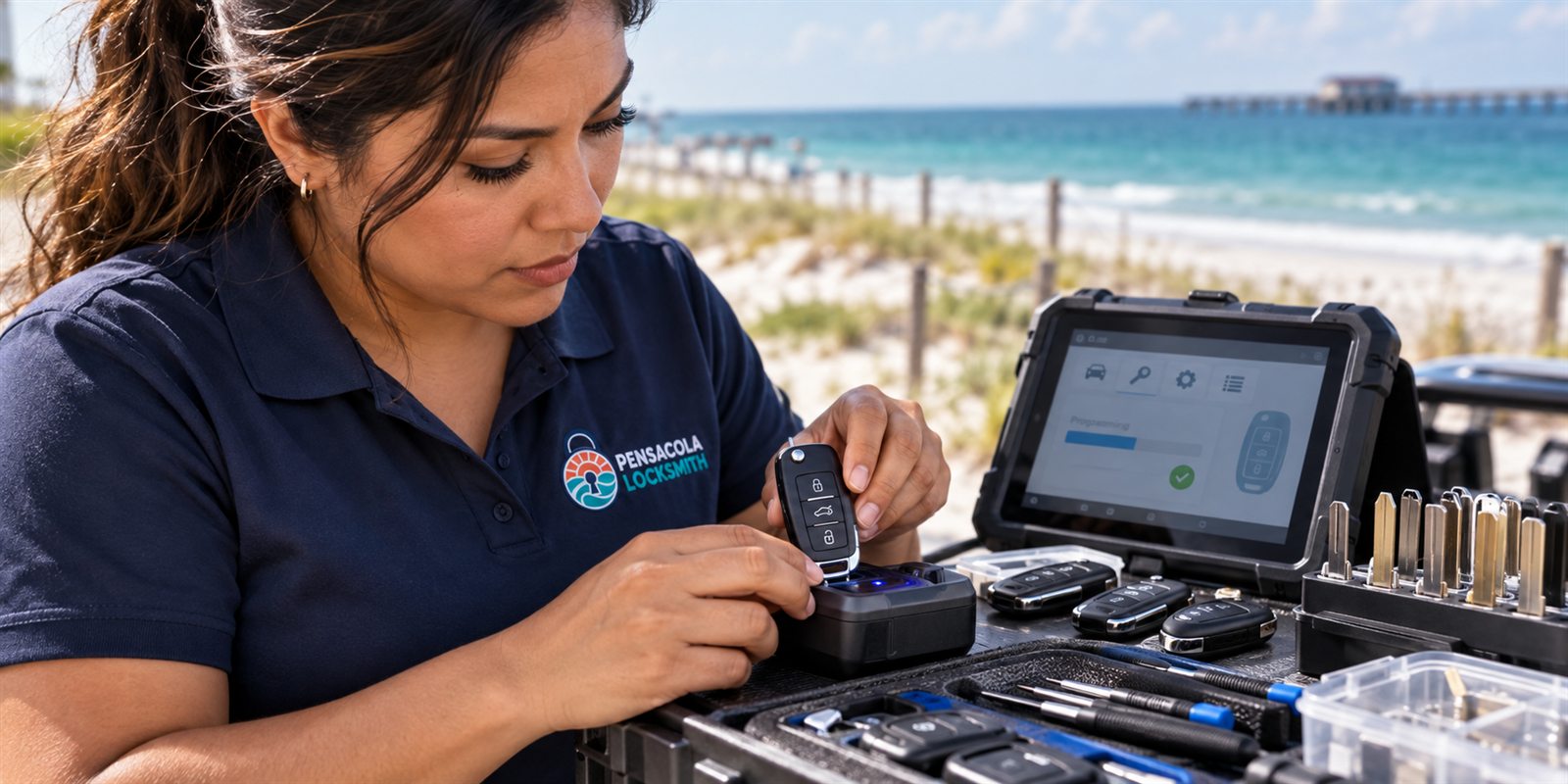
Many Warrington households have more than one vehicle, and keys go missing in the shuffle of moving, travel and long drives. A key lost on a road trip or left at a previous duty station can be a headache. Most modern car keys carry a chip that must be programmed, and a smart fob adds another layer.
We come to the vehicle and work there. After confirming ownership, we read the vehicle number, cut a blade if needed and program the key. If the vehicle is registered in another state, a registration or title from that state works, along with photo identification. A lease or loan document may also help.
Vehicles bought out of state or shipped across the country sometimes arrive with fewer keys than expected. If you have bought a used car and only have one key, make a spare early. And if you do not know how many keys exist, ask about removing unknown keys from the car's memory so a stray copy cannot start it.
Gulf Coast humidity affects fobs, so keep them dry and replace the battery when range falls. If a key fails after a trip to the water, let it dry before using it. Spares should live at home in a safe spot. For households with several drivers, a labeled hook or small box keeps keys from wandering.
Garage doors, storage and the things you bring along
Moving brings a lot of belongings into a garage or storage room. Tools, bikes, boxes, seasonal gear and sometimes a second vehicle all end up there. The door between the garage and the house is a frequent weak point. It should be solid, with a deadbolt and a reinforced strike plate, and it should be locked at night.
Check the garage entry. If the main overhead door has a manual latch, use it when you are away. If you rely on an opener, treat the remote like a key. A remote left in a car can be stolen, and it opens your garage. Reset the opener code when you move into a house, since the previous occupants had the old one.
Padlocks on storage lockers and sheds work best when they are hardened and weather-resistant. A thin padlock on a flimsy hasp can be cut in seconds. If you use a self-storage unit, check what the facility requires. Many provide their own locks or specify types. We can help if you are choosing for a shed or cage you control.
Think about safes and cabinets. Households with firearms, documents or valuables should store them in a locked cabinet or safe, and keep keys or combinations out of reach of children. If you lose a combination or key, we can discuss options for opening, and we will ask for proof of ownership first.
Older homes and simple repairs
Some of the homes near the base are older and have been lived in by many families. Original knobs may be worn, deadbolts may have been installed years ago and never maintained, and doors may have shifted. Small repairs can make a big difference, and they are often less costly in effort than people expect.
A loose knob can usually be tightened or replaced. A deadbolt that sticks may need cleaning and lubrication, or the strike plate may need adjusting. A door that sags may need its hinges tightened or shimmed. We check these things and tell you what we see. If a lock is beyond saving, we explain why and what to choose instead.
Salt air and humidity speed up wear on hardware. Even inland from the water, moisture affects metal. A little attention every few months keeps hardware working longer. We are happy to show you how to apply dry lubricant to a lock or tighten a plate. These skills are easy to learn and handy in any home.
If you are renting, tell the landlord about any problems rather than trying a repair yourself. Some leases require that repairs be made by approved people. If the landlord asks us to handle it, we work with them directly. Clear communication keeps everyone on the same page and avoids surprises at the end of a lease.
Storm season, evacuations and keeping the house secure
Hurricane season is part of life on the Gulf Coast, and families near the base often plan for it with extra care. Before a storm, check that doors close firmly and locks turn easily. A deadbolt that sticks is the last thing you want to meet while loading a car in a hurry. A few minutes of testing and lubricating earlier in the season can prevent that.
If you evacuate, take important documents with you. Ownership papers, a lease, identification and vehicle registrations all matter later, especially if you need help getting into a home that has been damaged or secured by someone else. Keep a photo of each on your phone as a backup, and store spare keys with a relative outside the area.
After a storm passes and it is safe to return, inspect each door. Wind can shift frames, and moisture can swell wood so a latch no longer lines up. Sand, leaves and debris can jam keyways and sliding tracks. Resist the urge to force anything. Clean gently, let the hardware dry and test again. If a door will not secure, call us to look at it.
If a door or frame has been damaged, you may need temporary security until repairs happen. A hasp, an extra deadbolt or a brace can keep a property closed. We can talk about options, though we do not rebuild frames or windows. Our focus is locks, hardware and keys, and we will say plainly when a problem calls for a carpenter instead.
What to expect when you call
Tell us where you are, what you need and when. We ask about the door, lock or vehicle and explain the likely steps. Quotes are given by phone. We do not promise arrival times, and we ask you to call to confirm availability, particularly around move days, month ends and storm periods.
For standard work, such as a rekey, a lockout or a key copy, one visit generally finishes the job. If the problem is complicated, such as a damaged cylinder or a car with a security fault, a technician visits first and the service call charge is explained before dispatch. No one should be surprised by the terms.
At the property, the technician checks identity and authority, looks over the lock and explains the work. You decide whether to proceed. When finished, we test the lock with you, confirm each key works and clean up. We also show simple care steps so the hardware lasts.
After the visit, keep new keys in separate places and write down which doors they open. If anything feels off in the next few days, call us. We would rather make a small adjustment than leave you with a problem. A well-done lock job should be quiet and uneventful.
Common questions
Do you serve Warrington and the area near the base?
Yes. Warrington and the neighborhoods around it are part of our service area. We come to homes and vehicles. We do not promise arrival times, so please call to describe the job and confirm availability, especially around move dates.
Should I rekey a rental home when I move in?
It is a sensible step, because you cannot know how many copies of the old keys exist. Check your lease or ask the landlord first. We confirm that you have authority to approve the work before rekeying, and a written message from the landlord helps.
What if my vehicle is registered in another state?
That is common. A registration or title from the other state, along with photo identification, can show ownership. A lease or loan document may also work. We check these before cutting or programming any key, and we explain what is acceptable when you call.
Can you help while I am away on a long trip?
We can help with locks and keys, for example by fitting a keypad lock or rekeying before you leave. We need to confirm authority, so have documents ready. We do not hold keys for anyone, and we do not enter a home without proper authorization.
How do I get a quote?
Quotes are given by phone. If a job is complicated, a technician visits first and the service call charge is explained before dispatch. Call us and describe the work, and we will go through it with you.