
Content note: this page was written by Claude (AI) for Pensacola Locksmith.
Why salt air is hard on locks
Anyone who lives near the coast knows how quickly metal changes. Salt carried on the breeze settles on door hardware, mixes with humidity and begins to attack finishes. Bright brass dulls, plated steel blisters, and screws seize in their holes. Inside a lock, the same moisture and salt can crust on pins and springs until the key drags or refuses to turn.
Not all hardware reacts equally. Thin plated zinc and low-grade steel tend to fail early in a marine environment, while solid brass, stainless steel and well-finished marine-rated hardware hold up better. A technician can tell a great deal from a quick look at a lock that is a few years old: white powder, green crust or orange streaks each point to a different material failing.
The honest advice is that the choice of hardware matters more here than almost anywhere else in the region. Spending a little more on suitable materials at installation can save repeated replacements. If your budget is limited, protecting what you already have with periodic cleaning and light lubrication is a sensible compromise, and a technician can show you what to use and what to avoid.
Sunlight adds to the problem. Ultraviolet exposure fades and cracks cheap coatings, and dark finishes on south or west facing doors can get hot enough to be uncomfortable to touch. Combined with salt and damp, a poorly finished lock can look tired in a couple of seasons. If appearance matters to you, a technician can suggest finishes designed to resist fading, and explain which ones are more than decoration and which are simply paint.
Keeping coastal locks working: simple maintenance
Maintenance does not need to be elaborate. Every few months, wipe exterior hardware with a damp cloth to remove salt film, dry it, and apply a thin coat of a product made for locks to the keyway. Dry graphite or a dedicated lock lubricant works better than general-purpose oil, which collects grit. Operate the key a few times to work the lubricant into the pins.
Pay attention to screws and fasteners as well. Salt corrodes steel screws, and a loosened strike plate or hinge can make a good lock feel faulty. Replacing visibly rusted screws with stainless ones is a cheap and effective step. If a screw has seized or its head has stripped, tell the technician rather than forcing it, since broken fasteners are far harder to deal with than stuck ones.
Know the warning signs. A key that gets progressively harder to turn, a latch that sticks in damp weather, or a deadbolt that needs a shoulder to close are all early notices that something needs attention. Dealing with them early often means cleaning and adjustment instead of replacement. Waiting until the lock fails entirely, usually at the least convenient moment, tends to turn a small job into a lockout.
If a lock has already begun to seize, resist the urge to spray it heavily with penetrating oil and force the key. That can push grit deeper and snap a key off inside the cylinder. A better first step is to stop, clean the keyway gently, apply a small amount of proper lubricant, and ask for help if it does not improve. Broken keys are fixable, but they are easier to deal with when nothing else has been damaged.
Vacation rentals and the problem of key turnover
A rental home sees a different guest every few days, and every guest means another key, code or lockbox visit. Physical keys get lost at the beach, tucked into luggage and driven home hundreds of miles away. Over a busy season, an owner can lose track of how many keys are loose, and each missing one is a small but real security question.
Many owners handle this by switching to keypad deadbolts or smart locks with unique codes for each reservation. The code is created before arrival and deleted after checkout, so no physical copies exist to lose. A technician can help choose and install a model that suits the door, set up the code structure, and explain what happens if batteries fail so that guests are never locked out of their holiday.
Where physical keys remain, a regular rekey between seasons or after a lost key keeps control tight. It is a modest job compared with the worry it removes. Owners often keep the rekey schedule alongside other seasonal tasks such as servicing air conditioning. If you manage rentals on behalf of an owner, the technician will ask for confirmation of your authority to make changes before proceeding.
Think about the guest experience as well. A tired traveler arriving at night should find the entry obvious, lit and easy to operate. Clear instructions, a keypad that is readable in glare and a backup plan make the first minutes of a stay pleasant. Technicians who work on rentals often hear that most guest calls are not about security at all, but about doors that confuse people. Simple hardware reduces those calls.
Lockboxes, keypads and the tradeoffs of each
Lockboxes are a familiar answer to the question of how guests get in. A box mounted near the door holds a key, and each guest receives a code. They are inexpensive and simple, yet they depend on keeping the code private and on someone resetting it between stays. A box left on its default code, or one whose code is shared widely, offers little protection.
Keypad deadbolts remove the physical key from the equation. Guests enter a code on the door itself, and the owner can change or delete it at will. The downside is battery dependence and the fact that salt and moisture are not kind to electronics. A model with a good weather rating and a sealed keypad is worth the attention, and so is a physical backup key stored in a secure place.
Smart locks go one step further with app-based control and scheduling. They suit managers who handle several properties remotely, but they require a reliable connection and a certain comfort with technology. There is no single best choice. A technician can walk through how you actually run the property, the number of guests, the frequency of turnover and your tolerance for upkeep, and then recommend the arrangement that fits.
Sliding doors, balcony doors and beach access gates
Beach-area homes are full of sliding glass doors, because everyone wants a view and easy access to a deck or pool. These doors are a classic weak point. The factory latch is typically a small hook, and salt and sand in the track make the panel hard to close fully, leaving the latch not quite engaged. A door that looks closed may not actually be locked.
Regular track cleaning does a great deal of good. A vacuum and a small brush clear sand, and a silicone-based lubricant keeps the rollers moving. If the door has been dragging, the rollers may be worn and need replacement. A technician can fit a secondary lock, a track bar or a pin to give the slider real security, and can advise on a choice that is easy for guests to understand.
Gates and pool enclosures bring their own concerns. A latch that fails to catch on a pool gate is a safety issue, not only a security one. Corrosion on gate hardware is common, and replacing it with a sturdier, rust-resistant latch is often the right move. If you own a property with a pool, treat gate hardware as seriously as the front door, and have a technician check it at the start of every season.
If you are a visitor with a rental car, note that a locked-out vehicle is a separate kind of job with its own tools and ownership checks. Tell us at the start of the call whether the problem is a house, a car or something else. It lets the right technician prepare. For vehicles, we confirm that the car is yours or that you are authorized to be in it before opening or programming anything.
Lockouts when you are on vacation
Visitors are locked out more than residents, simply because they are in an unfamiliar place with unfamiliar doors. A guest may step out to the beach, pull the door behind them and find the keypad dead or the key in the wrong pocket. If you are a guest, contact the property manager first, since they may be able to supply a code or a spare quickly.
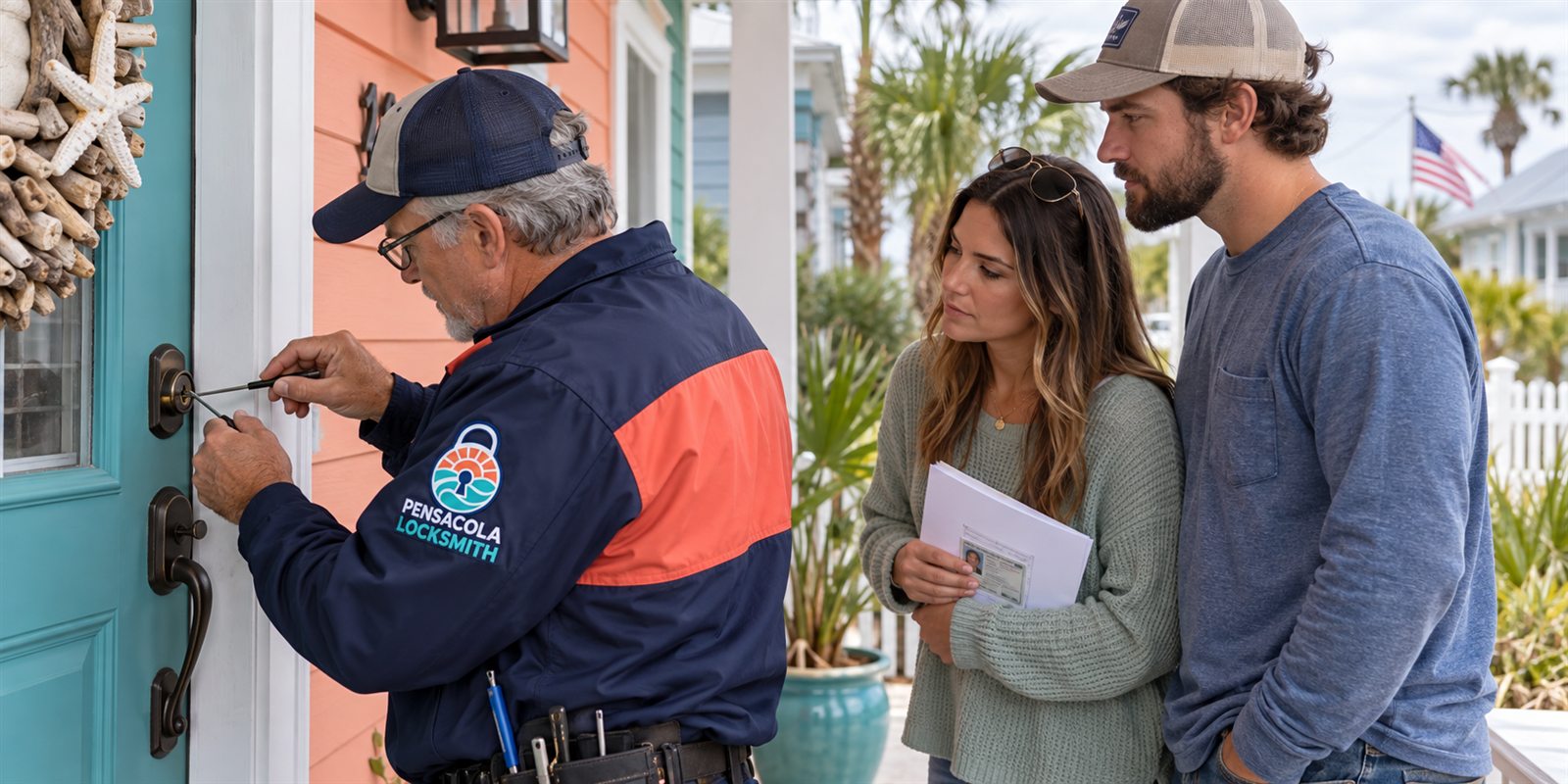
If you own the home and cannot reach it, call us, describe the door and the lock type, and tell us what happened. We will ask for proof that the home is yours or that you are authorized to be there. For a rental, that might be a property record or management agreement. We cannot open a door for someone who cannot show a reasonable link to the property.
Where possible, a non-destructive opening leaves the lock intact. Keypad locks sometimes need a battery swap or an override key rather than any opening work at all. Because conditions and demand vary, we do not promise arrival times. Please call to confirm availability for your area, and stay safe while you wait, in the shade and with water if it is hot.
If you own a beach-area home that sits empty for parts of the year, ask a neighbor or a manager to check it after major weather. Moisture can swell wooden doors, and a lock left unused for months can seize. A quick look at the entrance, a turn of the key and a note of anything odd can catch trouble early. A technician can fix many issues on a single visit once the cause is known.
Hurricane season and a coastal home
Living near the Gulf means hurricane season is part of life, and doors are among the first places where storm forces show. Heavy winds push against door slabs and frames, and if hinges or strike plates are held with short screws, the door can fail even when the lock is intact. Long screws that reach framing can make a real difference.
Before a storm, owners of seasonal homes often close up and leave. Think about how you will get back in afterward, who has a key, and whether the locks are in good enough condition to function after a hard rain. After a storm, swollen doors and salt-soaked hardware commonly need attention. A technician can loosen a stuck latch, clean a seized cylinder or realign a damaged strike.
Do not take unnecessary risks to deal with a lock during or just after a storm. Stay clear of damaged structures and downed lines, and wait for safe conditions. When it is safe, we are happy to help, subject to availability, so please call to confirm. Photographing your doors and hardware before the season gives you a useful record if you ever need to show the condition of an entry.
Working with a locksmith on rental properties
If you manage a rental, it helps to keep a simple log of every lock, its type, the date it was rekeyed and who holds keys. When something goes wrong, that record saves time. Many property managers also keep an up-to-date list of door and lock details so a technician can arrive with the right parts.
Be clear about authority. A locksmith will not rekey or open a rental on the word of a guest or a stranger. The person requesting the work needs to be the owner or a manager acting for the owner. Having a short note from the owner that names the manager and the property avoids delays, and it protects owners from unwanted changes made without their knowledge.
Finally, think ahead about the sequence of seasons. Spring is a good time to service coastal hardware after a damp winter, and early summer is a good moment to check sliders and gates before peak occupancy. Autumn is useful for storm checks. Spreading small jobs through the year turns locksmith work into maintenance instead of emergency repair, and it usually costs less in stress.
What a visit in Navarre looks like
The process is straightforward. You call, describe what is happening and where, and we give you a quote by phone. If the job turns out to be more involved than the description suggested, a technician visits to assess it, and the service call charge is explained before anyone is dispatched. You always know the basis of the cost before you commit to the work.
On site, the technician checks authority, inspects the door and lock, and explains the options. In a coastal setting, that explanation often includes materials: whether a given part is likely to survive the climate and whether a different finish makes sense. You make the decision, and the technician carries it out and tests the result with you.
Afterward, keep any spare keys, codes and instructions in a safe place. Write down what was done, including the date, and note any maintenance the technician suggested. Coastal locks reward a little attention, and the habit of checking them each season keeps small problems from becoming lockouts. If you have questions later, you are welcome to call us and talk them through.
Common questions
Why do my Navarre door locks corrode so quickly?
Salt in the air settles on hardware and combines with humidity, attacking plated finishes and steel parts. Thin plated zinc suffers most. Solid brass, stainless steel and marine-grade hardware last longer, and regular cleaning and light lubrication slow the damage on whatever you already have.
What is the best way to manage keys for a vacation rental?
Many owners use keypad or smart deadbolts with a unique code for each reservation, removing lost physical keys from the picture. If keys remain, rekeying between seasons helps. A technician can recommend an arrangement based on how often your guests change and how much upkeep you want.
Can you rekey a rental I manage but do not own?
Yes, provided you can show you are authorized to act for the owner, such as a management agreement or written permission naming you and the property. We check ownership or authority before rekeying, opening or programming anything, whether for a home, a rental or a business.
My sliding door will not lock properly. What can be done?
Sand and salt often stop the latch from engaging, and worn rollers make it worse. Cleaning the track and lubricating usually helps. A technician can replace rollers and add a secondary lock or track bar for real security. Call us to describe the door and arrange a visit.
How do I get a quote?
Quotes are given by phone after you describe the job. If it is complicated, a technician visits to assess it, and the service call charge is explained before dispatch. Please call to confirm availability for your area.