
Content note: this page was written by Claude (AI) for Pensacola Locksmith.
The problem of high turnover
Hospitality has some of the highest turnover of any industry. Cooks, servers, bartenders and dishwashers come and go, often within weeks. Each person who receives a key adds another copy to the world. If keys are not tracked and returned, a restaurant can have dozens of copies out there, with no record of who holds them.
The simplest rule is to limit keys to a very small group. Managers and owners need keys, while most staff do not. Opening and closing procedures can be assigned to a few trusted people. Everyone else enters when a manager is present. That one habit reduces key sprawl dramatically.
When someone with a key leaves, especially on difficult terms, rekeying the relevant locks is a sound business decision. It costs far less than a break-in or a theft that cannot be traced. Call us and describe your doors, and a quote is given by phone. We confirm ownership or authority before work begins.
Back doors, delivery doors and alley access
The back door is both the busiest and the most vulnerable entrance. Deliveries arrive, staff step out for breaks, trash goes to the dumpster. Doors get propped open for convenience, and propped doors invite trouble. Install a door closer and a latch that engages automatically, and make it a firm rule that the door never stays open unattended.
A good back door has a solid core or metal slab, a deadbolt with a one-inch throw, a reinforced strike plate and long screws that reach the framing. Hinges on the outside should have non-removable pins. These details matter because most forced entries target the door edge or the hinge side.
A door alarm or chime that sounds when the door stays open too long gives staff a reminder. Add good lighting outside and keep the area clear of clutter. If the door must also serve as an emergency exit, check that panic hardware or an equivalent allows quick exit from the inside. Confirm requirements with the local fire authority.
Front doors, glass storefronts and street-facing entries
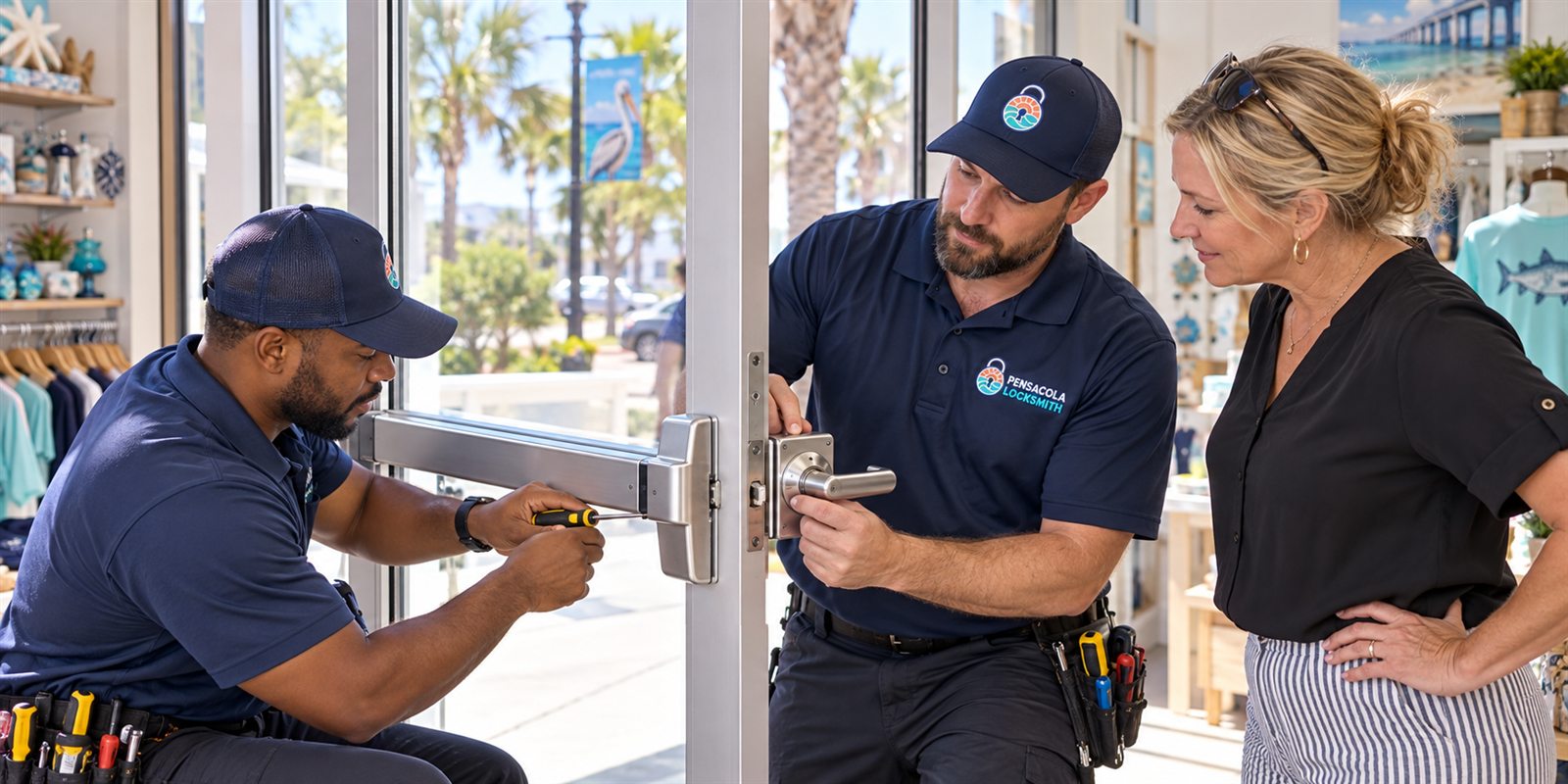
Many restaurants and bars have glass front doors with a lock in the bottom rail or a lock set into a narrow stile. These doors look inviting, but the lock and frame may be weak. A technician can check how the bolt engages and whether the frame can be strengthened. Where possible, add a second point of locking or a shield over the bolt.
Glass is a separate concern. Security film can hold glass together if it is struck, and it slows a break-in. It does not make a window unbreakable, but it increases the effort needed. Weigh this against the look of your storefront and your budget before deciding.
Coastal humidity and salt air affect doors and hardware close to the water. Aluminum frames and brass lock bodies hold up better than cheap alternatives. If your door sticks in summer or the lock feels gritty, it is a sign of wear. Maintenance now avoids a lockout during a busy weekend.
Cash offices, safes and the manager's desk
Restaurants and bars handle cash, receipts, payroll records and often a drop safe. The room where these live should have its own solid door and lock, separate from the general key group. Only the owner and a few managers should be able to open it. Keep the key off the main kitchen ring.
A safe should be anchored to the floor or a wall stud. A light safe can simply be carried away. A drop slot lets staff deposit cash during a shift without opening the safe itself. Change combinations when a manager leaves, and avoid using dates or numbers that others can guess.
If a safe key is lost or a combination is forgotten, do not attempt to force it. A technician may be able to open the safe or reset the lock depending on the model. Be ready to show proof that the safe belongs to the business. Describe the brand and model when you call and a quote is given by phone.
Walk-in coolers and storage rooms
Walk-in coolers and freezers have special latches designed to open from the inside at all times. This safety feature stops a person from being trapped. If the latch fails or a hasp is added carelessly, someone could be locked inside, which is dangerous. Never add a lock to a walk-in that cannot be opened from the inside.
Many owners want to protect expensive inventory, especially liquor, meat and seafood. A lockable cage or a separate storeroom with a solid door is a better approach than locking the cooler itself. Give the key only to the people responsible for inventory, and keep a count sheet.
Humidity and temperature changes cause hardware in and around coolers to corrode quickly. Check hinges, gaskets and latches regularly. If the door sticks or the latch is loose, call for repair before the cooler stops sealing. A technician can adjust or replace the hardware, and a quote is given by phone.
After-hours lockouts and early-morning emergencies
Lockouts in hospitality tend to happen at the worst times: a manager steps out to the dumpster and the door closes behind them, or a key snaps in a lock at closing. Having a plan saves stress. Keep a spare key in a secure location, such as with an owner, and know who can be called to bring it.
If you are locked out, do not force the door. Prying can bend the frame and ruin a good lock, turning a simple problem into a costly repair. Call us, describe the door and the lock, and ask about availability. A quote is given by phone, and a technician arrives with tools suited to the door.
Before work begins, the technician asks for proof that you own or manage the business. A business license, a lease or a manager's ID with a note from the owner generally works. This check applies to every commercial lockout. It protects your business as much as anyone else's.
Keypads, smart locks and shift-based access
Keypad locks suit restaurants with shift work. Each opener gets their own code, and the code can be removed when they leave. There is no key to copy, and no one has to chase a former employee for a set of keys. Some systems keep a log of who entered and when, which helps with questions about inventory and cash.
Choose hardware built for heavy use. A commercial-grade keypad lock handles hundreds of uses a day and resists grease, moisture and cleaning chemicals. Residential models may fail quickly in a kitchen environment. A technician can recommend the right grade and install it so the bolt aligns smoothly.
Plan for failure. Batteries run low, power goes out and codes get forgotten. Keep a mechanical backup key with the owner. Test the lock regularly. Write down the procedure for resetting codes so more than one person knows what to do on a busy night.
Patios, outdoor seating and storage
Outdoor patios and decks are popular around Pensacola, and they bring their own security needs. Gates and fences need latches and locks that survive rain, humidity and salt air. Cheap padlocks seize quickly outside, so choose weather-resistant models with covered shackles and lubricate them with a lock-specific product.
Outdoor storage cabinets and sheds often hold furniture, umbrellas, heaters and supplies. Lock them overnight so chairs and equipment do not disappear. Keyed-alike padlocks let staff carry one key for several locks. Mount hasps with hardware that cannot be unscrewed from the outside.
During hurricane season, plan for securing and protecting outdoor items, and check that locks and hinges survived storms. Wind can twist gates, and flooding can jam hardware. Call us after a storm if something does not move freely. Availability varies, so call to confirm availability when many businesses need help at once.
Tourism, seasonal staff and busy weekends
Pensacola draws visitors to the beaches and downtown, and many restaurants and bars add seasonal staff in the warmer months. Seasonal workers arrive quickly, learn on the job and leave when the season ends. That cycle is a perfect set of conditions for key sprawl. Set a rule at the start of the season: no seasonal worker receives a metal key, and managers handle opening and closing.
Busy weekends increase the chance of mistakes. A tired manager forgets to lock the back door, a cash bag is left on a desk, or a delivery person is let in without a check. Keep a closing checklist posted by the door and require a second person to confirm that every lock is secure. It takes a minute and prevents a long list of problems.
When the season ends, review the key list. Collect every key and card from temporary staff, change keypad codes and consider rekeying if any key is unaccounted for. Doing this on a schedule, rather than in response to trouble, makes it feel routine. A quote for rekeying is given by phone, and a technician can handle several doors in one visit.
Alcohol storage, liquor rooms and inventory control
Bars carry some of the most tempting inventory in any business. Bottles are easy to carry, easy to resell and easy to lose track of. A liquor room with a solid door, a quality deadbolt and a strict key policy is the foundation. Limit access to the bar manager and owner, and require a count at the start and end of each shift.
Back-bar cabinets and display shelves can have small locks to protect higher-priced items. Choose locks that bartenders can operate quickly during a rush, such as a keypad or a simple cam lock with a key on a wristband. A lock that slows service will be left open, so convenience matters as much as strength.
Think about the door between the liquor room and the rest of the building. A hollow interior door with a flimsy frame offers little resistance, and one good kick may open it. A technician can inspect the door, suggest reinforcement of the frame and strike, and recommend a lock suited to the use. Call us to describe the room and what it holds.
Fire exits, panic hardware and staying within the rules
Restaurants and bars are public assembly spaces, and exit rules are strict. Doors on exit routes must open from the inside without a key, special knowledge or excessive force. Many use panic bars that release the latch when pushed. Chaining or blocking an exit, even briefly, is dangerous and can bring serious consequences.
Owners sometimes ask for a lock that stops staff from sneaking out the back or letting friends in. The honest answer is that you cannot compromise an exit door to solve a staff issue. Alarms, cameras and clear policies handle those concerns better. A door alarm that sounds when the exit is opened can discourage misuse without creating a hazard.
Requirements vary by occupancy, building age and local rules. A locksmith is not a code inspector, so confirm your obligations with the fire marshal or building official. Then bring that guidance to us, and we will install hardware that fits it. We can also inspect existing panic hardware and tell you if it is worn, misaligned or failing.
Grease, moisture and the wear that kitchens put on hardware
Kitchens are hard on locks. Steam, grease, cleaning chemicals and constant door use wear out hardware faster than in almost any other setting. Handles loosen, cylinders gum up and latches stop retracting smoothly. A sticky lock at the back door is not just annoying, it is a sign that the mechanism is about to fail, often during the busiest night of the week.
Regular maintenance helps. Wipe handles and keyways, lubricate moving parts with a product made for locks, and tighten loose screws on handles and strike plates. Avoid spraying heavy oils into a cylinder, because they attract dust and grease and make things worse over time. If a key feels rough, replace the worn key before it damages the lock.
Choose hardware rated for commercial use in these environments. Stainless steel and sealed mechanisms resist moisture better than plain finishes. When replacing, ask for options that stand up to cleaning and humidity. Describe your kitchen and door traffic when you call, and a quote is given by phone based on the hardware that fits.
Working with a locksmith for a restaurant or bar
Tell us about your layout: number of exterior doors, interior offices, coolers, patios and any gates. Mention the problems you have noticed, such as sticky locks, unknown key copies or a history of break-ins. A quote is given by phone for simple jobs, and complicated jobs get a technician visit.
For a visit, the service call charge is explained before dispatch. This lets you decide with the full picture. We check ownership or authority first, so have a lease, business registration or a note from the owner ready. A manager who lacks authority may need the owner to confirm by phone.
Plan work for quieter hours when possible, so your team and customers are not disrupted. Keep a record of the keys issued and the codes assigned. Review the list every few months, and rekey after any staff change that raises concern. Good habits are cheaper than recovering from theft. Finally, ask the technician to show your managers how each lock works, how to reset a code and what to do if a key breaks, so the knowledge does not rest with one person.
Common questions
How many keys should a restaurant hand out?
As few as possible. Managers and owners need keys, while most staff can enter when a manager is present. Track every key in a written log and collect keys when someone leaves.
Is a keypad better than keys for shift workers?
Often yes, because each person can have a unique code that is deleted when they leave. Choose commercial-grade hardware that handles kitchen conditions, and keep a mechanical backup key with the owner.
Can I put a lock on a walk-in cooler?
Never add a lock that prevents opening from the inside. Walk-ins must always be openable from within. To protect inventory, use a lockable cage or storeroom inside or near the cooler instead.
What do you need before opening a locked business door?
Proof that you own or manage the business, such as a lease, business registration or an ID with confirmation from the owner. A locksmith checks ownership or authority before opening, rekeying or programming.
How do I find out the price before work starts?
Call us and describe the door and lock. A quote is given by phone. If the job is complicated, a technician visits and the service call charge is explained before dispatch.