Content note: this page was written by Claude (AI) for Pensacola Locksmith.
The basic parts of a door lock
Start with the pieces you can see. The cylinder is the part where the key goes in. It contains the small moving pieces that decide whether the key turns. The plug is the inner portion of the cylinder that rotates when the right key is used. The latch is the angled bolt that sticks out of the edge of the door and holds it shut against the frame. It is usually spring loaded and pulled back by turning the knob or lever.
The deadbolt is a separate bolt, usually square and sturdy, that slides deep into the frame when you turn a key or thumb turn. Unlike a latch, it does not move on its own, so it cannot be pushed back by a spring or a card. The strike plate is the metal plate on the door frame with a hole where the latch or bolt enters. A strike with long screws set into the frame stud adds real strength to a door.
The backset is the distance from the edge of the door to the center of the lock hole, and the bore is the large hole drilled through the face of the door. These measurements matter when replacing hardware, since a new lock must fit the existing holes. If you are buying a lock yourself, measure them first. A locksmith will usually check them in seconds and can tell you whether a new lock will go in without modifying the door.
- Cylinder: the key slot and its moving pieces
- Latch: the spring bolt that holds the door closed
- Deadbolt: the sturdy bolt thrown by key or thumb turn
- Strike plate: the metal plate in the frame
- Backset: edge of door to center of lock hole
How a key actually works
Most household keys operate a pin tumbler lock. Inside the cylinder are several small stacks of pins that block the plug from turning. When the right key slides in, its cuts raise each stack to the exact height where the gap between pieces lines up with the edge of the plug. This line is called the shear line. Once every stack reaches it, the plug can rotate and the lock opens. A wrong key leaves some pins blocking the way.
The cuts on a key are measured by depth and spacing. Locksmiths describe a key by its bitting, which is the pattern of depths along the blade. The blade is the part that enters the lock, and the bow is the head you hold. The shoulder is the point where the blade meets the bow, and it often stops the key at the correct depth. Keyways are the grooves cut along the blade that match the shape of the lock opening.
A key blank is an uncut key that matches the keyway but has no bitting yet. A locksmith cuts a blank to match an original or to match the lock, which is called duplicating or originating a key. When people say a key copy does not work, the usual reasons are a worn original, an imprecise cut, or the wrong blank. Starting from a clean, original key gives the best results, and a technician can check the result in the lock before you leave.
Common services explained
Rekeying means changing the internal pins of a lock so a different key operates it. The lock stays on the door, but the old key no longer works. People rekey after moving into a new home, after losing a key, or after a roommate or employee leaves. It is usually faster than replacing hardware and keeps the look of your door unchanged.
A lockout service is the opening of a locked door, car, or room when the key is unavailable. The aim is entry without damage whenever possible. Before opening, the technician checks ownership or authority. Lock repair covers fixing sticky, loose, or misaligned hardware, while lock replacement installs a new lock in place of the old. Installation can also mean adding a deadbolt or a keypad where there was none before.
Keying alike means setting several locks to open with one key, which reduces the number of keys on your ring. Master keying is a more complex arrangement where certain keys open many locks while others open only one, commonly used in apartment buildings or businesses. Master key systems add flexibility but also require careful planning, since a lost master key affects every lock in the system. A locksmith can explain the tradeoffs for your situation.
Types of locks around the home
A knob lock is the simple lock built into a doorknob. It is common on interior doors and sometimes on older exterior doors, where it is paired with a separate deadbolt. A lever handle is a similar mechanism with a lever in place of a round knob, popular for accessibility. A mortise lock sits in a deep pocket cut into the edge of the door and is common in older homes and some commercial doors.
A single cylinder deadbolt has a key on the outside and a thumb turn on the inside. A double cylinder deadbolt needs a key on both sides, which can be a safety issue in an emergency because you must find a key to get out. Many fire codes discourage double cylinder locks on homes for that reason. A rim lock is mounted on the surface of the door, not inside it, and appears on older doors and gates.
A padlock is a portable lock with a shackle, the U shaped bar that passes through a hasp or chain. A hasp is a hinged metal strap that folds over a staple to hold a padlock. Sliding glass doors often use a latch lock with a hook, plus a track bar or pin as a second layer. A patio door lock is only as strong as the frame, so a loose door can still be moved even when the lock is engaged.
Electronic and smart lock terms
A keypad lock opens with a code typed on buttons, and some also accept a key as backup. A smart lock connects to a phone or home system, allowing remote control, temporary codes, and activity logs. A fob is a small device that sends a signal to unlock a door or start a vehicle. Proximity cards or key cards work similarly and are common in hotels, offices, and apartment complexes.
A deadbolt with a motor drives the bolt electrically, either by code or app. Most of these locks run on batteries, so battery care matters. A low battery warning means it is time to replace them soon. The override key is a physical key that works if the electronics fail. Keep that key somewhere safe and accessible, because a smart lock with dead batteries and no backup key is just another locked door.
An access control system manages many doors with a central list of who can enter, usually through cards, fobs, or codes. Businesses use these to add and remove people quickly without rekeying. A magnetic lock holds a door shut with an electromagnet and releases when power is cut or a button is pressed. Fire codes require safe release for exit doors, so such systems need careful design and professional setup.
Car key vocabulary
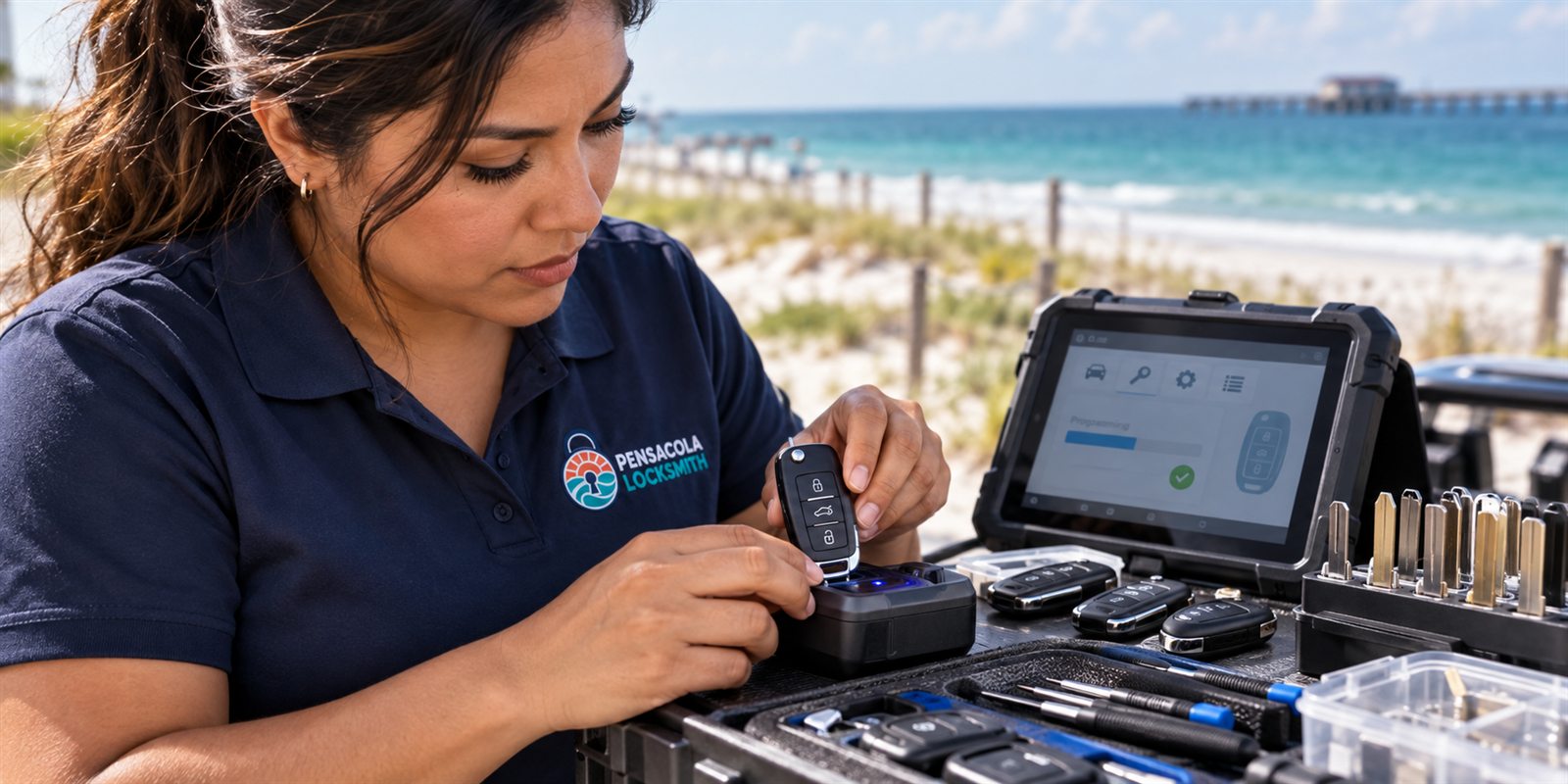
A transponder key contains a small chip that sends a coded signal to the vehicle. If the code does not match, the engine will not start even if the metal blade turns the ignition. Programming means teaching the car to recognize a new key, and it requires special equipment. A remote key head, also called a key with buttons, combines a blade with lock and unlock buttons built into the head.
A smart key or proximity key lets you start a car by pressing a button while the key stays in your pocket. A keyless entry fob unlocks doors without a metal blade. Many fobs include a hidden emergency blade you can slide out to unlock a door if the battery dies. A high security key, sometimes called a laser cut or sidewinder key, has a milled groove down the face of the blade rather than cuts on the edge.
The VIN, or vehicle identification number, is a unique serial number used to look up key information for many vehicles. Locksmiths use it, along with ownership proof, to cut or program replacement keys. An all keys lost situation means no working key remains, which can require more steps than adding a spare. Ownership or authority is checked before any key is made, because a vehicle key is a powerful tool.
Door and security hardware
A door jamb is the frame that surrounds the door, and the strike plate attaches to it. A reinforcement plate wraps around the edge of the door to strengthen the area around the lock. A door viewer, or peephole, lets you see who is outside. A door chain or latch guard allows a door to open a small amount while still staying attached, offering limited protection and a bit of peace of mind.
A door closer is a hydraulic or spring arm that pulls a door shut after you pass through, common on commercial and fire rated doors. A panic bar, or exit device, is a push bar on the inside of a commercial door that opens it quickly in an emergency. Exit devices are tied to safety rules, so adjustments should always be handled with care. A threshold is the strip at the bottom of the doorway, and a weatherstrip is the seal that helps keep out wind and moisture.
A safe is a locked container for valuables, and it may use a key, a dial combination, or an electronic keypad. A fire rated safe resists heat for a time, but ratings vary. A lockbox is a small box that holds a key and opens with a code, used by property managers and caregivers. Being familiar with these words helps you ask the right questions when you want to upgrade the security of your home or business.
Terms you might hear on a service call
A service call charge is the fee for sending a technician to your location. Quotes are given by phone, and if the job is complicated, a technician visits and the service call charge is explained before dispatch. Nondestructive entry means opening a lock without drilling or breaking it. Drilling is a last resort for locks that cannot be opened any other way, and it usually requires replacing the cylinder.
Picking is manipulating the pins in a lock with thin tools, while bumping, bypassing, and impressioning are other techniques with different goals. Impressioning makes a working key by reading marks left on a blank inside the lock. Decoding reads the pin heights to cut a key. You do not need to master these terms, but hearing them from a technician is a sign they are describing the options honestly.
Ownership verification is the step where the locksmith confirms you own or control the property or vehicle. Authority means you have permission from the owner, such as a property manager or a family member. Proof can include photo identification, a registration, a lease, or a utility bill. This step protects you and every other customer, and any responsible technician includes it before opening, rekeying, or programming anything.
Local words and conditions worth knowing
Around Pensacola, a few environmental words matter to locks. Corrosion is the slow damage metal suffers from salt air and moisture, and it is a common cause of stiff or sticking locks near the water. Seized describes a lock that will not turn at all because of rust, debris, or swelling. Humidity swell refers to wooden doors expanding in damp weather, causing latches to bind in the frame.
A hurricane rated or impact door is built to resist wind and debris, and its hardware is often heavier than standard. Storm shutters and bars are separate protective devices. A multipoint lock on certain doors engages several latch points at once for strength. Older neighborhoods may feature skeleton keys, which are old style keys for simple lever locks, and glass knobs, which were once common on interior doors.
Seasonal rentals bring words like turnover, meaning the changeover of a property between guests, and key control, meaning the practice of tracking who holds keys. Many owners use keypad or smart locks to avoid the burden of physical keys. If you are not sure which term describes your door or lock, just describe what you see when you call, and the technician will help you sort out the right vocabulary.
Words for security upgrades and maintenance
Lock grade is a rating system that describes how well a lock resists force and wear. Higher grades are built for heavier use and stronger attack resistance, while lower grades suit light residential doors. Grades are a useful starting point, but installation matters just as much. A strong deadbolt set into a weak frame with short screws offers much less protection than its label suggests.
A bump resistant or pick resistant cylinder includes extra pieces or tighter tolerances that make common attack methods harder. Restricted keyways limit who can duplicate your keys, since blanks are controlled and not sold openly. Lubricant refers to the product used to keep a lock moving smoothly. Dry graphite or a lock specific lubricant is preferred over heavy oils, which can collect dust and grit and make a lock stiffer over time.
Maintenance means checking that screws are tight, latches line up with the strike, and keys turn smoothly. A key that needs wiggling is a warning. Hinge screws, door alignment, and weatherstripping all affect how a lock performs. A short inspection once a year, especially in a humid coastal climate, can catch small issues before they turn into a lockout. Call us if something feels rough or loose.
Common questions
What is the difference between rekeying and replacing a lock?
Rekeying changes the internal pins so a new key works and the old one stops working, while the lock stays on the door. Replacing installs a different lock entirely. Rekeying is common after a move or a lost key. Replacement suits worn or damaged hardware. A technician can look at your door and explain which fits.
What does keyed alike mean?
Keyed alike means several locks are set to open with the same key. It reduces keys on your ring and is handy for front, back, and garage doors. The tradeoff is that one lost key affects every lock in the set. A locksmith can rekey multiple locks to match in one visit.
What is a transponder key?
A transponder key has a small chip inside the head that sends a coded signal to the vehicle. The car will not start unless the code matches. Replacements must be programmed to the car, not just cut. A mobile locksmith can often do this at your location after checking ownership or authority.
What does nondestructive entry mean?
It means opening a lock without drilling or breaking it, usually with specialized tools. The goal is that the lock keeps working afterward. Some damaged or high security locks may need other methods. The technician explains the options on arrival. Quotes are given by phone, and complicated jobs are explained before dispatch.
Why does a locksmith ask for identification?
A locksmith checks ownership or authority before opening, rekeying, or programming, so the service does not help the wrong person get in. Photo identification plus a registration, lease, or utility bill usually works. The step protects you as well, because the same rule applies to anyone trying to open your property.