
Content note: this page was written by Claude (AI) for Pensacola Locksmith.
Why rental doors fail more often in beach season
A vacation rental door is used differently from a home door. A family living in a house opens it a handful of times a day and knows exactly how to lift the handle, press the door, or turn the key just right. A rental sees a new group every few days, each with a different level of patience and a different way of handling the hardware. Add luggage, coolers, beach chairs and sunburned kids, and the lock gets pushed, pulled and slammed more than it was ever meant to be.
Gulf Coast conditions add to the strain. Salt air and humidity work on cylinders, latches and strike plates all year, and sand finds its way into every keyway and lockbox. A lock that behaved perfectly in February can start sticking by midsummer. Guests do not know the quirks, so they force the key, and a forced key is how a stiff lock becomes a broken one.
Beach season also compresses the schedule. Cleaners finish at noon, guests arrive at four, and there is almost no gap to notice a hardware problem before someone is standing outside with a suitcase. That is why most rental lockouts are not really mysteries. They are predictable wear showing up at the busiest possible moment.
The most common ways guests end up outside
The first cause is simple human error: a guest steps onto the balcony or the patio, the door swings shut behind them, and the keys are on the kitchen counter. Many rentals have a patio slider or a self-locking latch that engages without a key. Guests who are used to a home door that stays unlocked until they lock it do not expect this, and it catches people out in the first day or two of a stay.
The second cause is code and lockbox trouble. A keypad deadbolt or lockbox needs the right digits entered cleanly, and tired travelers often misread a message or type a code from the wrong reservation. Some boxes lock out after repeated wrong attempts and then refuse even the correct code for a period. Others have worn buttons that no longer register a press unless it lands in a very specific spot.
The third cause is hardware that has quietly failed. A deadbolt that does not fully retract, a thumb turn that spins freely, or a key that needs jiggling are all warnings. Guests do not report these because they assume it is normal. Then one evening the key snaps or the bolt jams halfway, and nobody is getting in without a technician.
- Self-locking patio and balcony doors that close behind a guest
- Mistyped or expired access codes, and lockouts after repeated wrong attempts
- Lockboxes clogged with sand, salt or moisture
- Worn keys that stick, bend or break inside the cylinder
- Dead batteries in keypad or smart locks
Lockboxes: convenient, but they need attention
A lockbox is a sensible way to hand over keys without meeting every guest in person, but it is not a install-and-forget device. The shackle and the dial or buttons live outdoors, usually hung on a railing or a door handle. Rain, spray and sand collect in the mechanism. Over a few months the numbers get harder to turn, and the release lever begins to stick.
A good habit for hosts is to test the box between stays, not only when something goes wrong. Open it, close it, scramble the code, and set it again. If the dial feels gritty, a gentle clean and a dry lubricant made for locks can help, while oily sprays tend to attract more sand. If a box fails to open, avoid hammering it. A damaged shackle can leave the key trapped and the door still locked.
Where a box is mounted matters as well. A box attached to a handle that moves can get knocked, and a box in direct afternoon sun gets hot enough to make plastic parts warp. Mounting it in a shaded, stable spot out of casual view is usually better. If a property keeps having box trouble, switching to a different access method may be the cleaner fix.
Smart locks and keypad deadbolts in rentals
Many hosts around the coast have moved to keypad or smart deadbolts because codes can be changed between guests without anyone handling a key. That is a real advantage, and it removes the lost-key problem. It also introduces a new set of failure points: batteries, firmware, wireless connections, and the motor that throws the bolt.
Batteries are the most common culprit. A lock may show a low battery warning that a guest never sees, or the host app may report one that nobody reads. Replacing batteries on a schedule, before they are nearly empty, prevents most of the calls. Humidity can also corrode battery contacts, so a quick look inside the battery compartment during each deep clean is worthwhile.
Alignment is the quieter issue. If the door has swollen in the damp or the strike plate has shifted, the motor has to push harder to throw the bolt, and it eventually stalls. A technician will check the door fit first, because a motorized lock cannot fix a bolt that rubs. Most keypad models also have a way to open the door with a physical key or a backup power source. Hosts should know where that is and keep a key somewhere accessible.
What a guest should do the moment they are locked out
Start by staying calm and checking the simple things. Try every door, including the garage entry and any side doors, but do not climb balconies or force windows. A fall or a broken pane turns an inconvenience into an injury or a damage claim. If the property has a host or manager, contact them first, because they may have a spare key, a different code or a nearby person with access.
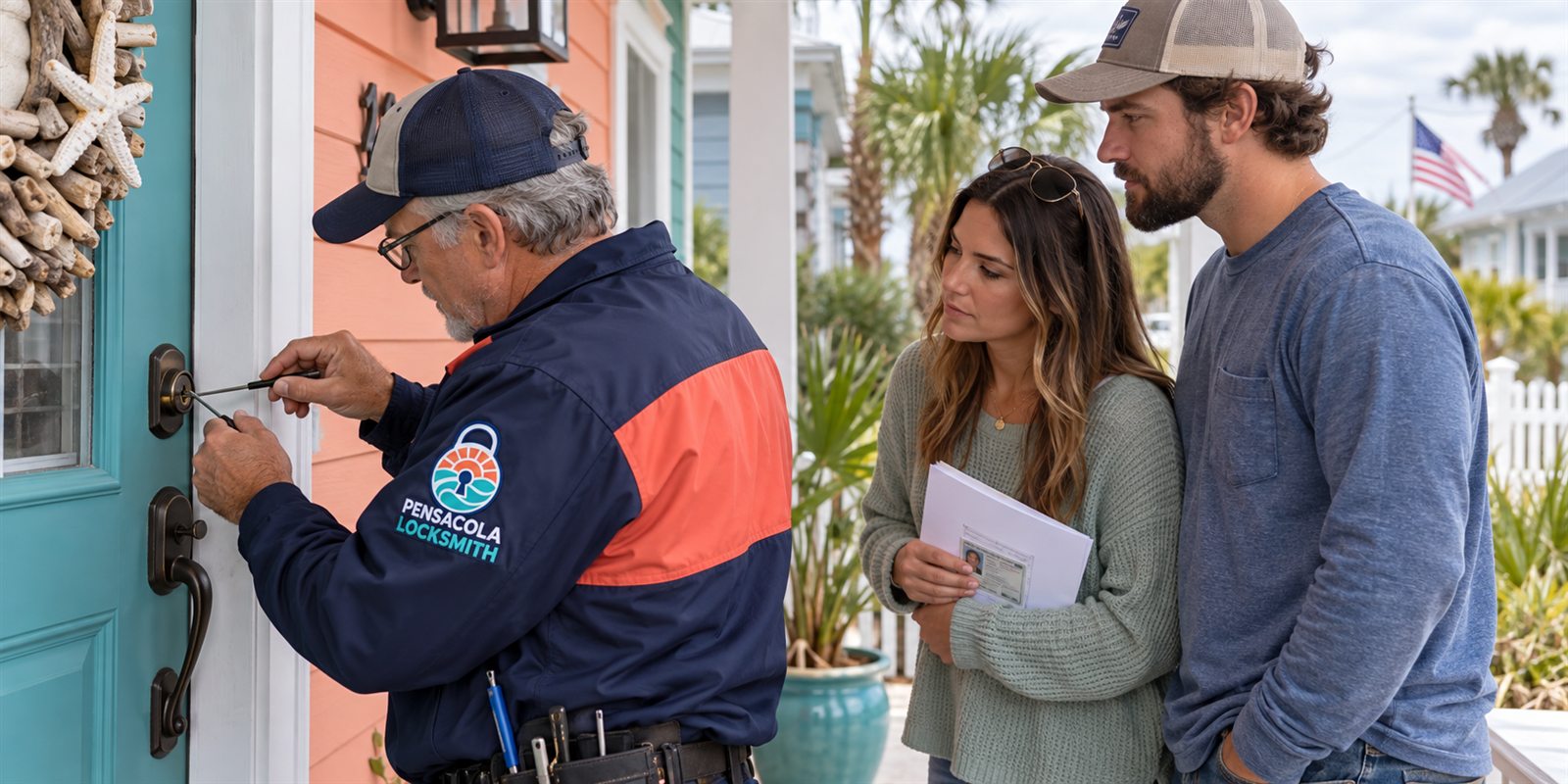
If the host cannot be reached or cannot help, calling a locksmith is the next step. Be ready to explain where you are, what kind of door it is, and whether it has a keypad, a lockbox or a standard key. A technician will want to confirm that you have the right to be there. A booking confirmation or messages from the host usually settle this, and the host may need to approve the entry by phone.
While waiting, keep your group somewhere safe and out of the sun. If children or pets are with you, find shade and water first. Avoid prying or kicking the door. Damage to the frame or latch is often more expensive and slower to fix than the lockout itself, and a rental owner will want an honest account of what happened.
Why a locksmith checks authority before opening
Rental properties create an unusual question: who actually has the right to say yes? A guest has paid for a stay, but the owner or manager controls the property. A responsible locksmith will not open a door for anyone who simply says it is theirs, because the same story could be told by someone who should not be inside.
In practice this is usually quick. A host who calls to authorize the entry, a reservation record, or an ID plus a lease or booking message is typically enough. The technician may call the owner or manager directly. If nobody can confirm authority, the technician may decline to proceed until someone can. It can feel inconvenient on a warm evening, but it protects the property, the guests and the next family who will use that door.
Hosts can make this easier by telling guests in advance whom to call and by giving the locksmith a way to reach them. A short note in the house manual with the property address, the host contact and a reminder that proof of booking may be requested saves time. It also prevents guests from trying risky shortcuts while waiting.
How hosts can prevent most lockouts before check-in
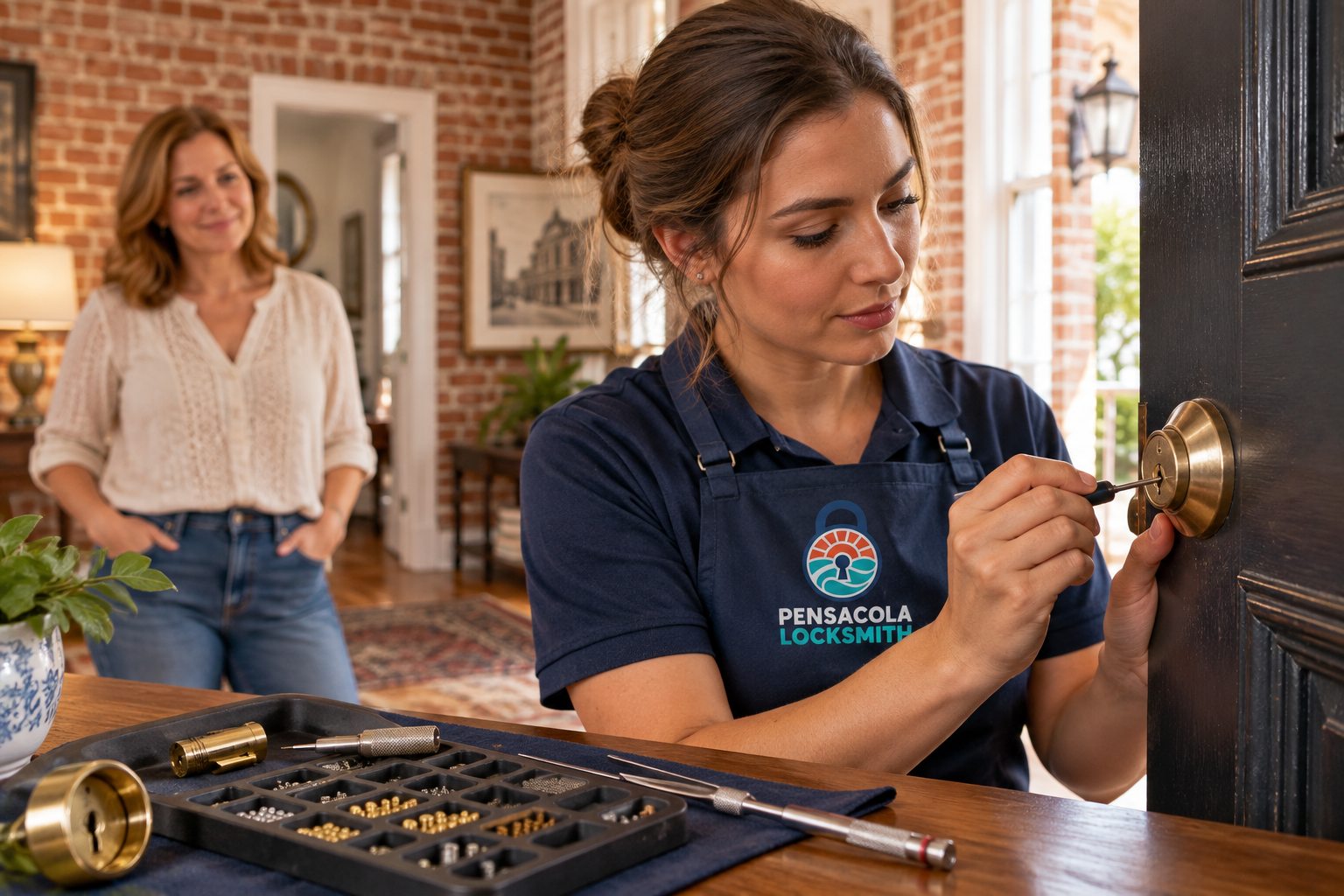
A short walk-through between stays catches most problems. Test every lock with the key a guest would actually use, not the owner key that has been worn smooth. Check that the door closes without being lifted or shouldered. Open and close the patio slider and confirm the lock engages and releases the way you expect. Look at the strike plate and the screws for looseness, since a loose plate often explains a latch that suddenly stops catching.
Make the instructions impossible to misread. Put the code and the steps in one clear message, include a photo of the lockbox location, and tell guests which doors self-lock. A line explaining that the patio door locks automatically prevents the most common evening call. Hosts who have had a repeat problem often add a small reminder card on the inside of the patio door.
Keep a spare key in a second, independent location and consider rekeying the property when a key has gone missing or a cleaner or contractor has left. Rekeying the cylinders so old keys stop working is a modest job compared with a break-in or a dispute, and it can be done at the property without replacing the hardware.
When to repair, rekey or replace rental hardware
Not every sticky lock needs replacing. A cylinder that has collected grit can sometimes be cleaned and lubricated, and a misaligned latch may only need the strike plate adjusted. A technician will test the lock with the key, with the door open and closed, and under the load of normal use before recommending anything. If the problem is wear inside the cylinder, replacing or rekeying that cylinder is often the sensible repair.
Rekeying is useful when the hardware itself is sound but the key situation has changed. A rental that has gone through a property manager change, a lost guest key or a worker who held a copy is a good candidate. It lets the host keep the existing locks while making sure only the current keys work, and it can combine several doors onto a single key so the host does not carry a ring of different ones.
Full replacement makes sense when a lock is corroded, bent or no longer meets the security needs of the property. Older rentals near the water are often the ones where salt has eaten into the finish and internal parts. Newer grade-rated hardware handles the environment better. A technician can explain the tradeoffs on site and the quote is given by phone before work begins.
Sliding doors and balcony latches on the coast
Sliding glass doors deserve their own mention, because they cause a surprising share of rental trouble. The latch is a small hook that catches a strike on the frame, and in damp coastal air the track fills with sand and the rollers wear flat. A door that drags can fail to line up with its latch, so it looks closed but is not secure, or it closes and locks when a guest only meant to step outside for a moment.
Hosts can keep these doors dependable with simple habits. Vacuum the track between stays, check that the door glides with one hand, and confirm the latch engages fully when the door is pushed home. A cut length of wood or a track bar is a common secondary safeguard, but it should be easy for a guest to release from inside, never a trap in an emergency.
If a slider will not latch, or the latch will not release, a technician can adjust or replace the hook and the strike, and in some cases the whole lock body. This is usually a modest repair compared with a door that cannot be secured at night. Replacing a worn latch on a door that guests rely on is also a good time to confirm the door itself is still sound.
Key control when many people have been inside
Over a season a rental sees guests, cleaners, maintenance workers, property managers and the occasional neighbor who was handed a spare. Each handoff is a copy that may still exist. Most of the time nothing goes wrong, but when a stay ends badly or a worker leaves, the host has no way of knowing who still holds a key.
Practical key control is not complicated. Keep a simple written list of who has a key, number the keys if you can, and collect them when an arrangement ends. Choose a key system that cannot be duplicated at any hardware counter if the property is high turnover, since restricted keys require the owner to authorize copies. A technician can set that up when rekeying.
For properties with keypads, the same thinking applies to codes. Give each guest a unique code, delete it after checkout, and give cleaners their own. When a code is reused across many people, nobody can tell who entered. Whether you rely on metal keys, codes or both, the aim is a clear record and the ability to cut off access quickly.
Getting help in the busy season
Beach season is busy for everyone, including locksmiths. If you are a host with a recurring issue, it is better to schedule a visit between stays than to wait for a lockout. A planned appointment lets the technician work calmly, test every door and talk through options, rather than rushing at night with guests waiting.
If you are a guest and already locked out, call us and describe the situation. Availability varies with demand, so call to confirm availability rather than assuming. We give a quote by phone, and if the job turns out to be complicated, such as a damaged lock, a jammed deadbolt or an unusual door, a technician visits and the service call charge is explained before dispatch.
Whether you are on a short stay or managing several properties, the goal is the same: a door that opens smoothly for the right person and stays secure for everyone else. A little attention to wear, batteries, codes and instructions makes that realistic, even in the wettest, sandiest weeks of the year.
Common questions
Can a locksmith open a rental if I am only a guest?
Usually yes, once authority is confirmed. A technician will want to verify that the owner or manager approves the entry, which often means a quick call to the host or a look at your booking details. Without that confirmation, a responsible locksmith may decline, since the property is not yours to authorize.
Why does my lockbox code stop working?
Common reasons include a mistyped or old code, sand and salt inside the dial, a worn button, or a temporary lockout after several wrong tries. Try the code slowly and without force. If the box still will not open, contact the host rather than hitting it, because damage can trap the key inside.
Should I switch a rental to a smart lock?
It can help, since codes change without handling keys. But batteries, door alignment and humidity matter, and you need a backup way in. If your doors rub or stick, fix the fit first. A technician can look at the door and tell you whether a keypad lock will work reliably there.
How often should a host rekey a vacation rental?
There is no fixed schedule. Rekey when a key goes missing, when a manager or cleaner changes, or when a former tenant or worker may still hold a copy. Many hosts also do it after buying a property so that previous keys no longer work.
What if the lock is broken, not just locked?
Tell us what you see, such as a snapped key, a spinning thumb turn or a bolt that will not move. We give a quote by phone. If the job is complicated, a technician visits and the service call charge is explained before dispatch. Call to confirm availability.