
Content note: this page was written by Claude (AI) for Pensacola Locksmith.
Why guest turnover changes everything about lock care
A family home might see the same four people open the front door for years. A rental near the beaches might see a new set of strangers every few days, each carrying a key, a code or a card that the owner will never get back with certainty. That difference is the reason hospitality properties need a different way of thinking about locks, one built around turnover rather than around a single household.
Every guest who has had access is a person you no longer control. That does not mean guests are a threat. It means a key that walked out the door in a suitcase, a code that was texted to a whole group, or a card that was never returned can all stay active long after the stay ends. Good lock planning accepts that and builds in a way to reset access cheaply and often.
Mechanical wear also builds faster. A lock that is cycled dozens of times a week wears its pins, springs and latch faster than one that is cycled a few times a day. Deadbolts get slammed by people carrying luggage. Handles get yanked by guests unfamiliar with a sticky door. A locksmith who works with rental owners looks at these patterns and recommends hardware that can take the abuse, not just hardware that looks good on the door.
Keycard systems, keyed locks and the space between
Hotels commonly use electronic card locks because a card can be reprogrammed in seconds and a lost card does not require changing a cylinder. A card lock reads a code stored on the card, compares it to what the lock expects, and then releases the latch. When a guest checks out, the next card issued changes what the lock accepts, which quietly disables the old card without anyone touching the door.
Smaller properties often stay with traditional keyed locks, and there is nothing wrong with that when the keys are managed carefully. A keyed lock is simple, does not need batteries, and is easy to service. The tradeoff is that a lost key keeps working until someone physically changes the lock. Many owners combine the two, using a keycard or keypad on the main entry and a keyed lock on utility rooms, storage closets and owner areas.
A locksmith can service several parts of this picture. That includes the mechanical side, such as latches, strike plates and deadbolt cylinders, and the programming side where the lock model allows it. Some proprietary card systems can only be reset through the vendor, and a locksmith will say so plainly rather than pretend otherwise. When in doubt, call us with the lock brand and a description, and we can tell you what is realistic before anyone drives out.
Rekeying between guests and after a lost key
Rekeying means changing the internal pin arrangement of a lock so the old key no longer turns it and a new key does. The lock itself stays on the door. For a rental, this is often the most sensible response to a key that has gone missing, because it fixes the actual risk without paying for new hardware on every door.
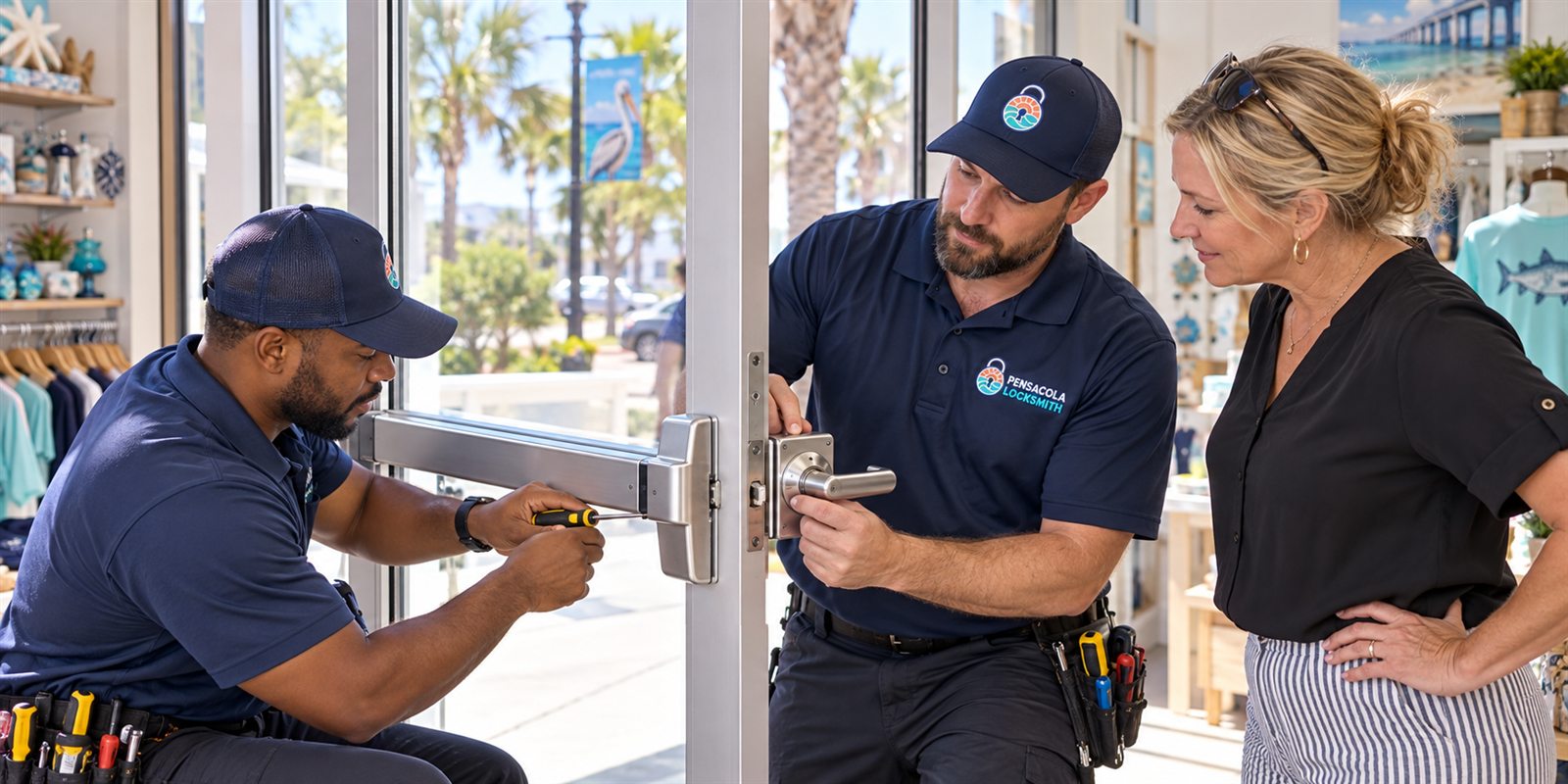
The process starts with the technician confirming that the person asking has the authority to change the lock. For a rental that usually means the owner, the property manager or someone the owner has authorized. Then the cylinder is removed, the pins are rearranged to match a new key cut, and the cylinder is reinstalled and tested from both sides. The new keys are tried in the lock before the technician leaves, not just handed over.
Owners who rekey regularly often ask for several doors to be keyed alike, so one key works the front door, the gate and the storage room. That is convenient, and it also concentrates risk, because one lost key opens everything. A locksmith can help you decide what to combine and what to keep separate. Quotes are given by phone, and if a property has many doors or an unusual system, a technician visits first and the service call charge is explained before dispatch.
- List how many doors need to change before you call
- Know which doors share a key today
- Tell us the brand on the lock if you can read it
- Have the owner or manager available to authorize the work
Lockboxes, keypads and smart locks for self check-in
Self check-in has become common for vacation rentals because it lets a guest arrive late without meeting anyone. The three usual methods are a lockbox holding a physical key, a keypad deadbolt with programmable codes, and a smart lock that connects to a phone app. Each has strengths, and each has ways to go wrong that are worth understanding before you rely on it.
A lockbox is mechanical and does not depend on power or a signal, but its code is shared, and it is easy to forget to change it after a guest leaves. A keypad deadbolt lets you give each guest a separate code and delete it afterward, which is a real security gain. A smart lock adds remote control, but it depends on batteries, a wireless link and the app staying up to date, so you need a plan for the day something fails.
Whatever you choose, keep a mechanical backup. A keyed override or a hidden spare, stored where you can reach it, saves a long evening when a battery dies or a keypad stops responding. A locksmith can install the hardware, set up the cylinder so a normal key still works, and show you how to replace the batteries before they run flat. If a guest is standing at the door unable to get in, call us and describe what the lock is doing.
Humidity, salt air and what the Gulf does to door hardware
Pensacola sits on the Gulf Coast, and the combination of heat, humidity and salt in the air is hard on metal. Properties close to the water or the bay see it fastest, but even inland rentals feel the damp. Locks that are rarely serviced can start to stick, feel gritty, or stop turning smoothly, and guests blame the property for it.
The usual signs are a key that needs wiggling, a deadbolt that does not fully throw, or a latch that sticks until you lean on the door. Corrosion can build inside the cylinder where nobody can see it. Plated finishes can pit and flake, and the screws that hold the lock can rust and loosen. A technician can clean and lubricate with the right product, replace worn cylinders and suggest hardware with a more weather-resistant finish.
Doors themselves move with the seasons. A swollen door can rub on the frame and make a good lock seem faulty, when the fix is an adjusted strike plate or a planed edge. Before blaming the lock, a technician checks alignment, because forcing a deadbolt into a misaligned strike wears both parts. Regular attention in the humid months is cheaper than an emergency call when a guest cannot get in.
When a guest is locked out: who can authorize the work
A guest locked out of a rental is a common call, and it raises a fair question: who can tell the locksmith to open the door? A guest does not own the property, so the locksmith checks authority before opening. In most cases that means the owner or the property manager gives the go-ahead, and the technician may ask for proof that the person is connected to the property.
This step protects everyone. It stops someone from talking their way into a unit that is not theirs, and it protects the owner from a door being opened on a stranger's word. Owners can make this easier by telling guests who to contact, keeping contact details visible inside the unit and the booking confirmation, and being reachable when a guest calls.
Once authority is confirmed, the technician chooses the least damaging method, usually a non-destructive opening. Newer deadbolts and quality hardware are usually opened without harm to the lock. If a lock is damaged or the door is unusual, the technician explains the options before proceeding. Call us to confirm availability, describe the lock and the situation, and have the owner or manager ready to confirm that the work is approved.
Key control and master key planning for larger properties
Once a property has more than a handful of doors, key control matters. A master key system lets a manager open any room with one key while each guest key opens only a single room. The system is built by combining specific pin patterns in each cylinder, and it needs a written plan so the structure is understood years later when someone new takes over.
The tradeoff is that more flexibility means more complexity. Every extra level of access creates more possible combinations and more places for an error. A poorly planned system can end up with keys that open doors they should not. A locksmith will usually recommend keeping the number of levels small, recording who holds which key, and storing the master pattern information securely so it is never lost.
Even small owners benefit from simple habits. Number the keys, keep a log of who has them, and never leave a spare in a spot that is obvious. When staff change, rekey the doors those staff could open. A short written key record, kept off the property, makes any future locksmith visit much faster, because the technician can see how the doors relate to each other before starting.
Back doors, balconies, gates and the spots guests forget about
Owners tend to focus on the front entry, but a guest property has several other points of access that deserve the same attention. Sliding patio doors, balcony doors, side gates, garage entries, laundry rooms and storage closets all carry locks, and many of them are the lightest hardware on the property. A weak patio latch undoes the work of a strong front deadbolt.
Sliding doors are a good example. The factory latch is often a simple hook that a bit of wear can defeat, and the track fills with sand and grit, which is common near the coast. A technician can check the latch engagement, suggest a secondary lock or a bar for the track, and make sure the door still slides without being forced. Gates and outbuildings often use padlocks, which rust quickly in salty air, so choose models designed for outdoor use.
It also helps to walk the property as a guest would. Try each door at night, with the lights off, to see whether the lock is easy to find and operate. A lock that confuses a tired traveler becomes a lockout call. Clear labels, a consistent type of hardware across doors, and a simple routine for the cleaning crew reduce mistakes. If you are not sure what you have, call us and describe the doors, and we can suggest what to look at first.
Working with cleaners, maintenance staff and property managers
Most rental owners hand keys or codes to cleaners, maintenance workers and sometimes a manager. Each of those people is trusted, and each handoff is still a risk if it is not recorded. The simplest improvement is to give every person their own keypad code where the lock allows it, so you can remove one person without disturbing everyone else.
Where keys are involved, a written log is the next best tool. Note who received which key and when, and ask for it back when the relationship ends. If a key is not returned, or you are unsure, rekeying the doors that key could open is a straightforward fix. The locksmith will confirm you have authority over the property before changing anything, which is normal and protects you as well.
Property managers sometimes call a locksmith on the owner's behalf. That works smoothly when the manager can show that the owner has authorized the work. Setting this up in advance, with a short written note or a quick call from the owner, avoids delays. It is also worth agreeing in advance who pays for lockout calls caused by guests, since the locksmith will explain the service call charge before dispatch and expects the person on site to understand it.
Seasonal demand, tourism and planning around busy periods
The Pensacola area draws visitors for the beaches, the bay, events and the naval presence, and rental properties tend to be fullest when the weather is best. Those are also the periods when a lock failure is most disruptive. A stuck deadbolt on the day of a full turnover creates a real problem, and a locksmith's schedule can be busy at the same time.
The practical answer is to do the maintenance before the rush. Walk the property between bookings and test every lock from both sides. Check that each key turns smoothly, that deadbolts fully extend, that batteries in keypads are fresh and that spare keys exist and work. Replace anything that feels rough now, not on the morning of check-in.
Hurricane season adds another layer for owners. Doors and frames that take a hit from wind-driven rain can shift, and a lock that worked in June may misbehave in October. After any storm, test the entry doors and the hardware before the next guest arrives. If something is binding or damaged, call us, tell us what you see, and we will advise whether a repair, a rekey or a replacement makes sense.
How to prepare before you call a mobile locksmith
A little preparation makes the visit faster and the quote more accurate. Gather the address, the number and type of doors involved, and a short description of what is wrong. If you can, note the lock brand, whether it is a keypad, a card reader or a standard keyed deadbolt, and whether any parts show visible damage.
Have the right person available. For a rental or a hotel room, that is the owner, the manager or someone authorized to approve changes. The technician will ask about ownership or authority before opening, rekeying or programming anything. This is routine and quick when the right person is present, and it avoids delays when the person on site is not the one who can authorize the work.
Quotes are given by phone, based on what you describe. If the job is complicated, such as a multi-door system, a card lock or a damaged frame, a technician visits and the service call charge is explained before dispatch. You decide after hearing the details. Call us to confirm availability for your area, and keep a record of what was done so the next visit starts from a clearer picture.
Common questions
Should I rekey my rental between every guest?
Not usually. Rekeying between every stay is rarely needed if you use keypad codes that you change per guest. Rekey when a key is lost, when a long-term guest leaves, when staff change, or when you simply do not know who holds copies. A locksmith can talk through your setup and suggest a sensible schedule.
Can a locksmith reprogram my hotel keycard locks?
It depends on the system. Some card locks can be serviced and reset locally, while others are tied to the manufacturer's software and need that vendor. Call us with the brand and what the lock is doing, and we will tell you honestly whether it is something we can handle before sending anyone out.
Is a lockbox safe enough for guest access?
A lockbox can work if the code is changed regularly and the box is mounted solidly. Its weakness is that the code is shared and easy to forget to update. A keypad lock with individual codes gives you better control, and many owners keep a lockbox only as a backup.
What if the guest, not the owner, calls about a lockout?
A locksmith needs the owner or manager to authorize the work, because a guest does not own the property. Tell your guests who to contact, and make sure that person is reachable. Once authority is confirmed, the technician can proceed with the least damaging method.
Do salt air and humidity really damage locks?
Yes, over time. Moisture and salt cause corrosion inside cylinders and on screws and finishes, which leads to sticking and rough turning. Regular cleaning, correct lubrication and hardware suited to coastal conditions slow the damage. Replacing a worn cylinder early is easier than dealing with a failed lock later.