
Content note: this page was written by Claude (AI) for Pensacola Locksmith.
First, work out what actually happened
Before you make any calls, take a breath and sort out which kind of problem you have. There is a big difference between a key that is misplaced somewhere in your luggage, a key that was stolen along with a wallet, and a key that you left behind in a hotel room or a rental. Each of those situations suggests a different level of urgency. A key that is probably in a suitcase pocket is an inconvenience, while a key that left your hands in a crowd may deserve a stronger response.
Go through the places the key could be, starting with the most boring. Check every bag compartment, jacket pocket, and toiletry kit. Look in the car, if you have one, including cup holders and door pockets. Call the hotel or rental host and ask if anything was found in the room. Retrace your last stops that day. It is surprising how often a key turns up after a calm search, and you will feel better having ruled out the easy answers before spending time on anything bigger.
Then ask yourself an honest question: could a stranger link this key to your address? If the key was on a ring with a tag, a parking pass, or a card that shows where you live, the risk is higher. If it was a bare key in a pocket, the risk is lower. Your answer tells you how quickly you should move on the home side of things. Write the answer down, since it will guide the choices that follow.
Who is at the house right now
The next question is practical: is anyone home, or is the house empty while you are away? If a family member, house sitter, or neighbor has a spare key, you may not have an urgent lockout at all. You simply need to let that person know the original is missing so that they can keep an eye on the doors. Ask them to check that nothing looks disturbed and that all the doors and windows are locked.
If the house is empty and no one has a spare, you are in a more delicate position. You cannot do much from a distance except to arrange a plan for when you return. A locksmith is not a remote fix for a missing key, but you can call ahead and talk about what will happen when you are back in town. We can explain what the process looks like so you know what to expect, and you can decide whether you want the locks changed on arrival.
In the case of a rental home or vacation property that you manage, the situation changes. Many owners of rentals pass keys to multiple guests, cleaners, and maintenance staff, so one lost key is a real exposure. Think about whether this is a good moment to rekey and start with a fresh set, especially if the lost key was never tracked closely. A rental turnover week is often the ideal time to make that change.
Getting back inside when you return
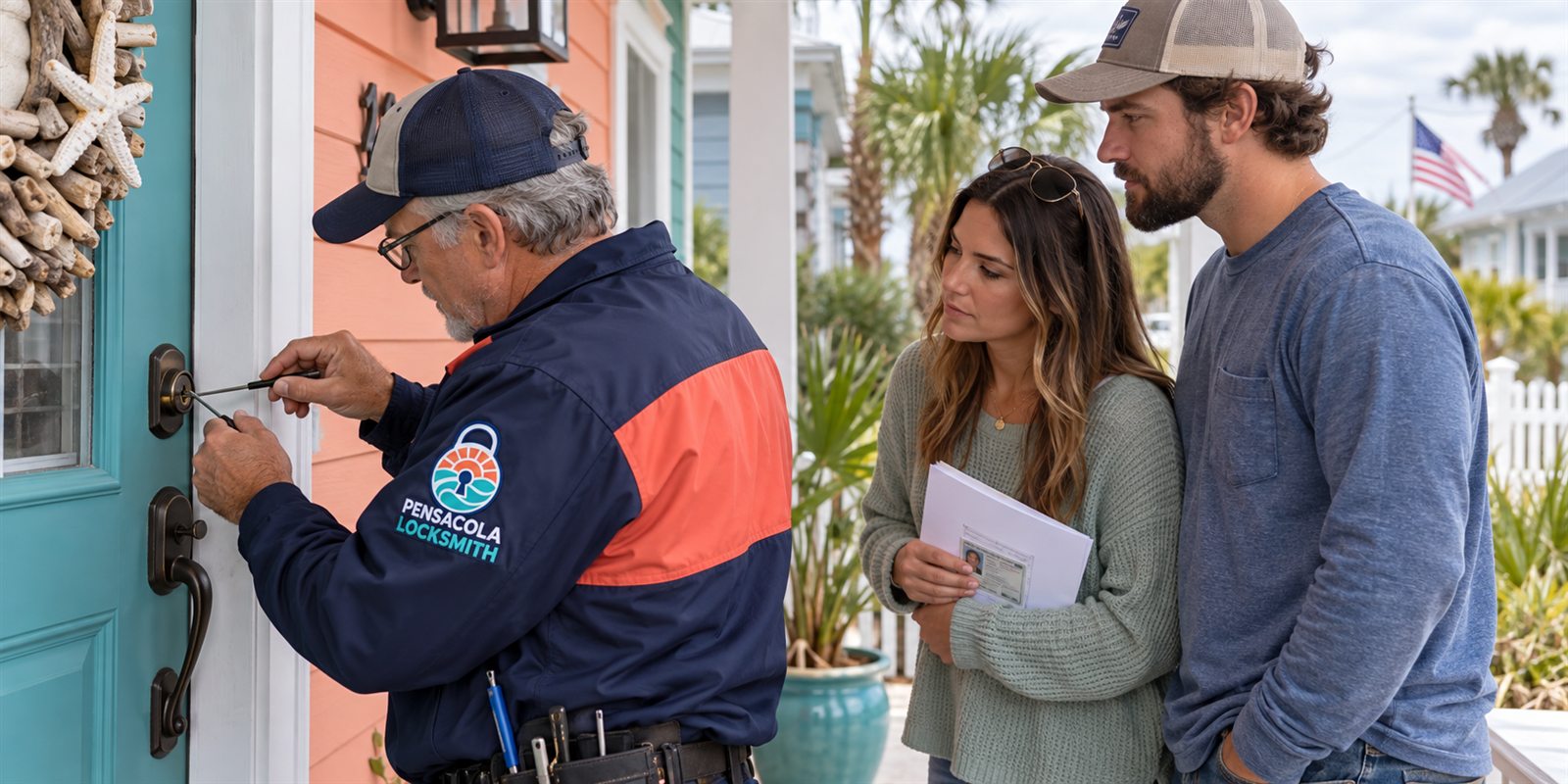
Maybe you got home and realized the key is gone and nobody else can let you in. In that case a mobile locksmith can open the door. The method depends on the lock and the door. Many standard residential locks can be opened without damage using specialized tools, and the lock continues to work afterward. A technician will usually try the least destructive approach first, because the goal is a working lock at the end of the visit.
Before opening, the locksmith will check ownership or authority. This is not a formality. A technician who opens homes needs to be sure the person asking lives there or has the right to enter, so expect to show photo identification and something that connects you to the address, such as a utility bill, a lease, or mail. If you are away and a house sitter needs entry, the owner may need to confirm permission by phone.
Quotes are given by phone, and if the job is complicated, such as a damaged lock, a high security cylinder, or a door with several locks, a technician visits and the service call charge is explained before dispatch. Please call to confirm availability. Let us know the type of door, the type of lock if you know it, and whether it is a deadbolt, a handle set, or both, so the right tools come along.
Rekeying versus replacing the lock
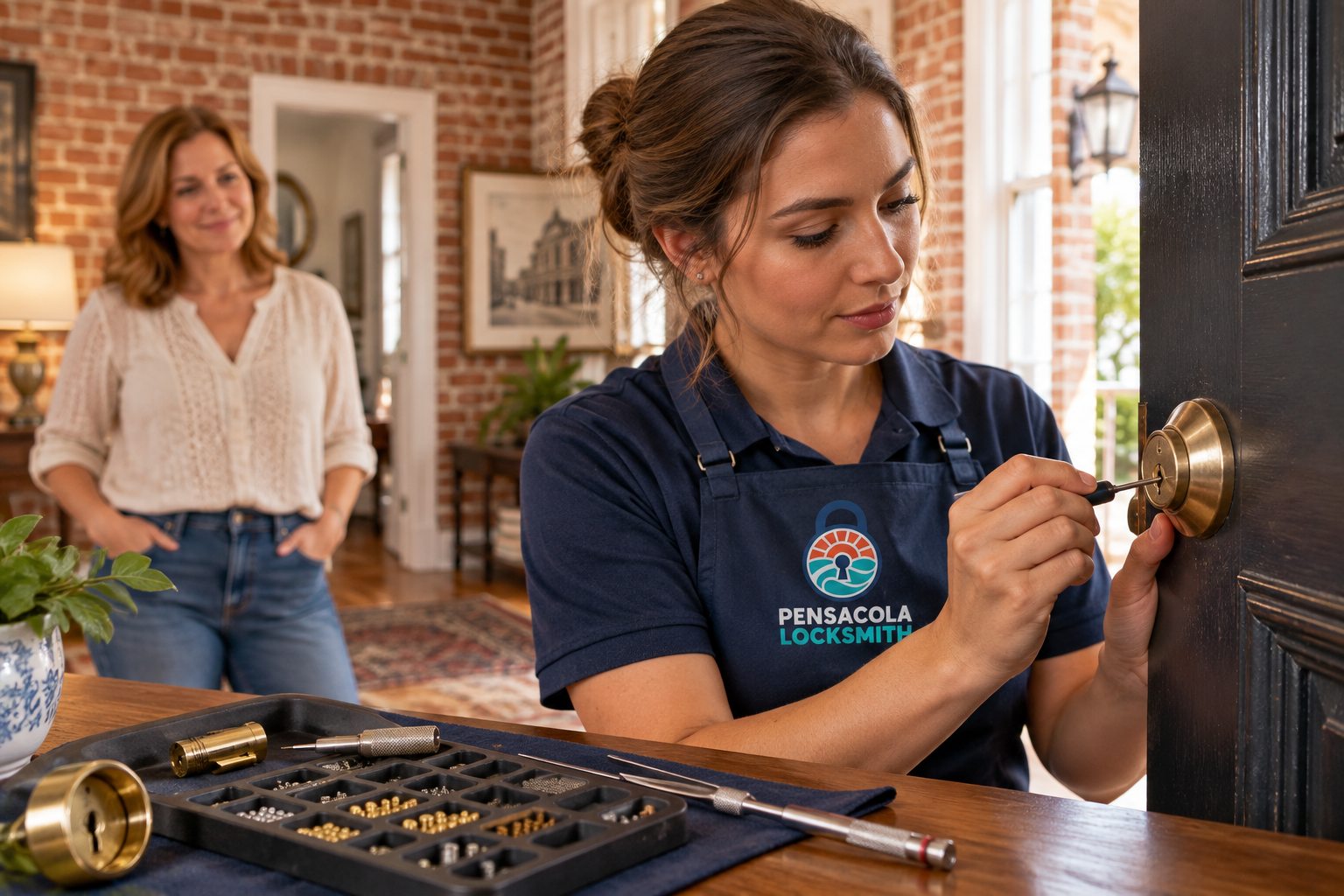
Once you are inside, the question becomes what to do about the lost key. The two main options are rekeying and replacing. Rekeying changes the internal pins of the lock so the old key no longer works, while the lock body stays in place. The lock gets new keys cut to match the new pin arrangement. It is usually the quickest route and keeps the existing hardware, which is useful if you like the look of your current locks.
Replacing the lock makes sense when the hardware is old, worn, or damaged. A lock that sticks, spins loosely, or has a loose handle is a sign that new hardware may be a better choice than reworking the old. Replacement is also an opportunity to upgrade to a stronger deadbolt or a different style. Your technician can explain the tradeoffs on site and help you decide what is practical for the door in front of you.
If you are not sure which way to go, think about how much risk you want to take. If the lost key was clearly traceable to your address, rekeying promptly is a sensible choice. If it was a bare key lost somewhere far away, you might decide the risk is low and wait until it is convenient. Either way, the choice is yours, and a good locksmith explains the options plainly without pressure.
- Rekeying keeps the same lock and changes how it responds to keys
- Replacement suits locks that are worn, loose, or damaged
- Both options give you new working keys
- Several locks can be rekeyed to the same key for convenience
Securing the house while you still wait
Sometimes a rekey cannot happen right away. Maybe you are still traveling, or a storm is approaching and plans have to shift. In that case, take sensible steps to lower the risk. Ask a trusted neighbor or relative to check the house, collect mail so it does not pile up, and make sure lights are on a timer or a smart plug so the house looks lived in.
Make sure every other entry is secure. Walk through the list in your mind: the garage door, the sliding patio door, the back door, windows, the side gate. A lost front door key does not matter much if the back slider is easy to lift. If you have a sliding door, check that the track bar or a wooden dowel is in place. Many Gulf Coast homes have large sliding doors that are worth a second look.
If your home has a smart lock with a code, change the code from your phone, and remove any codes you no longer need. A keypad lock gives you a fast way to cut off access without a technician visit, which can be a real help during travel. A traditional key lock cannot do that, so a trip back to the door with a locksmith is the main fix. Plan for that visit as soon as you return home.
Coastal homes and rentals have their own wrinkles
Homes along the Gulf Coast face salt air and humidity that wear on locks over time. A lock that has been exposed to the weather for years can stick, corrode, or feel rough in the key. If your key got lost and you end up using a spare that barely turns, this may be a good moment to have the lock inspected. A technician can often clean and service it, or recommend replacement if the wear is serious.
Many properties in this area are second homes, beach rentals, or seasonal places that sit empty for weeks. Those homes see many hands pass through, from cleaners to guests to maintenance workers, and a lost key can be a real concern. For rentals, consider using keypad locks that let you change codes between guests, which removes the need to track physical keys.
Hurricane season adds one more factor. If a storm is coming and you have a lost key problem, you want your doors working and your locks reliable. A door that cannot be opened or locked quickly is a risk when you need to leave or return. If you are worried, call us before the weather turns so we can talk about what can be done in advance. Availability can tighten before storms, so confirm early.
What to prepare before the locksmith comes
Preparation makes any visit smoother. Gather proof that you live at or own the property, such as a driver license that shows the address, a utility bill, a lease, or a mortgage statement. If the owner is away and you are acting on their behalf, have their contact details ready so the technician can verify permission. The locksmith will check ownership or authority before opening, rekeying, or changing anything.
Know which doors you want handled. Count every exterior lock, including the main door, the back door, any side entry, and any garage entry door. Decide if you want them all keyed alike, which means one key opens every door, or if you prefer separate keys for each. Keying alike is convenient but means one lost key affects all of them, so think about how you live in the house.
Clear the area around the door so the technician has space to work, and secure pets in another room. If you have a security system, be ready to disarm it or tell the technician how the door sensors behave. Having spare batteries for any keypad or smart lock is also helpful. A few minutes of preparation can reduce the time on site and keep the experience calm for everyone.
Building a travel routine that prevents this
A few habits make it far less likely that you ever repeat this. Leave your house key at home or in a hotel safe when you do not need it. Many travelers carry a full ring everywhere out of habit, and that is exactly how a lost ring turns into a security problem. Carry only what you will use on the trip, and keep other keys in a secure place.
Give a spare key to someone you trust, and keep a list of who has one. A neighbor or relative with a spare key makes a lockout a minor matter, not an emergency. If you are not comfortable giving out a physical key, consider a keypad deadbolt that allows temporary codes. Codes can be changed after each trip and do not get lost in a bag.
Finally, think about how your key is labeled. Never put your address on a key ring. If you want to be able to get a lost ring returned, use a phone number or a generic tag, not the home address. Consider a small tracker tag as well. With a few simple habits and a working spare in the right hands, a lost key becomes a small annoyance instead of a vacation ruiner.
Handling the lost key if you are traveling with family or a group
Group trips bring extra complexity, because keys change hands more often. Children carry things, a spouse borrows a jacket, and a tour or event may involve bags being checked. When a house key disappears in that kind of setting, ask everyone to check their pockets and bags before assuming the key is gone for good. Do this calmly and without blame, because a tense conversation rarely turns up a lost key any faster.
If the group includes teenagers or older relatives who stay at your home, think about who actually needs a key. Sometimes the easiest long term answer is to give each trusted adult their own copy and keep a simple list, so you know exactly how many keys exist. When one goes missing, you will know whose it was and what it could open, which makes the decision about rekeying much clearer.
Also consider the paperwork side. If the trip included a rental car, a hotel, or an event ticket, the key may have been left with one of those. Make a short list of the places and call each of them in turn, describing the key ring in detail. Many lost keys are returned to front desks within a day or two. If none of your calls turn anything up, you will at least have a clear record of where you searched, and you can move forward with a firm plan.
Common questions
Do I have to change my locks if I lost my house key?
Not always. If the key cannot be traced to your address and you have a low level of concern, you may choose to wait. If the key was on a ring with identifying tags, or was stolen with a wallet, rekeying is the wiser move. A locksmith can explain both options and let you decide.
Can a locksmith get me into my house without damaging the lock?
In many cases, yes. Standard residential locks can often be opened with specialized tools that leave the lock working. Some locks or damaged doors are harder, and a technician will tell you what to expect on arrival. Ownership or authority is checked before any door is opened.
What if I am out of town and my house sitter is locked out?
Call us to talk it over. The locksmith will need to confirm that you, as the owner, give permission, and will check the sitter's identity on site. Expect a phone conversation with you before work starts. Please call to confirm availability and share the address and lock type if you know it.
Is rekeying faster than replacing a lock?
Rekeying is often quicker because the lock body stays in place and only the internal pins change. Replacement takes a bit longer but may be better for worn or damaged hardware. A technician can look at the door and explain which option fits. Quotes are given by phone before the visit.
Should I use a keypad lock for a vacation home?
Many owners like keypad locks because codes can be changed between guests and no physical key can be lost. They do need batteries and occasional care, especially in salty coastal air. A locksmith can install one and explain how it works. It can be a good supplement to a standard key.