
Content note: this page was written by Claude (AI) for Pensacola Locksmith.
The first step: stay calm and make the call
The first thing to do after realizing you are locked out is to stop and take a breath. Panic leads to mistakes, such as trying a window, forcing the door or breaking a pane of glass. Those moves can cost far more than a locksmith call and can hurt you. A few quiet minutes to think usually saves money and effort.
Check the simple options before calling. Is there another door that might be unlocked? Does a family member, roommate or neighbor have a spare? Is there a building manager or landlord who can help? If so, that may solve the problem quickly. If not, a locksmith is the right call, and it is better to make it early than after an hour of frustration.
When you call, availability at night varies, so the first question is whether a technician can come. We ask you to call us to confirm availability, and we will tell you plainly what is possible. We do not promise arrival times, because traffic, distance and other calls change things. What we can do is explain the steps honestly so you know what to expect.
What the phone call covers
On the call, the dispatcher asks a short series of questions. Where are you? What kind of lock is it? Is it a home, a business or a vehicle? Are you safe where you are standing? The answers let the technician arrive with the right tools and parts. A deadbolt on a house requires different equipment than a car door with a chip key.
Give as much detail as you can. For a house, say whether the lock is a standard deadbolt, a keypad or a smart lock. For a car, say the make and general type and whether the key is metal, a chip key or a fob. Mention anything unusual, such as a broken key in the lock or a door that has been forced. These details help give an accurate quote.
Quotes are given by phone. You hear how the pricing works before a technician is sent, with no surprises on arrival. If the job sounds complicated, such as a damaged lock, multiple locks or a high-security cylinder, a technician visits first and the service call charge is explained before dispatch. You can decide with the facts in hand. Nothing should be rushed because it is late.
- Your exact location and any gate or access details
- The type of door or vehicle and its lock
- Whether anyone is inside, especially children or pets
- A callback number that will be answered
Safety while you wait, especially at night
Your safety matters more than the door. If you are outside alone at night, wait in a well-lit spot, such as near a neighbor's porch light or inside your car if it is unlocked. Keep your phone charged and stay where you can be seen. If you feel uneasy, go to a store, a friend's house or any public place and let the dispatcher know where to meet.
Never leave a child or a pet inside a locked vehicle, and if one is, treat it as an emergency. In that case, call emergency services first. A locksmith cannot be certain to arrive quickly, and a trapped child or animal cannot wait. This is especially serious in summer heat, when a car's interior becomes dangerous within minutes.
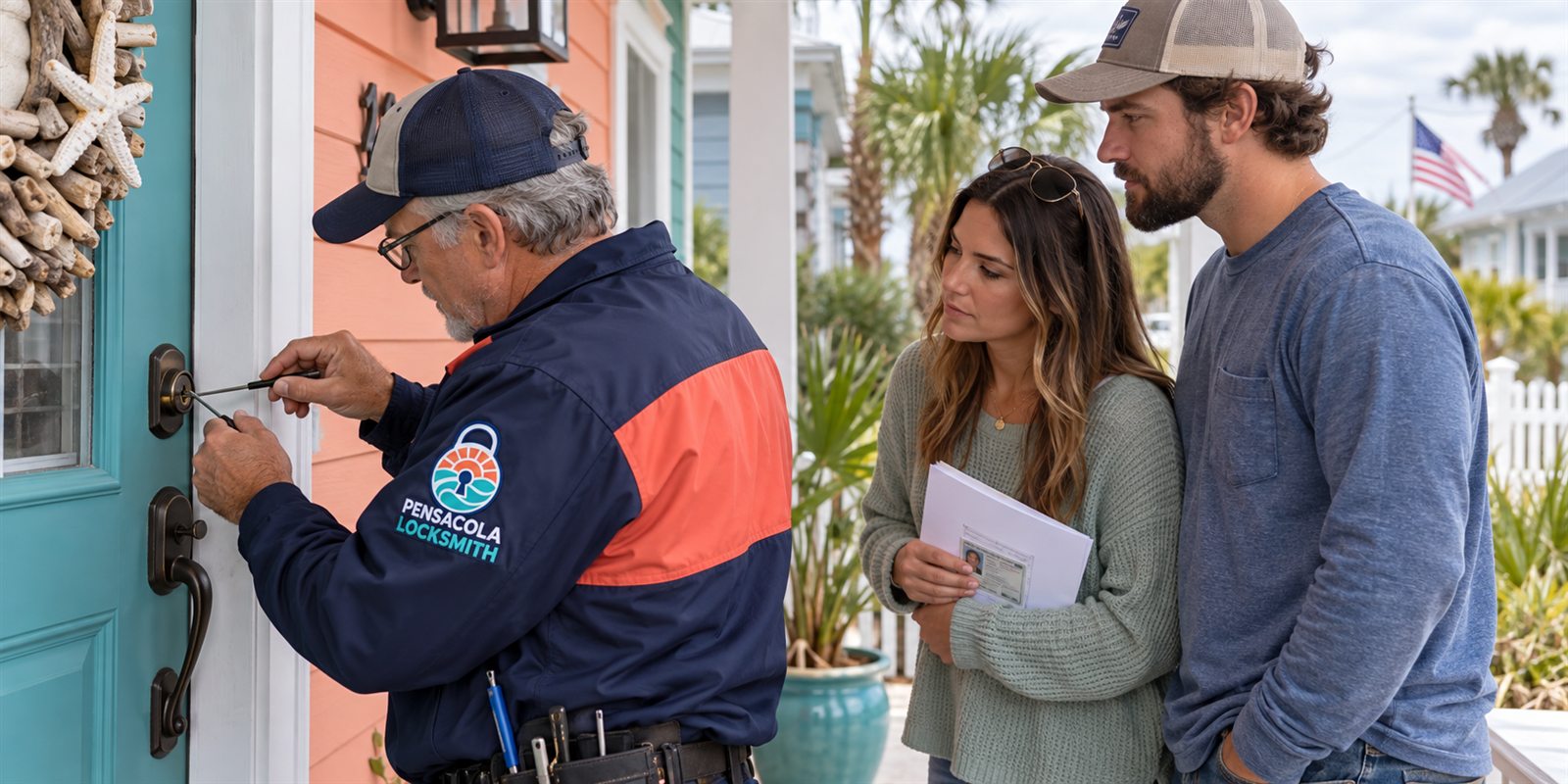
Be wary of anyone who approaches offering to help open your door. Wait for the technician you called. A reputable locksmith will tell you who is coming and will confirm identification when he arrives. If you are unsure, ask for the name and check it against what you were told. Trust your instincts and do not hand over documents until you are confident.
Proving you belong: the ownership check
Before opening a door or a car, the technician has to confirm that you have the right to be there. This is true at any hour, and it can feel awkward when you are cold and tired. The reason is simple. A locksmith who opened doors for anyone who asked would be helping burglars and car thieves, and would be putting honest owners at risk.
For a home, identification showing the address is ideal. If it is not available, other documents can help, such as a utility bill, a lease, mail, or a photo of you at the property on your phone. For a vehicle, expect to show identification and some link to the car, such as registration or insurance papers. If those are locked inside, the technician may ask other questions, and phone photos can sometimes fill the gap.
If you rent, the landlord or manager may need to confirm. If you are locked out of a business, the owner or manager must authorize the work. If the technician cannot confirm authority, the work does not go ahead, no matter the hour. Tell us on the call what documents you can show, and we will explain what is acceptable, so you can plan before the visit starts.
How a technician opens a door without damage
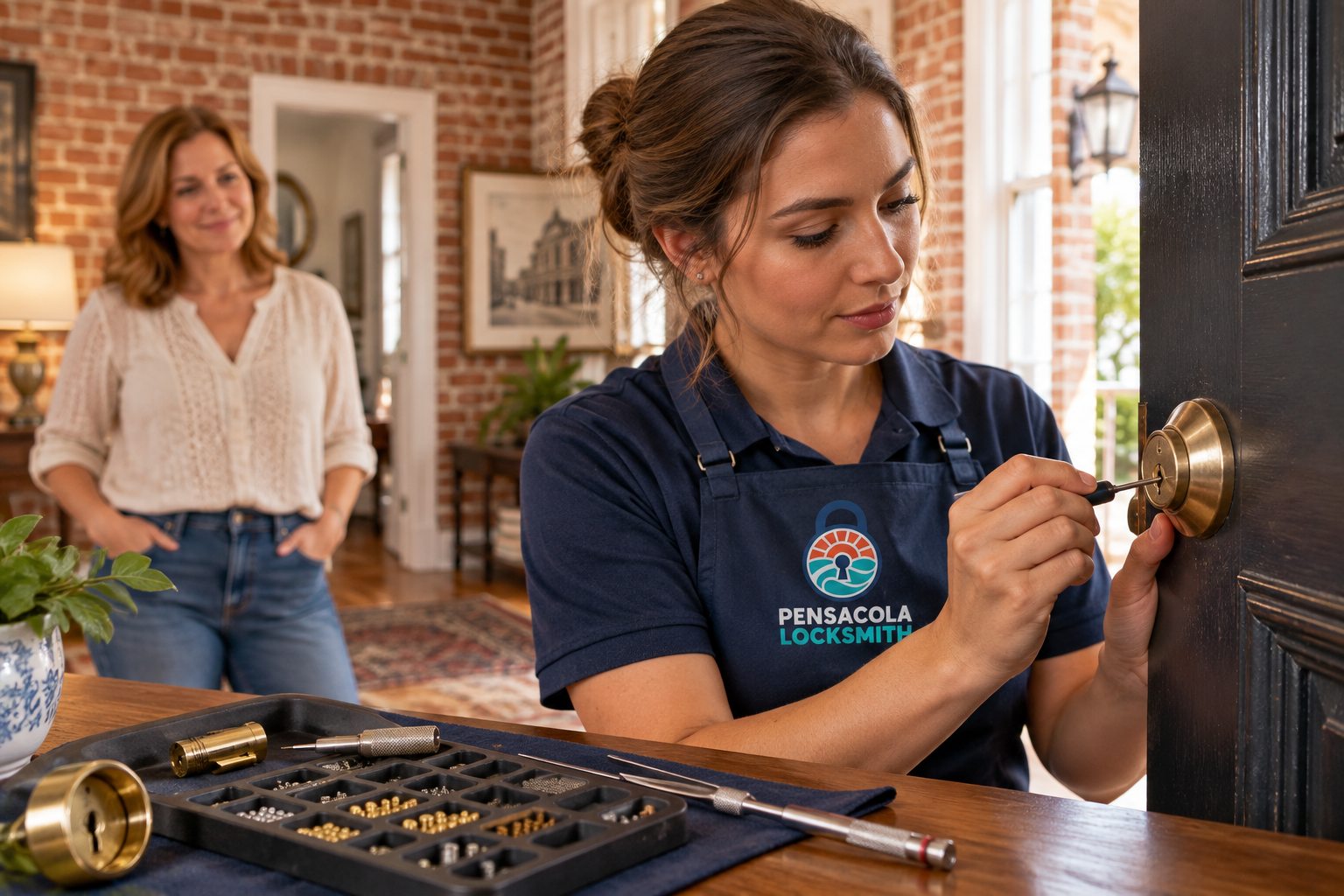
Once authority is confirmed, the technician picks the least damaging method. For many home locks, that means specialized tools that manipulate the lock without harming it. A standard deadbolt can often be opened in a short time by someone with the right skills. Other doors, with high-security cylinders or odd latches, take more care.
Car lockouts are handled with tools that reach through the door seal to trip the lock or the handle. Done properly, they leave no marks. Newer vehicles with side airbags and complex wiring in the door require care, and a skilled technician knows where not to push. Slim jim tricks seen in old movies can damage modern doors and are not used.
Sometimes opening without damage is not possible. A lock that has been forced, a broken key, or a door that has shifted may need drilling or cylinder replacement. The technician explains this first and does not proceed without your agreement. You can then decide whether to open and replace the lock now, or to take a different course in the morning.
What happens after the door is open
Opening the door is only the first step. If your key is lost, think about whether it can be found. If it fell out at a restaurant or a park, there is a chance of retrieval. If it is truly gone, the safest answer is to rekey the lock so the lost key no longer works. A technician can do this at the same visit in many cases.
If the lock itself failed, such as a broken latch or a deadbolt that jammed, repair or replacement may be needed. The technician will show you the problem and explain your options. A quick fix may be enough for one night, with a proper repair scheduled for daytime. What matters is that you can lock your home before the technician leaves.
Before the technician leaves, test the door. Lock and unlock it from both sides, and try your key. If the car was opened, check that doors and the trunk work normally. Ask for a spare key if one is useful. A short conversation about how the lockout happened can help you avoid a repeat, whether the answer is a hidden spare with a friend, a keypad lock or simply a habit change.
Common causes of night lockouts
Lockouts at night follow patterns. People return from dinner or work, step out to take the trash, or let a pet out and the door closes behind them. Automatic locks on some doors engage when they shut. A car key left on the seat or in a coat pocket goes unnoticed until the door is locked. Tired people make small mistakes.
Some lockouts are mechanical. A key breaks off in a worn lock, a deadbolt jams in humid weather, or a keypad lock runs out of battery. Coastal humidity makes locks sticky, and a door that swells in summer may bind in the frame. Early warning signs, like a stiff key or a loose handle, often appear days before a failure.
Vehicles add their own causes: a dead key fob battery, a dead car battery that prevents power locks from working, or a key locked in the trunk. In any of these cases, a locksmith can help or, if the problem is not locks, will tell you so. Describe the situation clearly on the call, and we will tell you whether it is a locksmith job or something else.
Apartments, rentals and shared buildings at night
Apartment lockouts raise extra questions. The management office is closed, the on-call number may not answer and the lease may restrict changes to the lock. Many complexes have an after-hours maintenance line, so try that first. They may have a master key and may handle the lockout themselves.
If management cannot help, a locksmith can open the door once the technician has confirmed your right to be there, often with your lease and identification. Some complexes require notice that a locksmith has been used. Tell the office in the morning. If the lock is damaged, ask before replacing it, since the lease may require the landlord to approve the hardware.
In shared buildings, the main entrance may be the problem. Fob systems, intercoms and gates are usually managed by the association or a vendor. A locksmith may not be able to bypass a proprietary system without authorization from the manager. Call us, describe where you are locked out of, and we will explain what we can do and what the building must handle.
Businesses and workplaces after closing time
A business owner who is locked out after hours faces more than inconvenience. The building may hold inventory, cash and records, and an unsecured door is a risk. Alarm systems may trigger. Staff who need to open in the morning may find the lock jammed. These cases are often urgent, and they need a clear head.
The technician will confirm that the caller owns or manages the business or has the owner's authorization. A business license, a lease or a manager's identification can help. For a break-in, call the police first, since evidence matters. After they release the scene, a locksmith can secure the building with a temporary or permanent fix.
Commercial doors often have panic hardware, exit devices and high-security cylinders. These are more involved than a house deadbolt. Quotes are given by phone, but complicated commercial jobs may need a technician to visit and the service call charge is explained before dispatch. Call us to confirm availability, and have your authority documents ready so the work can proceed without delay.
When the lockout is not really a lockout
Some late-night calls turn out to be something else. A door that will not open may have a swollen frame, not a locked bolt. A car that will not start after you get in may have a dead battery or a worn ignition rather than a lock problem. A keypad that does not respond may simply need fresh batteries. A good technician helps you sort this out on the phone before anyone drives out.
Ask yourself a few questions. Does the key turn but the door will not move? That points to the latch or the frame. Does the key refuse to enter or turn at all? That suggests a damaged or jammed cylinder. Does the car click but not crank? That is a battery issue. Describing the symptom precisely lets us say whether a locksmith can help, or whether you need a mechanic or an electrician.
We would rather tell you honestly that a visit will not solve your problem than send a technician for nothing. If your trouble is outside what we do, we will say so. If it is within our work, we will explain the likely steps. Call us and describe exactly what the door, lock or vehicle is doing, including any sounds, and we will help you work out the next move.
Keeping a record afterward
Once the night is over, write down what happened while you still remember it. Note the time, what was done, whether the lock was changed and which keys now work. If a lock was replaced, keep the receipt and any information about the new hardware. This record helps if something goes wrong later or if a landlord or insurer asks.
If you lost a key, think hard about where it might be and whether someone could find it and know where it fits. A key with a tag showing your address is a larger risk than a plain one. When in doubt, rekey. If the key was for a vehicle, a replacement and, where possible, reprogramming so the old key no longer starts the car is a sensible precaution.
Make a plan to prevent a repeat. Give a spare to a trusted person, add a keypad lock, or change a habit like leaving keys in a coat. If the night revealed a failing lock, schedule the repair in daylight, when you can compare options without pressure. Call us afterward with any questions about what was done or what to change.
Getting ready before it happens again
The best time to prepare for a lockout is before it happens. Give a spare key to someone you trust and who lives nearby. Consider a keypad deadbolt for your front door, with a mechanical key as a backup. Keep a photo of your identification and lease on your phone, in case your wallet is locked inside.
Save a locksmith's number in your phone before you need it. In the stress of a lockout you may not remember how to search for one, and a phone that is nearly out of battery makes it worse. Write the number on a card in your wallet too. Be sure you can recognize who you are calling, and avoid unfamiliar numbers that appear in a hurried search.
Build small habits that prevent lockouts. Check your pockets before closing the door, keep a key on a hook by the exit and avoid leaving keys in a vehicle. If you wake up to a stiff lock, address it that week. Call us to ask about locks that make life easier, and to confirm availability whenever you need help, day or night.
Common questions
Do you give an arrival time for night calls?
No. Arrival depends on distance, traffic and other calls, so we do not promise a time. Call us to confirm availability, and we will explain what is possible and keep you informed. Meanwhile, wait in a safe, well-lit place.
What if my ID is locked inside the house or car?
Tell us on the call. Other proof can help, such as a utility bill photo on your phone, a lease, or a message from your landlord or manager. The technician must confirm your right to be there before opening anything, and we will explain what is acceptable.
Will opening my door damage the lock?
Usually not. Most locks can be opened with specialized tools that leave them working. If a lock is broken, forced or unusual, drilling may be needed, and the technician will explain this before proceeding. You decide whether to continue.
How are prices handled for late-night calls?
Quotes are given by phone before a technician is sent, so you know how it works before you agree. If the job is complicated, a technician visits first and the service call charge is explained before dispatch. Call us and ask any questions.
What should I do if a child is locked in a car?
Call emergency services immediately. Do not wait for a locksmith. A child or pet inside a closed car faces danger quickly, especially in warm weather. Once the situation is safe, a locksmith can help with the car lock itself.