
Content note: this page was written by Claude (AI) for Pensacola Locksmith.
How a deadbolt is supposed to work
A deadbolt is a simple idea carried out with a few precise parts. When you turn the key outside or the thumb turn inside, a cam connected to the cylinder pushes or pulls a metal bolt in and out of the door edge. The bolt slides through a hole in the door, and when extended it sits in a hole in the frame, locking the door in place.
For the bolt to move freely, three things must agree. The cylinder must turn properly, the internal mechanism must carry that motion to the bolt without binding, and the bolt must be able to slide in and out of the frame hole. When any one of these fails, the bolt stays where it is, and the lock feels either stiff, jammed or strangely loose.
Knowing this helps you describe the problem accurately. A bolt that feels loose when you turn the key, with no resistance and no movement, suggests a broken link inside. A bolt that feels hard and stops suggests binding against the frame. A bolt that moves partway suggests a mechanism that is dirty or worn. Each clue points toward a different cause.
Binding against the strike and frame
The most common reason a deadbolt will not retract is pressure on the bolt from the door frame. If the door has sagged, swollen or shifted, the bolt may be pressed tightly against the side of the strike hole. Turning the key then asks the mechanism to drag the bolt across a surface that is gripping it.
A simple test works well. Lean gently on the door in the direction that takes pressure off the bolt, usually by pushing the door toward the hinge side or lifting slightly on the handle, while turning the thumb turn. If the bolt suddenly releases, you have found the issue. The door and frame are fighting the lock, and the lock itself may be fine.
Long-term fixes involve the door, not the lock. Tightening hinge screws, replacing short screws with longer ones that bite into the framing, adjusting the strike plate, or enlarging the strike hole slightly can end the binding for good. Simply forcing the bolt over and over wears the lock. Fixing the alignment protects it.
Humidity, swelling and seasonal movement
Wood absorbs moisture. In humid weather, especially during the long Gulf Coast summer and the rainy days around storm season, doors and frames swell. A door that closed perfectly in spring may press tightly in August. The bolt, which had a little clearance, now has almost none, and the lock begins to bind.
Older homes in the area often have solid wood doors and original frames that have moved over decades. Settling soil, shifting foundations and sagging hinges all change how a door sits. Some bind only at certain times of day, when the sun heats one side of the door or the air conditioning dries the indoor air.
If your deadbolt sticks only in some seasons or at certain hours, mention that to the technician. It points directly at movement, not at a failing mechanism. A small adjustment may be all that is needed, and replacing a perfectly good lock would solve nothing. Honest diagnosis saves money and avoids unnecessary work.
Failed mechanisms inside the lock
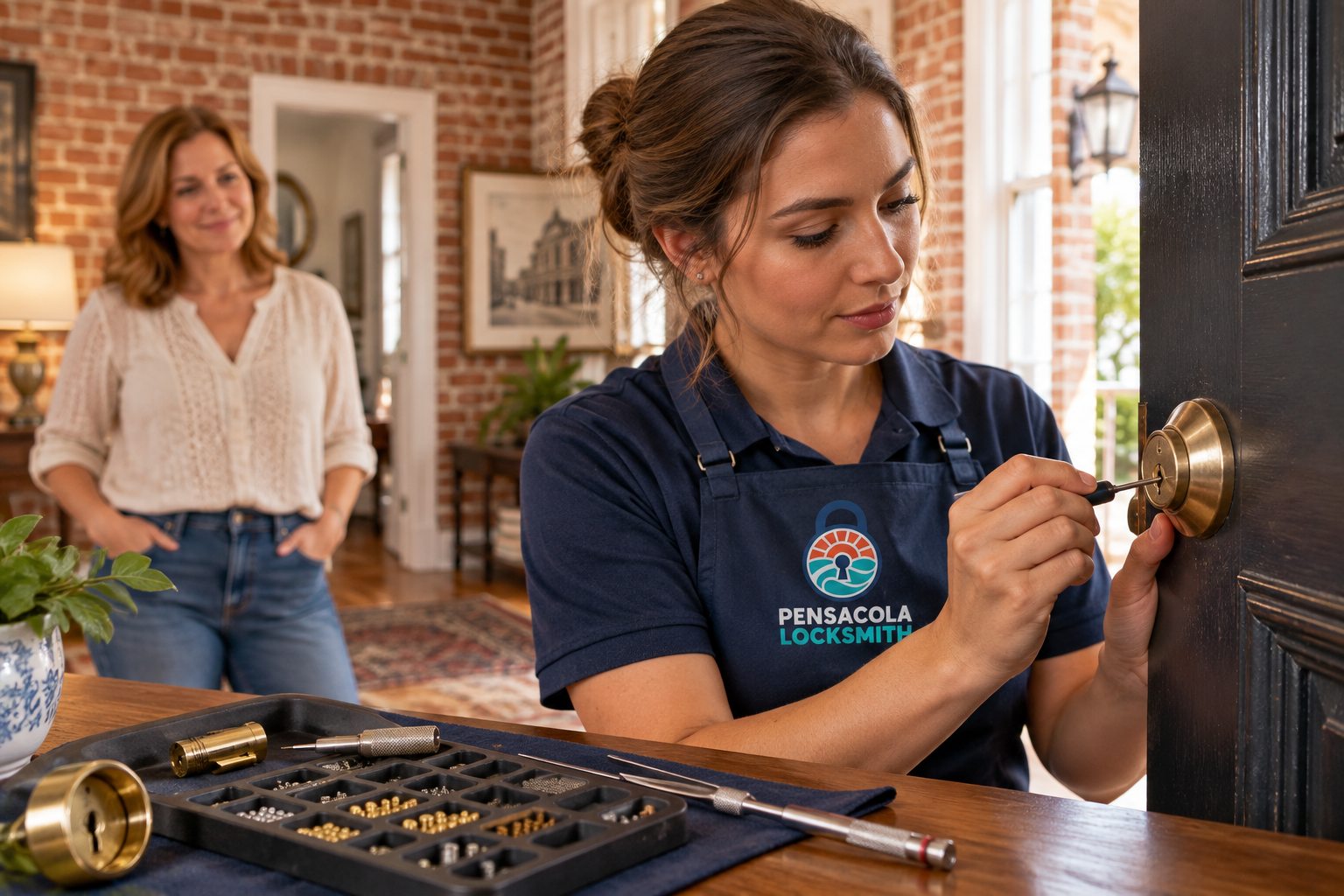
Sometimes the problem is inside the lock body. Springs can weaken or break, the cam can slip on the cylinder tail, and the gears or links that move the bolt can wear or snap. When this happens, the key may turn freely without moving the bolt, or the thumb turn may spin with no effect.
You can sometimes tell by feel. A key that turns all the way around with no resistance often means the tailpiece has broken or slipped out of the cam. A thumb turn that feels loose and wobbly suggests that the screws holding the interior assembly have backed out, or that the interior plate has cracked.
These failures are not rare. Deadbolts that were installed in a hurry, that are exposed to salt air, or that are used heavily every day will eventually wear out. A technician can open the lock, replace the failed part if it is available, or recommend replacing the entire deadbolt. The decision depends on the age, the quality and the cost of the parts.
Corrosion and dirt in the bolt path
The bolt slides through a bore in the door edge, and over time that bore collects dust, old lubricant, paint and rust. In a coastal climate, moisture and salt accelerate the rust, and a thin film of corrosion on the bolt can make it hard to slide. The key turns, but the bolt barely moves.
Paint is a surprisingly common culprit. When a door is repainted without removing the hardware, paint can fill the gap around the bolt or glue the faceplate to the door. A bolt that used to slide easily now has to fight through dried paint. The fix is to remove the lock, clean the bore and reinstall it.
A technician will often remove the bolt assembly to inspect it. A bright, smooth bolt that moves freely in hand suggests the problem lies elsewhere. A dull, scored or rusty bolt suggests it needs cleaning or replacement. Light dry lubricant, applied sparingly after cleaning, helps the bolt slide without attracting grit.
What you can safely try before calling
Begin with the gentlest tests. Try the thumb turn inside and the key outside separately. If one works and the other does not, the issue is probably in the linkage on one side. Try both with the door slightly pressed toward the hinge side, then slightly pulled away. Pay attention to when the bolt moves most easily.
Check the screws on the interior assembly. If they are loose, tighten them gently with the correct screwdriver. Make sure the thumb turn is aligned straight, not twisted. Look at the bolt edge for visible paint or rust. If you can see an obvious obstruction and you are comfortable, a clean cloth and dry lubricant may help, but do not pry at the mechanism.
What you should avoid is force. Pliers on the thumb turn, a hammer on the door, or a screwdriver forced into the keyway can turn a stuck bolt into a broken lock. If the key will not turn with light pressure, or the thumb turn feels like it is about to snap, stop. A technician can work on it without causing more damage.
- Press or lift the door slightly while turning
- Tighten loose interior screws gently
- Look for paint or rust on the bolt edge
- Stop if anything feels like it might break
Safety when someone is trapped inside
A deadbolt that will not retract from the inside is a safety issue. In an emergency, people need to leave quickly, and a door that cannot be opened is dangerous. If you or anyone in the home is stuck, and there is any risk of fire or medical emergency, call emergency services first. Do not wait for a locksmith.
If there is no immediate danger, make sure that another exit is available, such as a back door, a garage door or a window you can open. Hurricane season brings extra concern, because people may need to leave quickly with little notice. A front door that sticks in the locked position is a hazard when time matters.
Many local building rules require that homes have exit routes that do not need a key from inside. If your deadbolt requires a key to open from the inside, think about whether that suits your household. A thumb turn on the inside is usually the safer choice, and a technician can discuss whether your lock arrangement serves you well.
How technicians release a stuck bolt
The technician first diagnoses the cause, using the same tests described above. If the bolt is under pressure from the frame, relief may come from adjusting the door or strike. If the mechanism is failing, the technician works from the interior side, removing the thumb turn assembly and inspecting the cam, springs and tailpiece.
When the lock cannot be operated at all and the door must be opened, the technician may need to bypass the bolt. Depending on the lock and door, this can involve working through the gap between door and frame, retracting the bolt with a thin tool, or removing the lock from the door edge. The aim is to open the door with as little damage as possible.
If the lock is beyond saving, it is replaced with a new deadbolt, and the technician makes sure the new bolt aligns with the strike. They check it thoroughly, operating it multiple times with the door open and closed. A new lock in a door that still binds will soon fail the same way, so the door fit is part of the job.
Repair, rekey or replace
When the cause is alignment, the repair is usually carpentry and adjustment. When the cause is a worn mechanism, the choice is between replacing parts and replacing the lock. A good-quality deadbolt with a single failed spring may be worth repairing. A lightweight, corroded lock with several worn parts usually is not.
Rekeying is a separate option. If the lock works well but you want new keys, for example after a tenant leaves or after a key is lost, rekeying changes the pin combination so old keys no longer work. This does not fix a stuck bolt, but it is a smart add-on if the lock is already being serviced.
Replacement gives a chance to improve security. A new deadbolt with a solid bolt, a reinforced strike plate and longer screws makes a door more resistant to forced entry. The technician will describe the grade of lock and what it offers. Quotes are given by phone, and if the job is complicated, a technician visits and the service call charge is explained before dispatch.
Rentals, tenants and shared properties
In a rental, deadbolts see heavy use, and keys pass through many hands. A bolt that sticks may be a sign of wear, or of a tenant who forced the lock. Property managers often prefer a quick repair that returns the door to service. Guests who cannot get in or out of a vacation rental are quick to complain.
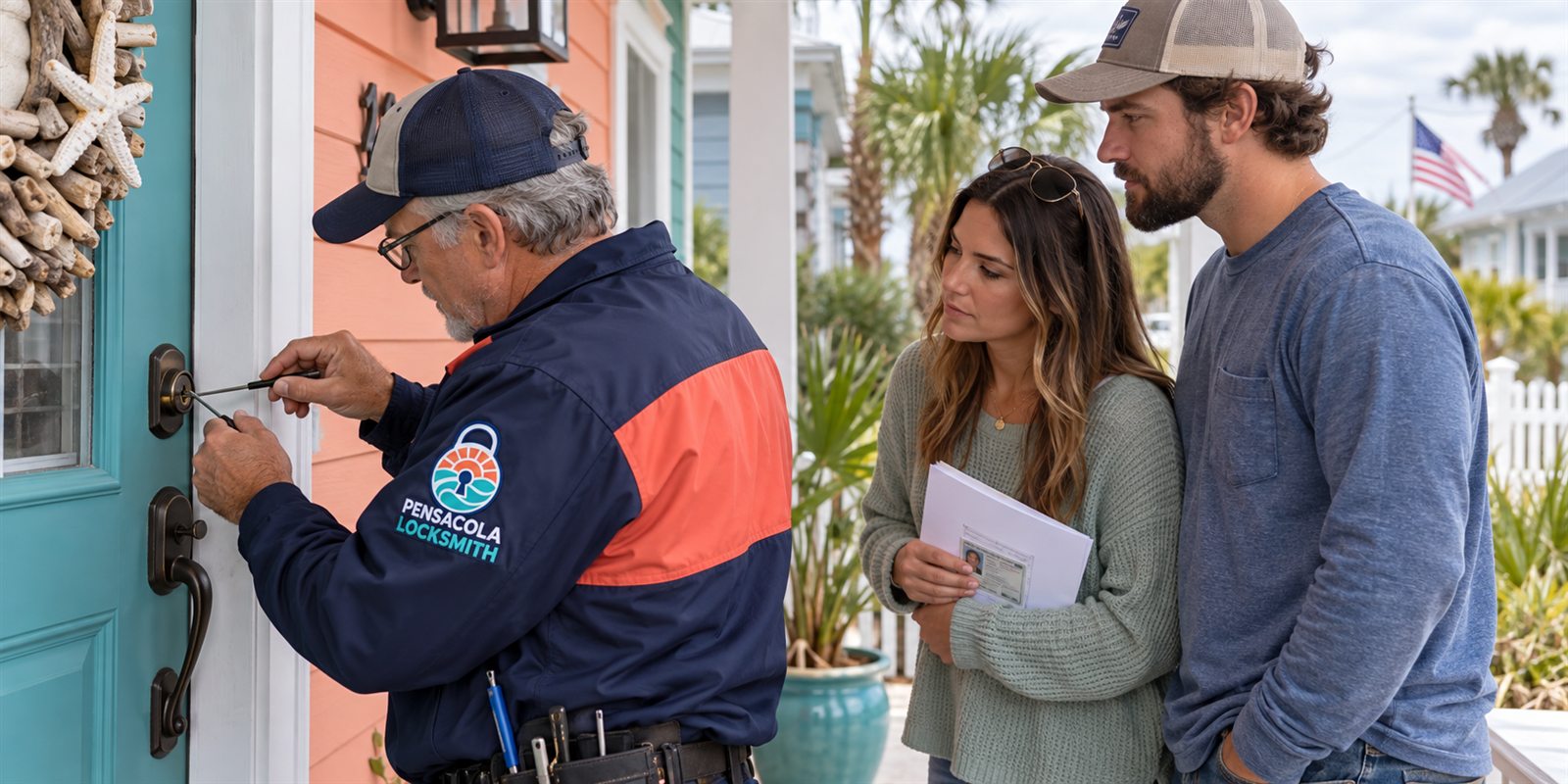
If you are a tenant, notify the landlord or manager before arranging work. The lock belongs to the property, and changing it without permission can violate the lease. We always check ownership or authority before opening, rekeying or replacing a lock, so we may ask for the owner's confirmation or a lease document.
For businesses, a deadbolt on a back or side door may be the main security. A stuck bolt can make closing up at night a problem. Tell us who has authority to approve work. If the door is part of a larger access system, such as a master key arrangement, mention that, because the work must preserve the rest of the system.
Keeping a deadbolt healthy
A few habits extend the life of a deadbolt. Lock it fully each time, throwing the bolt all the way into the strike. Partly thrown bolts wear the cylinder and strike unevenly. Avoid slamming the door with the bolt extended, since the impact stresses the bolt and the frame. Keep the keyway clean.
Check the door fit once or twice a year. Look at the gap around the edges and the alignment of the bolt with the strike hole. If the bolt hits the edge of the hole, correct it before it binds. Use dry lubricant lightly on the bolt and keyway, and wipe off any excess so dust does not stick.
Replace worn keys. A key that has lost its crisp edges strains the pins and the plug. Keep a spare in a safe place, and use it occasionally so you know both keys work. If the lock ever feels different, such as stiffer, looser or noisier, trust that feeling and have it examined before it fails completely. Please call to confirm availability when you need a visit.
Double cylinder, single cylinder and thumb turn types
Not every deadbolt is built the same way, and the type affects both the problem and the repair. A single cylinder deadbolt has a key on the outside and a thumb turn on the inside. A double cylinder deadbolt needs a key on both sides. Each has a place, but the double cylinder carries extra risk if the key is not within reach during an emergency.
A third type is the keyless or electronic deadbolt, which uses a keypad or a smart module to move the bolt. If the bolt on one of these will not retract, the cause may be low batteries or a weak motor, not the usual mechanical binding. That is a different diagnosis, and it starts with fresh batteries and a look at the strike alignment.
When you call, tell us which type you have and what you notice. Say whether the thumb turn feels loose, whether the key spins freely, and whether the bolt moves partway. These details let the technician bring the right parts, and they often make it possible to explain the likely repair before anyone arrives.
Common questions
Why will my deadbolt not pull back when I turn the key?
The common causes are pressure from a shifted door or frame, corrosion or paint in the bolt path, and a failed part inside the lock such as a broken cam or spring. Pressing or lifting the door slightly while turning can show whether alignment is the cause. If not, a technician should inspect the mechanism.
Can I fix a sticking deadbolt myself?
Simple steps are fine, such as tightening loose interior screws and applying dry lubricant sparingly. Avoid force, pliers or prying, since these can break the lock or the key. If the bolt stays stuck, leave it for a technician, especially if the door must remain secure.
Is a stuck deadbolt a safety risk?
It can be. If someone is trapped inside during an emergency, call emergency services first. Otherwise, confirm another exit is available and arrange a visit. A thumb turn on the inside is usually safer than a lock that needs a key from both sides.
Will you need proof of ownership?
Yes. We check ownership or authority before opening, rekeying or replacing a lock. A lease, bill or the owner's confirmation can serve. If you rent, tell us who the owner is. This protects the property and the people who live there.
How do I get a quote?
Call us, describe the lock and what it does, and we give a quote by phone. If the job is complicated, a technician visits and the service call charge is explained before dispatch. Please call to confirm availability for the time you need.