
Content note: this page was written by Claude (AI) for Pensacola Locksmith.
Why a locksmith asks before opening your door
It can feel strange to be asked for proof at your own front door, especially when you are tired, annoyed or standing outside in the heat. The question is not an accusation. A locksmith can open nearly any residential lock, which means the same skill that helps you could help a stranger who wants to get into a house that is not theirs. Checking residence or authority is the one thing that separates a trustworthy locksmith from a risky one.
Think about it from the other side. If someone claimed to be locked out of your home and a technician simply opened it, you would want that technician to have asked questions first. The check is a form of respect for the person who actually lives there, and it applies equally to owners, tenants, family members who live in the home and caretakers acting for an owner.
A reasonable technician will explain this plainly, ask politely and move on once the answer is clear. If a company never asks anything and offers to open any door for anyone, treat that as a warning sign rather than a convenience. Our technicians check ownership or authority before opening, rekeying or programming, and we say so up front on the phone.
Some people worry that being asked for proof means the technician does not believe them. In practice it works the other way. A calm, routine check shows that the person at your door takes the job seriously, and it keeps your home from becoming the target of someone who simply walks up and claims to live there. Ask about the process when you call, and you will usually hear a clear and reasonable explanation.
Documents that usually settle the question
The most convincing proof is a photo identification that shows the address of the home you are locked out of. A driver license or state identification card with the current street address is often all that is needed. If your card still shows an old address, do not worry, because other paperwork can fill the gap. The goal is a reasonable link between you and the house, not a perfect file of records.
Other documents that help include a utility bill, a mortgage statement, a lease agreement, a property tax notice, an insurance declaration page, a bank or credit card statement mailed to the address, or official mail from a government office. Even a recent package delivery notice or a message from a landlord can support the picture when paired with identification. Digital copies on your phone are usually fine, so check your email and your banking apps while you wait.
A technician looks at the whole situation rather than a single paper. Matching a name on your identification to a name on a bill, a mailbox or a lease is the common pattern. When names differ, for example after a marriage or when a parent owns the home, a short explanation and a second document usually resolves it without any drama.
Digital documents are widely accepted when they are clearly yours. A screenshot of a bill, a lease sent to your email or a photo of an insurance card can all help, as long as the name and address are readable. If your phone is dying, charge it with a car adapter or borrow a charger from a neighbor. Having something to show makes the visit much shorter.
- Photo identification showing the home address
- A recent utility, internet or insurance bill
- Lease, mortgage or property tax paperwork
- Official mail addressed to you at the property
What if your wallet and phone are locked inside
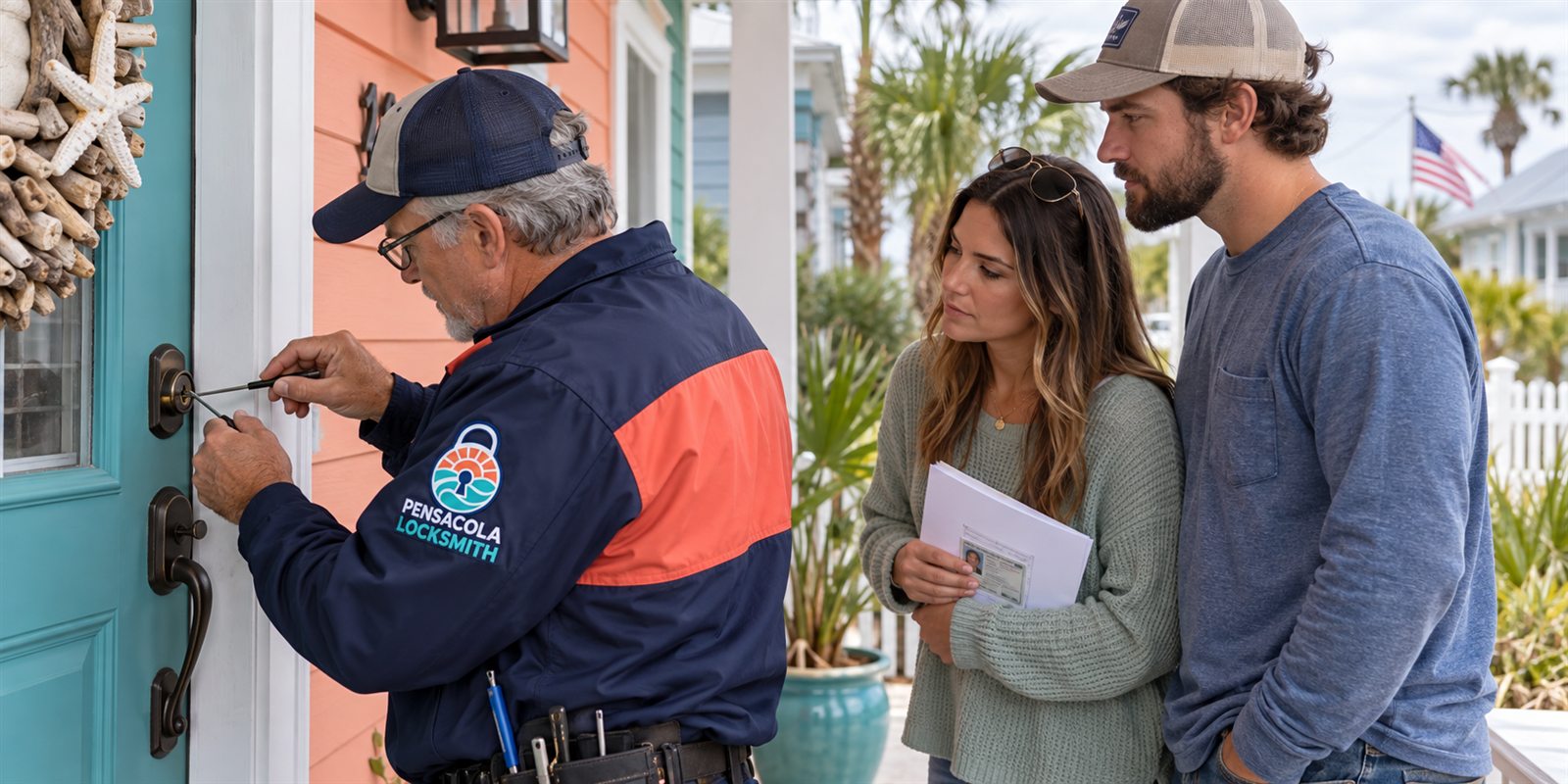
This is the most common worry, and it is easier to handle than most people expect. If your identification is behind the locked door, a technician can often work with other evidence available on the spot. A neighbor who knows you live there, a property manager who can confirm your tenancy by phone, or a family member who can email a copy of your lease may be enough. Mail or packages sitting at the door with your name can also help.
Sometimes the technician can open the door first and ask for identification once you can reach your belongings, but this is a judgment call that depends on how confident they are in the situation. They may also ask you to describe something only a resident would know, such as the layout inside or the name on the mailbox. None of this is a trick. It is just a way to be sure.
If you cannot show anything at all, be honest about it and ask what options exist. A landlord, a building manager or a homeowners association office may be able to confirm you live there. In a rental, the landlord often has the authority to approve the opening. Calling us ahead of time lets us explain what will work for your specific case before a technician is dispatched.
Names sometimes do not match across documents. A person may use a middle name on a lease and a shorter name on a bill, or a married name may not yet appear on every record. Mention this early, and offer whatever second item connects the dots. Technicians see these small mismatches all the time and usually resolve them with a sensible question or two.
Special cases: tenants, roommates and family
Tenants are residents too, and a signed lease or a rent payment record normally satisfies the check. If the lease names only one person and you are a roommate or a partner who lives there, bring something that links you to the address, such as mail, a bill or a message from the leaseholder. The leaseholder or the landlord can also give a quick verbal approval by phone, which a technician may accept in combination with your identification.
Family situations come up often. An adult child living at a parent home, a spouse whose name is not on the deed, or a caretaker watching a house for an owner can all be legitimate. The technician will look for authority, which can be demonstrated by a call from the owner, a written note, or documents showing you live there. Be ready to give the owner contact details so a quick confirmation can happen.
Short-term rentals and vacation properties near the beaches add another layer. A guest locked out of a rental generally cannot authorize a lockout service on their own. The property manager or the owner can approve the work, and a technician will usually want to speak with them. If you are a guest, contacting your host first often gets things moving faster.
Many people ask whether a phone call can replace documents. It can sometimes support them. A landlord, a building manager or an owner can confirm that you live in the unit, and the technician may combine that call with your identification. A call on its own, from someone the technician cannot verify, is usually not enough. The aim is to reach a reasonable confidence, not to create obstacles.
What happens when you call and when the technician arrives
When you call, we ask for the address, the type of lock on the door, whether the door is a deadbolt, a knob lock or a smart lock, and whether there is any damage. We also ask who you are in relation to the home. This is the first part of the ownership check, and it also helps the technician bring the right tools. Quotes are given by phone, and we ask you to call to confirm availability for your location.
At the door, the technician will ask to see your identification or whatever documents you have, and will compare them with what you told us on the phone. They may ask you to stand where they can see you while they work. Once the check is complete, they choose the least damaging method, which for most residential locks means bypass or picking rather than drilling.
If the job turns out to be more complicated than described, for example a high-security lock or a door that is damaged, a technician visits and the service call charge is explained before dispatch. You should never be surprised by a figure at the door. If anything about the plan feels unclear, ask the technician to restate it before they begin.
Keep the conversation friendly. Technicians are not immigration officers or detectives, and they have no interest in your private life. They only need enough information to be sure that opening the door is the right thing to do. Answer calmly, show what you have, and let them know if anything is missing. A cooperative approach usually gets you inside sooner than frustration does.
Preparing before you ever get locked out
A few minutes of preparation can turn a stressful lockout into a short interruption. Keep a photo of your identification and a recent bill or lease in a secure folder on your phone or in a cloud account that you can reach from any device. Make sure your phone itself is not the only way to prove who you are, because a dead battery has stranded many people outside.
Consider leaving a spare key with someone you trust, such as a neighbor, a relative or a property manager, and tell them when they might be asked to help. A lockbox with a code is another option, though it should be mounted properly and the code changed after any guest or contractor uses it. Salt air along the Gulf Coast can corrode cheap lockboxes, so pick a sturdy one.
If you rent, save your landlord or manager contact details somewhere other than the locked home. If you share a house, agree on a plan for who calls whom. These small habits mean that when the door does shut behind you, you already have the evidence and the contacts a locksmith will ask about.
Accidents happen to careful people too. Even if you did all the right things, a gust of wind can slam a door, a child can flip a latch, or a key can snap in the lock. Treat the lockout as a small problem with a clear solution. The documents you gather now can also be useful for other tasks, such as setting up a utility account or renewing a lease.
Common mistakes during a lockout
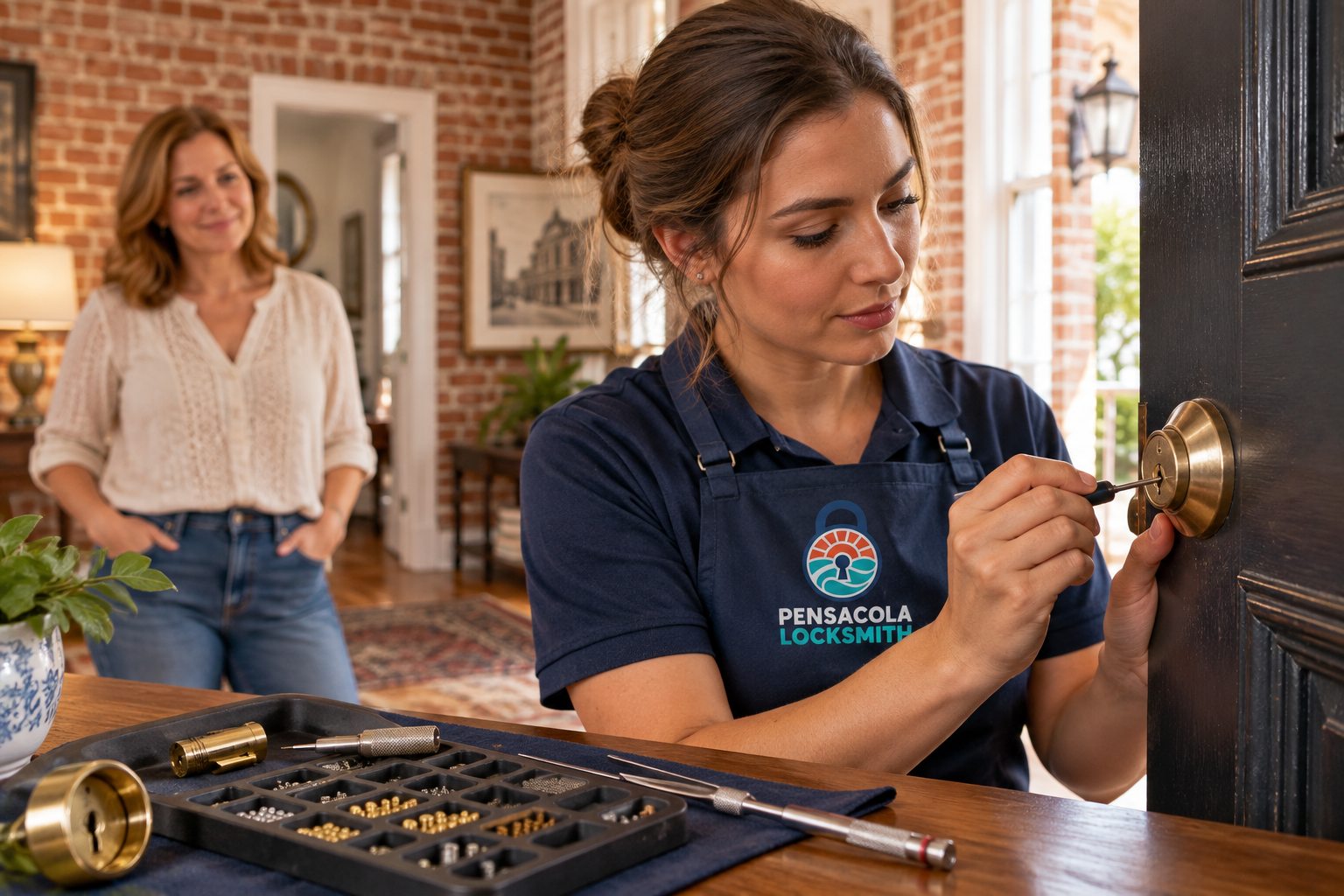
The first mistake is forcing the door or breaking a window out of frustration. That turns a simple opening into a repair bill and can leave the home unsecured afterward. Locks that fail to turn are often not truly stuck, and a technician can usually open them without any damage. Try not to pry at the frame, kick the door or push tools into the keyway, because these actions can bend parts and make the job harder.
The second mistake is hiring the first company that answers without asking questions. Ask whether the company will check your residence, how quotes work and whether the technician arrives in a marked vehicle. A company that will not discuss any of these on the phone is not one to trust with your front door.
The third mistake is assuming the lockout means the lock is broken. Many lockouts come from a lost key, a key left inside or a door that closed behind someone. Once you are back in, check whether the lock still works smoothly. If the key was lost rather than left inside, consider rekeying so that nobody who finds it can use it.
Hurricane season adds one more reason to keep records handy. If you evacuate and return to a damaged or unfamiliar situation, you may need to show that the property is yours to get help or to get through a checkpoint. Keep a small folder, physical or digital, with identification and proof of address. You will be glad of it long after the lockout is forgotten.
Storm season, coastal homes and extra considerations
Around Pensacola, humidity and salt air can swell wooden doors and corrode lock parts, which is a surprisingly common reason for a door that will not open even with the right key. During hurricane season, homeowners may also evacuate and return to find doors that stick, swollen frames or electronic locks that lost power. If you return from an evacuation and cannot get in, explain this to the technician so they can bring suitable tools.
Older homes in the area sometimes have original hardware that is difficult to replace, and the technician may suggest careful picking rather than drilling to preserve it. Historic character is worth protecting. Newer homes often have smart locks, which can lock you out through a dead battery or a failed app, and these may need a different approach.
Military families, students and seasonal residents often live in a place for a short time and may not yet have bills in their name. If that describes you, a lease, an orders document, a university housing letter or a note from the property manager can serve as proof. Tell the dispatcher what you have and we will explain whether it will work.
If you were never able to prove residence at the time, do not despair. Come back with the documents when you can, and talk with the dispatcher about alternatives such as a landlord visit or a scheduled appointment. Not every situation can be solved in one stop, and a prepared second attempt is better than rushing a decision that cannot be undone.
After you are back inside: next steps
Once the door is open, take a minute to look at the lock. Does the key turn smoothly? Does the latch catch properly when you close the door? If anything feels rough, mention it to the technician before they leave, since a small adjustment is easier while they are still there. Ask for a spare key if the lock allows it, and put one in a safe place you can reach.
If the lockout happened because a key was lost or stolen, think about rekeying. Rekeying changes the internal pins so the old key no longer works, and it is often a quicker and gentler option than replacing the whole lock. It is especially worth doing if the lost key had an address tag on it or if you cannot be sure where it went.
Finally, tidy up your documents. Update the address on your identification, keep digital copies of bills and leases, and store your contact list somewhere safe. The next time something goes wrong, the proof you need will already be in your pocket. If you have questions about any of this, call us and we can talk through your situation in plain terms.
Common questions
What if I only have a photo ID with an old address?
That is common and usually workable. The technician will look for a second document that links you to the home, such as a bill, a lease, mail or a message from a landlord. Having both together is normally enough. If neither is available, tell the dispatcher and they can explain what other confirmation may be accepted.
Can a landlord approve the opening instead of me?
Yes, in many cases. A landlord or property manager has authority over the rental and can confirm by phone that you live there. The technician may still want to see some identification from you. Have the landlord number ready when you call so the check goes quickly and the technician is not delayed at the door.
Will the locksmith open the door without any proof?
No. We check ownership or authority before opening, rekeying or programming. If proof is hard to show right away, we work through other options with you, such as a neighbor, a manager or a family member who can confirm. This protects residents and keeps everyone safe, so please do not take the question personally.
Do I need to be present for the lockout service?
Usually yes. The technician needs to see you and your documents, and you should be there to confirm the work is done. If you cannot be there, for example when a family member is locked out of your home, call us first and explain. We may be able to confirm authority with you by phone.
How do I find out the cost before a technician comes?
Call us and describe the door and the lock. Quotes are given by phone. If the situation is complicated, a technician visits and the service call charge is explained before dispatch, so there are no surprises. Please call to confirm availability for your location at the same time.