
Content note: this page was written by Claude (AI) for Pensacola Locksmith.
What is genuinely easy to do yourself
Swapping one standard knob, lever or deadbolt for another of the same size is the classic beginner job. Most modern doors are drilled to a common pattern, with one large hole through the face and a smaller hole in the edge. If the new hardware matches those holes, the work is a matter of removing two screws, pulling the old set apart, and installing the new one in reverse order.
Tools are modest. You need a screwdriver, perhaps a drill and a tape measure, and a clear idea of which way the door swings. Take the time to read the instructions that come in the box, because small details, such as which side the thumbturn goes on, matter more than they seem. Keep the old parts until you know the new ones work.
Interior privacy locks, closet latches and simple bedroom door sets also fall in the easy category. If something goes wrong, the stakes are low. The door is not your main protection, and a mistake can be corrected on the next attempt. Starting with a low stakes lock is a good way to learn how the parts fit together before touching your front entrance.
Where do-it-yourself jobs commonly go wrong
The most frequent trouble is a mismatch between the new lock and the door. Doors vary in thickness, backset and bore size. A lock that looks right on the shelf may not fit if the existing hole is smaller, the edge bore is a different size, or the backset is not the standard distance. Forcing parts into place damages the door or leaves the lock loose.
Misalignment is the second big issue. A deadbolt that does not line up with the hole in the frame will drag, bind or fail to extend fully. People often respond by loosening screws or enlarging the strike hole, which reduces security and produces a lock that works only sometimes. Proper alignment means checking the door, hinges and frame, not just the lock.
The third is a lock installed backward or with the wrong parts. The latch can face the wrong way, the cylinder can be seated incorrectly, or a spacer can be left out. The result may look finished but fail when you need it most, such as when a key turns but the bolt does not move. These errors are easy to make when working from memory instead of the instructions.
Jobs that deserve a professional
Anything that involves cutting or reshaping the door is best handled by someone with the right tools. If a bore hole has to be enlarged, a mortise pocket altered or a door edge repaired, a mistake is permanent. A worn or damaged door can often be reinforced professionally, but a poorly drilled door needs replacing.
Mortise locks, found in many older homes, are another example. The mechanism is more complex, parts are sometimes unavailable, and incorrect reassembly can leave the lock jammed shut with you on the wrong side of the door. Servicing one calls for patience and experience.
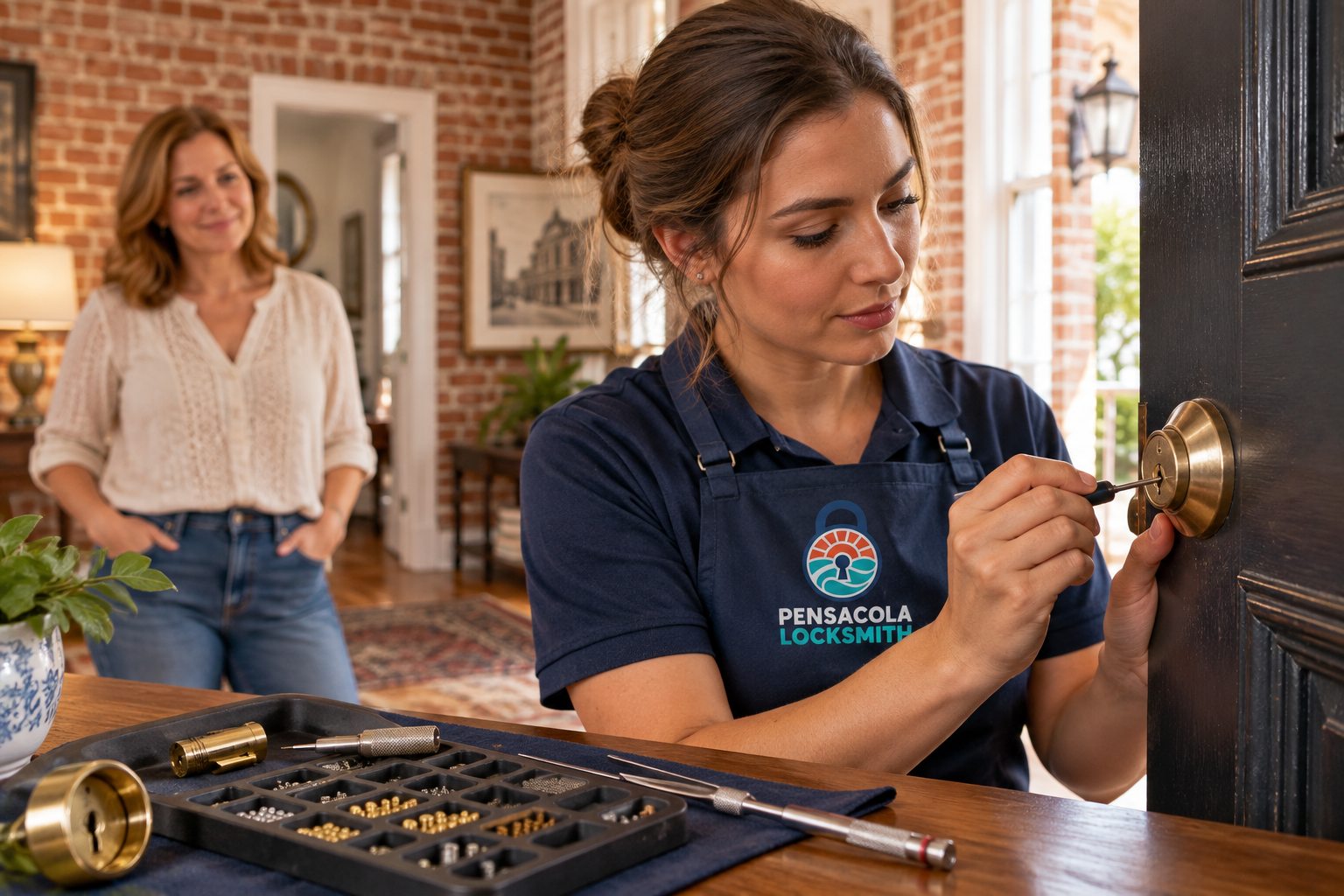
Rekeying, high security cylinders, master key systems and electronic locks also deserve professional attention. The mechanical principles are simple, but the tools, the tiny pins and the planning needed to avoid cross-keying are not. For electronic and smart locks, wiring, programming and compatibility add more layers. If the lock protects something valuable, consider paying for the knowledge as well as the hardware.
- Doors that need drilling, filing or repair
- Mortise locks and older hardware
- Rekeying, master keys and restricted keyways
- Electronic, keypad and smart lock installs
- Any lock where you cannot get back in if it fails
The hidden risk: locking yourself out mid-project
A surprising number of DIY problems end with the owner outside a door they cannot open. The most common version happens when someone removes the old lock, finds the new one will not fit, and closes the door to go shopping, only to discover the door has no working latch. Another version is a new deadbolt that locks but will not unlock, leaving the person outside.
To avoid this, work on one door at a time while another entrance stays usable. Keep your phone and spare keys with you. Test the new lock several times with the door open before you close it, so you know the bolt, the key and the thumbturn all work. Only then try it with the door closed.
If you do end up locked out, resist forcing the door. Damage to a door or frame costs more than the lockout. A locksmith can open it and then help finish the job, but the repair becomes more involved when the door has been scarred. Prevention is simple: do not leave an exterior door unsecured or unusable, and have a backup plan before starting.
Doors, frames and the parts people forget
A lock does not work alone. The door and frame carry the load when someone pushes, kicks or pries. A fresh lock in a split frame is only as strong as that frame. The strike plate, the small metal piece where the bolt enters, is usually held by short screws that barely reach the wood. Replacing them with longer screws that reach the stud behind the jamb is cheap and improves strength.
Hinges matter as well. On an outswing door, exposed hinge pins can be removed from outside. On any door, loose hinge screws let the door sag, which then throws off the lock. Check that hinges are tight and plumb before blaming the lock for sticking.
Weather plays a role. Pensacola humidity makes wood doors swell in summer and storms can leave frames damp for days. A lock that fit well in dry weather may bind in wet. A professional can adjust the door, plane a sticking edge or advise sealing exposed wood, which often fixes what looks like a lock problem and never was.
Rekeying: simple idea, delicate work
Many homeowners hear that rekeying costs less than replacing a lock and wonder if they can do it themselves. Kits exist, and the idea is straightforward: the pins inside the cylinder are changed to match a new key. In practice, the work involves small springs, tiny pins and a cylinder that can fly apart at the wrong moment.
Doing it right means identifying the pin sizes, assembling them accurately and testing the result. A single wrong pin can leave a key that works poorly or opens only part of the time. If the cylinder was manufactured to a particular standard, parts must match that standard. A technician rekeys many cylinders and knows these details.
For a new home, a former tenant's key problem or a lost set, a professional rekey is usually the smoother route. The locksmith checks that you own or manage the property before rekeying, and the new keys are cut and tested on the spot. Quotes for typical rekeys are given by phone, so you can compare that with the time and risk of a do-it-yourself attempt.
Smart locks and keypads: easy to buy, easy to misjudge
Electronic locks are attractive and many are designed for home installation. The hardware often replaces just the deadbolt or the interior assembly. The part people overlook is compatibility. The lock needs to fit the door, work with your phone or hub, and have enough battery life and signal range to be reliable.
Setup can involve apps, accounts and codes, and mistakes here have security consequences. Default codes left unchanged, weak passwords and shared accounts all create openings. If you stop supporting the app later, you could be locked out of your own system.
A good approach is to decide what happens when things fail. Is there a physical key override? Does the lock behave sensibly when batteries run low? In salty coastal air, exterior electronics benefit from weather-rated hardware. A technician can install the lock, test it with you and make sure you understand the backup plan before leaving.
Time, tools and what your hours are worth
Even straightforward jobs take longer than expected for a first timer. Finding the right lock, buying the wrong one, returning it, reading the instructions and testing the result can fill an afternoon. If something does not fit, you start again. For one door this may be fine, but for several doors it adds up.
Tools are another cost. A drill, hole saw, chisel and a few specialized bits are useful but not always on hand. Buying them for a single job is hard to justify. A professional arrives with everything needed and often completes the work in a fraction of the time.
On the other side, doing it yourself builds knowledge and gives satisfaction, and it is a reasonable choice for simple swaps. The sensible line is to do what is easy and low risk, and to call for help when the door, the lock type or the security stakes grow. Quotes for simple jobs are given by phone, and for anything involved a technician visit lets the work be scoped. The service call charge is explained before dispatch.
A sensible order of operations for a first lock swap
If you decide to try a swap yourself, a little discipline prevents most trouble. Start by measuring the door thickness, the distance from the door edge to the center of the large bore hole, and the diameter of that hole. Write the numbers down. Take a photo of the old lock before you remove anything, including both sides of the door and the edge plate. These small steps make shopping and reassembly far easier.
Remove the old hardware slowly, keeping screws in a small cup so they do not roll away. Note how the latch faces, since a latch installed with the slope the wrong way will not catch properly. Compare the old and new parts side by side before installation to confirm that the dimensions match. If something does not line up, stop and sort it out before you drill or force anything.
Install the new latch first, then the exterior piece, then the interior piece, tightening screws a little at a time so nothing binds. Before you close the door, test the knob, the key and the bolt many times. Then close the door and test again. Finally, check the strike plate alignment and replace short screws with longer ones where the frame allows.
Keep the old lock and its screws for a few days in case you find a problem. If at any point the work feels beyond you, pause and call for help rather than pushing through. A half finished job on a front door can be handled professionally, though a damaged door will cost more to correct.
Rental properties, landlords and permission
A tenant who changes the lock on a rented home without permission can run into trouble with the lease. Landlords generally need access under the terms of the lease, and a lock that the owner cannot open creates conflict. If you rent, talk to the landlord before touching the hardware, and let them arrange the work or approve a plan.
Landlords doing their own lock changes face other pitfalls. Changing locks between tenants is routine, but doing it without tracking keys leads to confusion. A neat system, where each unit has a record of the current key and who holds it, avoids headaches. Rekeying rather than replacing often keeps the same hardware while resetting the keys.
In vacation rentals near the beaches, guests turn over quickly and keys go missing. Professional rekeying or a keypad system can simplify life. Whoever performs the work, a locksmith confirms authority over the property first, which means owners and authorized managers should be ready with documentation. Call us if you manage several units and want to talk through options.
Tools and materials worth having on hand
If you plan to do basic lock work around the house, a short kit pays off. A good screwdriver set with the right bit sizes prevents stripped screw heads, which are the most irritating part of any hardware job. A tape measure and a small ruler handle backset and bore checks. A drill with sharp bits helps with pilot holes for long strike plate screws, and a chisel can clean a mortise edge if a plate sits proud.
Beyond tools, keep a few consumables. A graphite or dry lock lubricant suits cylinders far better than household oil, which attracts dust and turns gummy in coastal humidity. Spare long screws, about three inches, let you anchor strike plates and hinge plates into the framing. A small tube of wood filler and a touch-up finish can repair old screw holes before you reinstall hardware.
Finally, keep your documentation. Save the instructions, the box and any key cards that came with the lock, because those cards sometimes carry the information a locksmith needs to cut more keys. Photograph the work as you go. If you later need help, those photos let the technician understand what was done and where to look.
How to decide in five minutes
Ask yourself whether the door and frame are in good shape, whether the new lock matches the existing holes, and whether you can still get in and out if the job fails. If all answers are yes, a DIY swap is a reasonable try. If any answer is no, consider calling.
Also ask what is at stake. A front door that protects your family and belongings deserves more care than a shed. A rental property with changing tenants needs consistent, tested work. A business door often has requirements for exits and key control.
If you decide to call, have the door type, the lock brand if you know it, and a description of the problem ready. The locksmith will confirm ownership or authority before working, and will explain the plan before anything is changed. Call us, and confirm availability for the time that suits you.
Common questions
Can I change my own deadbolt?
Often yes, when you are replacing one standard deadbolt with a matching one on a sound door. Check the bore sizes and backset first, use long screws in the strike plate, and test with the door open. If the door needs drilling or the frame is damaged, call a professional.
Is it cheaper to rekey myself?
Kits can reduce the parts cost, but mistakes with tiny pins and springs are common, and a poorly rekeyed lock can fail. A professional rekey is quick and tested. Quotes are given by phone, so you can compare time, risk and cost before deciding.
What if I break something while changing the lock?
Stop and avoid forcing parts. If the door is damaged or you are locked out, a locksmith can help secure the entrance and finish the job. The repair is easier if the door has not been scarred by attempts to force it open.
Do I need a locksmith for a smart lock?
Not always, but a technician helps with fit, setup and a sensible backup plan. Smart locks add batteries, apps and codes that affect security. Ask about a physical key override, especially for exterior doors in humid, salty coastal air.
Will a locksmith check that I own the home?
Yes, ownership or authority is confirmed before rekeying or replacing locks on a home or business. Tenants and managers should be ready to show authorization from the owner. Call us to confirm what to bring and to check availability.