
Content note: this page was written by Claude (AI) for Pensacola Locksmith.
What corrosion does inside a lock
Rust is more than a cosmetic problem. When steel parts oxidize, they swell slightly and the surface turns rough. In a cylinder, where tolerances are tiny, that swelling slows the pins and springs. The key must push against rough metal, so it feels gritty, and eventually the pins stick and the plug will not turn.
Corrosion also affects the mechanism behind the cylinder. Deadbolt tailpieces, latch springs and the bolt body can seize. A knob may spin without retracting the latch because a pin has corroded through. Because these parts are hidden, the first sign is often a lock that fails suddenly, after seeming fine the day before.
Different metals corrode differently. Brass tarnishes but does not rust, though it can develop green deposits. Zinc alloys pit and crumble when attacked by salt. Steel rusts and flakes. Mixed metals in contact can speed the process through galvanic action, which is common when cheap plated parts meet screws of another material.
The finish on a lock is only the first line of defense, and it wears through at the edges and around the keyway first, where hands and keys rub it. Once bare metal shows, moisture gets in quickly. That is why a lock can look fine from a distance and still be in poor condition up close. Take a moment to look at the lock face in good light, at the keyway edges, and at the screw heads, before deciding that all is well.
Why this region is hard on hardware
The Pensacola area combines warm temperatures, high humidity, frequent rain and salt carried inland by wind off the Gulf and the bay. Salt is a strong catalyst for corrosion, and it settles on door hardware, hinges and screws. Homes near the water see faster damage, but even inland neighborhoods are affected.
Sun adds to the problem. Heat expands metal and dries lubricants, while strong ultraviolet light breaks down finishes. Rain then finds the cracks. Exterior doors facing west or south often show the worst wear, and doors under open porches may stay damp longer than those with good overhangs.
Storm season brings another hit. Wind driven rain pushes water into lock cases and keyways, and flooding can soak lower hardware. After a major storm, check locks for moisture and early rust. Early attention can prevent a minor problem from becoming a failure later in the season.
Heat from direct sun is easy to overlook. A dark colored door in full afternoon sun can reach temperatures that cook lubricants out of the lock and stress plastic parts, including those inside some modern locks. The lock then works dry, wears faster, and picks up corrosion more readily. If your door faces west, give its hardware extra attention, and consider shading or a lighter finish if the door is repainted.

Early warning signs to notice
Watch how the key behaves. If it enters with more resistance, needs wiggling, or turns only after several attempts, the cylinder is beginning to bind. A key that comes out with dark residue or fine metal dust is a sign of internal wear. Do not wait until it stops completely.
Look at the visible parts. Orange streaks running down from screws, blistered paint on the strike plate, white powdery deposits on a brass finish, and pitted surfaces all show that corrosion is under way. A lock that looks tired from outside is likely worse inside.
Listen to the lock too. A deadbolt that grinds or squeaks, a latch that clicks slowly, or a handle that feels stiff and returns slowly are signals of internal friction. Addressing the issue at this stage is cheaper, easier and safer than dealing with a lockout when the lock finally seizes.
A useful habit is to compare the lock you use daily with one you rarely use, such as a back door or a garage entry. If the rarely used lock feels smoother, the difference tells you how much wear your front door has taken. Locks that sit idle can also seize from lack of movement, so operating them every so often keeps the parts moving and the finish from setting hard.
- Key feels gritty or needs wiggling
- Orange stains below screws and plates
- White or green powder on brass parts
- Deadbolt turns slowly or stops partway
- Handle returns slowly or sticks
What can be cleaned and what cannot
Light surface corrosion on a sound lock can often be cleaned. A technician may remove the lock, disassemble it where possible, clean the parts, and apply a suitable lubricant. A cylinder that is only mildly stiff may recover well with this care, and it saves the cost of a new set.
Heavy corrosion is a different story. Pitted pins, swollen springs and rust that has eaten into the plug cannot be restored. The same goes for plated finishes that have blistered through. Once the base metal is exposed, rust spreads from beneath, and cleaning only delays failure.
A good technician will be candid about this. Sometimes cleaning a lock that has little life left is a waste of time and of your money. The honest advice is to replace the lock with something suited to the conditions, and keep the cleaned lock only if it truly performs like new.
Cleaning a lock properly takes more than a spray. The technician may take it apart, soak metal parts in a solvent, brush away deposits, dry everything, and then add a measured amount of lubricant. They will also look for worn pins, bent springs and damaged cams. The point is to see the parts, not to hope the problem has gone, and this is why professional cleaning often outlasts a quick spray.
Lubricants and what to avoid
The wrong lubricant makes things worse. Heavy oils and household sprays attract dust, pollen and sand, forming a gum inside the cylinder. Graphite can help in dry climates but turns into a paste when mixed with moisture. In humid conditions, a dry film lubricant made for locks tends to work better.
Apply lubricant sparingly. A small amount on the key, inserted and withdrawn a few times, usually does the job. For the latch and bolt, a drop on the moving surfaces is enough. Wipe away excess so that it does not collect grit. Over lubrication is as bad as none.
Do not use penetrating oil as a long term fix. It can loosen a stuck lock temporarily, but it washes away existing grease and leaves a film that collects dirt. If a lock needs penetrating oil to function, treat that as a warning that it should be inspected, cleaned properly, or replaced.
Dry lubricants leave a thin slippery film and avoid the sticky buildup that wet products cause. Some contain PTFE or similar materials, and others use molybdenum disulfide. Read the label and check that the product is meant for locks. Test on a spare key or a less important lock if you are unsure. If a lock looks wet and feels gummy, wipe away what you can and have it cleaned out.
Materials and finishes that last longer
Solid brass and stainless steel handle coastal conditions well. Brass develops a patina but retains its function, and stainless resists rust though it can stain. Look for locks described as marine grade or designed for coastal use. These typically use corrosion resistant internals as well as external finishes.
Finish matters as much as the base metal. A thick, well adhered coating protects better than a thin plating. Physical vapor deposition finishes on brass and some powder coatings hold up well, though quality varies by maker. Ask the technician which finishes they have seen last in local conditions.
Do not forget the fasteners. Steel screws in a stainless lock will rust and stain the finish. Stainless screws, or screws with a protective coating, keep the whole assembly consistent. Even hinges deserve attention, since a corroded hinge can sag a door and throw off the lock alignment entirely.
Marine environments have given rise to specialized hardware, and a few manufacturers publish test results for salt spray exposure. These tests simulate years of exposure in a short period, and a high rating suggests a longer service life. Real conditions vary, but the rating is a useful comparison between products. Ask the technician what they have seen perform well on homes near the bay or the beach.
Hinges, strikes and the whole door system
A lock operates inside a system. Rusty hinge pins make the door heavy and cause it to drop, which strains the latch. A corroded strike plate may have rough edges that resist the bolt. Weatherstripping that has hardened or split lets rain run into the lock area. Fixing the lock alone leaves these faults in place.
On steel doors, check the bottom edge and the lock bore for rust. Water that enters through the bottom can corrode the interior of the door skin. Where paint has chipped around the lock, seal and repaint to keep moisture out. A little paint is a cheap defense for a door that must last.
On wooden doors, moisture is the main concern. Wood that swells can bind the latch, and rot around the strike area can leave the plate with nothing to hold. A technician will mention these issues when they see them, and may advise a carpenter before new hardware is installed.
Garage and side entry doors often get the least attention. Their hardware may be old, and they sit in damp, shaded spots where moisture lingers. If one of these doors becomes difficult to lock, deal with it before it fails entirely. A door that cannot be secured is a weak point in the whole house, even when the front door is in perfect shape.
Routine care that extends lock life
Twice a year, perhaps at the start and end of hurricane season, clean and inspect your locks. Wipe the faces with a damp cloth, check the screws, and test the keys. Spray a dry lock lubricant into the keyway and work the key a few times. It is a small effort that adds years.
Rinse exterior hardware with fresh water if salt spray is heavy, especially after storms. A soft cloth and mild soap remove salt deposits. Dry the hardware thoroughly. Avoid abrasive cleaners that strip finishes. If the finish has already worn, a protective wax made for metal can slow further damage.
Keep spare keys in good condition too. A corroded key is a poor key, and one that wears will accelerate damage to the lock. Cut copies from the original, replace any worn keys, and store spares away from damp areas. Good key habits and good lock habits go together.
After the visit, keep a note of when the hardware was cleaned or replaced and what was used. Next time you wonder whether it is time for attention, you will have a reference point. If the technician mentioned any other doors that looked marginal, arrange to look at them soon, ahead of the heaviest weather months, so that problems do not pile up.
What to expect when you call
Describe what you see and feel: gritty key, rust marks, a stuck bolt, or a lock that has seized. Mention how old the hardware is and whether it is exterior or interior. A photo of the lock and the surrounding door helps. Quotes are given by phone, and call us to confirm availability.
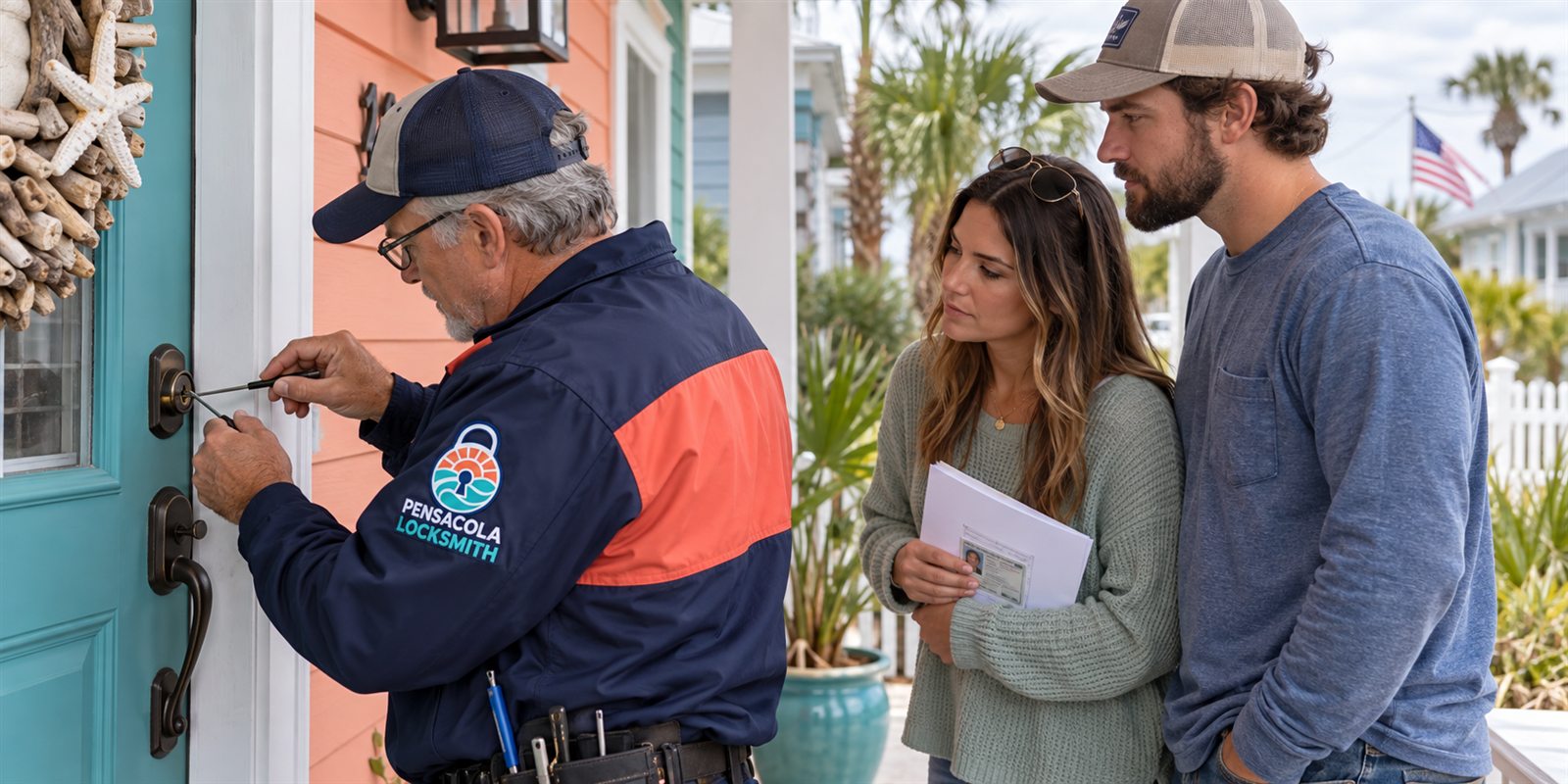
On site, the technician confirms that you own the property or have authority to authorize the work, then examines the lock, door and hinges. The options will be laid out clearly: clean, repair or replace, with the likely lifespan of each in the local climate.
If the problem is wider, for example several doors with corroded hardware or a door that has begun to rot, a technician visits to assess it and the service call charge is explained before dispatch. That lets you plan the work in a sensible order, starting with the doors that matter most.
Padlocks, gates and outbuilding hardware
Corrosion does not limit itself to doors. Gate latches, shed hasps, fence locks and padlocks suffer even more because they have no shelter. A padlock exposed to rain for a season may need a spray of dry lubricant and a cover to keep water out of the keyway. Hang it with the keyhole facing down so water drains out rather than in.
Choose padlocks with stainless shackles and sealed or weather resistant bodies for outdoor use. Brass bodies resist rust but the shackle is the weak point, so look for a hardened, coated shackle. Cheap padlocks with thin plating rust shut in a year or two, and then they must be cut off, which is awkward when you have lost the original key.
Gates and outbuildings are often shared with neighbors, tenants or contractors, so key control matters. A locksmith can rekey padlocks to match each other, so one key opens several, or fit new cylinders into gate latches. Ownership or authority is checked first. For a boat house, dock box or storage unit near the water, corrosion is a particular concern, and tougher materials are well worth the choice.
Common questions
Can a rusty lock be saved?
Sometimes. Light corrosion can often be cleaned and relubricated, which restores smooth operation. Heavy rust, pitted pins or a blistered finish usually means replacement is the better option. A technician can look inside and tell you honestly whether it is worth saving.
What lubricant is best for coastal locks?
A dry film lubricant made for locks tends to work better than oil or graphite in humid conditions. Apply a small amount to the key and work it in. Avoid heavy oils, which collect sand and dust. If the lock needs frequent lubrication, it probably needs inspection.
Which materials resist salt air best?
Solid brass and stainless steel tend to hold up well, as do well made coated finishes. Look for hardware rated for coastal use and use matching stainless fasteners. Cheap plated or zinc parts often pit and fail sooner in damp, salty conditions.
How often should I check my door locks?
Twice a year is a sensible routine, for example before hurricane season and after it ends. Also check after a major storm. Clean the faces, test the keys, look for rust stains, and lubricate lightly. Early attention prevents most sudden lockouts.
Why does my key come out dirty?
Dark residue or metal dust on a key indicates wear or corrosion inside the cylinder. It is an early sign that the lock needs cleaning or replacement. Using the lock until it fails risks getting locked out, so having it inspected sooner is wise.