Content note: this page was written by Claude (AI) for Pensacola Locksmith.
What counts as an emergency and what does not
The word emergency gets used for many situations, and it helps to separate them. A true emergency involves safety: a person or pet trapped in a locked vehicle, a home that cannot be secured after a break in, or a door that will not open while someone inside needs help. Those come first, and in some cases they belong with emergency services before any locksmith.
Other situations are urgent without being dangerous. Being locked out of your house at night with nowhere to go, losing your only car key far from home, or finding a broken lock on a business door at closing time are all stressful. They need prompt attention, and a locksmith can usually help once you are in a safe place.
Then there are inconveniences, such as a stiff lock, a spare key you want to copy or a planned upgrade. These can wait for a regular visit and often cost less to handle that way. Being honest about which group you are in helps us help you, and lets us focus on what really cannot be delayed.
When to call emergency services first
If a child, an infant or a pet is locked in a car, especially in heat, call emergency services right away. Do not wait for a locksmith. Coastal summers get hot quickly, and a closed car can become dangerous in a very short time. Emergency crews have tools and authority, and they can act immediately when life is at risk.
The same applies to a person who may be injured or unwell behind a locked door. If someone does not answer and you fear a medical problem, call for emergency help. They can enter in ways a locksmith cannot, and they bring medical support. A locksmith can assist afterward, for example by securing the door once it has been opened.
If you believe an intruder may still be inside your home, leave and call for help from a safe place. Do not try to deal with locks while someone dangerous may be nearby. Safety is the first concern, and the rest can be handled later. We are glad to help secure the property once the situation is under control.
Common urgent lock problems we handle
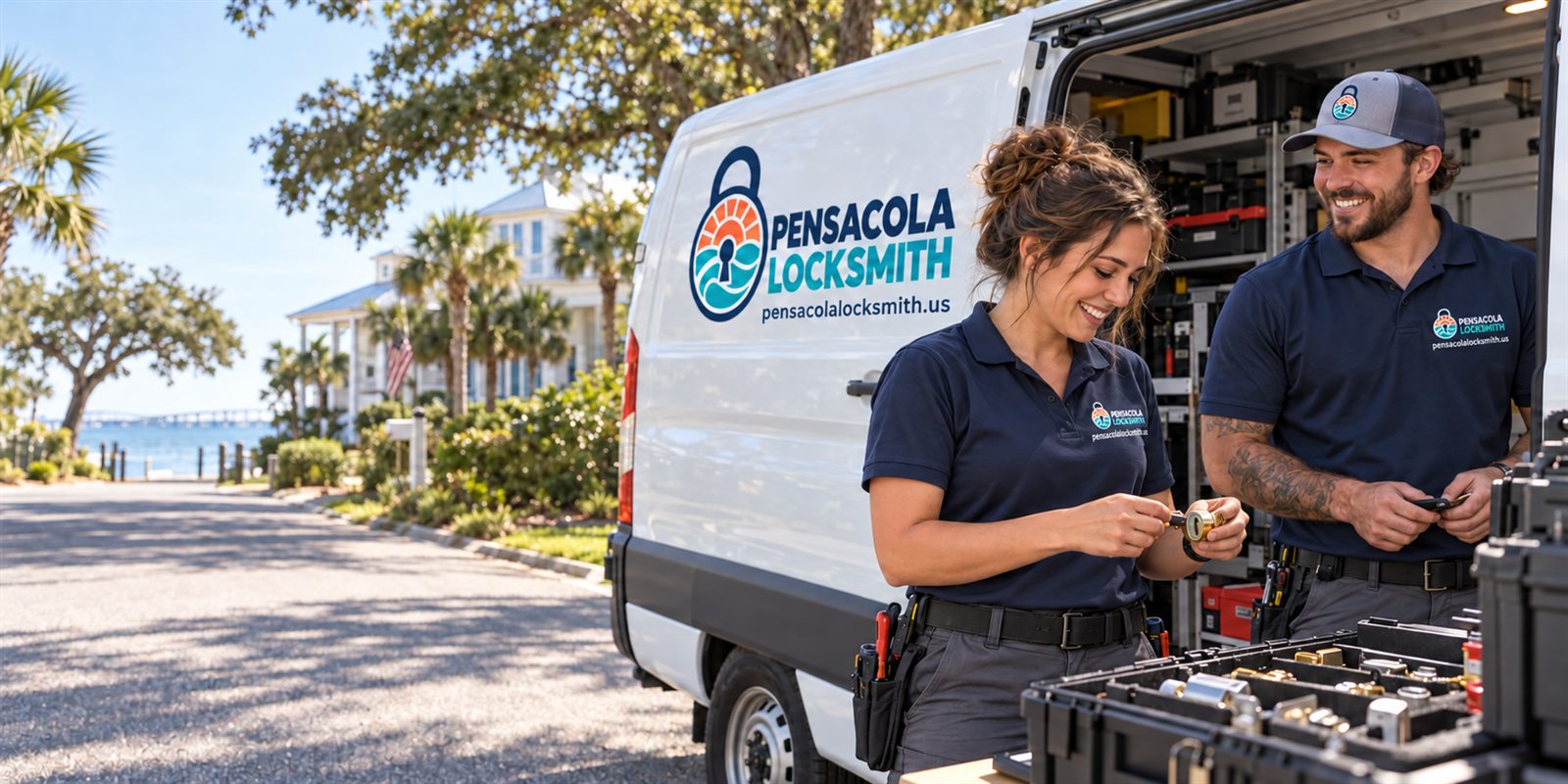
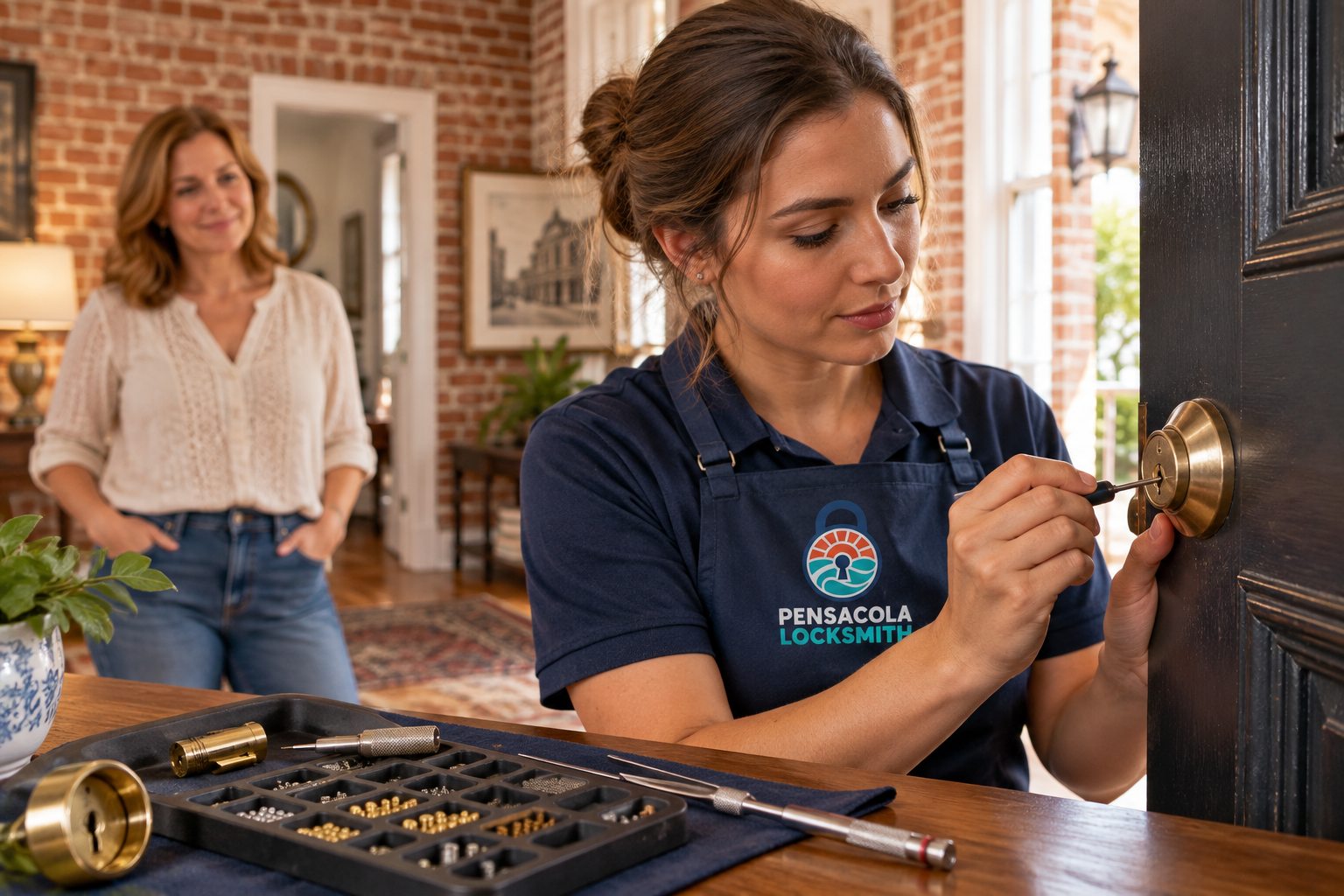
Lockouts are the most frequent calls: keys left in the car, a door that closed behind you, or a key lost on a beach outing. The technician checks the lock type, confirms ownership and chooses the least damaging way to open it. Many openings leave no marks at all.
Broken keys are next. A key that snaps in the cylinder can block entry for everyone. Removing the broken piece without harming the lock takes small tools and care. Afterward, a new key is cut, and the lock is checked for wear that may have caused the break. Without that step, the new key could snap as well.
Damaged locks after a break in or attempted entry also call for quick action. A door that cannot be locked leaves the home open. The technician looks at the lock, frame and strike, makes the opening secure and recommends repairs. We also handle lost car keys, failed fobs and locks that jam, all of which can strand someone at a bad moment.
What to prepare before you call
A few details speed up the call. Know your location as precisely as possible, with a street, a cross street or a nearby landmark. If you are in a large lot, a beach access or a hotel, say which part. If your phone has a map, use it to read the address aloud. Clear location details reduce delays.
Describe the problem in short, plain words. For a car, give the make, the type and whether it uses a key or a button. For a home, say what kind of door and lock it is. For a business, say who can approve work. If you can, note whether anyone is inside the building or vehicle.
Have identification and proof of ownership or authority ready. For a car, that is a registration or title. For a home, ID that fits the address, or permission from the owner. For a business, someone who can authorize. This is part of the process every time, and having it ready makes the visit smoother.
How an urgent visit works step by step
You call, we ask about your location and the problem, and we give a quote by phone based on what you describe. We confirm that we can help and ask about ownership. If the situation is complicated, we explain that a technician will visit and that the service call charge is explained before dispatch. We do not promise arrival times, because traffic and other factors change.
When the technician arrives, they confirm who you are and check ownership or authority. They look at the lock, vehicle or door, and tell you what they plan to do. They choose the gentlest method first. If something unexpected comes up, they explain it before going further, so you stay in control.
After the work, the technician tests the lock, hands over any new keys and checks that the door or vehicle functions properly. They explain anything you should do next, such as replacing a worn lock or adding a spare key. You should leave the visit with a working lock and a clear idea of what, if anything, still needs attention.
Why we do not promise arrival times
You may see claims of fixed arrival times from other services. We do not make them. A technician may be finishing another job, driving through traffic, or dealing with a storm that has slowed the roads. Pensacola has bridges, bay crossings and tourist traffic that can change travel time quickly.
What we can do is be honest. We tell you the situation as we understand it and keep in touch. If delays happen, we say so. You can decide whether to wait or to call someone else. That openness is better than a promise that cannot be kept and leaves you stuck.
Availability varies by hour and by day, so please call to confirm availability for your location. If we cannot reach you in a sensible time, we will say so right away. Our aim is to give you accurate information so you can make the best choice for your safety, comfort and schedule.
Staying safe while you wait
Waiting for help can be uncomfortable, and in some places risky. If you are outside at night, move to a well lit area, ideally near other people. A store entrance, a gas station or a hotel lobby is better than a dark corner. Let someone you trust know where you are and what is happening.
If you are in a car by the roadside, turn on hazard lights if possible and stay away from traffic. If you cannot safely remain in the vehicle, stand well off the road. Avoid wandering to unfamiliar places. Keep your phone charged and available so we can reach you, and keep valuables out of sight.
In hot weather, find shade and water. On the coast, summer heat and humidity can be intense, and children and older adults are more vulnerable. In cold or wet weather, protect yourself with what you have. Your comfort and safety matter more than any lock, and we are happy to talk through the plan while you wait.
Ownership checks stay in place during urgent calls
Urgency does not change our ownership check. Whether it is a home, a vehicle or a business, we confirm that you own it or have authority to request work. We know it can feel frustrating when you are stressed, but this step protects you and the real owner from someone who might claim a false emergency.
For vehicles, a registration or title that matches your identification usually works. For homes, ID with the address, a lease or a utility bill can help. For businesses, an owner or manager who can verify the request. If you do not have these with you, tell us. We may be able to verify in other ways.
If we cannot confirm authority, we cannot proceed, and we explain your options. That might mean calling the owner, getting a document or contacting the property manager. It is not meant to slow you down. It is the same responsible standard we apply every time, and it is part of why you can trust a locksmith with access to your property.
Securing a home after a break in
After a break in, the first priority is safety and reporting. If you suspect someone is still inside, leave and call for help. Once police have been informed and the area is safe, a locksmith can help secure the opening. Do not clean up or disturb evidence before the proper people have looked.
The technician examines the damage. Often the lock is bent or the frame split, and the door cannot be locked. A temporary fix may be needed to keep the home closed overnight, followed by a stronger repair. We also suggest rekeying or replacing locks if keys may have been taken or copied.
Documentation can help with insurance. Take photos of the damage, note what was done and keep any paperwork. We do not give legal advice, but a clear record is useful. Over the next days, consider what weak points allowed the entry. Reinforced strike plates, better deadbolts and improved lighting are common upgrades that help prevent a repeat.
Storm season and unusual local conditions
Hurricane season creates its own urgent lock problems. Wind and water can warp doors, swell frames and damage hardware. Flooding can ruin electronic locks and keypads. After a storm, doors that were fine before may jam or refuse to latch, and homes can be left unsecured. Expect high demand in those periods, and be patient.
Before a storm, check the doors you rely on. Make sure hinges and strike screws are tight, and that locks turn smoothly. Keep a spare key somewhere safe, and consider where you will store keys and documents if you evacuate. A little preparation can prevent a lockout during a stressful time.
After a storm, take care when entering damaged buildings. Safety comes before locks. If a door has been damaged, we can help secure it so the home is protected while repairs are arranged. Be mindful that roads, bridges and neighborhoods may be affected, and that availability may be limited. Calling early helps us plan.
Urgent calls for rentals, students and travelers
Pensacola welcomes many visitors, renters and students. A tourist may lock keys in a rental car on the way to the beach. A student may lose a key to a shared house. A traveler arriving late may find that a keypad is not working. Each of these is urgent for the person involved, even if it is routine for a locksmith.
Proof of authority can be trickier in these cases. A rental car belongs to a company, and a rental home belongs to an owner. We may need to speak with the rental company or property manager, or see a lease or booking confirmation. Having those details on your phone speeds things up.
If you are visiting, tell us where you are staying and who manages the property. If the lock has failed and the owner is reachable, a joint call often solves it. We would rather take a few extra minutes to confirm things than open a door that should stay closed. Everyone benefits when the process is careful.
Quotes and honest expectations
Quotes are given by phone based on what you describe. In an emergency it is tempting to agree to anything. We encourage you to ask what the quote includes and what could change it. If the job is complicated, a technician visits and the service call charge is explained before dispatch.
We do not use sales pressure of any kind. Our goal is to give you accurate information and fair service. If a situation turns out to be more involved than it sounded, the technician explains why before continuing. You stay in control of the decision at every step.
Please call to confirm availability. We serve Pensacola and Escambia County, and we will tell you plainly whether we can help. If we cannot, we would rather say so than leave you waiting. Whatever happens, take care of your safety first, and let us help with the lock when you are ready.
Calm steps while you wait for a technician
Once you have called and are waiting, a few small actions can help the visit go smoothly. Gather your identification and any vehicle or property papers in one place. Write down the make and type of vehicle or lock so you can answer questions without scrambling. If other people are with you, ask one person to watch for the technician so you are not all searching the lot.
Think about whether any simple option remains. Is there a spare key within reach, a window you can legally and safely use, or a family member who holds a copy? Sometimes the answer is yes, and a quick call to someone who lives nearby resolves the problem faster than a visit. If so, let us know right away so we can adjust.
Avoid trying to force the lock yourself. Bending a key in a cylinder, prying at a door frame or smashing a window can turn a small problem into an expensive one. If you have already tried something, tell the technician honestly. Knowing what has been attempted helps us choose a safe approach and avoid making matters worse.
Follow up after an urgent job
Emergency repairs are sometimes a first step rather than the final one. A quick fix may get you back in, but the lock, key or frame might still need proper attention. Ask the technician what they would do next if time allowed. Write it down, and schedule follow up work when you are calm and the day is regular.
It also helps to review your spare key plan. A spare in a trusted place, a second fob for the vehicle or a keypad code for a family member can prevent the next emergency. These changes are not dramatic, and they are much easier to arrange before a crisis than during one.
Finally, take a moment to note what went wrong. Did the lock stick for weeks before failing? Was a key worn? Did a habit, such as setting keys on the car roof, contribute? Small changes in routine often prevent repeat problems. We are happy to talk through ideas by phone once the urgent part is behind you.
Common questions
What should I do if a child or pet is locked in a car?
Call emergency services immediately. Do not wait for a locksmith, especially in warm weather. Emergency crews can act right away when life is at risk. Once everyone is safe, we can help with the lock or key problem that caused the situation.
Can you tell me how long you will take to arrive?
We do not promise arrival times, because traffic, weather and other calls change things. We tell you honestly what we know and keep in touch. Please call to confirm availability for your location in Pensacola or Escambia County.
Do you still check ownership in an emergency?
Yes. We confirm ownership or authority for any vehicle, home or business, no matter how urgent the call is. A registration, ID with the address or permission from the owner usually works. It protects you and the real owner.
What if my door cannot be locked after a break in?
Once police have been informed and the area is safe, call us. A technician looks at the lock and frame, secures the opening and suggests repairs. We may also recommend rekeying if keys could have been taken.
How do emergency calls get priced?
Quotes are given by phone based on what you describe. If the job is complicated, a technician visits and the service call charge is explained before dispatch. We aim to be clear so there are no surprises.