
Content note: this page was written by Claude (AI) for Pensacola Locksmith.
Which kind of key is in your hand?
Begin by identifying the key, because the answer shapes every step that follows. If you turn it in the ignition, you have a blade style key with a chip. If you simply push a button on the dashboard and the key stays in your pocket, you have a proximity fob. A third group sits between these, with a fob that must be placed in a slot or held against a spot when its battery is low.
Next, count the buttons. A basic remote has lock, unlock and trunk. More equipped fobs add remote start, a panic button, or a separate control for a power liftgate. The button layout tells a technician which remote family your vehicle uses, and it affects which replacement shell and board are suitable. Fobs with the wrong button set may look right but fail to do everything you expect.
Finally, look for markings. Many fobs have a small printed code on the back or inside the battery compartment. That code is not a secret, and it helps identify the family. Photograph it along with the front of the fob. When you call, we ask about these details, then confirm what we need to bring. If you are unsure, describe what you see and we will help sort it out.
Why luxury vehicles can involve more than one module
A modern luxury vehicle is a network of small computers. One module handles the engine, another the body functions such as locks and lights, and another the security system. When a new key is introduced, more than one of these modules may need to be told about it. If they do not agree, the vehicle might unlock but not start, or start but refuse to unlock by remote.
This is why a technician checks the system as a whole, not just the key. A diagnostic tool reads the state of the relevant modules, and the learning routine writes the new key into each place it belongs. In some vehicles it is a single step. In others, there are separate steps for the remote, the immobilizer and the proximity system, and each must be completed in order.
For you, the practical effect is that a Cadillac key job may take longer than a basic one, and that cutting corners is not wise. A part that fits physically but is not recognized by every module will cause irritating faults later. A good technician tests every function before leaving. Expect to be asked to try every button and to start the engine more than once.
- Remote lock, unlock and trunk release
- Remote start, where the vehicle has it
- Proximity entry on all doors
- Push button start and shutdown
The ownership check, and why we do it every time
A key to a luxury vehicle is a valuable thing, and locksmiths have a responsibility not to hand one to the wrong person. Before opening a vehicle, cutting a key or programming one, a technician confirms that you are the owner or have authority from the owner. That means showing identification and a document that ties you to the vehicle.
Registration or title usually does the job. If the name on the registration differs from yours, perhaps because the vehicle is owned by a family member or a company, mention it up front. There may be a reasonable way to show your authority, such as a letter or a document from the business. We will explain what is acceptable, so you can gather it before the technician arrives.
This might feel like an extra step, but it protects you. It means a stranger cannot call, claim your vehicle and walk away with a working key. It also means that when you need help, the process is consistent and predictable. If you cannot show any ownership documents at all, tell us and we will explain what alternatives exist, if any.
How a replacement fob is added
The technician starts by identifying the vehicle from its identification number and confirming which fob family it uses. A compatible fob is chosen, tested for basic function, and prepared. If the fob is a proximity type, a backup blade is cut to the vehicle's lock pattern. The blade is tested in the driver door lock to make sure it turns without catching.
Then comes the learning stage. Diagnostic equipment is connected through the port under the dashboard. The technician selects the vehicle and the key function, and follows the procedure the system requires. In many cases the vehicle will ask for actions such as opening a door, switching the ignition state or pressing a button on the fob. The tool records the new fob and writes its identity to the vehicle.
Afterwards, the technician tests range and function. The fob must be detected at each door, inside the cabin and near the trunk. The engine must start with the fob on the seat, in a pocket and in the center console. Every remote button is pressed. You are told how many fobs the vehicle now recognizes and whether any older ones were removed from memory.
All fobs lost: what changes
With no fob to lean on, the process begins from scratch. The technician may need to take extra steps to gain access to the immobilizer and security modules, and the learning routine can take longer. The vehicle may also need its security system to be reset into a state that accepts a completely new key. This is normal work, though it asks more patience than adding a spare.
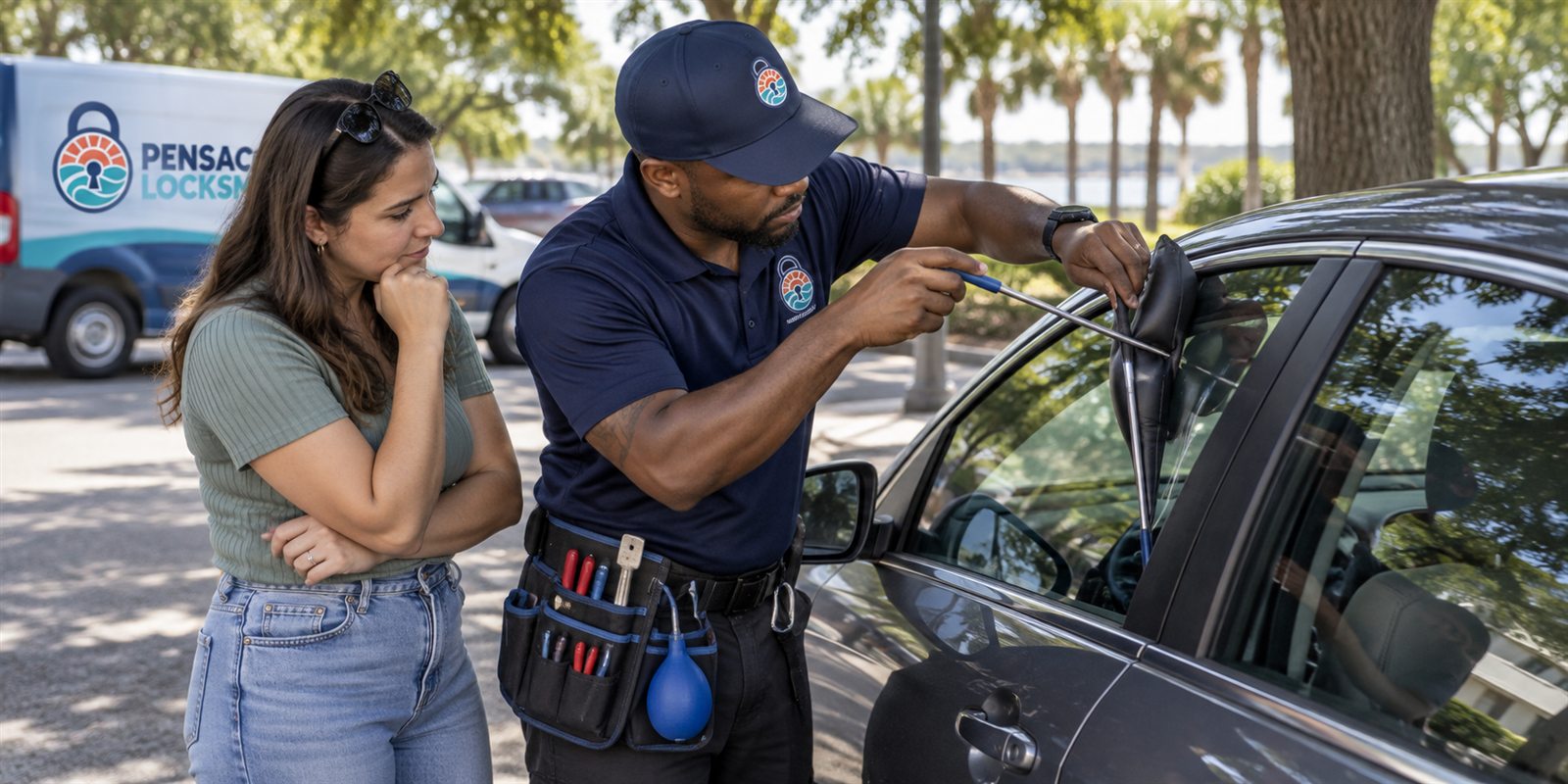
If the vehicle is locked and the alarm is armed, the first step is entering it without harm. The technician uses tools designed to open the door without scratching paint or distorting the frame. Luxury vehicles often have tight door seals and sensitive electronics near the door, and improper tools can cause expensive damage. Experience matters here, and so does patience.
If you suspect the lost fob could be used by someone else, ask for it to be removed from the vehicle's memory. All fobs you wish to keep are enrolled together at the end, and those not enrolled stop working. This is a sensible security measure, especially if the fob was lost in a public place or with other belongings such as a bag or wallet containing your address.
Battery backup, weak fobs and warning messages
A dashboard message about a key battery or about a key not being detected is often the first hint of trouble. The coin cell inside a fob lasts a long time, but eventually the range shrinks. Replace it when you first see the message, not after it dies completely. Waiting risks a day when the vehicle will not recognize the fob and you have to use the emergency method.
Most vehicles have an emergency method for starting with a dead fob. Often you hold the fob against a certain place, such as a mark on the steering column, a console pocket or the start button itself. A short range chip in the fob can be read without battery power. Your owner's manual shows the exact location. Knowing this beforehand turns a stressful moment into a minor inconvenience.
If a fresh battery does not help, the fob board may be damaged, or the vehicle's antennas may have a fault. A technician can test the fob separately. If the fob is fine, the problem lies elsewhere, perhaps in an antenna or module, and you will be told that honestly. It would be wrong to sell a replacement fob when the real fault is not the fob.
Valet use, shared fobs and keeping track
Luxury vehicles are often shared or handed over. A valet takes the fob at a restaurant, a family member borrows it for the weekend, a service shop keeps it during repairs. Each handoff is a small risk that a copy is made or the fob is misplaced. Consider using a simpler backup key for situations where you must hand over a key, if your vehicle supports one.
Some vehicles offer a limited mode where a particular key restricts speed or locks the glove box and trunk. Whether yours does depends on the system, and the technician can explain it. Even without such features, you can keep your trunk contents secure by locking items away before handing over a fob.
Keep a list of keys and where they are. If your household has two fobs and one is with a teenager, note it. If one goes missing, you know immediately which one. This sounds fussy, but it avoids the situation where you discover a fob is lost only when you need it. A simple note in your phone does the job.
Coastal wear: why Pensacola keys age faster
Salt in the air is gentle but constant. It finds its way into tiny gaps, leaves moisture on metal and speeds up corrosion. A luxury fob has delicate contacts and fine antennas, and those do not appreciate being carried wet. After a trip to the beach, dry the fob thoroughly and avoid putting it back in a bag with damp items.
Humidity also invades the battery compartment. If you open your fob and see a greenish deposit, a gentle cleaning with a dry cotton swab may help, and a new battery should be fitted. Avoid soaking the board in liquid unless you know what you are doing, because it can make things worse. If in doubt, ask a technician to inspect it.
Sunlight and heat are the other half of the problem. Cases fade, glue loosens and batteries lose capacity. A fob that lives on a dashboard in a parked vehicle will age faster. Make a habit of taking it with you. During hurricane season, remember to keep spare keys somewhere dry and secure, since flooding can ruin electronics left on the ground floor.
Honest limits and when a visit is needed first
Some Cadillac situations are straightforward, and some require a closer look. If your vehicle has had previous key work, an aftermarket alarm or a failed attempt at programming, the system may be in an unusual state. A technician may need to visit first, assess the vehicle and explain the options. If so, the service call charge is explained before dispatch.
There are also cases where the answer is not a locksmith. If a key system fault is caused by a failing control module, a damaged wiring harness or a deeply discharged battery, replacing the key will not fix it. A technician can usually identify this quickly by reading the vehicle's basic information, and will tell you plainly when to seek another kind of repair.
We would rather say we cannot do something than promise and fail. If your vehicle needs equipment or data that are not available outside the manufacturer's channels, you will be told. Honest answers let you choose the best path. Call us, describe the situation as fully as you can, and we will confirm availability and explain what we can do.
Getting a spare made the easy way
The simplest key job is one done while you still have a working fob. The vehicle is already cooperating, the technician can copy settings from the existing fob in some cases, and nobody is stranded. If you have only one fob, treat that as a reason to act soon. Waiting until it is lost turns an easy task into a longer one.
Pick a time when the vehicle is available and parked somewhere convenient. Have your identification and registration ready, and set aside the fob you currently use. The technician needs access to the vehicle for some time, so avoid scheduling during a day you need to be somewhere else. If you want a backup blade or a simple chip key as well, mention it.
After the job, store the spare somewhere safe, away from the vehicle. A drawer at home is better than the glove box, since thieves check glove boxes. Tell a trusted person where it is. Test the spare every few months, and replace the battery on a schedule. A spare you never test is a spare you cannot trust when it matters.
Preparing before a hurricane or a long trip
Storm preparation puts pressure on every household, and keys are easy to forget. If you evacuate, you will probably take your main fob. Leave the spare in a secure place at home or with a relative. If your vehicle floods or is moved by others, you will have a backup. Place electronics in a sealed bag to protect them from water.
Before a long drive, check the fob battery, press every button and make sure the blade slides out of the fob smoothly. A key that fails in an unfamiliar town is a harder problem. Keep the locksmith's contact details and your vehicle identification number somewhere you can reach even if your phone is lost, such as a note in your wallet.
If you do get stranded away from home, a local locksmith can still help, but you will need your ownership documents. Photograph your registration and keep the image in your phone. A technician will still verify you are the owner. Planning for this takes a few minutes now and prevents a long, stressful afternoon later.
Common questions
Can a Cadillac proximity fob be programmed at my location?
In most cases, yes. The technician comes to the vehicle in Pensacola or the surrounding area, confirms ownership, identifies the fob family and registers the new fob using diagnostic equipment. Some vehicles take longer than others. Call us to describe your vehicle and to confirm availability.
What if I have lost every key?
It is still a normal job. The technician works with the vehicle's computer to enroll a new fob and can remove the lost ones from memory if you wish. It takes longer than adding a spare. If the job is complicated, a technician visits and the service call charge is explained before dispatch.
Why does a fob look right but not work?
Looks do not decide compatibility. The radio frequency, chip family and internal electronics must match your vehicle, and a used fob may also be locked to another vehicle. A technician can check a fob before you rely on it. Bring the details when you call, and we can advise what applies.
How do I start the vehicle if the fob battery is dead?
Many vehicles let you hold the fob against a marked spot, such as near the start button or in a console pocket, so the vehicle can read a chip without battery power. Your owner's manual shows the location. Then replace the battery promptly, or call us if the fob still misbehaves.
Do you check ownership for luxury vehicles?
Yes, for every vehicle. We check ownership or authority before opening, cutting or programming. Expect to show identification and a registration or title. If the vehicle belongs to a business or family member, tell us when you call and we will explain what is acceptable for your situation.