
Content note: this page was written by Claude (AI) for Pensacola Locksmith.
The kinds of Nissan keys you are likely to meet
Nissan has used several key styles over the years, and the right approach depends on which one your vehicle has. Older vehicles often use a traditional metal key with a plastic head that contains a small transponder chip. The chip talks to the car's immobilizer, so a plain copy cut at a hardware counter will turn the lock but will not start the engine.
Many newer Nissans use what the brand calls an Intelligent Key, a smart fob that stays in your pocket while you press a button to start the engine. Between those two styles you will find remote head keys, where the lock, unlock and panic buttons are built into the key head, and flip keys where the blade folds into the fob.
Inside most of these fobs is an emergency blade. It looks like a short metal key and is meant for opening the driver door if the fob battery dies. Knowing which style you hold, or which one the vehicle came with, is the first thing a technician asks, because it decides what blank gets ordered or stocked and what programming path is used.
Some owners are surprised to learn that a key can look identical to the original and still be wrong underneath. Two Nissan keys may share a head shape while using different chips or different blade profiles. That is why a technician identifies the vehicle first, rather than guessing from a photo of the old key, and why bringing the broken key along is still helpful as a cross check.
How the immobilizer shapes the whole job
Nissan vehicles use an immobilizer system that Nissan calls its anti-theft system. The idea is simple: the car will only start when it recognizes a key that carries the right coded signal. The code is stored in the key and in the vehicle's computer, and the two have to agree before the fuel and ignition systems wake up.
This is why cutting a blade is only half of the work. After the key is cut, the technician connects diagnostic equipment through the vehicle's data port, which sits under the dashboard on the driver side, and teaches the car to accept the new key. Without that step, the engine may crank but never fire, or the dash may flash a security light.
It also explains why shortcuts cause trouble. Cheap blanks from unknown sources sometimes contain chips that cannot be programmed to a particular car. A locksmith who stocks quality blanks and tests each chip before cutting saves you from paying for a key that simply will not work.
The immobilizer is not meant to be an obstacle for owners. It is meant to stop someone from hot-wiring the car or starting it with a copied blade. When a locksmith programs a key, the car's computer is told to trust this new signal, and in many systems the old, lost key can be erased from memory at the same time, which is a real security benefit if the lost key could be found by someone else.
What information the technician will ask for
When you call, expect a handful of plain questions. The technician will want the make, model and approximate year, because key hardware and programming steps change between generations. They will ask whether you still have any working key, whether the vehicle is locked or unlocked, and whether the fob has a push-button start or a regular ignition slot.
The vehicle identification number, the long code on the dashboard near the windshield and on the driver door jamb sticker, is useful because it lets the technician confirm the exact key and look up the cut code where it is available. A photo of the VIN plate is perfectly fine, as long as it is legible.
You will also be asked where the vehicle is parked. A car in a home driveway, an apartment lot, or a beach parking area all work, but access matters. If the vehicle is in a garage with a closed door or on private property, the technician needs to know before arrival so the visit goes smoothly.
If you plan to be away from the vehicle for the technician, say so on the phone. The work generally needs the car accessible, the doors openable and the owner present with identification. If a friend or family member will meet the technician, make sure they have the same documents and know how to reach you. Having the vehicle locked with the keys inside is a separate and common situation, and the technician can open it first.
Proof of ownership comes before any key is made
A locksmith who makes keys for vehicles has a responsibility to confirm the person asking is entitled to the car. Before opening, cutting or programming, the technician checks ownership or authority. That normally means a photo ID that matches the name on the registration or title, plus the registration or proof of purchase.
This can feel like an inconvenience when you are standing in the heat with no way to leave, but it protects you as much as anyone. The same process that stops a stranger from getting a key to your car is what makes sure you are the one who receives it.
If the vehicle belongs to a company, a rental owner, or a family member, bring whatever shows your authority, such as a written note from the owner or a fleet document. When you are unsure what will be accepted, mention it on the phone and the technician can tell you what to have ready before dispatch.
Do not be surprised if the technician asks to see the vehicle's dashboard lights when the ignition is turned on. A security light that stays on, blinks in a pattern or goes out and returns can tell the technician which stage of the immobilizer process the car has reached. These small observations help avoid unnecessary steps and make the job more predictable.
Cutting the key at your vehicle
Mobile key cutting uses a portable machine that runs from the service vehicle. For a standard edge-cut key, the technician measures the existing key or works out the cut pattern from the lock or from code data, then cuts a new blade in a few careful passes. Many modern Nissan keys use a milled channel on the sides of the blade rather than teeth on the edge, and that needs a machine built for the job.
If every key is lost, the technician may need to work from the vehicle itself. That can mean reading the lock's wafers to decode the cut, or using code information tied to the VIN where it is available. It takes more time than copying a key you hold in your hand, but it is a normal part of the trade.
Once the blade is cut, it is tested in the door lock and the ignition before any programming starts. A key that sticks, drags or only works when wiggled gets recut. Better to catch that in the driveway than a week later when the lock has worn a groove into the new brass.
After cutting, the technician files the edges lightly so the key enters smoothly and does not catch on the wafers. A properly finished key slides into the ignition without force. If the lock itself is worn, sticky or dirty, you may feel resistance even with a perfect key, and a small amount of dry graphite lubricant can help. Avoid heavy oil sprays, because they gather dust and grit in the tumblers over time.
Programming the fob and the transponder
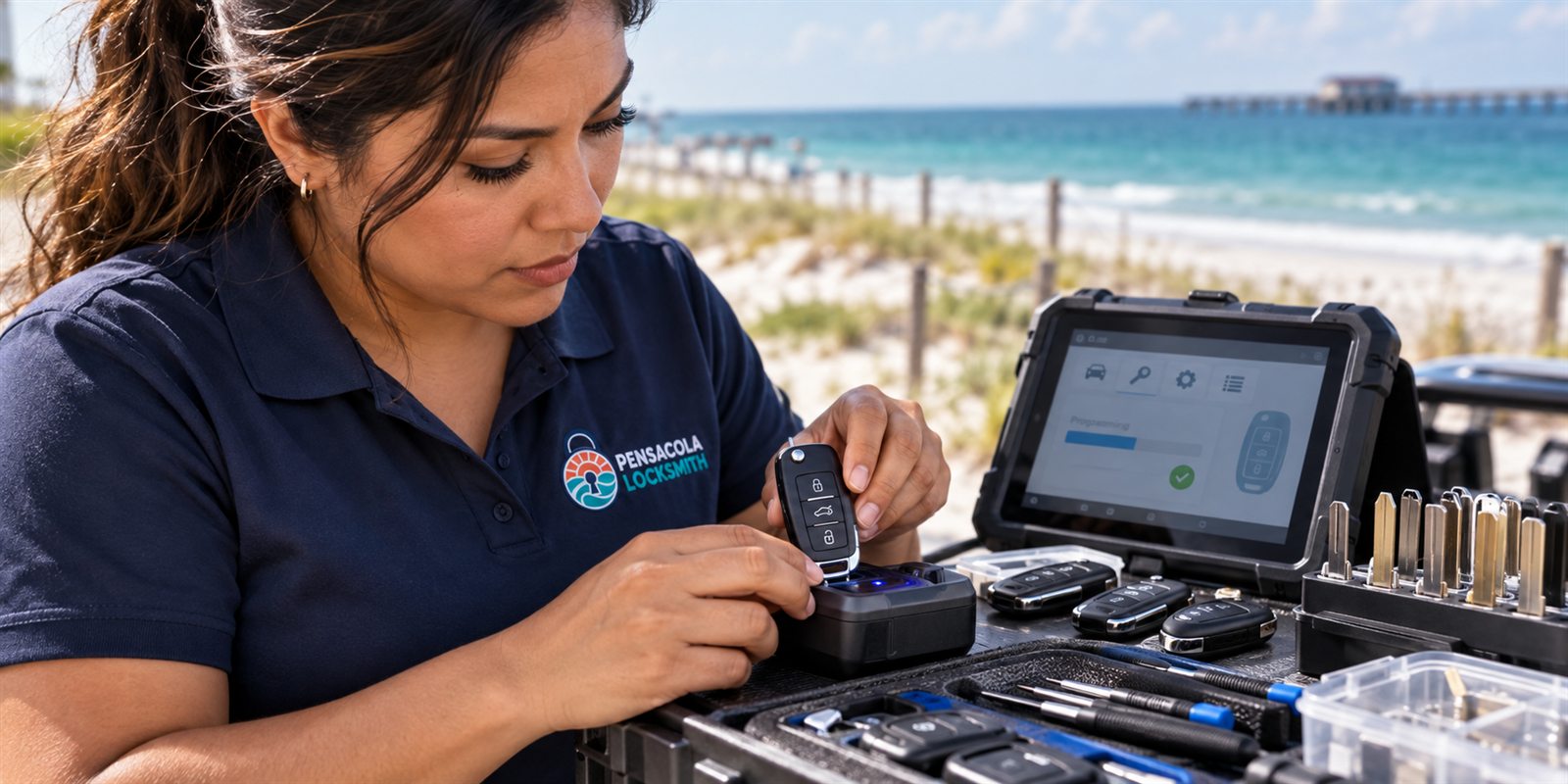
Programming is the part most people never see. The technician plugs a diagnostic tool into the data port, selects the vehicle, and puts the car into a key learning mode. The new key is then introduced, and the car stores its signal. For some vehicles this takes a few minutes. For others, the process includes a security wait period that cannot be skipped.
Remote buttons are usually taught in a separate step from the engine start. The technician checks that lock, unlock, trunk release and panic all respond, and that a push-button start fob is detected inside the cabin. If the vehicle has a second fob, it is retested at the same time, because some systems drop older keys during programming and need them added again.
If a fob arrives with a damaged case or a failing battery, the technician will usually tell you before programming begins. A dead coin cell is a simple fix. A cracked circuit board is not, and it is better to learn that before paying for a job that cannot be completed on that particular fob.
Programming sessions can fail for ordinary reasons: a weak vehicle battery, an aftermarket alarm, or a data port with damaged pins. A technician will often connect a small power supply to keep voltage steady during the session, because a drop in voltage in the middle of a write can interrupt the process. If something unusual shows up, the technician explains it plainly rather than pushing ahead.
Smart keys, spare keys and batteries
Many people only think about a Nissan key when it disappears. A spare cut now, while one working key still exists, is much simpler than starting from nothing. Copying from a working key avoids the decoding step, and the programming is usually quicker because the existing key can sometimes be used to authorize the new one.
For a smart fob, battery care matters. A weak battery can cause the car to say it cannot find the key, even when the fob is in your pocket. Before assuming the fob is broken, replace the small coin battery and hold the fob close to the start button, since many vehicles have a backup reader there.
If your vehicle has had water exposure, which is not unusual on the Gulf Coast where humidity, rain and the occasional storm surge reach driveways, check the fob for corrosion. Green or white residue on the battery contacts is a sign. Cleaning may help, but a fob that has been underwater is sometimes better replaced.
Another habit worth building is to check every function in daylight before the technician leaves. Press each button twice, start the engine, turn it off, and start it again. Try the emergency blade in the door lock, even though you will rarely need it. This takes a couple of minutes and can reveal a problem while the technician is still beside the car.
- Keep a spare key somewhere other than the vehicle or your daily bag
- Replace the fob battery when the car starts warning you about it
- Avoid carrying the fob on a heavy key ring that strains the ignition
- Dry a wet fob and remove the battery before trying it again
How the visit works and what to prepare
The simplest way to start is to call us, describe the vehicle and the situation, and get a quote by phone. If the job is straightforward, such as making a key for a vehicle where you hold another working key, the technician can usually describe the work clearly. Please call to confirm availability for your location and time.
If the situation is more complicated, such as all keys lost on a push-button start model, the technician may need to visit before giving a firm number. The service call charge for that visit is explained before dispatch, so there is no surprise at the door.
To prepare, find your photo ID and the registration or title, move the vehicle somewhere with good access and light if you can, and gather any keys, fobs or key blades you still have, even broken ones. Broken pieces often hold information that makes the job easier. Keep children and pets away from the working area while equipment is in use.
Finally, think about where spare keys live. Hiding a key on the vehicle, such as inside a bumper or wheel well, is tempting but risky, especially at beaches and public lots where vehicles sit for hours. A better habit is a spare held by a trusted person, or kept at home in a place you can reach, so a lockout becomes a minor inconvenience rather than a long afternoon.
Parking, weather and Gulf Coast conditions
Working outdoors around Pensacola means paying attention to weather. Summer heat can make a parked car uncomfortable inside, and sudden storms can interrupt an outdoor job. If rain is forecast, mention whether there is a covered spot, a carport or a garage. Technicians carry equipment that should stay dry, and a covered area keeps both the tools and the open vehicle safer.
Salt air and humidity are part of life near Pensacola Bay and the beaches. They can corrode key blades, door lock cylinders and the metal contacts inside fobs faster than in drier places. If a Nissan key has started to stick or feel rough in the lock, that may be early corrosion, and it is worth mentioning when you call so the technician can bring the right lubricants and inspect the cylinder.
Hurricane season adds another reason to keep spares organized. After a storm warning, many people move vehicles, evacuate or lose power for days. Knowing where every key and fob is, and having at least one spare that works, means you are not trying to solve a key problem while also dealing with everything else. A little preparation in advance is far easier than a scramble afterward.
Military families around the naval air station, students at the university and college, and visitors staying in short term rentals all deal with vehicles that move around or change hands. If you are a visitor with a rental or borrowed Nissan, contact the owner first, because the locksmith will need their authority. Residents who recently bought a used vehicle often discover they have only one key, and that is a good moment to make a spare.
Common questions
Can a locksmith make a Nissan key if I lost every key?
Yes, in most cases. The technician checks ownership first, then works from the lock or vehicle information to cut a blade and programs the new key to the car. It usually takes longer than copying an existing key, and some smart key models need extra steps. Call us with the make, model and year and we can explain what applies to your vehicle.
Will my new Nissan key start the engine, or only open the doors?
A properly programmed key does both. The blade turns the lock, the transponder or smart fob is registered with the immobilizer so the engine starts, and the remote buttons are taught separately. The technician tests each function before finishing, so you can see the lock, unlock, panic and start all working while the technician is still there.
What do I need to show before a key is made?
Bring a photo ID and something that connects you to the vehicle, such as the registration or title. If the car belongs to a business or another person, bring written authority. The locksmith checks this before opening, cutting or programming, because it keeps vehicles in the right hands and protects you as well.
How much does a Nissan key cost?
The cost depends on the key type, whether you have a working key, and what programming the vehicle needs, so there is no single number. Quotes are given by phone once we know the details. If a technician has to visit before pricing a more complicated job, the service call charge is explained before dispatch.
Can a worn or broken fob be repaired instead of replaced?
Sometimes. A dead battery, a cracked case or worn buttons can often be fixed by swapping the battery or moving the electronics into a new shell. A damaged circuit board or a fob that has been soaked usually cannot be saved. The technician inspects it first and tells you honestly which path makes sense.