
Content note: this page was written by Claude (AI) for Pensacola Locksmith.
Sorting out which key you actually own
The first job is working out what kind of key you hold. If it is a plain metal key with no plastic head, it may be from an older vehicle and have no chip at all. If it has a plastic head, there is probably a chip inside. If it has buttons on the head or on a separate fob, a remote is involved. If you never insert it, it is a proximity fob.
Why bother? Because each kind needs different handling. A plain key needs only cutting. A chip key needs cutting and an enrolled chip. A remote needs the radio part matched to the vehicle. A proximity fob needs full registration with the vehicle's computer. A technician who knows which one you hold can bring exactly the right parts and avoid return trips.
If you are not sure, take a photograph of both sides of the key and the area around the ignition or start button. Note whether the dashboard shows a small key or lock symbol when you switch on. Describe all of this by phone. Even partial information helps, and a technician can ask follow up questions to fill in the gaps and confirm availability.
Older vehicles, simple keys and what they still need
Older Mitsubishi vehicles that predate chip keys are mechanically simple. The key is a shaped piece of metal, and the ignition is a lock with pins or wafers. Copying such a key is straightforward in principle, but old locks have often worn, and a copy of a worn key may be worse than the original. A fresh cut by code or from the lock itself can work better.
If the ignition feels rough, the key may not be the only problem. Years of use wear the wafers inside the cylinder, and a loose cylinder can be unreliable. A technician can inspect the lock, tell you whether it is worth repairing and suggest a cylinder replacement if needed. Replacing a cylinder means new keys, and the doors may be rekeyed to match.
Older vehicles also tend to have door locks that stick from years of rain and dust. A little dry lubricant can help, but heavy oil makes things worse. If a door lock has failed, a technician can usually tell whether the cylinder, the linkage or the latch is the culprit. Honest advice here may save you from buying a key that will not fix the real issue.
Chip keys, transponders and the engine that will not start
Once chips arrived, the key became a two part device. The blade turns the lock, and the chip tells the immobilizer that the key is allowed. If either part is wrong, the vehicle will not run. The classic symptom is an engine that cranks and then dies, accompanied by a flashing security light on the dashboard. That pattern points straight to the chip.
A locksmith cuts the blade and enrolls the chip. Depending on the system, the enrollment may use a diagnostic tool plugged under the dashboard, or a sequence of key turns that teaches the vehicle. Some chips can be cloned from an existing key, which can be useful when the original is still working. Cloning is not available for every chip, and a technician will say whether it suits your key.
After the work, the technician tests starting several times, not just once. A key that starts the engine on the first try but fails on the second is a sign something was not completed. The security light should go off shortly after you turn the key. You should leave knowing the engine runs, the doors open and the light behaves, with each key tested.
- Plain metal key on older vehicles
- Chip key with a plastic head
- Remote head key with built in buttons
- Proximity fob with push button start
Remote fobs, proximity fobs and the emergency blade
A remote fob adds convenience: lock, unlock and sometimes a panic or hatch button. The radio inside is paired with the vehicle, and a replacement must be paired too. Some remotes can be paired by a series of steps inside the vehicle, and others require a diagnostic tool. Either way, it is a different task from enrolling the chip that starts the engine, though they may be done together.
A proximity fob goes a step further. The vehicle senses it nearby, and you start the engine by pressing a button. Inside the fob is a hidden blade for emergencies. If you lose only the blade, a technician can cut a new one without touching the electronics. If you lose the fob, the replacement must be registered with the vehicle through diagnostic equipment.
People sometimes ask whether they can skip the remote and have a plain chip key instead. On many vehicles, yes. A basic key starts the engine and opens the door by hand. The tradeoff is losing the buttons. Some owners keep one of each: the convenient fob in daily use and a rugged chip key in a drawer. Ask what your vehicle supports.
Getting ready for the technician
A short bit of preparation makes a difference. Find the vehicle identification number, visible through the windshield at the base on the driver side or on the label in the driver door frame. Photograph it. Find your registration or title, and your identification. These are the documents a technician uses to confirm that you are the owner or authorized to act for the owner.
Gather your keys. Even broken or unreliable ones help, since the blade shape, chip type and fob family can be read from them. If a key snapped, keep the pieces. If a key is stuck in the ignition, do not force it. Describe how it behaves, what the dashboard says and whether the engine cranks. Those details guide the plan.
Think about where the vehicle is. A driveway is easiest. A crowded lot or a street is workable, but tell us. If the vehicle is blocked in, say so. If you are at work and the vehicle is in a company lot, you may need permission for a technician to enter. Quotes are given by phone, and if the job is complicated, a technician visits and the service call charge is explained before dispatch.
What the technician does, step by step
First, the technician confirms identity and ownership, and reads the identification number. The key system is identified, and the technician selects the right blank or fob. If a blade is needed, it is cut and tested in the lock. The aim is a smooth fit with no catching, because a rough cut wears the lock and fails sooner.
Next, the key is introduced to the vehicle. The technician may use a diagnostic tool or follow a manual sequence. During this stage, you may be asked to stay nearby to open doors or turn the ignition on and off at certain points. The vehicle stores the key, and the technician confirms it was accepted.
Finally, the technician tests everything: the engine, the remote buttons, the proximity detection and the trunk or hatch release. Each key is tested separately. You are told how many keys the vehicle now knows. If any old key was removed from memory at your request, that is confirmed. If something fails the test, the technician keeps working until it is resolved or explains why it cannot be.
When every key is gone
With all keys lost, the technician starts from the vehicle. A first key must be introduced without a working one to guide the process. On many Mitsubishi systems this is a standard job, though it takes longer than adding a spare. On others, extra steps or data are needed. The technician will tell you which applies after identifying the vehicle.
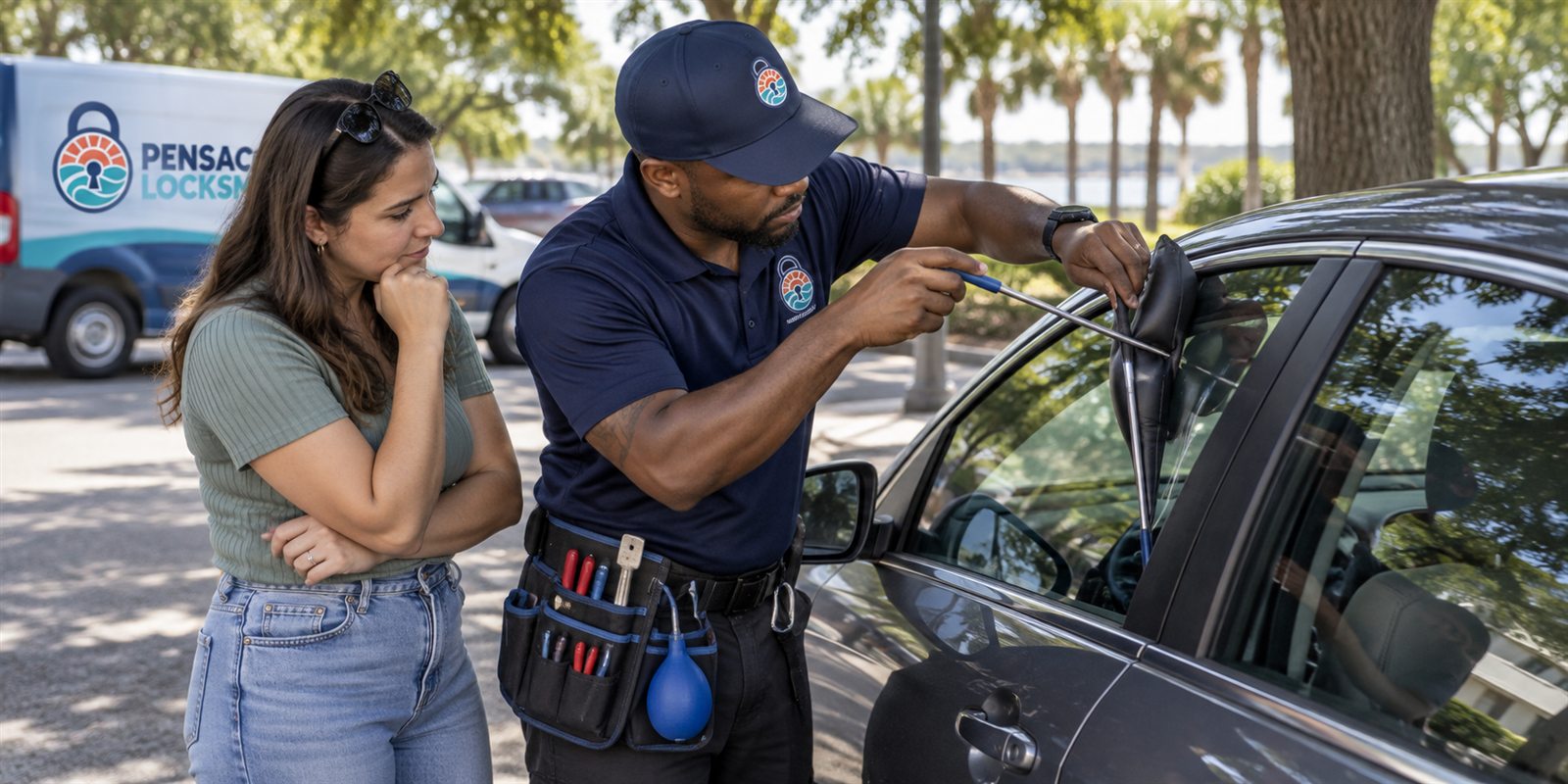
Gaining entry comes first if the vehicle is locked. A technician uses tools meant to open a door without damaging paint or weatherstripping. Please do not attempt to force the door, because modern doors contain wiring and sensors. If an alarm sounds, it usually stops once the vehicle is unlocked or a valid key is registered.
If you worry the missing key could be misused, ask for it to be removed from the vehicle's memory. Only the keys present during programming will work afterward. This is especially sensible if the key was lost in a public place or with items that show your address. We check ownership before any of this work, and we will explain the steps. Call us to confirm availability.
Keys in a college and military town
Pensacola has plenty of students and service members, and with them come a lot of vehicles that change hands and a lot of people who move. If you buy a used Mitsubishi from someone leaving town, ask how many keys were made. You may inherit extra keys in unknown hands. A technician can clear old keys and program only those you hold.
Students often share vehicles with roommates or leave them parked for weeks over breaks. Batteries in fobs and in the vehicle itself can drain. Before a long break, check the fob and consider leaving a spare with a trusted person. If you travel home and a key fails, a spare can save a difficult situation.
For those who rent out vehicles or property, consider using basic chip keys without remotes for guests. They are simpler to replace, and the loss of one is less disruptive. Keep your main fobs separate and never leave them in a lockbox or a welcome basket. Think of each key as access you have lent out, and track who holds what.
The Gulf climate and the habits that help
Humidity, salt and heat shorten the life of keys here. Salt air corrodes metal contacts, moisture creeps into case seams and heat softens plastics. A key that rides on a dashboard in July is aging faster than one kept in a cool pocket. Wipe fobs dry after a beach day and avoid dunking them.
Crowded key rings add wear. Heavy bundles pull on ignition cylinders, and the extra weight makes the key wobble in the lock. Over years, this wears both the key and the cylinder. A lighter ring helps. Remove keys you do not use, and keep a separate ring for household keys.
Plan for hurricane season. Keep a spare in a waterproof container with your important documents. If you evacuate, take a spare and leave another at home. After a storm, vehicles sometimes need to be moved by others, and you may want to share a key. Having a spare makes that simple, and you can retrieve it afterward without fuss.
Spare keys, limits and straightforward advice
Making a spare while you have a working key is the cleanest job. The vehicle is cooperating, and nobody is stranded. If you have only one key, do not wait. A spare gives you breathing room and a fallback. Ask the technician whether the vehicle has a limit on stored keys, and whether older entries should be cleared.
Be realistic about what a locksmith can and cannot do. Most Mitsubishi key jobs can be handled on site. Some systems need extra data or steps, and a technician will say so. If the problem is not the key, such as a weak vehicle battery or a failed starter, we will tell you and point you toward the right repair rather than sell you a key that will not help.
After the work, keep your documents and keys organized. Store the vehicle identification number in your phone. Keep the spare away from the vehicle. Test all keys now and then. A bit of routine care keeps you out of trouble. Call us whenever you have a question, and we will explain the process and confirm availability.
Crossovers, SUVs and the locks you do not think about
Many Mitsubishi vehicles on the road are crossovers and SUVs, and these have more places where a key or fob is used. There is the rear hatch, sometimes a separate glass release, a fuel door and a cargo cover. Families load groceries, beach chairs and coolers through that hatch, and the fob button for it gets heavy use. It is often the first button to wear out.
When a replacement key is made, ask the technician to test the hatch release and any other remote function you rely on. If a function does not respond, there may be a programming step missing or the fob family may not support it. Better to know before the technician leaves than to discover it with your arms full of bags.
Mechanical backups matter, too. If the vehicle battery dies, the hatch will not open by button. Some vehicles have a manual release inside the cargo area, and some have a lock cylinder that takes the emergency blade. Knowing where yours is can save a long wait. A technician can show you if you ask during a visit.
Common questions
Can you make a Mitsubishi key if I only have a broken one?
Usually yes. The broken key still shows the blade shape and the chip family, and the technician can cut a fresh blade and program the new key to the vehicle. Keep the pieces. We confirm ownership first. Call us to describe the breakage and we will explain what applies to your vehicle.
My engine cranks and then dies, with a flashing security light. Is that the key?
It often points to the chip or the immobilizer, which means the vehicle did not accept the key. A technician can check whether the key needs programming or whether something else is at fault. Describe the light and the symptoms when you call, and we will advise.
Can the old keys be disabled when I get a new one?
Often yes. During programming, the vehicle can be set to recognize only the keys you present, so a missing key stops working. Every key you want to keep must be present. This is sensible after a loss or after buying a used vehicle. Mention it when you call.
Do you serve all of Escambia County?
Service is mobile in Pensacola and the surrounding Escambia County area. Because programming needs the vehicle present, the technician comes to you. Call us to confirm availability for your location. If the job is complicated, a technician visits and the service call charge is explained before dispatch.
What proof of ownership do I need?
Identification plus a document tying you to the vehicle, such as a registration or title. We check ownership or authority before opening, cutting or programming. If the vehicle belongs to a family member, a roommate or a business, tell us when you call so we can explain what is acceptable.