
Content note: this page was written by Claude (AI) for Pensacola Locksmith.
How cabinet and desk locks are built
Most filing cabinets use a small cylinder with a flat or wafer style key. Inside are thin metal wafers that block the plug from turning until the right key lifts all of them to the correct height. When you turn the key, a cam on the back of the cylinder rotates and moves a bar or latch that locks the drawers.
Desks and credenzas often use a similar lock, though some have a tubular cylinder that looks like a small round tube with a ring of pins. Many cabinets in a single office share only a few key patterns, which explains why a spare found in a drawer of one desk sometimes opens another.
These locks are made for convenience, not high security. They keep honest people out and show that a drawer is meant to be private. For truly sensitive records, a better cabinet or a safe is the right answer. Knowing what level of protection you have helps in deciding what to do next.
The cam on the back of the lock is worth understanding because it is the part that most often causes trouble. It is a flat arm held by a nut or a clip. Cams come in different lengths and angles, and swapping a lock without matching the cam means the locking bar may not move far enough. A technician carries a small assortment for this reason, so a replacement lock works properly the first time it is fitted.
Why the key goes missing
The usual reason is that the key was never treated as important. It sat on a hook for years, moved with a desk, or went home on a keyring that has since been lost. Office moves are a major cause, as are staff changes where a person leaves and their keys are not collected.
Sometimes the key is not lost but broken. Thin keys bend and snap, especially when they are used to pull a stuck drawer. The broken tip stays inside the plug and blocks the keyway, and trying another key will not work until the piece is removed.
Other times the lock is the problem. A cylinder that has not been used for years may seize with dust and corrosion, so the key goes in but will not turn. Humidity affects metal furniture in storage rooms and garages, and a Gulf Coast climate speeds this up without air conditioning running.
A related issue is that one key often opens many cabinets of the same make. That convenience becomes a weakness when you realize that anyone with a matching key from another cabinet may be able to open yours. If you work in a shared office or a building with many tenants, do not assume a locked drawer is private. Rekeying to a unique pattern solves this where it matters.
- Key lost during an office move or staff change
- Key bent or snapped in the lock
- Cylinder seized from dust or corrosion
- Drawers jammed even though the lock turns
Ownership comes first
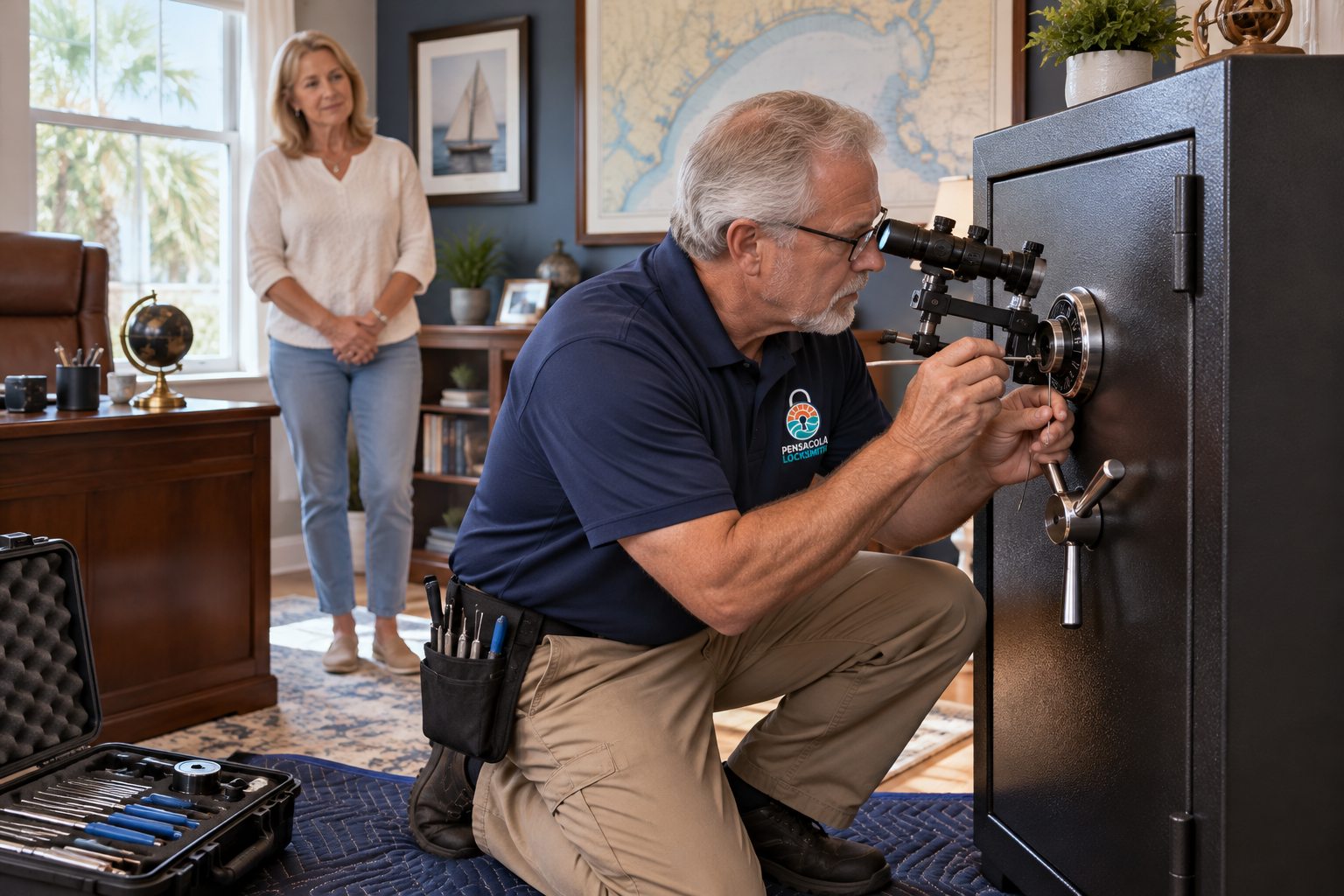
Before opening any locked cabinet, a locksmith asks who owns it and who has authority to open it. That is standard practice. A cabinet in a business belongs to the business, and the person asking should be the owner, a manager, or someone the owner has authorized. The technician may ask for a name or a short explanation.
This matters more than people expect. Locked drawers sometimes hold personal belongings, confidential files, or items involved in a dispute between co-workers or family members. A responsible locksmith will not open a cabinet if the situation looks unclear or if two people are disagreeing about who has the right to open it.
If the cabinet belongs to a former employee or a tenant who left, check with the person responsible for the premises. Landlords, property managers and business owners can usually give permission. If there is any doubt, a brief written note authorizing the work protects everyone involved and keeps things simple.
Documentation helps the visit go smoothly. A business card, a lease, an invoice for the furniture, or a short message from the manager is usually enough. For a home office, the technician may simply ask a few questions about the cabinet and who uses it. The goal is to be reasonably sure of the situation without making an ordinary job difficult for an honest customer.
How a locksmith opens a cabinet without damage
The first approach is to try to open the lock using small tools made for wafer locks, which preserves the cylinder. Many cabinet locks open this way in a short time, because they have only a few wafers and simple tolerances. The lock is then still usable, and a key can often be cut or the cylinder rekeyed on the spot.
If the lock is damaged or heavily corroded, another route is to remove the cylinder. On many cabinets, a retaining clip or screw holds the lock in the face, and the technician can reach it from inside a drawer or from behind. Releasing it allows the cam to be turned by hand.
As a last resort, a lock may be drilled. This destroys the cylinder, so a replacement is fitted afterwards. It is quicker in some cases, particularly with tubular locks on desks, but it is not the first choice. A good technician will explain which method is being used and why, and what it means for the lock afterward.
Time matters less than care with these locks. Hurrying can bend a wafer or scratch the face, which makes the cabinet harder to open next time. Technicians who work on furniture locks regularly know the common models and where they tend to fail, and can often tell from the style of the lock what approach will work. That experience shows up in a clean result.
Cutting a new key or rekeying the lock
Once the lock is open, there are two main choices. One is to read the lock and cut a new key that works with the existing pins or wafers. The other is to rekey the cylinder to a new pattern, which makes any old copies useless. Rekeying is better if you are unsure who has had the missing key.
Many cabinet cylinders carry a code stamped on the face or the side of the plug. This lets a locksmith cut a key directly from the code, even without the original. The code should be kept private because it is effectively the key in written form. Noting it in a safe place is wise.
Sometimes it makes sense to replace the cylinder with a new one that comes with keys. This is common if the old one is worn or if the cabinet is in regular use. The technician can match the cam and length so that the new lock fits and operates the locking bar properly.
A third option, particularly for older furniture, is fitting a modern replacement lock that suits the existing hole. Cabinet lock sizes are fairly standard, with a handful of common diameters and lengths. A technician measures the hole and the thickness of the drawer face, then picks a lock that sits flush. That way the cabinet looks tidy and the key works smoothly.
When the lock turns but the drawers will not open
A jammed cabinet is different from a lost key. If the key turns but the drawers remain locked, the latch bar inside may be bent, the cam may have slipped, or the drawers may be overloaded and binding against the frame. Pulling harder usually makes the situation worse.
Tall four drawer cabinets are designed so that only one drawer opens at a time. This interlock prevents tipping. If one drawer is stuck, the interlock may be holding the others, and a drawer left partially open can hold the system jammed. Gentle pressure on the drawer front while turning the key sometimes releases it.
If the interlock or latch bar is damaged, a technician may have to reach in from the top or the back to release it. Removing weight from the drawers helps. After freeing the mechanism, the part can be bent back, replaced, or left in place if the lock functions again. Some older cabinets are best replaced.
Before the technician arrives, empty the top drawers if you can reach them, and clear the area around the cabinet. Heavy cabinets can be dangerous to tip, so do not try to move a loaded one by yourself. A cabinet standing against a wall with little clearance may be harder to reach at the back, and moving it a little may make the work faster.

Moving to better key control
If an office has many cabinets and several people, think about a system. Number the keys and keep a simple log of who holds each one. Store spares in a locked place that a manager controls. This is dull, but it is the way to avoid the next lost key crisis.
A master key system lets one key open all the cabinets, with each person also having a key for their own. This can be set up by a locksmith on many cabinet lines, though not all models allow it. It may be easier to rekey a group of cabinets to the same pattern so that one key does everything.
When staff leave, take the key back and note it. If a key goes missing, change the lock instead of hoping it turns up. A few minutes of rekeying costs far less in time and worry than an unknown key floating around the building or leaving with a former colleague.
Think about digital records too. Many organizations keep paper copies only because it is habit. Scanning key documents and storing them in a secure place reduces the pressure on the physical cabinet. If a key goes missing next time, you will not be in a rush to open the drawer, and you can plan a calm replacement of the lock.
Protecting important records in Florida conditions
Paper files face threats beyond theft. Humidity, flooding and storm damage all affect cabinets in the Pensacola area. Steel cabinets sitting on a floor can take on water in heavy rain, and records in the bottom drawer are the first to suffer. Raise cabinets off the floor when possible and avoid storing important documents in garages or sheds.
A lock only controls access. It does not protect papers from moisture or fire. For birth certificates, deeds, insurance papers and passports, consider a fire and water rated box or safe, plus digital scans stored securely. Keep a list of what is stored and where, so that if you cannot reach a cabinet, you know what is inside.
Back up what matters before a hurricane season begins. Scan documents, store copies somewhere off site, and keep a short list of key contacts. A locksmith can help with the physical security side, but planning for the whole set of risks protects the records you cannot easily replace.
Open the cabinet and test every drawer after the work is complete. Lock and unlock several times, with the drawers loaded as they normally are. Ask the technician how to avoid forcing the lock in future. Put the spare key somewhere sensible, and record who has the working keys. A few minutes of tidying now prevents the same call next year.
What to expect when you call
Describe the cabinet: office or home, make if visible, number of drawers, and whether the key is lost, broken or the lock simply does not turn. Mention if you have the lock code. A photo of the front helps. Quotes are given by phone, and call us to confirm availability.
On site, the technician checks ownership or authority, looks over the lock, and chooses the method that preserves it if possible. Most cabinet openings are quick and tidy, and the technician will let you know if any drilling or part replacement is needed before it happens.
If the situation is more involved, for example several cabinets, a damaged interlock, or a lock that needs special parts, a technician visits to assess it and the service call charge is explained before dispatch. You can then decide how far to go and whether to rekey the rest of the cabinets at the same time.
Home offices, family papers and shared furniture
At home, locked drawers hold different things: tax papers, medical records, school documents, old letters, and sometimes cash or keepsakes. If the key is lost, resist the urge to pry the drawer open. A forced drawer front can crack the frame and ruin furniture that may have sentimental or financial value. A proper opening leaves the piece looking as it did before.
Shared homes need extra care. Roommates, adult children and parents may each have items in a desk that belongs to one person. A locksmith will not open a cabinet if there is disagreement about who has the right. Settling that first is part of doing the job properly, and it can save relationships as well as furniture.
If you are clearing a relative's home after a loss, treat locked drawers with respect. Check for a key in the usual places: pockets, a jewelry box, a hook inside a closet, or taped under the drawer. If nothing turns up, a locksmith can open the piece, with confirmation that you have authority to manage the estate or the home.
Common questions
Can a filing cabinet be opened without damaging it?
Often yes. Many cabinet locks are simple wafer designs that a locksmith can open with small tools, leaving the cylinder intact. If the lock is corroded or broken, the cylinder may have to be removed or drilled and replaced. The technician explains the method before starting so you know what to expect.
Can I get a new key made from the lock?
Usually. A key can be cut from a code on the lock face, or made by reading the lock after it has been opened. Rekeying is another option and makes old copies useless. Either way, the locksmith checks ownership or authority before doing the work.
The lock turns but the drawers will not open. What is wrong?
The latch bar or interlock may be bent or stuck, or the drawers may be overloaded and binding. Forcing a drawer can bend the mechanism further. A technician can release the latch from inside or behind the cabinet and tell you whether the part can be reused.
Should I rekey all the cabinets in my office?
It is worth considering if keys have been lost or staff have changed. Rekeying cabinets to a common pattern simplifies key control and removes any old copies from circulation. Not every cabinet allows it, so the technician checks what suits your furniture.
Is a cabinet lock secure enough for sensitive papers?
Not really. These locks keep casual access out but can be defeated with little effort. For important or confidential records, a rated safe or a higher security cabinet is a better choice. A locksmith can discuss options that suit what you need to protect.