
Content note: this page was written by Claude (AI) for Pensacola Locksmith.
Reading your key to see what you have
Start by looking at the key itself, because it tells you most of what a locksmith needs to know. A key with a plain metal blade and a thick plastic head usually has a transponder chip sealed inside. A key with the blade attached to a head that has lock and unlock buttons may have the remote built in. A flat fob with no exposed blade and a start button on the dashboard points to a smart key system.
Next, look at how you start the vehicle. If you turn a key in a cylinder, you have an ignition key system, and the key blade matters a great deal. If you press a button while your foot is on the brake, the vehicle reads the fob wirelessly, and the blade is only an emergency backup. A number of Mazda vehicles have both versions across the lineup, so the style of your own vehicle is the best guide.
Also notice the condition of the key. Worn teeth, cracked casings and peeling button pads are all signs that a replacement will soon be needed, even if the key still works. A key in poor shape is a good moment to make a spare while you can still use the existing key to help. Describe what you see when you call, and a photo can speed things along.
Transponder chips and why a cut key is not enough
A chip key adds a layer of security that a plain brass key does not have. Inside the plastic head is a tiny chip that holds a code. When you turn the key, the ignition area sends a short radio pulse that wakes the chip, and the chip replies. If the reply matches what the vehicle's immobilizer expects, the engine can run. If not, the engine may turn over briefly and then stop, or refuse to turn over at all.
For that reason, a key that merely fits the ignition might not start the engine. The blade opens the door and turns the cylinder, but the chip decides whether the engine fires. Hardware stores can cut blades, yet they usually cannot enroll the chip. A locksmith cuts the blade accurately and then programs the chip so the vehicle recognizes it as one of its own.
Some chips can be copied from an existing key by cloning, and others must be programmed fresh through the vehicle's diagnostic port. Which method applies depends on the system. Cloning is not available for every key family, and a technician will tell you honestly if your key needs a different approach. Either way, the vehicle is tested after the work to confirm a reliable start and no warning lights.
Push button start fobs and the backup blade
On vehicles with push button start, the fob communicates with the vehicle through short range radio. You do not insert it anywhere. The vehicle looks for it when you open a door, press the brake, or push the start button. A ring of antennas around the cabin and trunk helps the vehicle decide if the fob is inside or outside, which is why a fob left on the roof can sometimes trigger a warning message.
Because there is no ignition cylinder in the traditional sense, the physical blade in the fob is purely a backup for entering the vehicle when power is weak. It slides out and fits a small lock cylinder on the driver door. If you lose only that blade, a technician can cut a replacement from the door lock pattern or from the vehicle's code without touching the electronic side.
If the whole fob is gone, a new one must be added by a technician with the right equipment. The vehicle's computer needs to accept the new fob as an authorized device. Some systems allow this in a few minutes, while others require an extended learning routine. The technician also checks that the remote functions, such as lock, unlock and rear access, are working as expected after programming is done.
- Chip key with a separate remote
- Chip key with built in buttons
- Smart fob with push button start
- Emergency blade only
The information we need on the phone
When you call, a few facts let us plan the job properly. First, the make and general type of vehicle, which you already know. Second, how the vehicle starts, with a key turn or a button press. Third, whether you have any working key at all. This one answer changes the plan more than any other, since adding a key with a working one present is a different process from starting from nothing.
Next, we ask where the vehicle is. A technician travels to you, so the location matters for planning, and so does the setting. A vehicle in a home driveway is simple. A vehicle in a tight parking structure, or one that has been left on a roadside, may need extra thought about safe access. If the vehicle is not drivable or is blocked in, say so and the technician can prepare.
Finally, expect to be asked about ownership. The technician needs to confirm you are the owner or authorized to act for the owner before opening the vehicle, cutting a key or programming anything. Have identification and a document linking you to the vehicle, such as a registration or title. Quotes are given by phone, and if the job is complicated, a technician visits and the service call charge is explained before dispatch.
What happens when the technician arrives
The technician starts by confirming the details you gave on the phone. Identification and ownership proof are checked, the vehicle identification number is read from the windshield plate, and the key system is verified against what you described. Occasionally the vehicle turns out to have a different system than expected, and catching that early avoids cutting a blade that will not fit.
With the system identified, the blade is cut on a portable machine if needed. The technician checks the cut by testing it in the door and the ignition, watching for any sticking. Then the diagnostic tool is connected and the programming sequence runs. During this stage, you may be asked to stay near the vehicle in case the process needs a key turn or a door to be opened and closed at a specific moment.
Last comes testing. Every key is tried in the lock and used to start the engine. Remote buttons are tested, and the vehicle is left running for a short time to confirm the immobilizer light settles and there are no new warnings. You are shown how many keys the vehicle now recognizes. If something does not behave properly, it is addressed there at the vehicle, not later by phone.
All keys lost and the case for clearing old ones
Losing every key is more involved because there is no working key to lean on. The technician connects to the vehicle and creates a fresh key identity from nothing. Some vehicles accept this readily, and others need extra steps to open the immobilizer for learning. It generally takes longer than a spare key job, and it is best to expect that rather than hoping for a quick fix.
If the lost key might be in someone else's hands, you may want the old key removed from the vehicle's memory. Doing so means the old key can no longer start the engine, even if it turns up later. The process is usually part of the same programming session, and every key you want to keep must be present, because they are all enrolled again together.
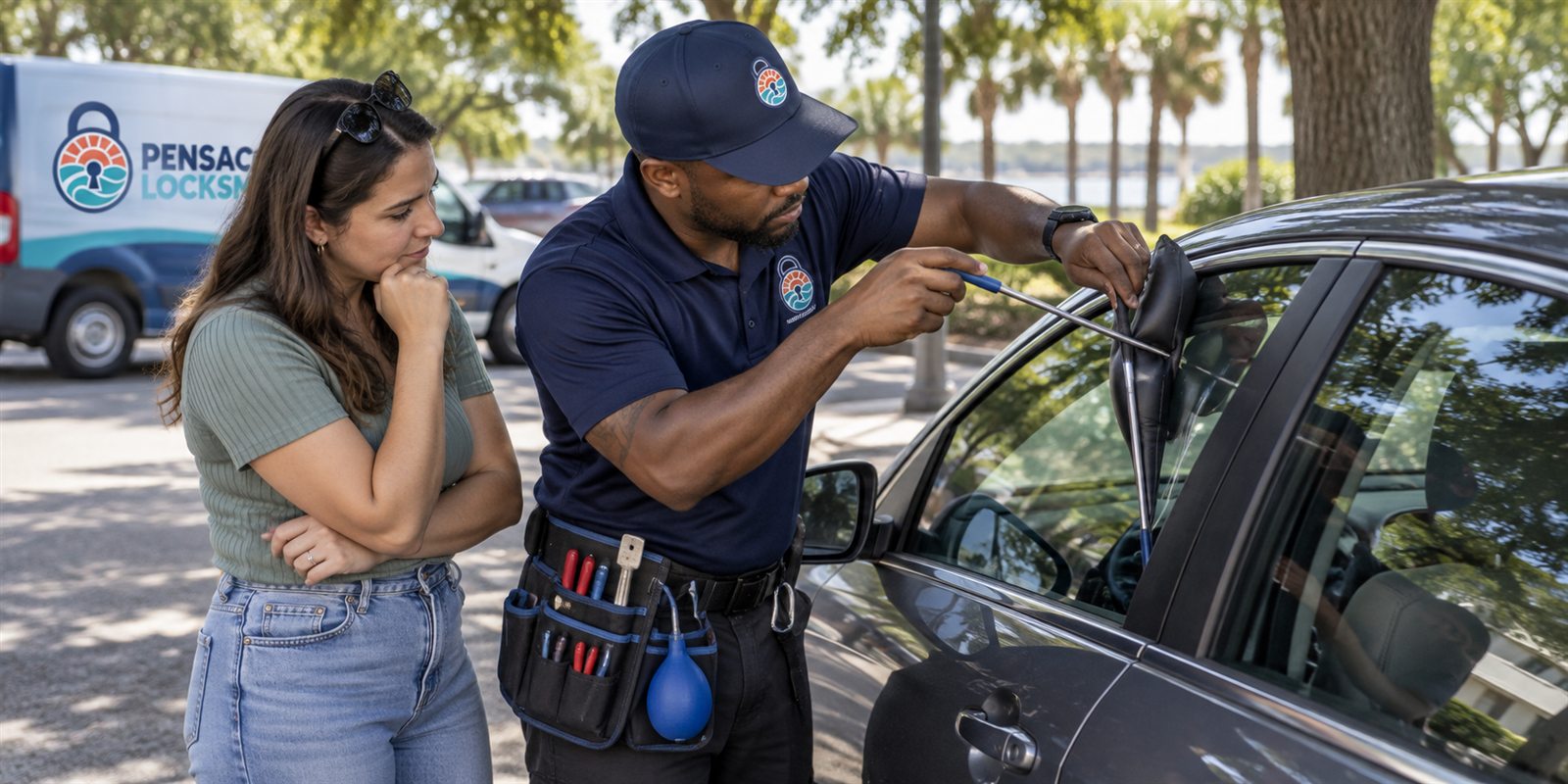
Keep in mind that a vehicle that is locked with no key also needs entry. A technician uses tools meant to open the door without harming the paint or weatherstripping, and then moves on to the key work. Describe if any alarm is sounding or if the vehicle has any damage near the door, as that changes how the technician approaches the job. Call us to discuss and confirm availability.
Weak batteries, worn buttons and other small failures
A key that seems dead is sometimes just tired. The battery in a remote or smart fob weakens slowly, and the signs are easy to miss. You might have to press a button twice or stand closer to the vehicle. The dashboard may flash a message about key battery. When these signs appear, a new battery is usually the first and simplest remedy and often brings the fob back to normal.
Worn buttons are different. The rubber pads inside a fob wear through, especially on the lock and unlock buttons, and the contacts underneath lose their coating. A new battery will not fix that. Some fobs can be opened and repaired, while others are better replaced. A technician can look at the condition of the case and tell you which path makes more sense for your situation.
Water damage is another common cause. If a fob went through a wash, a pool or an afternoon at the beach, moisture may have reached the circuit board. Remove the battery as soon as you can, dry the fob in open air and avoid heating it. If it still misbehaves after a day, bring it up when you call. Salt air near the Gulf makes this issue more common than inland.
Living in Pensacola and the routines that protect your key
Daily life here means keys meet sand, sunscreen, salt and humidity. Sunscreen softens the rubber on buttons, and sand works into the gap around the blade release. After a beach day, wipe the fob with a dry cloth and let it air out before returning it to a cup holder. Do not rinse a fob under a tap unless you are prepared to take it apart and dry it.
Heat is the quiet enemy. A fob left on a dashboard in a closed vehicle during a Florida summer can warp, and the battery inside can lose capacity. Keep your spare somewhere cool and dry at home, and avoid hanging a heavy bundle of keys from the ignition because the weight wears the cylinder over time.
If you live near the naval air station, attend the university, or run a rental property, your keys may be shared or passed between people. The more hands a key passes through, the more reason to track how many exist. Ask the technician how many keys your vehicle has enrolled, and keep a short note of where each one is. It makes any future change simpler.
Choosing between a basic key and a full featured fob
Not every owner needs every feature. A basic chip key starts the engine and opens the door, and costs less effort to make and to maintain. A key with buttons adds convenience, and a smart fob adds a start button and hands off entry. More features means more parts that can wear, so the choice depends on how you use the vehicle and how much you value convenience.
One approach many owners like is a pair: a full fob for daily use, and a basic backup stored at home. If the daily fob fails, the backup gets you moving. A technician can explain which options your particular vehicle supports, since not every style is available for every system. Ask about it when you call and we will tell you what applies.
Whatever you pick, avoid waiting for the last key to fail. A spare made while you have a working key is the easiest job to do, and it gives you breathing room. When you call, mention if you want a second key made during the same visit, because it is quicker to enroll two keys together than to arrange two separate trips.
Honest limits of mobile key work
Mobile service is convenient, but it has limits worth stating. Some key systems require data or procedures that are not available outside the manufacturer's channels, and a technician will say so openly if your vehicle falls into that group. In that case you will hear what the options are rather than being promised something that may not be possible.
Also, a key is only one part of the system. If the vehicle will not start because of a weak battery, a failed starter or a security module fault, a new key will not fix it. The technician can usually tell by checking for the immobilizer light and by reading basic information from the vehicle. If the problem is outside key work, you will be told so.
Finally, time can vary. Cutting and programming may be quick on some systems and drawn out on others, and weather matters, since working outdoors in a summer thunderstorm is not ideal. A technician may suggest moving the vehicle under cover when possible. Being flexible about location helps the job go cleanly. Call us to describe your situation and to confirm availability.
Common questions
Can you make a Mazda key if I have no spare?
Yes, in most cases. The technician confirms ownership, identifies the key system from the vehicle identification number, cuts a blade if one is used, and programs the new key through the diagnostic port. It takes longer than copying a key when one still works. Call us with the vehicle details to talk through your case.
Why does my new key open the door but not start the engine?
The blade opens the lock, but the chip inside the head decides whether the engine runs. If the chip has not been enrolled with the vehicle, the immobilizer blocks the start. A locksmith programs the chip after the blade is cut, which is why a key from a hardware counter often fails to start the vehicle.
Do I need to bring the vehicle somewhere?
No. The technician comes to the vehicle in Pensacola and the surrounding Escambia County area, since programming must be done with the vehicle present. Call us to confirm availability and share the location. If the job is complicated, a technician visits and the service call charge is explained before dispatch.
What documents will the technician ask for?
Expect to show identification and something that links you to the vehicle, such as a registration or title. The technician checks ownership or authority before opening the vehicle, cutting a key or programming it. If you are acting for someone else, mention that on the phone so we can explain what is needed.
Should I replace the battery in my fob myself?
You can, if you are careful. Open the case at the marked seam, note which way the cell sits, and avoid touching the circuit board. If the case is cracked, the buttons are worn, or the fob still misbehaves after a new battery, a technician can inspect it and tell you whether repair or replacement makes sense.