
Content note: this page was written by Claude (AI) for Pensacola Locksmith.
Sorting out which Hyundai key you have
Hyundai vehicles have used a handful of key designs, and the first job on any call is to figure out which one yours is. Some have a standard metal key with a plastic head that hides a transponder chip. Others have a remote head key, where the lock and unlock buttons are molded into the same piece as the blade.
Flip keys, sometimes called switchblade keys, fold the metal blade into the fob when you press a button. Smart keys, used on push-button start models, let you start the engine without inserting anything. Each of these is a different piece of hardware with its own chip and its own programming rules.
If you are not sure, look at the ignition. A slot where a key goes in means a blade and chip system. A start button on the dash usually means a proximity fob. Mentioning this when you call helps the technician bring the right blanks and equipment instead of guessing.
Many fobs also hide a small mechanical key inside. It looks like a thin metal blade, and it opens the driver door if the fob battery has died or the vehicle's power is down. That emergency blade is cut separately from the electronic part, so it counts as its own step in the job.
Why a hardware store copy usually fails
People often try the quick option first: a copy made on a general key machine. For a Hyundai with a transponder system, that copy may open the door and turn in the ignition, yet the engine will not start. The car looks for a coded signal from the chip, and a plain brass copy carries none.
The immobilizer in the car stores the identity of each approved key. When you turn the ignition or press the start button, the system asks the key to answer. If the answer is missing or wrong, fuel delivery is blocked and the dash may show a key symbol or a security light.
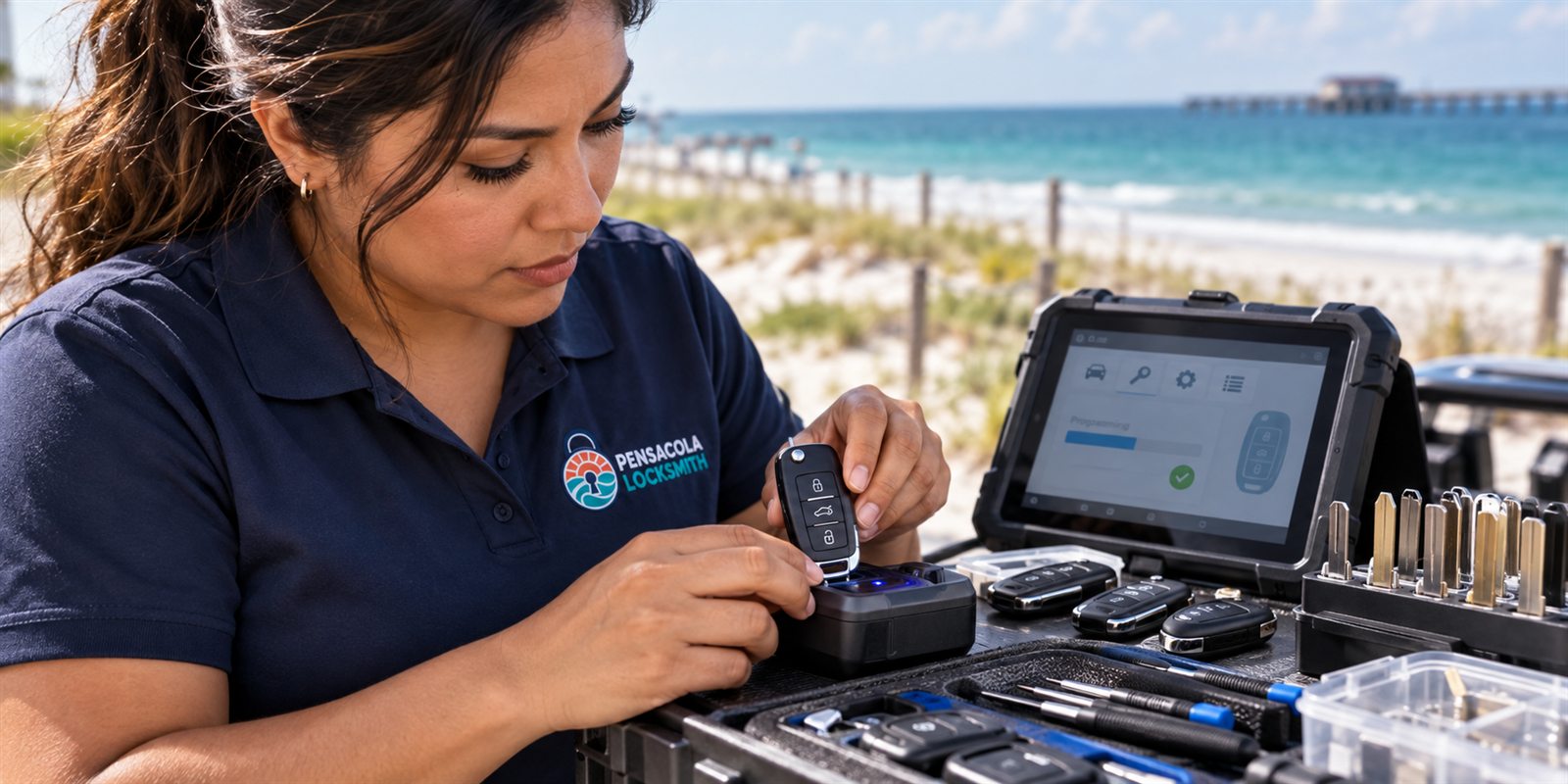
A locksmith who programs Hyundai keys carries both the blanks and the electronic tools needed to register a chip. The cutting is one part of the work. The other part is communicating with the vehicle's computer, and that requires equipment that most general key shops do not have.
There is one more reason to avoid unknown blanks. Low quality chips sometimes pass programming at first and fail later in heat, which is a real concern in Gulf Coast summers. A technician who tests the key after programming and before leaving catches the obvious failures, and good blanks reduce the rest.
What a technician needs to know before arriving
A good call covers the basics. The technician will ask for the make, model and approximate year, how many keys you have left, and whether the vehicle is locked. These details narrow down the key type and programming procedure, which can differ even between two Hyundai models built a few years apart.
The vehicle identification number is also valuable. It sits on the dashboard at the base of the windshield and on a sticker in the driver door jamb. With the number, the technician can confirm trim level, key type and, where the data exists, the code used to cut a key to factory specification.
Tell the technician where the car is. A home driveway, a hospital lot, a parking garage or a roadside pull-off each presents different working conditions. Vehicles in tight garages or crowded lots sometimes need to be moved, and the technician would rather plan for that than discover it with tools in hand.
Finally, say plainly whether you have a spare. A working key makes the job simpler, because the technician can copy and authorize from it. With no keys at all, the job takes longer and sometimes needs a technician visit to evaluate the vehicle before a firm quote is possible.
Ownership and authority checks
Before any Hyundai is unlocked, cut or programmed, the locksmith confirms that the person asking has the right to the vehicle. This normally means a photo ID and a document that connects you to the car, such as a registration, a title or a purchase record.
The check is not about suspicion. Vehicle keys are powerful, and giving one to the wrong person can mean theft. Most honest customers understand this and appreciate that the same step protects their own car if someone else ever tries to claim it.
If you are a family member helping a parent, an employee handling a company vehicle, or a manager at a rental property, the locksmith needs proof of authority. A written note from the owner, a company letter or a fleet document can work. Ask when you call so you bring what is needed.
If the paperwork is missing, the technician may be unable to complete the job. That is frustrating but correct. A quick call to the registered owner, or a visit to retrieve documents, is much better than a key made for someone who has no right to the car.
Cutting a Hyundai blade in the field
Many Hyundai keys use a laser cut or milled blade, which has a channel cut into the flat of the metal rather than teeth along the edge. These keys need a machine that follows a different path, and the mobile cutter carried by a locksmith is built to handle it.
The blade is cut to match a code, a copy source or information read from the lock. When you hold the old key, copying is straightforward. When everything is lost, the technician may decode the lock itself, which takes patience but is a normal technique.
After cutting, the key is tested in the door and the ignition. A blade that sticks, only works when turned a certain way, or leaves marks on the pins is recut. A good blade feels smooth, enters easily and turns without effort.
If the vehicle's lock cylinder is worn, a perfect blade can still feel rough. The technician will tell you if the lock itself is the issue, and whether a lubricant, a cleaning or a cylinder repair would help. That is an honest conversation worth having instead of blaming the new key.
How programming ties the key to the car
Programming usually begins with a diagnostic tool plugged into the data port under the dash. The technician selects the vehicle, starts a key learning routine and then presents the new key. The car stores the key's identity, and from that moment treats it as a trusted key.
Some Hyundai models allow an onboard method if you already hold working keys, where a sequence of ignition cycles lets you add a key without a scan tool. Many do not, or the process is restricted, so the technician decides which path fits your vehicle rather than trying the same method every time.
Remote functions are checked separately. Lock, unlock, panic and any trunk or hatch button should respond, and a proximity fob should be detected when it is inside the cabin. If the vehicle offers remote start through the fob, that is tested as well.
Smart key vehicles sometimes require more steps, including a security procedure that makes the car wait before it will accept a new key. This is deliberate. It slows down theft, and the technician will explain any wait so you are not left wondering if something has gone wrong.
Fob batteries, wear and water damage
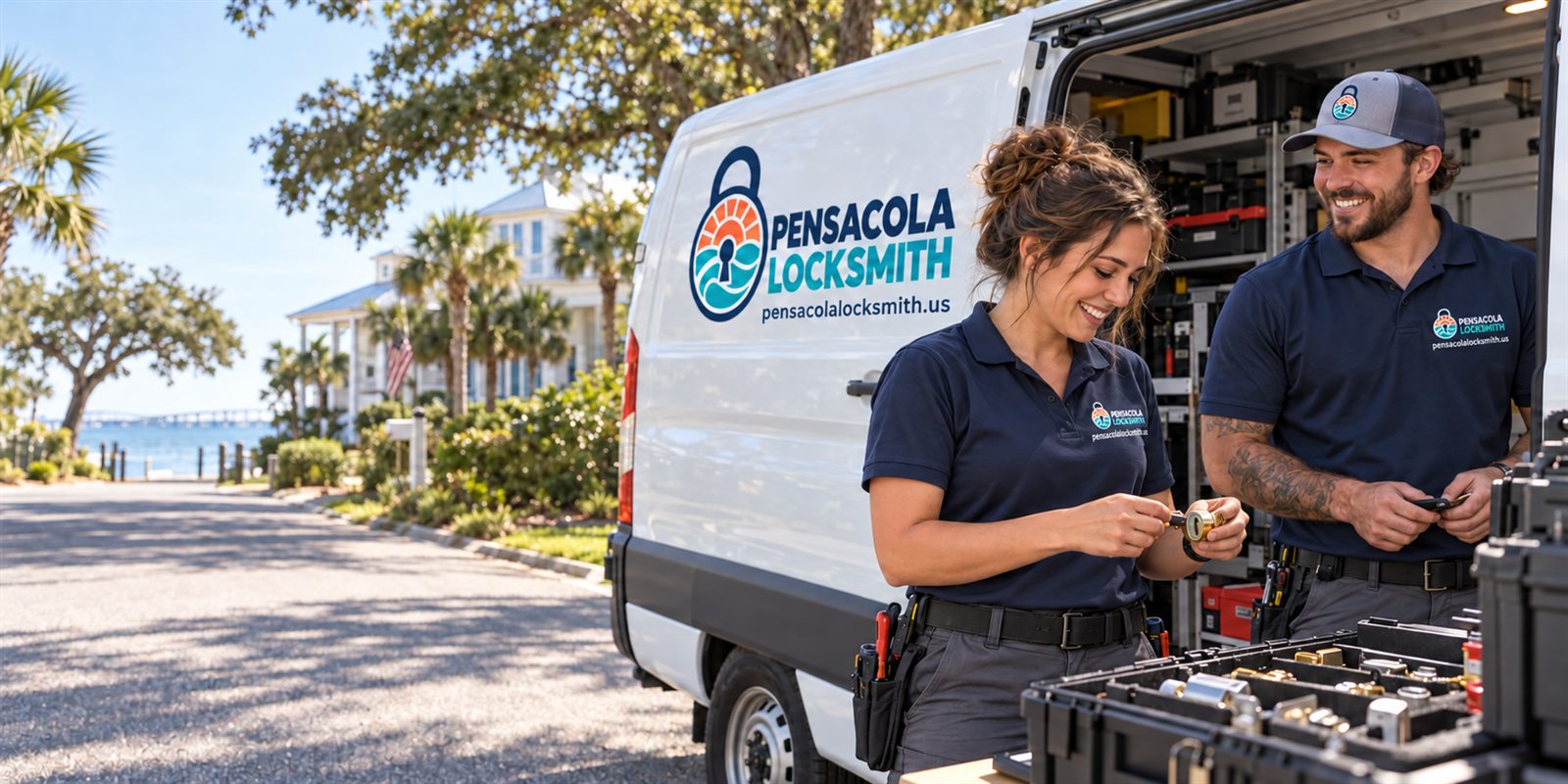
A fob that suddenly stops working is not always dead. The coin battery inside is small and wears out. Replacing it takes a minute, and the technician can do it while on site. Check the battery first if the remote has become weak, and carry a spare coin cell if you are a heavy fob user.
Buttons wear too. The rubber pad on a well used fob may crack, and the contacts underneath lose their grip. A technician can often move the electronics into a new case, which brings an old fob back to life without a full replacement.
Water is harder. Pensacola's humidity, summer storms and beach days all expose fobs to moisture and salt. A fob that has been through the wash or dropped in the surf may corrode on the circuit board, and that damage tends to spread. If the fob has stopped working after getting wet, let it dry, remove the battery, and let the technician inspect it.
Heat is the quiet enemy. A fob left on a dashboard in a Gulf Coast summer can warp the case and weaken the battery. Keep your fob in a bag, a cup holder or your pocket, not baking in sunlight, and it will last noticeably longer.
- Remove the battery from a wet fob and let it dry completely
- Do not leave the fob on the dashboard in direct sun
- Keep the emergency blade accessible and know how to remove it
- Test the spare key every few months so you know it still works
When the situation is more complicated
Not every Hyundai job is simple. Cars with a damaged ignition, a faulty immobilizer module, or an aftermarket alarm can resist normal programming. In those cases the technician may need to visit the vehicle in person to diagnose before promising a result.
When a visit is needed, the service call charge is explained before dispatch. That means you know what the trip involves before anyone shows up, and you can decide whether to go ahead. Quotes for ordinary key jobs are given by phone.
Sometimes the right answer is not a new key. If the problem is a failed module or a worn ignition, a new key will not fix it, and a technician who says so is saving you money. Expect plain explanations rather than pressure to buy more than you need.
If the car has been sitting for a long time, the battery may be too weak for programming. A jump start or a charged battery is often part of preparation. Mention it when you call, and the technician can bring a power supply to stabilize voltage during the session.
Planning around students, visitors and busy households
Pensacola has a mix of long term residents, students at the university and college, military families and seasonal visitors. Each group faces slightly different key problems. Students share cars and misplace keys at parties, military families move often and end up with a single key after a relocation, and visitors lock keys in rental vehicles.
If you are a visitor, remember that the locksmith needs to confirm authority. A rental company or owner may need to confirm that you can have a key made, and that call can take time. Contacting them early, before the technician arrives, can prevent delay.
Households with several drivers should keep an organized spare system. A labeled hook at home, a spare with a trusted relative and a record of which key belongs to which car sound dull, but they turn a lost key into a short interruption rather than an emergency.
During hurricane season, check your vehicle keys when you check your supplies. If you need to leave the area, the last thing you want is a missing key. Please call to confirm availability if you need help during busy or stormy periods, since conditions can affect scheduling.
What to do before and after the visit
Before the technician comes, collect your ID, registration or title, any remaining keys or pieces, and clear the area around the driver door. If possible, keep the vehicle in a shaded or covered spot, since summer heat is hard on both people and electronics.
During the work, stay nearby and ask questions. A good technician narrates what is happening: cutting, testing, connecting the tool, learning the key. If something is unclear, ask, because understanding the process helps you make better choices about spares and maintenance.
After programming, test everything in front of the technician. Start the engine twice, press every button, and try the emergency blade in the door. Walk a few steps away and test the remote range. Take a moment to confirm the dash shows no warning lights.
Finally, decide on a spare while the technician is there. Adding a second key during the same visit is usually more convenient than another call later. Store it somewhere safe and separate from your daily key, and your next lost key will be a small nuisance, not a crisis.
Mistakes that make a Hyundai key job harder
The most common mistake is trying to program a key with an online video and a cheap blank. Sometimes it works. Often the car ends up with a confused key list, or a security lockout that takes a professional to clear. If you have already tried something and it failed, tell the technician exactly what you did, because that history affects the next step.
Another mistake is repeatedly pressing the start button or cranking the ignition when the car refuses to start. Some systems count failed attempts and add a delay each time. Stop after a few tries, note the dash message, and call. The extra information helps, and you avoid locking yourself out of the quick path.
A third is ignoring a warning that the key battery is low. Many owners see the message for weeks, then find the car stranded in a parking lot. Replacing the battery early is a small task, and it protects you from the exact situation that brings most people to a locksmith.
Finally, avoid handing your only key to a stranger for copying. Make your spare from a trusted, accountable provider, and keep the original close. Bring everything to the appointment, including broken pieces, so the technician has the fullest picture of what the vehicle needs.
Common questions
Can you program a Hyundai smart key if all keys are lost?
Often yes, though it takes more steps than copying an existing key. The technician verifies ownership, then uses diagnostic equipment to register a new smart key with the vehicle. Some models enforce a security delay. Call us with the model and year, and we can explain what your vehicle needs before anyone is dispatched.
Why did my copied Hyundai key turn the lock but not start the car?
The car's immobilizer looks for a coded signal from a chip inside the key. A plain copy has no chip, or a chip that was never registered with the vehicle, so the engine stays disabled even though the blade turns. The key must be both cut and programmed for the car.
What should I have ready when I call?
Have the make, model and approximate year, the VIN if you can read it, and a note on whether you still have any working key. Also have your photo ID and registration or title nearby. The locksmith checks ownership or authority before cutting or programming anything.
Can a technician replace just the battery or case on my fob?
Yes, in many cases. A weak coin battery or a cracked shell can be fixed on site, and the electronics can be moved to a new case. If the circuit board is corroded or damaged by water, replacement is more realistic. The technician inspects it first and tells you honestly which option fits.
How is the price decided for a Hyundai key?
It depends on the key style, whether you have a working key, and how involved the programming is. Quotes are given by phone after we hear the details. If a more complicated job needs a visit first, the service call charge is explained before dispatch, so you know what to expect.