
Content note: this page was written by Claude (AI) for Pensacola Locksmith.
What wear actually does to a key
A standard pin tumbler key works by lifting a row of small pins to precise heights so that a gap lines up at the edge of the plug, allowing it to turn. The valleys and peaks cut into the key's blade each match one pin. When those cuts are fresh, the key slides in smoothly and each pin lands exactly where it should. With use, the peaks round off and the valleys shallow out.
Wear is gradual, so you rarely notice it day to day. A key might need a tiny wiggle to turn, or you might find yourself pulling it back a hair to get the lock to open. These small adjustments are your hand compensating for pins that no longer sit at the right height. Eventually the difference becomes too large and the lock refuses to turn.
The brass or nickel silver that most keys are made from is soft by design, because it has to be cut easily. That softness also means the key wears faster than the harder steel pins inside the lock. In daily-use locks, such as a front door, a car door or a business entrance, the key can wear noticeably within a few years, and the effect is faster with heavy use.
The copy-of-a-copy problem
Many people never realize that the way a key is copied matters. A duplicate cut from a worn key inherits its flaws. The machine traces the existing cuts, including the rounded edges and slightly shallow valleys, and reproduces them. If the original was already off by a small amount, the copy may be off by the same amount, and then a second copy made from that copy can be off by even more.
Add to this the tolerance of the cutting machine and the thickness of the blank, and each generation drifts a little further from the factory specification. A copy of a copy of a copy might look fine and still fail to lift the pins correctly. That is why a key that your neighbor's spare opened just fine may refuse to work in your lock.
The best practice is to cut copies from the original key made by the lock maker, or better, from the key code when available. A locksmith can decode the lock itself to determine the original cuts and make a fresh key from that. This restores the intended geometry and gives you a clean starting point for future copies.
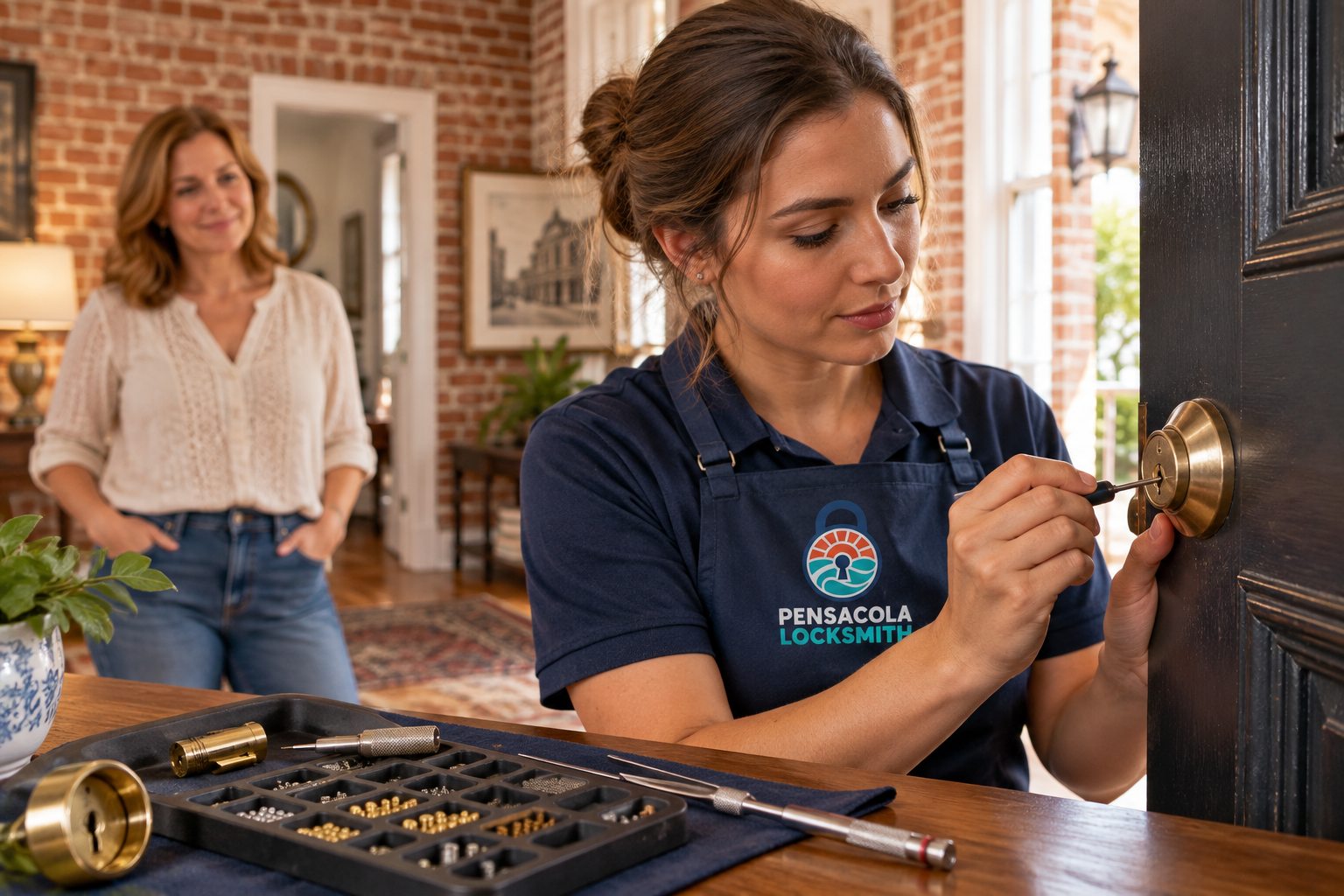
Signs your key is on its way out
There are early clues if you know what to look for. The key may feel rougher as it slides in and out, or you may need to push the door slightly while turning. It might work in the morning and fail in the afternoon, particularly when the weather changes. A key that must be turned with extra force, or that works only if you hold it at a slight angle, is telling you something.
Look at the key itself. Compare it with a newer spare, if you have one. Worn keys often have visible flattening on the high points and a shiny look on the surfaces that touch the pins. The edges of the cuts may look rounded rather than crisp. Cracks, bends or a loose bow, which is the head of the key, are also warning signs.
Pay attention to what the lock does. If a lock sticks, binds or feels gritty with every key, the problem may be the lock rather than the key. A fresh key that works smoothly in one lock but sticks in another points to the lock. A worn key that still works in other locks of the same brand points to the key itself. A technician can sort that out quickly.
- Needs jiggling or pulling back to turn
- Works only some of the time
- Rounded or shiny cuts compared with a spare
- Bent, cracked or loose key head
- Sticks in one lock but works in others
Why you should act before the key fails
A worn key that still works is an opportunity. Once it fails completely, you may be locked out, and you may be left with a broken key stuck in the lock. A key that snaps off in the cylinder takes extra time to remove and can damage the lock. Acting early lets you choose the time and place instead of dealing with it on a rainy night or when you are in a hurry.
A failing key also puts strain on the lock. Forcing it to turn can bend the plug or break pins inside. What began as a worn key can become a damaged cylinder that needs repair or replacement. If you are using a car key, the worn blade may damage the ignition cylinder or the door lock, and those repairs can be more involved than cutting a new key.
Another reason is security. When a key barely works, people tend to leave doors unlocked or use workarounds like keeping the door slightly ajar. If a key fails at the wrong moment, you may be tempted to hide a spare under a mat, which is easy for others to find. Replacing the key keeps the routine simple and the door secure.
How a locksmith makes a clean replacement
A technician has a few options. If the lock is still in good shape and you have a decent original key, the technician may cut a new key using code cutting, which uses the lock's key code or the manufacturer's data rather than copying the worn shape. For many locks and cars, the code can be found from the lock itself, the vehicle information or the paperwork that came with it.
If no code is available, the technician can decode the lock by examining the pins or wafers inside, a process called reading the lock. From that information the technician cuts a fresh key that matches the lock as designed. This gets around the worn key entirely, which is why it is useful when you have only copies of copies.
In some cases, the more practical approach is to rekey the lock, meaning to change the internal pins so that a new key fits. This is helpful if the lock itself is worn, if several keys are in circulation and you do not know who has them, or if you want a fresh start. The technician confirms your ownership or authority before rekeying, which protects the property owner.
Vehicle keys and transponder chips
Car keys have an added layer. Many modern vehicle keys include a small chip inside the head that communicates with the car's immobilizer system. A worn blade can fail to turn the ignition, but even a perfect blade will not start the engine unless the chip is recognized. That means replacing a worn car key may involve both cutting the blade and programming the chip.
Wear on a car key shows up differently from a house key. The door lock may stick, the ignition may be stiff or the key may only turn when jiggled. Because car keys are carried in pockets and bags and used several times a day, they wear faster than most house keys. Dirt, lint and sand from coastal areas can speed up that wear.
For vehicles, the locksmith checks ownership before cutting or programming a key. Have your driver license and registration, title or lease paperwork ready. Describe the key type, whether it is a plain metal key, a key with a plastic head, a flip key or a push-button fob. Call us to confirm availability and discuss what your vehicle needs.
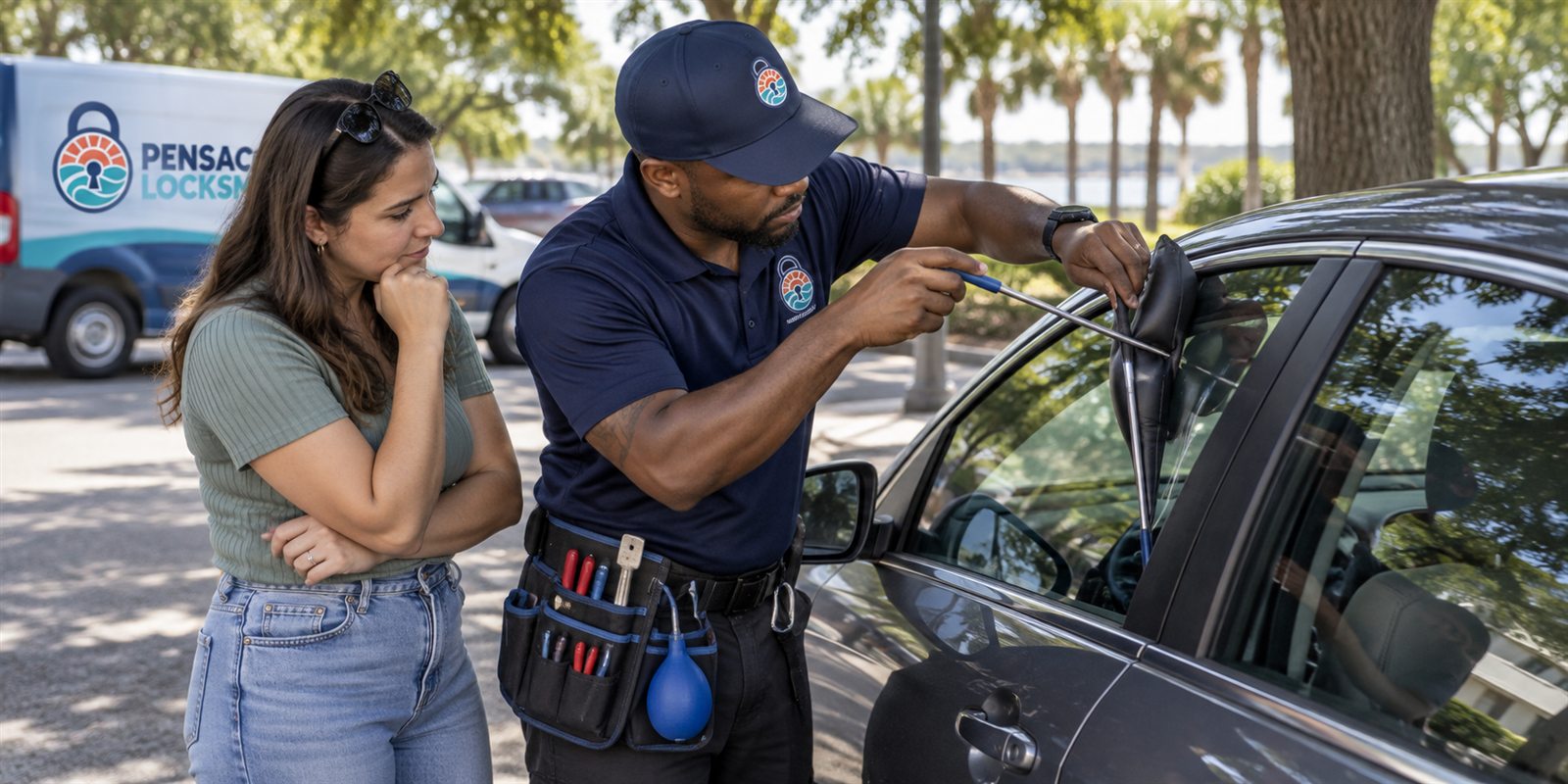
Coastal humidity, salt and sand
Pensacola's climate adds extra stress to keys and locks. Salt in the air settles on metal surfaces, and warm, humid conditions encourage corrosion. A key that lives in a pocket with sand from the beach carries abrasive grit into the lock every time it is inserted. Over time, that grit acts like sandpaper on both the key and the pins.
Locks on exterior doors, gates, padlocks and sheds are particularly exposed. A padlock on a boat shed or fence gate may corrode inside, leading to a stiff turn that quickly wears the key. Even a well-made lock can be damaged when moisture and salt combine. If your lock has begun to feel gritty, cleaning and lubricating it may help extend the life of both lock and key.
Use a dry graphite or a lubricant designed for locks, rather than a heavy oil that attracts dust. Avoid spraying a lot of lubricant into a car ignition. If a lock is badly corroded, a technician may recommend replacement. During hurricane season, check your locks after a storm, because wind-driven rain and flooding can push water and debris into cylinders.
Cleaning and lubricating a sticky lock
Sometimes a key that seems worn is really being defeated by a dirty lock. Before you give up on the key, try cleaning it. Wipe the blade with a soft cloth and a little rubbing alcohol to remove grease and grime. Look for lint or debris in the keyway, which is the opening of the lock, and use compressed air to blow it out gently.
If the lock is still stiff, apply a small amount of dry lubricant, such as powdered graphite or a PTFE-based product, to the key and work it in and out a few times. Wipe off the excess. Avoid household oils, which can gum up the pins and attract dirt. Do not force the key. If it binds, stop and ask for help.
Cleaning does not repair a truly worn key, but it can tell you whether the key or the lock is the issue. If a clean, lightly lubricated lock still fails with a worn key but works with a newer one, the key is the problem. If a new key also sticks, the lock needs attention. A technician can disassemble the cylinder and service it.
Different key types wear in different ways
Not all keys age the same. A traditional brass house key with two sides of cuts shows wear mostly on its tallest peaks, where it presses hardest against the pins. A high-security key with a milled or laser-cut track wears differently, often losing definition along the side groove. Dimple keys, which have holes drilled into the blade rather than notches along the edge, tend to resist wear longer but can still develop shallow dimples.
Padlock keys and gate keys wear fast because they live outdoors and get little care. Mailbox keys and cabinet keys are small and lightly used, so they usually last, but they are often cut with cheap blanks. Car keys vary widely, from plain steel blades to composite heads with chips. Each kind needs the right blank, and using the wrong one speeds up wear.
Knowing your key type helps when you call. Describe the shape of the blade, any markings on the head, and the number of sides cut. If you can read a brand name or a stamped number on the bow, share it. That information lets a technician bring the right blanks and decide whether the replacement can be done on site or whether a part must be ordered.
Questions worth asking before you replace a key
Take a moment to ask a few questions before you commit. How many keys are in circulation, and who has them? If a former roommate, contractor or employee still holds a copy, rekeying the lock is worth considering instead of just replacing the worn key. A new key cut for the old pin arrangement still opens the lock for everyone else who has a copy.
Ask whether the lock itself is in good condition. A worn cylinder, loose set screws or a latch that sticks can make any key feel bad. Fixing the lock at the same time can save a second visit. Ask whether a spare key should be made, and where it should be stored. A well-placed spare can save you from another lockout.
Finally, ask about what happens to the old keys. Worn keys that no longer work in your lock may still open another lock somewhere, such as at a previous address. Dispose of unneeded keys safely by cutting them or handing them to the technician. Keeping a tidy key ring is a small habit that avoids confusion and makes the worn key problem easier to spot next time.
What to bring and what to expect from the visit
When you call, describe the problem: which lock, what the key does, how long it has been getting worse, and whether you have any other keys. If you have an original key, a spare or a key from the manufacturer, set them aside. If the lock is on your home or business, be ready to show that you live there or have authority to make changes, such as a lease or a utility bill with your address.
The technician will inspect the key and the lock, test how the key moves, and explain the options. Typically you will hear about cutting a new key by code, decoding the lock, rekeying, or replacing the cylinder. Ask questions, and make sure you understand the recommendation before work begins. Quotes are given by phone, and if a job is complicated, a technician visits first and the service call charge is explained before dispatch.
After the new key is cut, the technician tests it in the lock several times and may cut a spare. Check that the key turns smoothly in both directions and that the door latches properly. Keep the original worn key out of circulation or dispose of it. Store spares in separate safe places so you are not caught again. Call us to confirm availability.
Common questions
Why does my key work only when I jiggle it?
Jiggling usually means the key cuts have worn down, so the pins do not lift to exactly the right height without a little help. It can also mean dirt in the lock. Clean the key and lock first. If it persists, have a locksmith cut a fresh key from the lock code.
Is a copy made from a worn key as good as the original?
Not always. A copy traces the worn shape, including rounded edges and shallow cuts, so it may inherit and even add errors. A key cut by code or decoded from the lock restores the original dimensions and usually works much better than a copy of a copy.
Can a worn key damage the lock?
Yes. Forcing a worn key can bend the plug, break internal pins or snap the key off in the lock. In a car, it can harm the ignition or door cylinder. Replacing a failing key early is usually simpler than repairing a damaged lock.
Do I need proof of ownership to get a new key cut?
For vehicles, homes and businesses, the locksmith checks ownership or authority before cutting, rekeying or programming. Bring a driver license and registration, title, lease or a utility bill, depending on the property. This protects the owner of the lock or vehicle.
How do I find out what a replacement will involve?
Call us and describe the lock or vehicle and what the key is doing. Quotes are given by phone. If the job is complicated, a technician visits and the service call charge is explained before dispatch. Call us to confirm availability before planning around a visit.