
Content note: this page was written by Claude (AI) for Pensacola Locksmith.
Why outbuildings are an easy target
A detached structure has three weaknesses compared with the house. It is out of sight from the rooms where you spend your time, it usually has lighter construction, and it often holds items that are valuable, portable and easy to resell. Mowers, trimmers, generators, ladders and tools can leave in a single trip. Someone walking through a backyard can check a shed door in seconds, and a poor lock tells them the whole building is probably soft.
Burglars also like outbuildings because they hold tools that help with the next break-in. A pry bar, a ladder or a cordless drill stored in a shed can be used on the house itself. That is one reason it makes sense to treat the shed as part of the home's security, not as an afterthought. Securing it protects the contents and removes helpful equipment from anyone who wanders into the yard.
Think too about what the building contains that is not just property. Fuel cans, paint, pool chemicals and pesticides are hazards to children and pets. A reliable lock keeps those out of the wrong hands, and the habit of keeping the door shut and latched also protects against moisture and pests. Before choosing hardware, list what is inside, how valuable it is, and who in the household needs regular access.
Start with the door and the frame, not the padlock
People tend to shop for a padlock first, but the strongest padlock in the world secures nothing if the door is a thin panel or the hinges are exposed. Walk around the structure and ask how someone would get in if they ignored the lock. Many sheds have doors held by small screws into soft wood, and those screws can be pried out. A door that flexes when you push on it will flex more under a crowbar.
Hinges are the next point. If the hinge pins are on the outside, someone can tap them out and lift the door away, leaving the locked hasp untouched. Fix this with non-removable pins, by peening the pin ends, or by using security hinges. Replace short screws with longer ones that reach solid framing, and consider through-bolting the hasp with carriage bolts and washers so the nuts are on the inside where nobody can reach them.
If the shed has a plain wooden door, adding a layer of metal sheeting or a sturdier frame can help, but consider whether a replacement steel or fiberglass door is more sensible. For a detached garage, the side service door deserves the same attention as the house. It should have a proper deadbolt, a reinforced strike and a solid frame. The vehicle door gets its own treatment, discussed below, because it uses different hardware.
Choosing and mounting a hasp
A hasp is the hinged plate that swings over a staple and holds a padlock. The best hasps are made of thick steel, have concealed screws or bolts when closed, and are wide enough that cutting tools cannot reach the fasteners. A cheap hasp with exposed screws can be unscrewed in under a minute, which makes the padlock decorative. Look for a hasp whose mounting screws are hidden when the hasp is shut.
Mounting matters as much as the product. Fasten the hasp to solid wood or metal framing, not just to the thin skin of the door. Where possible, use carriage bolts that pass entirely through the door and frame, with washers and nuts inside, so the heads are rounded and the nuts cannot be reached from outside. If the door is hollow or thin, add a backing plate on the inside to spread the load and prevent pulling through.
Make sure the hasp and the door line up without strain. Humidity on the Gulf Coast makes wood swell, and a door that binds will tempt you to leave it unlatched. A well-fitted hasp closes with a bit of tension but does not require force. Also check the staple, since some come loose in soft wood. If the staple pulls out with moderate force, replace it with a heavier unit and bolts instead of wood screws.
Padlock choices for an outdoor building
For a shed or garage, a padlock should have a hardened steel shackle, a solid or laminated body, and a design that resists the common attacks of cutting, prying and hammering. Shackle thickness matters, but so does how much of the shackle is exposed. A shrouded or protected shackle design leaves little room for bolt cutters to bite, and it is a good match for a hasp that sits close to the door.
Weather is the other factor. Salt air corrodes cheap locks quickly, and a padlock that seizes is as bad as one that is cut. Look for models with weather-resistant bodies, sealed or covered keyways and stainless or coated parts. Even a good outdoor padlock benefits from a little protection, such as a cover that keeps rain out of the keyway, and from occasional lubricant suited to locks rather than a heavy oil that attracts grit.
Decide between keyed and combination padlocks based on who uses the building. A key is fast and reliable but can be lost. A combination avoids carrying keys but can be shared or learned by watching. If several people use the shed, a keyed-alike set lets one key open multiple padlocks. A locksmith can help choose a model, key several to match, and recommend a position that makes the lock harder to attack. The page on choosing a padlock covers the details.
- Hardened shackle with a shrouded or protected design where possible
- Weather-resistant body and covered keyway for salt air
- Keyed-alike options when several locks must share a key
- Hasp bolted through the door, not screwed to thin trim
Garage vehicle doors and how they get opened
A sectional overhead garage door is usually opened by a motorized operator, and the lock built into the door itself is often forgotten. Thieves sometimes attack the emergency release cord, reaching through a gap at the top with a wire to pull the release. You can reduce this risk by closing visible gaps, replacing weatherstripping that has worn, and, on some models, using a cord shield or a lock for the release.
If you use a remote, keep it out of cars parked outside, since a stolen remote opens the garage and sometimes the house. Many people leave remotes in vehicles, and that is a quiet security leak. If you lose a remote or sell a vehicle, reset the codes on the operator. Rolling code systems help with this, and a technician or the operator manual can walk you through erasing old remotes and programming new ones.
For a manual door, a slide bolt on the inside or a side lock keeps it closed. Check that nothing can be pried at the bottom edge. If the garage is detached and you leave for vacation, unplugging the opener or using its vacation lock stops signals from opening it. Do not rely on a door that merely looks closed. A quick inspection of seals, tracks and the release cord tells you how tight the overall package really is.
Windows, vents and other side doors
Windows in outbuildings are often single pane and held by a simple latch. Because nobody lives there, a broken window is rarely noticed. Options include a strong window film that holds shattered glass together, a lock for the sash, bars on the inside, or replacing the window with a solid panel if you do not need light. For small sheds, a fixed pane with an interior security layer is often enough.
Look for vents and gaps. Roof vents and wall louvers can allow entry or at least a view of what is inside. Covering windows with blinds or paint stops people from seeing valuable items, which reduces temptation. Make sure that nothing is stacked against a wall that could be used as a step. A trash can or ladder leaning near a window turns a hard entry into an easy one.
Side and rear doors need hardware of the same quality as the front. Many people secure the main door and leave a rear hatch with a simple turn button. Walk around and test every opening. If you have a detached garage with a pedestrian door, treat it like a house door with a deadbolt, a reinforced strike plate and a solid frame. A single weak point undermines the work done on the rest of the building.
Lighting, visibility and simple habits
Security hardware works best when combined with visibility. A motion light aimed at the outbuilding makes a visitor feel watched, and it also helps you when you walk out at night. Place the light high enough that it cannot be easily smashed, and aim it so it does not blind neighbors. Landscaping that blocks sight lines is a quiet friend of thieves, so trim shrubs near the building to keep the door visible from the house or the street.
Habits matter more than most people admit. Lock the shed every time, even for a few minutes. Do not leave the key hidden nearby, because under a flowerpot is the first place anyone looks. Do not leave ladders and tools outside overnight. Keep a list of what you store, with serial numbers for valuable tools, so recovery and reporting are easier if something is taken.
Think about the neighborhood too. Pensacola has quiet residential areas, rental properties, beach homes that sit empty between guests, and busy streets near the bay. Properties that are vacant for part of the year, such as seasonal or vacation homes, benefit from an extra check of the outbuilding by a trusted neighbor or property manager. A building that looks cared for sends a clear message that someone is paying attention.
Weather, moisture and long-term maintenance
The Gulf Coast climate is hard on outdoor hardware. Humidity swells wood, salt air eats steel, and summer heat dries out lubricants. A hasp that worked well in spring can seize by late summer. Plan a check twice a year, ideally before hurricane season and again after it. Look for rust at screw heads, cracked wood around fasteners, and hinges that have begun to sag.
Hurricane preparation affects outbuildings in particular. High winds can pull at doors, so secure them with sturdy latches that hold even when the hasp padlock is on. Move loose items inside and strap down what cannot be moved. After a storm, inspect the door alignment and the lock before assuming everything is fine, because a shifted frame can leave a gap that was not there before.
Lubricate padlocks and hinges with products meant for locks and metal, and avoid heavy grease that traps dirt. If a padlock becomes stiff, replace it before it fails completely, since a lock that jams on a busy day can lead to leaving the door unsecured. Keep spare keys in a safe place inside the house. A small maintenance routine extends the life of the hardware and keeps it working when you need it.
When to call a locksmith and what to expect
Many shed improvements are straightforward do-it-yourself jobs, such as replacing a hasp or swapping a padlock. A locksmith adds value when the door needs reinforcement, when you want several padlocks keyed alike, when a garage side door needs a proper deadbolt, or when a lock is jammed, lost or damaged. A technician can also look at the building as a whole and point out weak spots that are easy to overlook.
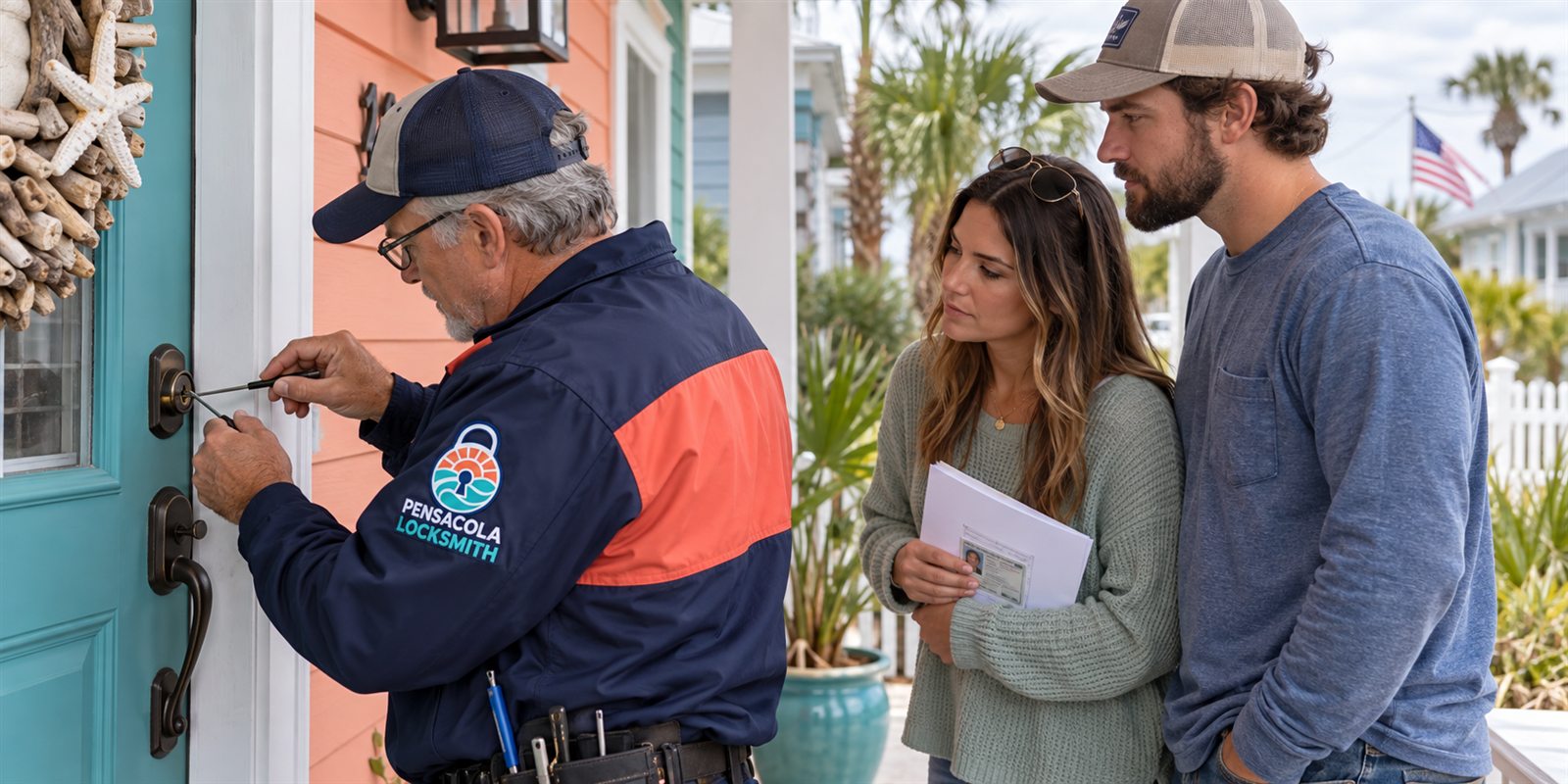
When you call, describe the building, the door type and the problem. Quotes are given by phone. If the job is complicated, a technician visits and the service call charge is explained before dispatch. For outbuildings attached to a rental or a business, the locksmith will ask for proof that you own the property or have authority to change the locks. This protects the owner and is a normal part of responsible work.
Having the right information ready helps. Know the approximate size of the door, whether it opens in or out, what material the frame is made of, and how many people need keys. If you are unsure, take a few photos. Call us to confirm availability, and we will talk through whether a quick fix will do or whether the building calls for a more thorough upgrade.
Securing what is inside: tools, fuel and vehicles
Even a well secured building can be improved on the inside. Keep valuable tools in a locked cabinet or chest bolted to the floor or wall, so a thief who gets through the door still faces another obstacle. Engrave or mark tools with an identifier and photograph them, which helps if items are reported stolen and recovered. Store small, easy to carry items in the least visible spots.
Fuel, solvents and chemicals deserve their own care. Keep them in proper containers on shelves above the floor, away from heat sources and out of reach of children. A separate lockable cabinet for hazardous items adds safety as well as security. If the structure is used for a generator or a mower, make sure fuel is stored according to the manufacturer's guidance and that ventilation is adequate.
If a vehicle, boat or trailer lives in the garage, think about the keys and the opener too. Do not leave keys on a hook near the door, where someone who gets in can drive away. Keep spare keys in the house. For a trailer or boat stored outside, a hitch lock and wheel lock add layers. A locksmith can advise on the options and, with proof of ownership, help if a key or lock for a trailer or vehicle is lost.
Rentals, seasonal homes and shared yards
Pensacola has many rental homes, seasonal properties and shared lots where an outbuilding is used by more than one person. In these cases, key control becomes the main issue. Decide who has access, and record it. When a tenant moves out or a guest leaves, change the padlock or rekey it so old keys no longer work. A combination lock with a reset feature can make this fast for short stays.
If you manage a property that stays empty between visits, arrange for periodic checks. Look at the lock, the hasp and the door each time, and note any signs of tampering. A building that looks neglected, with overgrown plants or weathered hardware, invites attention. A neat appearance and working lights signal that someone is paying attention.
When changing locks on a property you do not own, such as a tenant changing the shed lock, make sure the lease and the owner allow it. A locksmith asks for proof of ownership or authority before rekeying or replacing a lock, and it is better to settle that question before the visit. If you are the owner, have a deed, lease or utility bill ready so the work can begin promptly.
Common questions
What is the weakest part of a typical shed lock setup?
Usually the hasp and its fasteners, not the padlock. A hasp with exposed screws or one fastened to thin wood can be removed in moments. Choose a hasp that hides its screws when closed and bolt it through solid material with the nuts on the inside.
Can I use the same key for several padlocks?
Yes. Many padlocks are available keyed alike, so one key opens all of them. A locksmith can also key a set to match. This is convenient for a shed, a gate and a garage, but remember that losing the key affects all of them.
Does salt air really damage outdoor locks?
It does. Salt and humidity corrode steel and clog keyways over time. Choose weather-resistant models, cover the keyway when possible, and lubricate with a product made for locks. Inspect them twice a year, especially around hurricane season.
Should I leave the garage opener remote in my car?
It is better not to. A stolen remote can open the garage and sometimes lead into the house. Take it inside or use a keychain remote. If one is lost, reset the opener codes so the old remote no longer works.
Can a locksmith help with a lock on a rental property outbuilding?
Yes. The locksmith will confirm that you own the property or have authority to change the locks before starting. Call us, describe the building and we will explain how the work is quoted and whether a visit is needed.