
Content note: this page was written by Claude (AI) for Pensacola Locksmith.
How salt air attacks lock hardware
Salt air does not rust metal by itself. The damage comes when salt particles settle on a surface, absorb humidity and form a conductive film. That film speeds up the electrochemical reactions that corrode metal. Because the Pensacola area is both humid and close to the water, locks spend a lot of time in exactly the conditions that encourage this process.
Locks are particularly vulnerable because they combine different metals, tight tolerances and exposed openings. The keyway lets moist air reach the internal pins and springs. Steel springs can rust, brass pins can tarnish and the lubricant inside can wash out. Even small amounts of corrosion can make a key feel gritty or stick.
Plating and finishes slow the process but do not stop it. Cheap plating wears through at edges and around screw heads, leaving bare metal exposed. Once corrosion starts under the surface, it spreads. Understanding this helps you see why maintenance and material choice matter more here than in a dry climate.
Many homeowners assume only oceanfront houses face corrosion issues, but the effect can reach several miles inland, especially when the wind pushes salt from the bay or Gulf. Your distance from the water matters, but so does the direction of prevailing breezes and the shelter around your entry. Treat any home in the region as a candidate for routine lock care.
Early warning signs of corrosion
Corrosion rarely appears overnight. The first sign is often a key that needs a little more wiggle to turn, or a deadbolt that feels slower than before. You might notice a gritty sensation, a slight squeak or a bolt that does not fully extend. These are signals to clean and lubricate before the problem becomes a lockout.
Visible clues include brown or orange stains around the lock, white or green powder on brass and aluminum, pitting on the surface, or a finish that looks dull and flaky. Screws with rust blooms are another hint. Look at the strike plate and hinges too, because they are exposed to the same conditions.
Pay attention to the latch on the door edge. If the latch bolt does not spring out crisply, or the door must be pulled hard to catch, corrosion may be gumming the mechanism. Acting early often means a simple cleaning rather than a replacement. If you ignore these signs, a key may eventually break in the cylinder.
Dust and pollen add to the problem. During spring, fine yellow pollen coats surfaces and mixes with salt and moisture to form a sticky film. Wiping down the lock area during the season keeps this from working into the keyway. A quick pass with a damp cloth takes a minute and protects the mechanism.
- Key feels gritty or sticky
- Rust stains around hardware
- White or green powder on metal
- Latch or bolt moves slowly

Choosing materials that last near the coast
When you replace a lock, think about the material, not just the look. Stainless steel resists rust well, though not every stainless alloy is equal in salty air. Solid brass handles moisture fairly well and tarnishes rather than rusting, though it may need polishing. Zinc die-cast parts are cheaper but can pit and crumble in harsh conditions.
Finishes matter too. Physical vapor deposition coatings and thick plated finishes tend to resist corrosion better than thin paint or flash plating. Ask whether a lock is rated for coastal use and what finish it has. A lock that lists a salt spray test is a better sign than one that only mentions style.
Mixed-metal contact can cause trouble. A steel screw in an aluminum door or a brass lock on a steel plate can set up galvanic corrosion if moisture bridges them. Using matching screws and hardware reduces this. A locksmith can suggest hardware suited to your door and your exposure, whether you live right on the water or a few miles inland.
If you pressure-wash the exterior of your home, shield the locks. A powerful spray can force water and grit deep into the cylinder and wash out lubricant. Cover the hardware with tape or a bag, or clean around it by hand. Afterward, check that the lock operates smoothly and re-lubricate if needed.
A simple cleaning and lubrication routine
Set a calendar reminder to do a quick check every season. Begin by wiping the exterior of the lock, handle and strike plate with a damp cloth to remove salt film, then dry them. Do not spray water into the keyway. Use a soft brush to clear dust and sand from the edges of the latch and bolt.
For lubrication, choose a product meant for locks. Dry graphite powder and PTFE-based lubricants are popular because they do not attract dirt as much as oils or grease. Apply a small amount into the keyway, insert the key and turn it several times to distribute. Wipe away any excess so it does not run onto the door.
Lubricate the latch bolt and deadbolt edges with a light touch. Operate them a few times and watch the movement. Avoid heavy household oils, which can gum up the pins and collect grit. If the lock still feels rough, stop and consider professional service, since over-lubricating can make things worse.
Cylinders with tight tolerances are more sensitive to contamination. A lock that has been dry for a long time can seize when exposed to moisture and grit. Regular operation helps. Use the lock daily when possible, because movement keeps parts from sticking and spreads lubricant evenly. Rarely used side doors and gates deserve attention too.
Hinges, strike plates and the rest of the door
A lock only works as well as the door around it. Hinges rust, squeak and loosen in salty air, which lets the door sag and puts a strain on the latch. Clean hinges and apply a light lubricant to the pins. Tighten loose screws and replace rusty ones with stainless steel screws that match the hinge material.
Strike plates are often overlooked. They sit in the frame and take wind, rain and salt like everything else. If the plate is rusty or the screws are loose, the bolt may not engage fully. Replace the plate with a corrosion-resistant version and use long screws that reach the framing.
Weatherstripping and thresholds keep moisture away from the lock edge. A worn sweep lets wind-driven rain wick up the bottom of the door and into the hardware. Replace damaged seals, and make sure the door closes evenly. Painting or sealing the edges of a wood door protects it from swelling, which reduces friction on the latch.
Replacing hinge screws with stainless steel is an easy upgrade that pays off. Standard zinc-plated screws can rust and stain the door, then weaken and break. Stainless screws cost little more and resist coastal air far better. Use the correct length, and tighten without stripping the hole.
Padlocks, gates and outdoor hardware
Outdoor padlocks take the worst of it. If you use one on a gate, shed or equipment, choose a model with a sealed or shrouded body and a corrosion-resistant shackle. Hang it with the keyway facing down so water drains out. A simple cover or boot can extend its life significantly.
Gate latches and hasps are made of steel more often than people realize. Check for rust and replace with stainless or powder-coated versions if possible. Replace screws that are stained or loose. A strong lock on a weak hasp is not much protection, and a corroded hasp can fail suddenly.
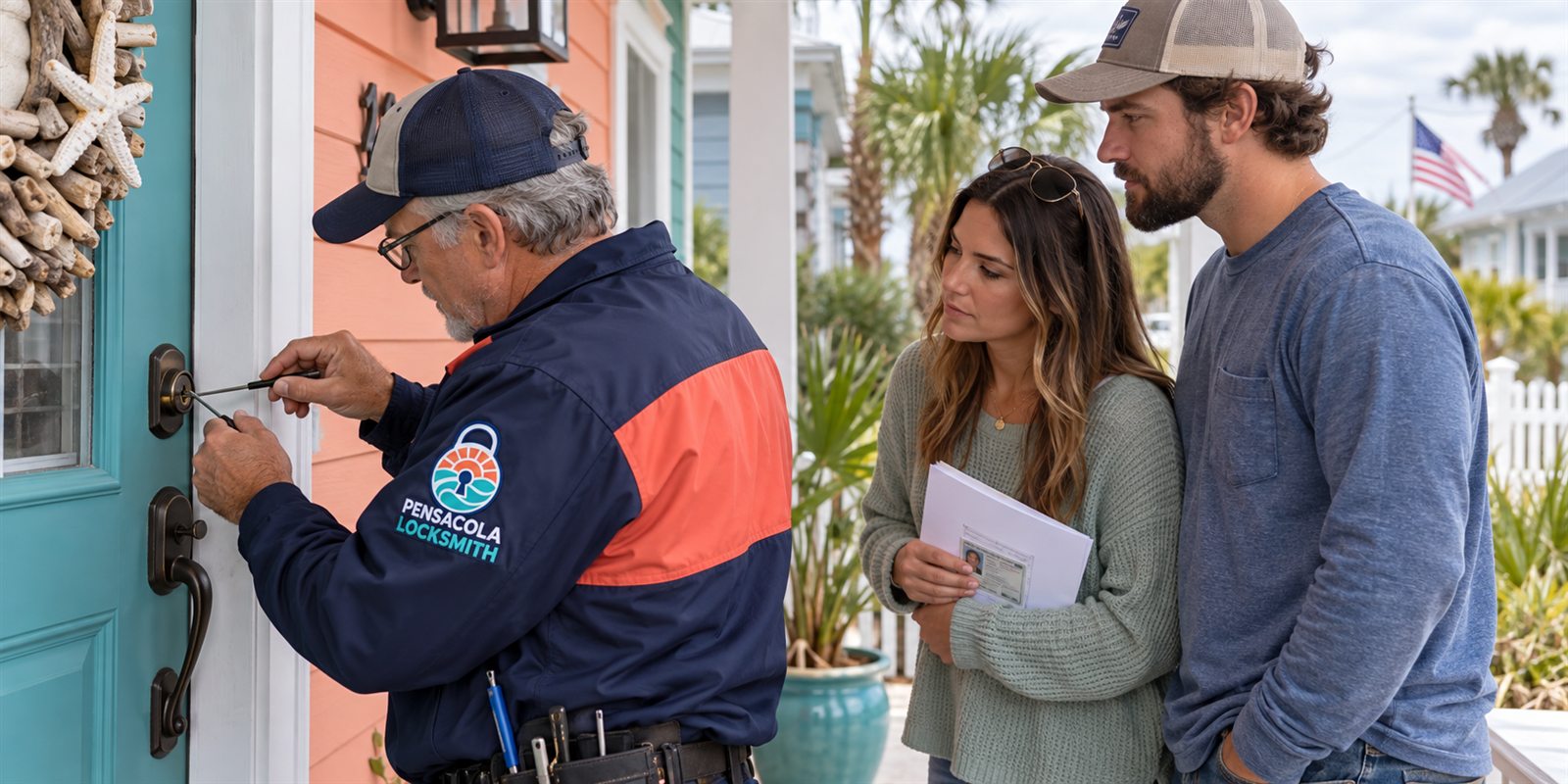
Mailbox locks, utility cabinets and garage side doors sit outside and are often forgotten. Add them to your inspection list. Lubricate their keyways, test the keys and replace any that stick. If a lock refuses to open, ask a locksmith before using force. We check ownership or authority before opening any lock, so be ready to show it is yours.
Think about the color and finish of your hardware. Dark finishes can heat up in the sun, which affects lubricants and adds expansion stress. Lighter finishes reflect heat, though they may show stains more easily. Choose a finish designed for coastal exposure, and clean it gently with mild soap and water rather than abrasive products.
Smart locks and electronics in humid air
Electronic locks pair a mechanical bolt with circuits and batteries. Salt and moisture can creep into battery compartments, corrode contacts and cloud keypads. Choose models with weather-sealed housings and check how they are rated for outdoor exposure. A unit under a covered entry fares better than one in direct spray.
Replace batteries on a schedule, not only when the low-battery warning appears. Inspect the battery compartment for corrosion when you do. If you see crusty residue, clean it gently with a cotton swab and a little isopropyl alcohol, then dry thoroughly. Corroded contacts cause intermittent failures that are difficult to diagnose.
Keep a physical key backup and know where it is. Test it from time to time, because the cylinder under the smart lock is also exposed to humidity. If the electronics ever fail, a working key means you are not locked out. If a unit stops responding, call us and describe what happens, and we can advise by phone.
If you have an older lock that uses a warded or lever design, corrosion can lock moving parts in place. Soaking and gentle work may loosen it, but forcing risks cracking old castings. Antique hardware can be valuable, so ask a locksmith before replacing it. Careful restoration is sometimes possible when the parts are not fully seized.
When to repair, rekey or replace
Not every stiff lock is ruined. If cleaning and lubricating restores smooth action, you may be fine for another season or two. If the key still binds, a technician can disassemble the cylinder, clean it and replace worn pins or springs. Rekeying at the same time can give you a fresh set of keys and a smooth cylinder.
Replacement makes sense when there is deep pitting, a bent or cracked body, a bolt that sticks even after servicing, or a finish that has failed. In that case, a new lock with better corrosion resistance may be a good investment. Matching the new lock to existing keys is often possible, which saves you from carrying a pile of different ones.
Whatever the choice, the technician checks ownership or authority before opening, rekeying or programming locks. Quotes are given by phone. If the job is complicated, a technician visits and the service call charge is explained before dispatch. Please call to confirm availability, and describe your locks and symptoms so we can plan appropriately.
Keep records of your lock models and finishes. When something wears out, you can find a match rather than starting over. A note on your phone with the brand, type and last service date helps you plan. Call us to discuss maintenance, and remember that we check ownership or authority before opening or rekeying.
A yearly checklist you can actually keep
Good habits beat heroic repairs. Pick a time each year, such as the start of spring before pollen and storm season, and walk the property with a small kit: a soft cloth, a dry lock lubricant, a screwdriver and a handful of stainless screws. Work through the front door, back door, garage entry, gates and any outbuildings in the same order every time so nothing gets skipped.
At each lock, clean the surface, check the screws, work the key several times and watch how the bolt moves. Note anything that feels different from last year. A one-line entry in a notes app, such as stiff deadbolt on the side door, is enough. Over a few seasons these notes show which locks age fastest and where to spend upgrade money.
When the checklist turns up something you cannot fix, call us and describe it. Quotes are given by phone, and if the job is complicated a technician visits and the service call charge is explained before dispatch. We check ownership or authority before opening, rekeying or programming, and we ask you to call to confirm availability for your area.
Rental homes, vacation properties and shared doors
Short-term rentals near the beaches see heavy use and little maintenance between guests. Keypad locks get sandy fingers, doors get slammed after beach trips, and wet towels hang on handles. If you manage a property like this, inspect locks more often than a private homeowner would, and keep spare batteries and keys in a dry storage spot that staff can reach.
Shared doors, such as building entrances and gates, take thousands of cycles a year. Salt and sand accelerate wear on the latch and strike. A routine of cleaning and lubricating every month or two in peak season prevents most breakdowns. When a shared lock fails, many people are affected, so it is worth fixing early and choosing durable hardware.
Rekeying between long-term tenants or after a lost key is a practical way to keep control, and it also gives the cylinder a fresh internal check. We verify ownership or authority before rekeying, so owners and managers should be ready to show it. Call us to talk through a schedule, and to confirm availability for your location.
Common questions
How often should I lubricate my door locks?
Every few months is a good habit near the coast, and more often if you live right on the water. Use a lubricant made for locks, such as dry graphite or a PTFE product, and wipe away excess. If the lock still sticks after lubrication, have a technician look at it.
Is WD-40 okay for lock cylinders?
Light penetrating sprays can release a stuck lock in a pinch, but they are not a long-term lubricant and can leave residue that attracts dirt. For regular care, use a product designed for lock cylinders. If you have already used a spray and the lock feels gummy, a cleaning may help.
Which lock finish holds up best in salty air?
Solid brass, quality stainless steel and thick, durable coatings tend to hold up better than thin plating or basic zinc. Look for locks described as suitable for coastal use. A technician can suggest options for your door and exposure when you call us.
My key is getting harder to turn. Should I worry?
It is an early warning. Clean and lubricate the lock, and check whether the door alignment has shifted. If the problem continues, have the cylinder serviced before the key breaks or you are locked out. Forcing the key can make a small problem much bigger.
Can corroded locks be rekeyed?
Sometimes. If the internal parts are sound, rekeying can work well. If the cylinder is badly corroded, replacement is usually better. We check ownership or authority first, and quotes are given by phone. A technician visits if the job is complicated, with the service call charge explained before dispatch.