
Content note: this page was written by Claude (AI) for Pensacola Locksmith.
Before the keys change hands
Start the lock conversation before moving day. If you are buying or renting, ask how many keys exist, who has had copies, and whether any locks were changed recently. Sellers and landlords rarely know the full history of a house, and previous tenants, contractors, cleaners and relatives may all have held a key at some point.
Make a short list of every opening that locks. Count the front door, back door, garage entry door, any side or patio doors, sliding doors, windows with latches, a shed, a mailbox and any gate. People are often surprised by how many different keys a home really has, and a list prevents the classic mistake of changing the front door and forgetting the back.
If you are the one moving out, gather every key and remote now rather than on the last day. Look in drawers, jackets and the kitchen junk drawer, and ask family members. Handing over a complete set is a courtesy, and it saves the next occupant from guessing. Label what each key opens if you can.
The first-day priority: rekey or replace
On the day you take possession, the single most useful step is to make sure old keys stop working. Rekeying changes the internal pins of each cylinder so a new key fits and the old ones do not. The existing hardware stays on the door, which is why it is usually the practical choice when the locks are in good shape and the finish is acceptable.
Replacement is better when the hardware itself is worn, loose, mismatched or looks to be a low-grade builder set. A technician can tell on site whether the deadbolts are solid, whether the strike plates are properly screwed into the frame, and whether the door closes straight. There is little point in rekeying a deadbolt that is about to fail.
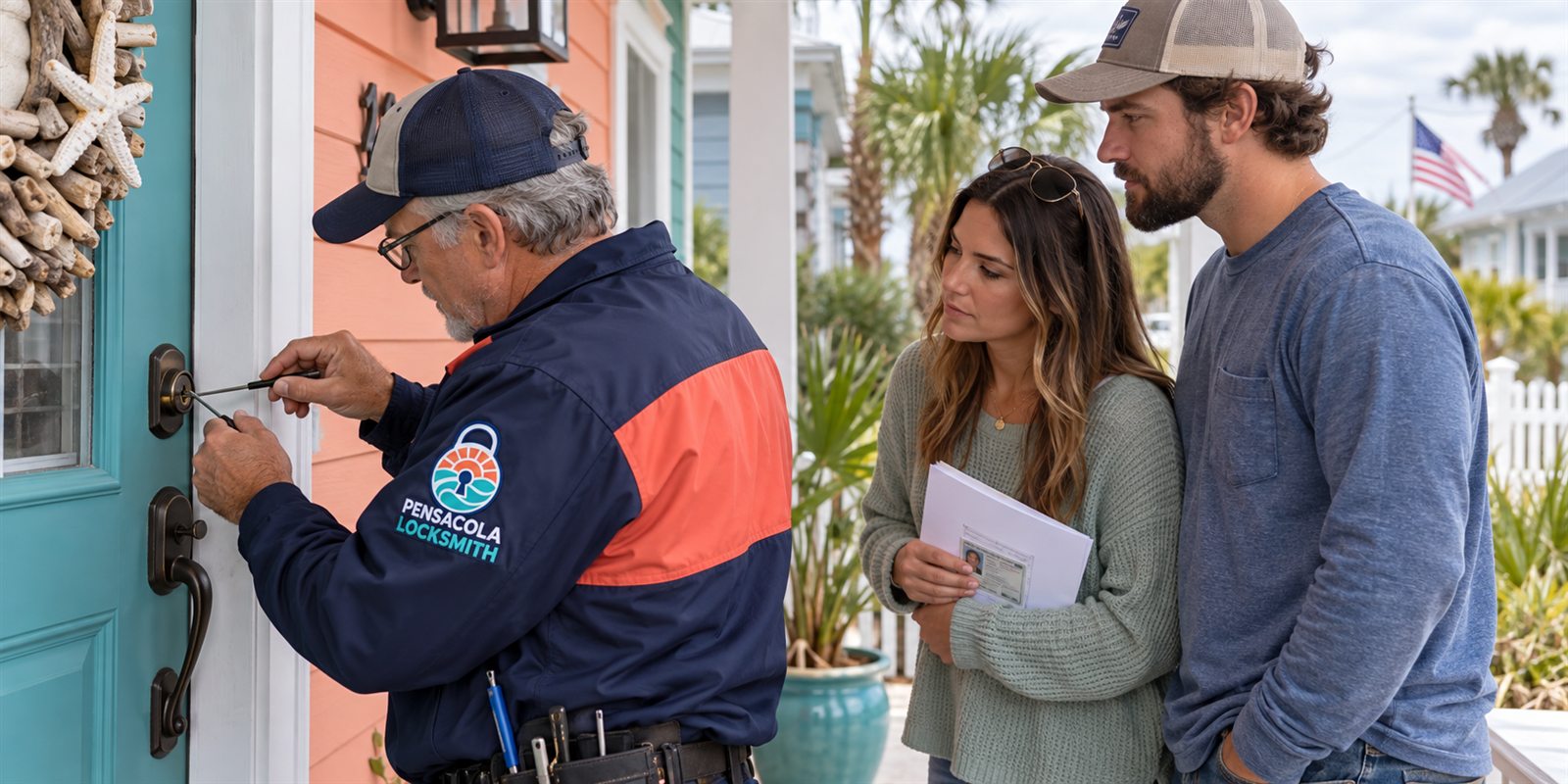
A technician will confirm that you own or lease the home before rekeying, because changing the locks is exactly what someone with bad intent would try to do. A closing statement, lease or utility record is usually enough. Quotes are given by phone, and for complicated jobs a technician visits and the service call charge is explained before dispatch.
Matching all the doors to a single key
Many people dislike carrying a ring of four or five keys that look alike. When a home is rekeyed, the locks can often be set to match, so one key opens the front door, the back door and the garage entry. This is called keying alike, and it is one of the best conveniences of the moving process.
There are tradeoffs to know about. A single key means a single point of loss, so a lost key affects every door. Some people prefer a separate key for an outbuilding, a storage room or a detached garage, so a worker or a guest can be given limited access. A technician can split these into groups to suit the household.
Do not forget cylinders that are not on doors. Many homes have a keyed knob on a patio door, a window lock, a mailbox lock or a garage side door that quietly runs on a different key. It is much easier to include these while a technician is already working than to chase them later with a dozen different copies.
Garage doors, gates and remotes
Garage remotes are often forgotten in a move. The previous owner may have kept one in a car, a neighbor may have used a spare, and the codes can be shared more widely than people realize. Resetting the opener's memory and reprogramming only the remotes you hold is a quick step that closes that gap.
Check the manual release as well. Every opener has a cord that disengages the door from the motor so it can be lifted by hand. Make sure it works, that everyone in the household knows where it is, and that the door lifts smoothly. A door that is hard to lift by hand points to spring or track problems, which should be handled by a garage door specialist, not forced.
If the property has an electronic gate, shared entry or keypad, ask who controls the codes and whether they have been changed. In multi-unit buildings, the building manager usually controls shared entries, and tenants should ask them directly rather than assuming the code is private.
Deadbolts, strike plates and door fit
A lock is only as good as the door it sits in. Look at the strike plate, the small metal piece on the frame that receives the bolt. On many homes it is held by short screws that bite into thin trim. Replacing them with long screws that reach the framing behind makes a door far harder to kick open and costs little.
Next, test the door. It should close without being lifted or pushed, the latch should click into place, and the deadbolt should throw smoothly without rubbing. Gulf Coast humidity swells wooden doors and frames, and a door that rubs in summer may fit fine in winter. Persistent rubbing puts stress on the bolt and often explains a lock that seems to wear out early.
If you find a hollow door, a loose knob or a cracked frame, mention it to the technician. They can suggest reinforcement, a better strike, or a different style of lock. For a rental, you may need the landlord's approval before changing hardware, and it helps to get that in writing before work starts.
Smart locks and keypads for a new home
A move is a natural time to consider a keypad or smart lock. They remove the need to cut spare keys for a babysitter, a dog walker or visiting relatives, because a code can be created and later removed. Some also keep a log of when the door was used, which some households find reassuring.
The tradeoffs are real. Batteries need attention, the lock depends on the door fitting well, and you still want a physical backup. Choose a model that has a key override or a way to power it from outside if the batteries die. A technician can also tell you whether your door preparation suits the lock you have in mind, since some require specific bore sizes.
If you move in at the start of hurricane season, think about what happens during a power loss. Most keypad locks run on batteries and keep working, but any connected features such as remote access depend on a home network. Know how to open the door by hand and where the spare key is.
Spare keys and where to put them
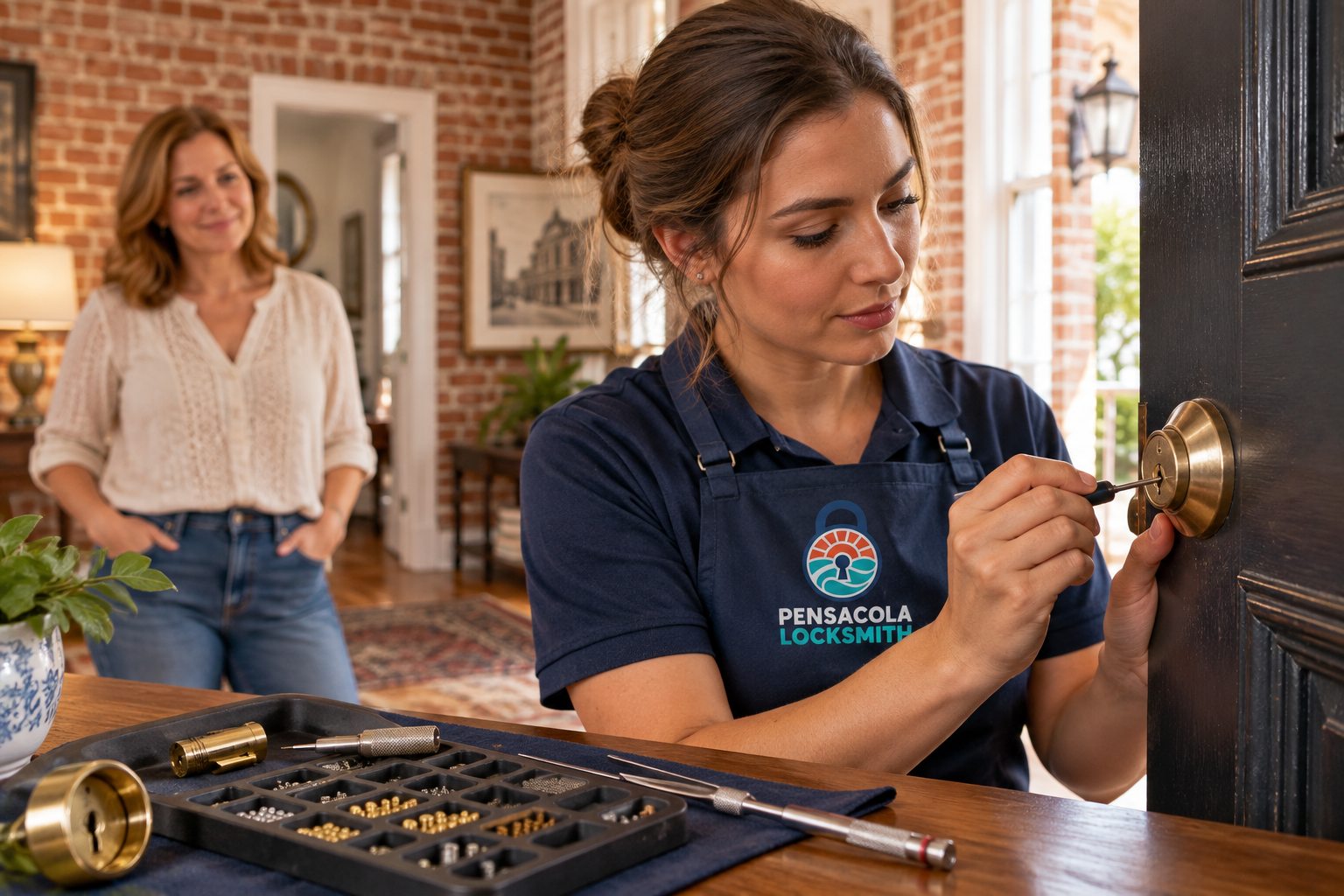
Plan spare keys deliberately. Cut at least one extra of each key and put it somewhere other than the house, such as with a trusted relative or friend. A key hidden under a doormat, in a fake rock or above the door frame is the first place anyone with bad intent looks, so please skip those.
Consider a small lockbox mounted somewhere inconspicuous if you need to share access. Keep the combination limited to the people who truly need it, and change it after anyone leaves the arrangement. For vehicles, keep a spare key separate from the car and from your daily set, especially if your car uses a transponder key that is costly and slow to replace after it is lost.
Write down what each key opens and where the spares are kept, and store the note with your important papers. When you hand a key to a movers' crew, a cleaner or a contractor, note who has it and collect it afterward. A household with a short, known list of keys is far easier to secure than one with unknown copies scattered around.
Office, storage and secondary locks
Moves often include more than a house. If you are relocating a small business, a home office or a storage unit, take the same approach. Count the doors, find out who has had keys and rekey where it makes sense. Commercial doors may use heavier hardware or exit devices that a technician needs to see before quoting.
Filing cabinets, desks and safes also have keys or combinations that are easy to lose in the shuffle. Locate the original keys before packing, and keep them with you during the move, not in a box on the truck. If a key is missing, a locksmith can often open and rekey a furniture lock without damaging the piece.
For a safe, record the combination or locate the key and the paperwork that came with it. Moving a heavy safe is a job for people with the right equipment, and a technician can help with opening or resetting a combination once ownership is established. Keep sensitive contents with you until the safe is in place.
Moving out: what to leave and what to take
If you are leaving a home, the lock work is partly about courtesy and partly about protecting yourself. Hand over every key you hold, including the ones you stopped using years ago, and tell the next person about any special hardware such as a keypad code, a garage remote or a gate fob. Leaving a clear note on the kitchen counter, with a list of what each key opens, saves the new occupant a good deal of confusion.
Renters should read their lease before touching any lock. Some leases forbid changing hardware, while others require the original locks to be present at move-out. If you installed your own deadbolt or smart lock, ask the landlord whether it should stay, and keep the original parts in a labeled bag so they can be refitted. Taking a lock off a door and leaving bare holes is a common cause of deposit disputes.
Owners who are selling should think about the buyer's first day. Gathering all keys, remotes and codes in a labeled envelope, and being honest about any lock that sticks, is far better than a surprise at closing. If a lock has been troublesome, repair or replace it before listing, because buyers and inspectors both notice a deadbolt that does not turn smoothly.
Common mistakes people make during a move
The most frequent mistake is waiting. People tell themselves they will deal with the locks once the boxes are unpacked, and weeks go by with an unknown number of keys still in circulation. The second is changing only the front door, which leaves the garage entry, the patio slider or the back door on the old key. A burglar does not choose the door you improved.
Another is hiding a spare key outside in an obvious spot, then forgetting to tell anyone where it is. Or the reverse: handing a spare to a mover, a painter or a friend and never getting it back. Each is understandable in the chaos of a move, but each leaves a copy loose. Keeping a short list of who holds what is a small habit with a large effect.
People also forget that tools can be misused. Never leave the key to a new lock in the door overnight, and do not write the alarm code on a sticky note by the entry. Finally, avoid cutting copies at a hardware counter without thinking about who else might do the same. If a key is stamped do not duplicate, take that seriously, and ask a locksmith about restricted key systems for a stronger option.
Hurricane season and a new address
On the Gulf Coast, moving often overlaps with storm season, and the locks play a role in preparation. Before a storm, doors need to close and latch firmly, because wind pressure finds weak points. A door that rubs or a latch that only catches halfway can be pushed open by a strong gust, so a quick check of the strike and the closing action is worthwhile.
If you evacuate, you will want to lock up properly, and that means knowing exactly which keys you have and where the spares are. Keep one set with your important documents in a waterproof bag that travels with you. Take photos of your locks and the keys, in case you ever need to describe them to someone.
After a storm, doors and frames can swell or shift, and a lock that worked yesterday may bind. Do not force a key. Wait for the wood to dry where possible, and call a technician if a door will not lock securely. Salt and moisture after flooding can also corrode cylinders, so a post-storm look at your hardware is sensible, especially in low-lying areas.
A simple order of operations
Put it all together in order. First, count every opening and collect every existing key before the move. Second, on possession day, rekey or replace the locks. Third, reset the garage opener and gate codes. Fourth, check strike plates, door fit and the manual garage release. Fifth, decide on spare keys and share only what is necessary.
The order matters because of timing. If movers are propping doors open all day, it is practical to wait until the last box is in before changing the locks, but do it the same evening, not next week. A house with unknown keys outstanding is easy to overlook while you are unpacking, and the days right after a move are when this quietly gets forgotten.
Call us to ask about scheduling and to confirm availability. We give quotes by phone and we will ask for proof of ownership or authority at the door. A checklist is only useful if it is finished, and finishing the lock work early lets you enjoy your new home without a nagging worry about who else holds a key.
Common questions
Is it better to rekey or replace the locks when I move in?
If the hardware is solid and you like it, rekeying is usually enough, since it makes old keys useless without changing the locks. Replace when parts are worn, loose or poor quality. A technician can check on site and explain the choice, and the quote is given by phone.
Do I need to prove I own the home?
Yes, a locksmith checks ownership or authority before rekeying or replacing locks. A lease, closing paperwork or a utility bill with your name and address is usually enough. Renters may also need the landlord's permission before changing hardware.
Should I reset the garage door remotes too?
It is a good idea. Previous owners and tenants may still hold remotes. Clearing the opener memory and programming only the remotes you have closes that gap. Also test the manual release cord so you know the door can be lifted by hand.
Can all my doors open with one key?
Often yes. A technician can key the locks alike during rekeying. The tradeoff is that losing that key affects every door, so some people keep a separate key for a shed or detached garage. Mention any special doors when you call.
When is the best time to call during a move?
Ideally before moving day to schedule, then on possession day once you have the keys. Call to confirm availability, since timing varies. If the job is complicated, a technician visits and the service call charge is explained before dispatch.