
Content note: this page was written by Claude (AI) for Pensacola Locksmith.
Adding a key and replacing a key are different jobs
When people call about a car key, they often use two words as if they meant the same thing: spare and replacement. They are not the same job. A spare, sometimes called a duplicate or an added key, is made while at least one working key still exists. A replacement is made when every key is gone, and the technician has to start from nothing but the vehicle itself.
The difference matters because a working key gives the technician something to work with. With a key in hand, many vehicles can learn a new key by copying the existing programming through the onboard computer, and the blade can often be cut by matching the one you already have. The vehicle is still there, the immobilizer is still happy, and nothing has been lost yet.
When every key is gone, the technician has to read the lock information from the vehicle, generate a cut that fits, and then introduce the new key to the vehicle's computer without the benefit of an existing key to authorize it. That is more equipment, more steps, and usually more time on your driveway or parking lot. Calling early turns an emergency into an appointment.
What is actually inside a modern car key
Car keys have changed a great deal over the years. Older vehicles used a plain metal key that only had to turn the ignition cylinder. Many newer vehicles use a key with a small transponder chip hidden in the plastic head. The chip carries a coded identity that the vehicle must recognize before the engine will run, even if the blade turns the cylinder perfectly.
Other vehicles use a remote head key, which combines the blade, the chip and the lock and unlock buttons in one body. Some use a flip key, where the blade folds into the fob. Others use a smart key or proximity fob that never has to touch a cylinder at all, because the vehicle senses it nearby and starts with a push button.
Each of these categories needs different tools and different programming steps. That is why the technician asks what kind of key you have now, whether it has buttons, and whether you start the vehicle with a blade or a button. Those answers help us prepare the right blank and the right equipment before we arrive.
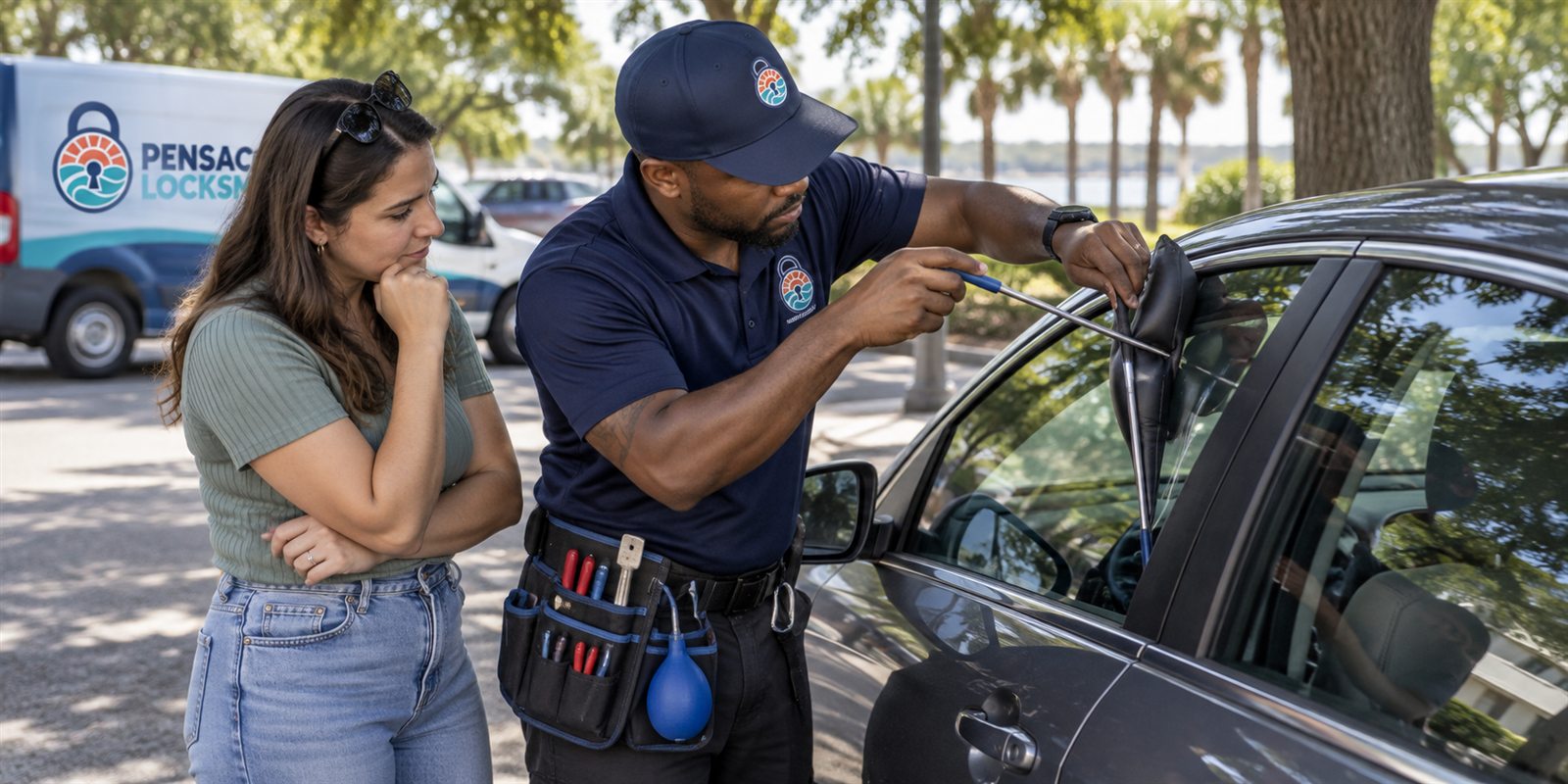
Why the cost of waiting usually shows up as time
This page does not quote amounts, because quotes are given by phone after we know your vehicle and key type. What can be said honestly is that the all-keys-lost situation tends to involve more work than the added-key situation. More work means more time on site and, in some cases, a vehicle that cannot be driven to a shop while you wait.
Think about the practical side. If you lose your only key at a beach access lot or a boat ramp on Pensacola Bay, you may be stuck far from home with a vehicle that will not start and a schedule that has just fallen apart. If instead you made a spare a month earlier, losing one key is a small annoyance, because the second key gets you home.
There is also a quieter benefit. A spare that lives at home, or with a trusted family member, gives you a backup when a key breaks, gets damaged by saltwater or simply stops working because the internal battery or chip failed. You are not racing a deadline, and you can plan the visit around your day.
What the technician needs from you
Preparation is simple. Have the vehicle with you, since the key has to be introduced to that specific vehicle's computer. Have your working key ready, and be ready to hand over any other keys that came with it. Know the make and the general type of vehicle, and be able to tell us roughly how it starts, with a blade or with a button.
We also check ownership or authority before making or programming a key. That is not a formality, and it protects you as much as anyone. A technician who cut keys for anyone who asked would be handing out access to other people's vehicles. Expect to be asked to show who you are and how you are connected to the vehicle, such as registration or title information.
If the vehicle is owned by a company, a rental fleet or a family member, tell us at the start. We can usually work with proof of authority, such as a letter or a call from the owner, but it is easier to sort out before the work starts than in the middle of it. A short conversation on the phone saves a wasted visit.
- Your vehicle, parked where the technician can reach it
- At least one working key, and any other keys you own
- Registration or title information and your own identification
- The general make and how the vehicle starts
How a spare key is cut and programmed
There are usually two separate parts to making a spare. The first is the physical blade. Depending on the key, the blade is either a traditional edge cut or a laser-style cut that runs along the face of the key. The technician uses the original key, or the vehicle's own lock information, to cut a new blade and then checks that it enters the lock smoothly and turns without force.
The second part is the electronic side. The new key's chip has to be registered with the vehicle. Some vehicles allow this through a sequence of steps in the cab, and others need a diagnostic tool plugged into the vehicle's service port. During programming the vehicle's computer accepts the new key and keeps the old ones, so everything you own keeps working.
After programming, the technician tests the key in the way you will actually use it. The blade should open the door if that is how you use it, the remote buttons should lock and unlock, and the engine should start and keep running. A key that only starts the engine for a few seconds is a key that has not been properly taught to the vehicle, and we do not leave until it is.
Gulf Coast habits that wear keys out
Living near the water is hard on small electronics and metal. Salt air gets into everything, and a key that rides in a pocket during a day at the beach can come home damp, gritty and a little corroded. Remote buttons can get sticky, battery contacts can corrode, and blades can pick up residue that makes them drag in the lock.
Humidity does its own slow damage. Key fobs that live on a boat dock, in a kayak bag or on a hook in a damp garage are exposed to moisture for years. The case may look fine on the outside while the circuit board inside is slowly corroding, which is why a fob that worked yesterday can stop completely today.
A spare stored in a dry place is insurance against exactly that kind of quiet failure. Keep it away from salt spray, away from the beach bag, and away from the key hook beside the back door where steam from the kitchen and wet swim gear collect. A small box inside the house, kept somewhere dry and cool, is better than a hiding spot outside the vehicle.
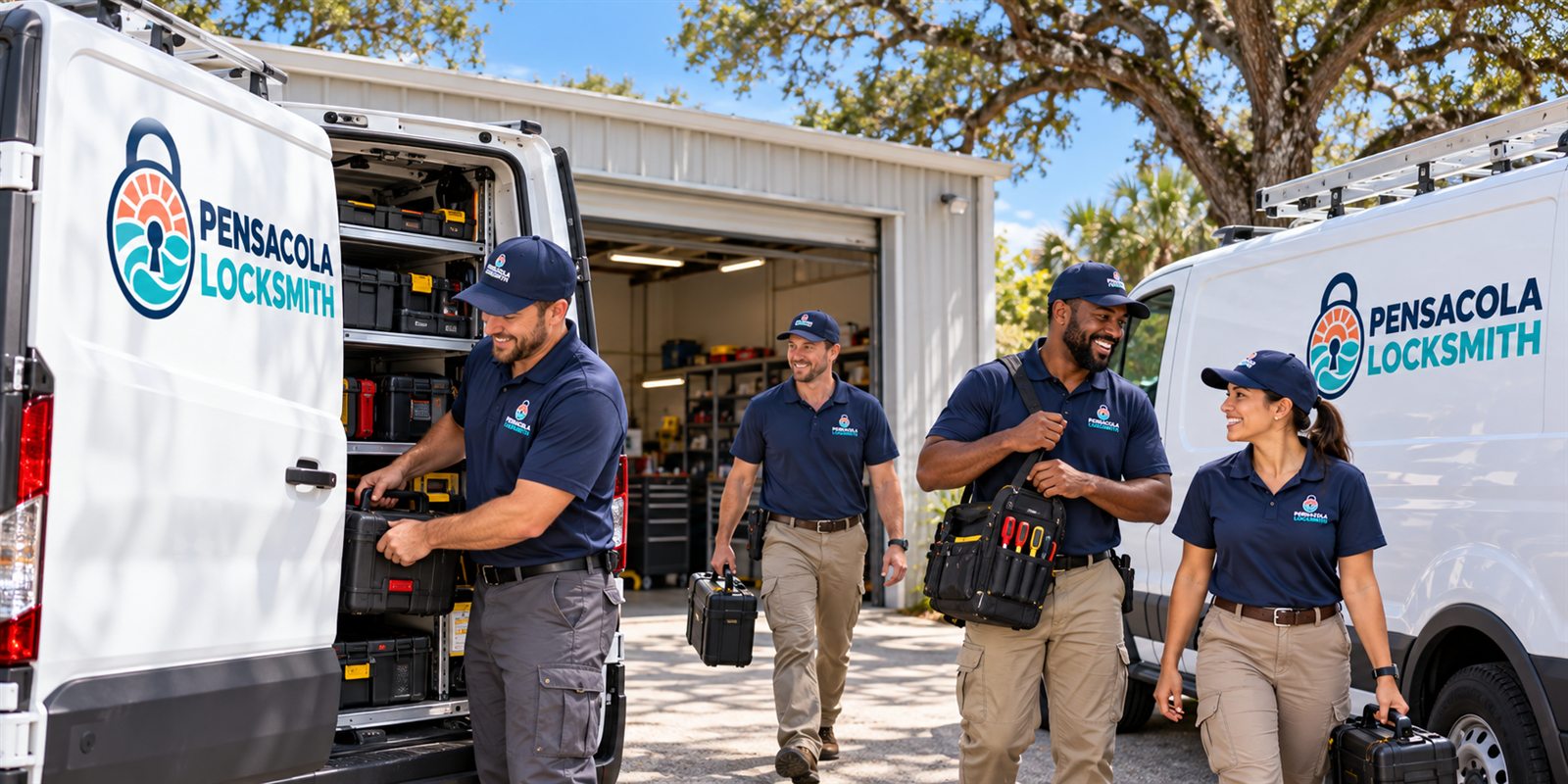
Where to keep the spare, and where not to
People love to hide a spare key in a magnetic box under a bumper or wheel well. It feels clever, but it is one of the first places a thief checks, and road salt and moisture eat the magnet and the box over time. Worse, a key hidden outside the vehicle is a key that anyone who finds it can use, with no trace left behind.
A better habit is to keep the spare indoors, in a place you can describe to a family member over the phone. Some people give a spare to a trusted relative or a neighbor, which works well if you live far from family or travel often. Think about how you would actually get the key to the vehicle if you were stranded across town.
Avoid leaving the spare in a glove box, center console or trunk. If the vehicle is locked out with that key inside, the spare does not help at all. The same goes for a smart key left in a bag in the vehicle. The spare is only a spare if it lives somewhere other than the thing it is meant to unlock.
Special situations around Pensacola
Pensacola has a mix of residents, students, service members and seasonal visitors, and each has a slightly different reason to make an extra key. Someone stationed at the naval air station may be heading out on a deployment and want a second key left with family. A student at the university or a local college may share a car with a roommate and need a key for each person.
Rental owners and anyone managing a vehicle used by several people have an even stronger reason. A single key passed from hand to hand is bound to get lost, and each loss means a lockout and a stalled day. With a spare in reserve, the person who lost the first key can still get moving while the missing one is found or deactivated.
Hurricane season is another trigger. Before evacuating, people tend to gather everything important, and a second key often goes into the go bag. If you may have to leave quickly, you do not want to be searching for the one key you own. Planning ahead, with the vehicle and the key both in good order, takes one worry off a list that is already long.
What happens to old keys when you add a new one
A common worry is whether making a new key will disturb the old ones. In most cases it does not. Adding a key registers another identity with the vehicle without wiping the existing ones. After the visit you should have the original key or keys plus the new one, and all of them should work.
There is one situation where you may want the opposite. If a key was lost or stolen, you may want the vehicle to stop accepting it. Many vehicles can be set so that only the keys present during programming are recognized, which means the missing key no longer starts the engine. If this is your situation, tell the technician before the work begins.
That decision affects how the programming is done, so it is worth having a clear conversation about it. A key that is merely misplaced in the house is a different problem from a key that went missing in a crowded parking lot. Be honest about what happened, and the technician can set things up to match the risk.
Questions worth asking yourself before you call
A few minutes of thought before the call makes the visit smoother. Ask yourself how many keys you actually own right now. Many people believe they have two and discover they have one, because the second went missing with a former roommate, an ex-partner or a previous owner of the vehicle. Counting honestly tells you whether you need a spare or a replacement.
Also check the condition of the key you do have. If the buttons are worn smooth, the case is cracked, or the key only works when you hold it at an odd angle, that key may be close to failing. Copying from a worn key is possible, but a technician may prefer to cut from the vehicle's own information so the new blade is accurate rather than a copy of a copy.
Finally, think about who else drives the vehicle. If a teenager, a partner or a coworker needs regular access, a dedicated key for each person keeps one lost key from stranding everyone. Tell us how many keys you want in total, and we can plan the visit so every key is cut and programmed in one stop rather than several.
Signs your current key is about to give out
Keys rarely fail without warning. A remote that needs several presses before the doors respond, a dashboard light that flickers when you start the vehicle, or a key that sometimes refuses to turn the ignition are all hints that something is wearing out. Replacing a weak battery sometimes fixes the buttons, but a chip or a bent blade will not improve by itself.
Another sign is a vehicle that starts on some mornings and not others, especially after the key has been wet. The chip inside a transponder key is sealed, but not perfectly, and years of heat in a parked vehicle near the coast take their toll. If the engine cranks and then shuts off, the vehicle may not be recognizing the chip.
Treat these signs as a reminder, not a reason to panic. A spare made now gives you a fresh key with a fresh chip, and the older key can retire to the drawer. If it keeps working, you have two. If it quits completely, you already have the replacement ready, and the day continues as planned instead of ending on the side of the road.
Common questions
Is a spare key the same as a replacement key?
No. A spare is made while you still have a working key, which gives the technician something to copy and authorize from. A replacement is made after every key is gone, which usually involves more steps and more equipment. Both end with a working key in your hand, but the spare path is generally simpler. Call us and describe your situation, and we will explain which path fits.
Do I need to bring the vehicle for a spare key?
Yes, in nearly every case. The new key has to be introduced to that specific vehicle's computer, so the vehicle needs to be present. We come to you as a mobile service, so the vehicle can stay where it is parked. Have your working key ready, and be prepared to show ownership or authority before we begin.
Will making a new key stop my old key from working?
Usually not. Adding a key normally registers another key alongside the existing ones. If a key was lost or stolen and you want it blocked, tell the technician first, because the programming can often be done so that only the keys present are recognized by the vehicle afterward.
Why do you ask for proof that the vehicle is mine?
A key opens and starts a vehicle, so we check ownership or authority before cutting or programming one. That protects you and the vehicle. Registration or title information with your identification is typical. If the vehicle belongs to a company or family member, tell us when you call so we can plan for the right proof.
How do I get a quote for a spare key?
Call us and describe the vehicle and the key you have now. Quotes are given by phone after we know the key type. If the job turns out to be complicated, a technician visits and the service call charge is explained before dispatch. Please call to confirm availability for the day you want.