
Content note: this page was written by Claude (AI) for Pensacola Locksmith.
Start by working out which type of safe you have
Home and office safes fall into a few categories. Electronic safes use a keypad and a battery powered lock that drives a motor or solenoid. Mechanical dial safes use a combination wheel pack with no power at all. Key operated safes use a cylinder, sometimes in addition to a keypad as a backup.
Each type fails in its own way. An electronic safe with a weak battery may beep and then refuse to move the bolt. A dial safe rarely fails electrically but can go out of sync after years of use or after the dial is knocked. A key safe has the usual lost or broken key issues.
Look at the front for a brand name, model, or serial number, and note whether there is a backup key slot or a battery compartment on the outside. This information helps a technician decide what to bring and whether the safe can be opened without damage.
Size and weight give further clues. A small fire resistant box that sits on a shelf is a different animal from a heavy gun safe bolted to a slab. Light boxes can be opened with methods that would not work on a thick door. Heavy safes may have multiple locking bolts, hard plates behind the lock, and relockers. Knowing which you have helps set realistic expectations about how long the job takes.
Dead or weak batteries on electronic safes
The most common cause of an electronic safe refusing to open is simply the battery. Typically four AA cells sit in a compartment inside the door, which is of no help when the door is shut. Many safes offer an external contact point, such as two terminals on the keypad, that lets you apply power from a nine volt battery.
If your safe has the contacts, the manual will describe how to use them. Touch the battery to the terminals, then enter the code. This delivers just enough power to run the motor once. Once open, replace all the batteries at once and use good quality cells.
If the safe has no external contacts and the battery is dead, the options are fewer. Before assuming the worst, check that the code is entered correctly and that nothing is blocking the keypad. A locksmith can often open the safe without damage by using the weakness of that model, or by working from the back or the bolt side.
Before concluding that a battery is to blame, watch the keypad closely. Does it light up? Does it beep when you press a key? If the display is dead and nothing responds, the power is likely the problem. If it responds but rejects the code, the issue may be the code or a lockout. Describing exactly what happens on the keypad saves the technician time on the phone.
- Keypad lights are dim or absent
- Motor sound is weak or stops mid-way
- Safe beeps repeatedly without unlocking
- Backup key slot is present but the key is missing
Forgotten or mistyped combinations
If you cannot remember the code, start by checking the paperwork that came with the safe. Many people write the factory code in a manual, on a card, or on a sticker inside the door. Some safes ship with a default code that was supposed to be changed and was not. Trying the default is worth a go.
Be careful with repeated attempts. Many electronic safes have a lockout feature that disables the keypad for a time after several wrong entries, and the delay may grow with more tries. Entering codes at random can leave you waiting. Take a moment to think about when you last changed the code and what you would likely have chosen.
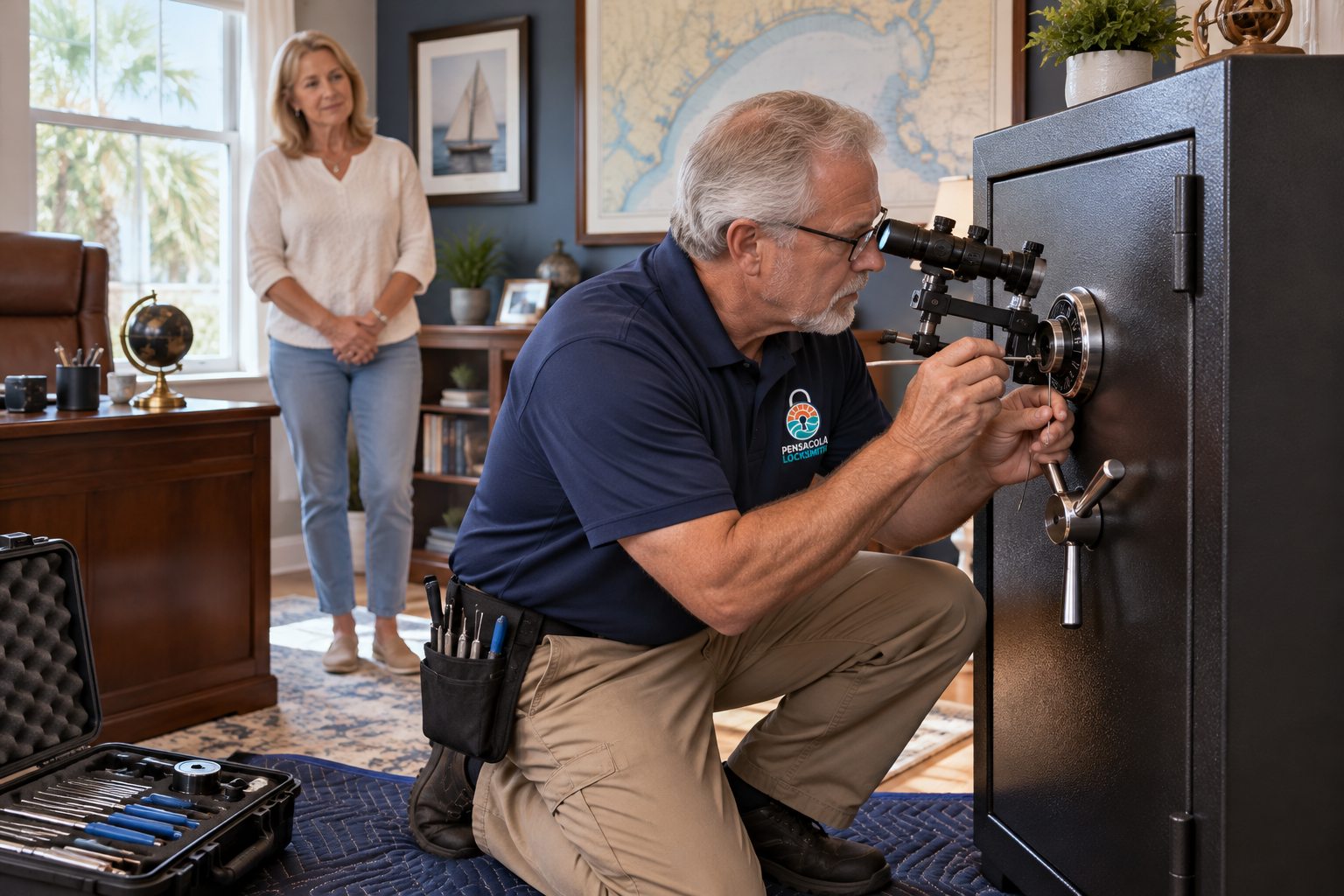
With a dial safe, a forgotten combination is trickier. Most dials need a precise sequence with correct turns, and a small error resets the process. If you have lost the numbers entirely, a locksmith can often manipulate the lock or open the safe by other means, though that takes skill and time.
A mechanical dial lock has a wheel pack with a set of numbered wheels, a fence that falls into gates when the right numbers are reached, and a bolt that moves when the fence lines up. Wear can shift the sweet spot, so a combination that worked for years may start to need slightly different numbers. A technician can adjust or service the lock, which keeps it reliable.
Mechanical failure and bolt work problems
Sometimes the lock has done its job and the safe still will not open. That means something in the bolt work is jammed. Heavy items resting against the inside of the door, an object that fell into the mechanism, or a bolt that has seized from corrosion can all stop the door from swinging.
In humid climates like the Gulf Coast, steel parts inside a safe can rust if moisture builds up. Homes near the water see this often in safes kept in closets, garages or on ground floors. Keeping a desiccant pack inside helps, as does avoiding storage in damp rooms.
Impact is another cause. A safe that was dropped, moved, or struck during a break-in attempt can have bent bolts or a displaced lock case. If you suspect damage from tampering, stop and call a technician. Further attempts could lock the mechanism permanently and make the repair more involved.
Condensation is an underrated enemy. A safe in a closet that is not air conditioned can collect moisture overnight when temperatures swing. The inside of the door may be dry, while the bolt ends and the hinge pins show orange spots. Treating the safe with a light protective coating on the bolts and keeping a desiccant inside slows the process considerably.
Ownership, authority and inherited safes
A locksmith needs to be sure that the safe belongs to you or that you have the authority to open it. This applies to home safes, business safes and those left behind after a death or move. Expect to be asked about the circumstances, and be ready to show identification or documents that support your claim.
Inherited safes are a frequent reason for calls. A relative passed away, the combination was never shared, and the family needs access to papers and valuables. In this case, a technician may ask for proof of your role, such as being the executor or a legal heir, before working.
Landlords and property managers sometimes find safes left in a unit after tenants leave. Do not open them without sorting out who has the right. Check the lease and the local rules, and consult whoever manages the property. The locksmith will want the same assurance before starting.
Documents that help show authority include a death certificate with letters of administration, a will naming you, a lease, a business registration, or a purchase receipt for the safe. If the safe was in a house you recently bought, a closing document may show that you own the contents. None of this is meant to be a hurdle, only a reasonable check.
How a locksmith opens a safe
The method depends on the safe. For many electronic models, the technician can bypass the lock through a known procedure that avoids damage. For dial safes, a skilled technician can work out the combination by feel and measurement, a process called manipulation, which takes patience but leaves the safe intact.
If these approaches fail, drilling may be needed at a precise spot to reach the lock or the bolt. This is a serious step, and it is chosen only if the safe is not needed afterward or can be repaired. The technician will explain what is involved, what it means for the safe, and what fixes follow.
After opening, the safe usually needs attention. The lock may be replaced, the batteries refreshed, or the combination reset. A small amount of lubrication on the bolts and hinge points can also help. The aim is to leave you with a safe that works every time.
Some safes carry a manufacturer's emergency override. Depending on the make, a technician may be able to contact the maker with proof of ownership and obtain a reset code. This is not available for every model, and it takes time, but it can leave the safe untouched. Have the serial number ready, because it is how the maker identifies the unit.
What you should not do
Do not attack the safe with tools. Prying, hammering and grinding can damage the lock, relockers, and bolt work, creating a situation in which the safe cannot be opened without drilling. Some safes include relockers, which are hardened devices that trigger when force is applied and deliberately make entry harder.
Do not take a safe apart without guidance. Even simple models contain parts under tension, and a careless move can jam the mechanism. If you have no experience, leave the work to someone who has the tools and training to do it properly.
Do not move a heavy safe by yourself. Tilting a safe can injure your back or the floor, and the contents can shift and press against the lock. If a safe needs to be moved before opening, plan the lift with enough people and the right equipment.
Think about why you were locked out in the first place. Was the battery weak for weeks? Did a child or visitor press keys at random? Did you change the code and not write it down? Understanding the cause helps prevent a repeat. A small habit such as writing the code in a separate private place can save a call.
Preventing the next lockout
Change the batteries on a schedule, for instance when clocks change or at the start of hurricane season. Use fresh alkaline cells rather than bargain cells. Test the safe with the door open before you close it, and check that the code works from outside before you rely on it.
Keep a record of the combination in a place separate from the safe, such as a locked drawer elsewhere or with a trusted person. Do not tape it to the safe or write it in a phone note that others can see. If you rely on a key backup, store that key where you can reach it without opening the safe.
Think about what you store inside. Heavy items should not rest against the door. Items that could be harmed by moisture need protection. If you use the safe for documents, keep digital copies as well. A safe is a good tool, and a little planning keeps it that way.
After the work, ask the technician to explain how to check the battery, how to enter the code correctly, and what to do if the keypad becomes slow. Practice opening and closing the safe a few times with the technician present. If you inherit a safe with unknown contents, take care when opening it, as items can shift or spill.
Calling a locksmith for a safe
Tell the dispatcher what kind of safe it is, what it does or does not do, and whether you have tried anything. Mention the brand and any labels. A photo of the front and the lock is helpful. Quotes are given by phone, and call us to confirm availability.
On site, the technician confirms ownership or authority, examines the safe, and chooses a method that avoids damage if possible. Opening a safe can take longer than opening a door, and the technician will keep you informed.
For complicated jobs, such as a high security model or one with a damaged lock, a technician visits to assess it and the service call charge is explained before dispatch. If drilling becomes necessary, you will be told before it happens, so the decision is yours.
Gun safes, fire safes and special cases
Safes designed for firearms are heavier and often have more bolts and more complex locks. If you own one, you have a particular responsibility to keep it accessible only to authorized people. A locksmith will check ownership and authority before opening it, and may ask extra questions. This is normal and meant to protect everyone.
Fire safes use insulation inside the walls, which can hold moisture. Over time, a fire rated box that has been kept in a damp place may have problems with the lock or the door seal. Opening such a safe requires care, because drilling can damage the fire barrier and reduce its protection afterward. Discuss this with the technician before agreeing to a method.
Wall and floor safes are another case. They are set into concrete or framing, and the door is the only part you can reach. If the lock fails, there is little room to work. A technician may need to remove a surrounding panel or cut access from behind, so be prepared to talk about what you are willing to do to the surrounding structure.
Choosing and placing a safe so lockouts are less likely
If you are planning to buy a safe, think about where it will live. A bolted down safe in a dry interior closet is easier to maintain than one in a garage that sees heat, humidity and salty air. Raise it slightly off a concrete floor, which can wick moisture, and leave enough room around the door to open it fully without hitting a wall.
Pick a lock type you will keep up with. Electronic keypads are convenient and quick, but they depend on batteries and electronics. Mechanical dials need no power and last for decades, but they are slower and can be harder for some people to use. Some owners choose a safe with both a keypad and a key override, so a single failure does not mean a lockout.
Talk to a locksmith before the purchase if you can. A technician knows which models are straightforward to service and which are difficult. Quotes are given by phone, and call us to confirm availability. Choosing a model with a serviceable lock and a clear manufacturer record makes any future problem simpler to fix.
Common questions
My electronic safe beeps but will not open. Is it the battery?
That is a common cause, especially if the motor sounds weak. Check whether your safe has external contacts for a nine volt battery. If it does, power it from there and enter your code. If it has none, or the problem persists, a locksmith can often open it without damage.
Can a locksmith open a safe without the combination?
Often, yes. Depending on the model, the technician may use a bypass method, manipulation of the dial, or in some cases drilling. The aim is to keep the safe usable. Ownership or authority is confirmed first, and the method is explained before work begins.
Will opening my safe destroy it?
Not necessarily. Many safes can be opened without drilling, and even when drilling is needed the lock can often be replaced afterward. High security models with relockers are more difficult. The technician will tell you what to expect before choosing a method.
What if I inherited a safe and do not know who owns it?
Sort out your right to open it first. An executor or legal heir can usually provide documents showing authority. The locksmith will ask for this before working. If ownership is disputed, wait until it is resolved, since opening a safe cannot be undone.
How often should I replace safe batteries?
Many people change them once a year, or sooner if the keypad seems slow. Use fresh alkaline cells, replace all at once, and test the safe with the door open before closing it. Keep a record of the code somewhere other than the safe itself.