
Content note: this page was written by Claude (AI) for Pensacola Locksmith.
How a mobile locksmith visit works
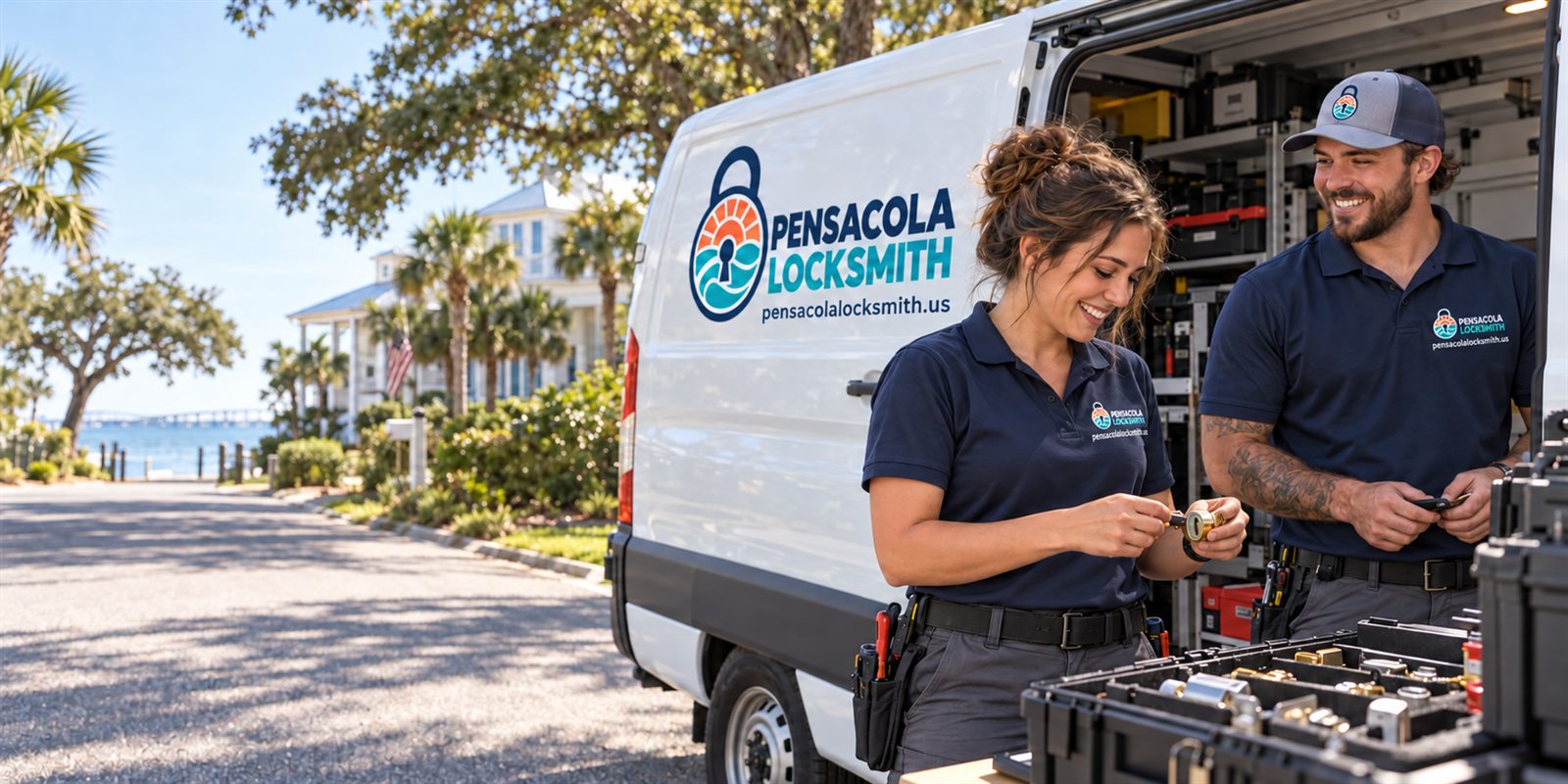
A mobile locksmith comes to you instead of asking you to come to a shop. That matters when you are locked out of a car in a parking lot or standing outside your own front door. You call, describe the problem, and get a quote by phone. The technician then travels to your location with tools and supplies for the job. Because the work happens on site, you do not need to move a locked vehicle or leave a home unsecured.
On arrival, the technician starts with a short conversation. They look at the lock or vehicle, confirm what you described, and check ownership or authority. Only after that do they begin work. If the job is simple, such as opening a standard door, it can be over quickly. If it is more involved, such as programming a chip key or repairing a damaged lock, the technician explains what is needed before proceeding.
Afterward, test the result before the technician leaves. Turn the new key several times, try the lock from inside and outside, and check that doors close cleanly. A good technician expects this and welcomes questions. If anything feels off, say so right away, while everyone is still on site. Please call to confirm availability when you reach out, since the schedule depends on how many calls are in progress at the time.
Quotes, service calls, and how pricing is discussed
People often ask how pricing works, and the honest answer is that it depends on the job. Quotes are given by phone, based on what you describe. A simple lockout is easier to estimate than a car with a lost smart key. The more precise your description, the more accurate the quote will be, so have the vehicle details or lock type ready when you call.
If the job is complicated, a technician visits and the service call charge is explained before dispatch. That means you will know what the visit itself involves before anyone drives to you. You are not locked into anything by asking. If you decide not to proceed after hearing the details, that is your choice, and a respectful technician will not pressure you.
It also helps to ask what the quote includes. Does it cover the key itself, programming, and the visit? Are there extra steps that might change the plan if the lock turns out to be damaged? Clear questions lead to clear answers. If something is unclear, ask again until it makes sense. You should leave the conversation understanding what will happen and in what order, with no surprises on the day.
Proof of ownership and why it is required
One of the most common questions is why a locksmith asks for identification. The reason is simple: opening a lock, cutting a key, or programming a fob gives someone access to property. A responsible technician makes sure the person asking is the owner or has real authority. This protects you from anyone who might try to open your home or car, and it protects the technician from helping the wrong person.
For a home, proof can be photo identification plus something that ties you to the address, such as a lease, a utility bill, or official mail. For a vehicle, it is usually photo identification matching the registration or title. For a business, it can be proof that you are the owner, a manager, or an authorized representative. If you are acting for someone else, you may need their permission confirmed by phone.
If you do not have the documents on hand, do not worry. Tell the technician or dispatcher what you have, and they will explain what is acceptable. Sometimes a family member can send a photo of the papers, or a property manager can confirm by phone. The rule is not meant to make your day harder. It exists so that a locksmith is a trusted part of keeping property safe, not a risk to it.
Lockouts: houses, cars, and businesses
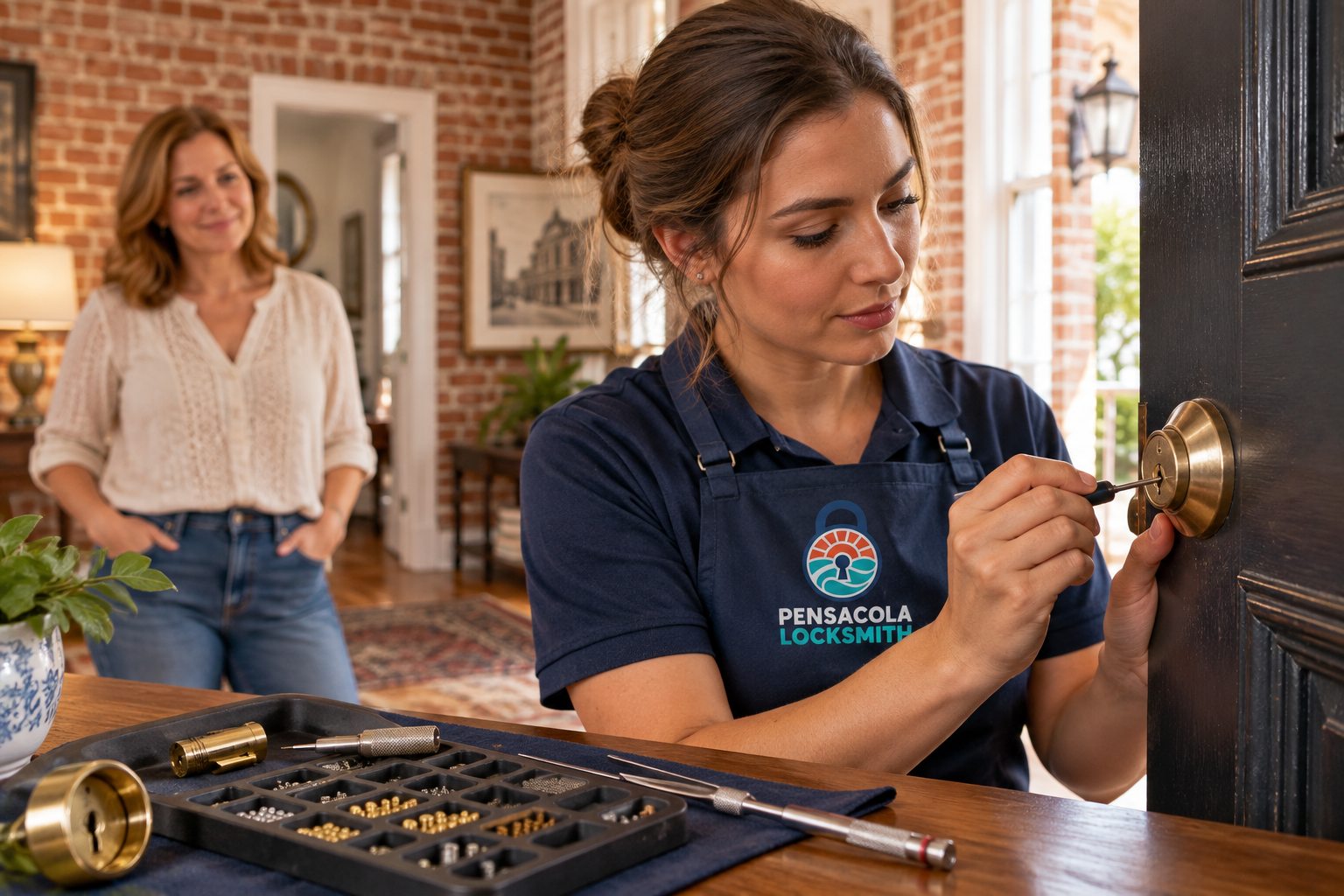
Lockouts are the most common reason people call. For a house, the technician looks at the type of door and lock and chooses the gentlest method. Many standard locks can be opened without damage. Deadbolts, high security cylinders, and damaged doors may take longer or require additional steps. The goal is to get you inside with the lock still working afterward.
For a car, the process depends on the vehicle. Many can be opened with specialized tools that avoid scratching the paint or damaging weatherstripping. If your keys are inside, it is a lockout. If you have no keys at all, it is a different job that may include making and programming a new key. Tell the dispatcher which situation you are in, since that determines what the technician brings.
Businesses have their own complications, such as multiple doors, access control systems, and different keys for different staff. A technician can open a door for an owner or manager after checking authority, and can recommend changes if keys have been lost or an employee has left. If a lockout happens often at your place, that is a sign something about the hardware or routine needs adjusting, and a quick conversation can help you find the cause.
Car keys: copies, replacements, and fobs
Car key questions are common because modern keys are more than metal. Many vehicles use a chip inside the key, and the car will not start unless the chip matches. Making a copy therefore involves cutting the blade and programming the chip. A mobile locksmith can often do both at your location. Bring all the keys you have, since having an existing working key makes the process simpler.
If you have lost every key, the job is still possible in most cases. The technician uses the vehicle information and ownership proof to produce a key that fits and then programs it to the car. Smart keys, which allow push button starting, are more involved, and some vehicles take longer than others. Describe the vehicle clearly on the phone so the right equipment is brought along.
People also ask whether it makes sense to get a spare. In general, yes. A spare made while you still have a working key is simpler than a new key made after you have lost every one. Store the spare at home, not in the vehicle, and check its battery occasionally. If a fob feels weak or stops responding, replace the battery early, since failing fobs often give trouble at the worst possible moment.
Rekeying, lock changes, and upgrades
Rekeying changes how a lock responds to keys without replacing the lock. People rekey after moving into a new home, after a breakup or roommate change, after a lost key, or after a contractor or employee has had access. It is a good way to reset who holds working keys while keeping the hardware you already like.
Replacing a lock is better when hardware is worn, damaged, or outdated. A lock that sticks, wobbles, or shows heavy corrosion may not be worth rekeying. Replacement also lets you upgrade to a stronger deadbolt, a keypad lock, or a smart lock. A technician can compare options based on your door, your habits, and your comfort with technology.
Many customers ask whether they can have all locks use one key. That is possible and common, and it makes daily life simpler. The tradeoff is that one lost key then affects every lock in the set. Some people prefer a few separate keys for areas such as a shed, a garage, or a rental unit. Talk through how you actually use your doors, and the right arrangement usually becomes clear.
Smart locks and keypads
Smart locks and keypads attract many questions. Are they secure? Are they reliable? What happens when the battery dies? Most models are well made, but they do depend on proper installation and care. A lock fitted to a door that sags or a frame that is out of line will struggle regardless of how modern it is. A technician checks alignment as part of the job.
Batteries matter. Most keypad and smart locks give warning when power runs low, and a physical override key or an external power contact is usually included. Keep the override key somewhere safe and reachable, not locked inside. Replace batteries on a regular schedule, and do not wait for the warning if you are about to travel.
Codes need attention, too. Remove codes for people who no longer need access, and avoid easy numbers such as birth years or repeated digits. For rentals, change codes between guests. A smart lock does not make a home secure on its own, but used well it can reduce the need to hand out physical keys, which is a real benefit for families, landlords, and owners of seasonal properties.
Questions specific to the Pensacola area
Locks on the Gulf Coast face salt air, humidity, and sun, all of which wear hardware over time. Metal parts corrode, wood doors swell, and plastic fobs weather. If a lock feels stiff, a key sticks, or a door binds in its frame, those can be early signs. A quick service visit can often fix things before they become a lockout.
Hurricane season is another local consideration. Before a storm, you want doors that close tightly and lock reliably. After a storm, doors can shift in their frames and hardware may be damaged by water or debris. If a door does not seem to latch properly after a storm, have it checked. Availability can be tight around storm events, so call early and confirm availability rather than waiting.
The area also has many rentals, seasonal residents, students, and military families, which means frequent moves and many key handoffs. For these situations, rekeying between occupants and using keypad locks are popular choices. If you manage a rental or a second home, ask about key control, which means tracking who holds which key. It makes a real difference to peace of mind, especially for owners who live elsewhere.
How to prepare before you call
A little preparation makes the call smoother. Know your exact location, including cross streets or a landmark if you are not at a street address. If you are in a parking lot, note the lot name and the nearest entrance. Have a working phone number ready for the technician to reach you. If you can, move to a safe, well lit place while you wait.
Gather your identification and any papers that show ownership, such as registration, a lease, or a utility bill. If you are not the owner, have the owner reachable by phone. Describe the situation as exactly as you can, including the type of lock, the make and model of a vehicle, and whether you have any working keys. The more details you share, the better the quote and the plan will be.
Finally, keep expectations realistic. A technician needs time to travel and to do the job properly. Please call to confirm availability, and be patient if the schedule is busy. Do not attempt to force a lock, pry a window, or use tools you are unsure about, since damage costs more time and effort than a proper opening. A calm, prepared customer makes the whole visit go better for everyone.
After the visit: care and follow up
Once the work is done, take a few minutes to look after the result. Test each key several times, in each lock it is meant for. Keep new keys separate and label them if needed. If you received a set of keys for multiple doors, make a note of which key fits where, and store spares in a safe place away from the main ring.
If you had a lock rekeyed or replaced, remember to update anyone who needs access, such as family members, a house sitter, a cleaner, or a property manager. Make a short list of who holds keys and refresh it from time to time. This simple habit saves a lot of confusion later and is the basis of good key control at home or in a business.
If something does not feel right after the visit, such as a key that sticks or a lock that seems loose, call us and explain. Small adjustments are usually quick, and it is far better to address a concern early than to live with a lock you do not trust. A good lock should turn smoothly, latch firmly, and feel solid under your hand every time you use it.
Safety, privacy, and what a good technician does
People sometimes worry about letting a stranger work on their doors, which is a sensible instinct. A good technician arrives ready to explain who they are, what they plan to do, and why. They do not rush you, do not push upgrades you did not ask about, and do not leave you guessing about next steps. If something feels wrong, you are welcome to pause and call back.
Privacy matters as well. A technician sees your keys, your locks, and sometimes the inside of your home or vehicle, and should treat that with respect. Key codes and bitting information are sensitive, and they should not be shared or written where others can see them. Ask how your information is handled if you are unsure, and expect a straight answer.
Finally, a good technician leaves things tidy. Tools are put away, any debris is cleaned up, and the lock or door is working before they go. They show you how to use new hardware and answer your questions. If you ever feel unsure about a visit, call us, say so plainly, and we will talk it through with you until you feel comfortable.
Common questions
What should I have ready when I call a locksmith?
Have your exact location, a phone number, and a clear description of the problem. For a vehicle, know the make, model, and color. For a door, describe the lock type if you can. Gather identification and proof of ownership. Quotes are given by phone, and please call to confirm availability.
Will the locksmith damage my door or car?
The goal is always to open the door or vehicle without damage, and most standard jobs go that way. Damaged, older, or high security locks can be harder, and the technician will explain options before starting. If a lock must be drilled or replaced, you will hear why first.
Why do you need to see identification?
A locksmith checks ownership or authority before opening, rekeying, or programming, so that access is only given to the right person. Photo identification and a document tying you to the property or vehicle are usually enough. The rule protects you and every other customer.
How is the price decided?
Quotes are given by phone, based on what you describe. If the job is complicated, a technician visits and the service call charge is explained before dispatch. The more detail you give about the lock or vehicle, the clearer the quote will be. You can ask questions before agreeing to anything.
Should I rekey or replace my locks?
Rekeying resets which keys work while keeping the lock on the door, and it suits most key loss or move in situations. Replacement is better for worn, damaged, or outdated hardware, or when you want an upgrade. A technician can look at your doors and explain which makes sense for you.