
Content note: this page was written by Claude (AI) for Pensacola Locksmith.
Roll-up doors and how they are actually secured
A roll-up door is a flexible steel curtain that slides in side tracks. It is strong when closed, but the lock is often a small slide latch at the bottom, sometimes with a hole for a padlock. If that latch is thin, bent or worn, the door can be forced. The quality of the latch and how it engages the track matter more than the thickness of the door itself.
Many roll-up doors have a lock on each side, called a cylinder lock, which lets a bolt slide into the track. Others use a simple padlock through the bottom bar and the track. A technician can check whether the bolt fully engages, whether the track is straight and whether the door sits flush. Misalignment is common after years of use.
Doors with electric openers should also have a mechanical lock so security does not depend on power. Use the manual lock at closing and keep the opener's remote controlled. Call us to describe your door and how it is locked now. A quote is given by phone, and a technician visits if the job is complicated.
Choosing padlocks that survive the coast
Padlocks outdoors in Pensacola face humidity, rain and salt air. A cheap steel padlock may rust shut in a season. Choose models with a weather-resistant body, a covered or shrouded shackle and a keyway with a cover. Stainless steel and laminated bodies resist corrosion better. Read the specifications rather than relying on appearance.
Shackle design matters. A thick, hardened shackle resists bolt cutters, and a shrouded one makes cutting difficult by limiting access. Match the padlock to the hasp. A strong lock on a thin hasp is only as good as the hasp. Mount hasps with carriage bolts or through-bolts, not exposed screws that can be removed.
Where several people need access, keyed-alike padlocks let everyone carry one key for multiple locks. Keyed-different locks work better when you want separate access for separate areas. A technician can pin padlocks to a plan and label the keys. Keep a record so you know which key opens which lock.
Man doors, dock doors and the other entrances
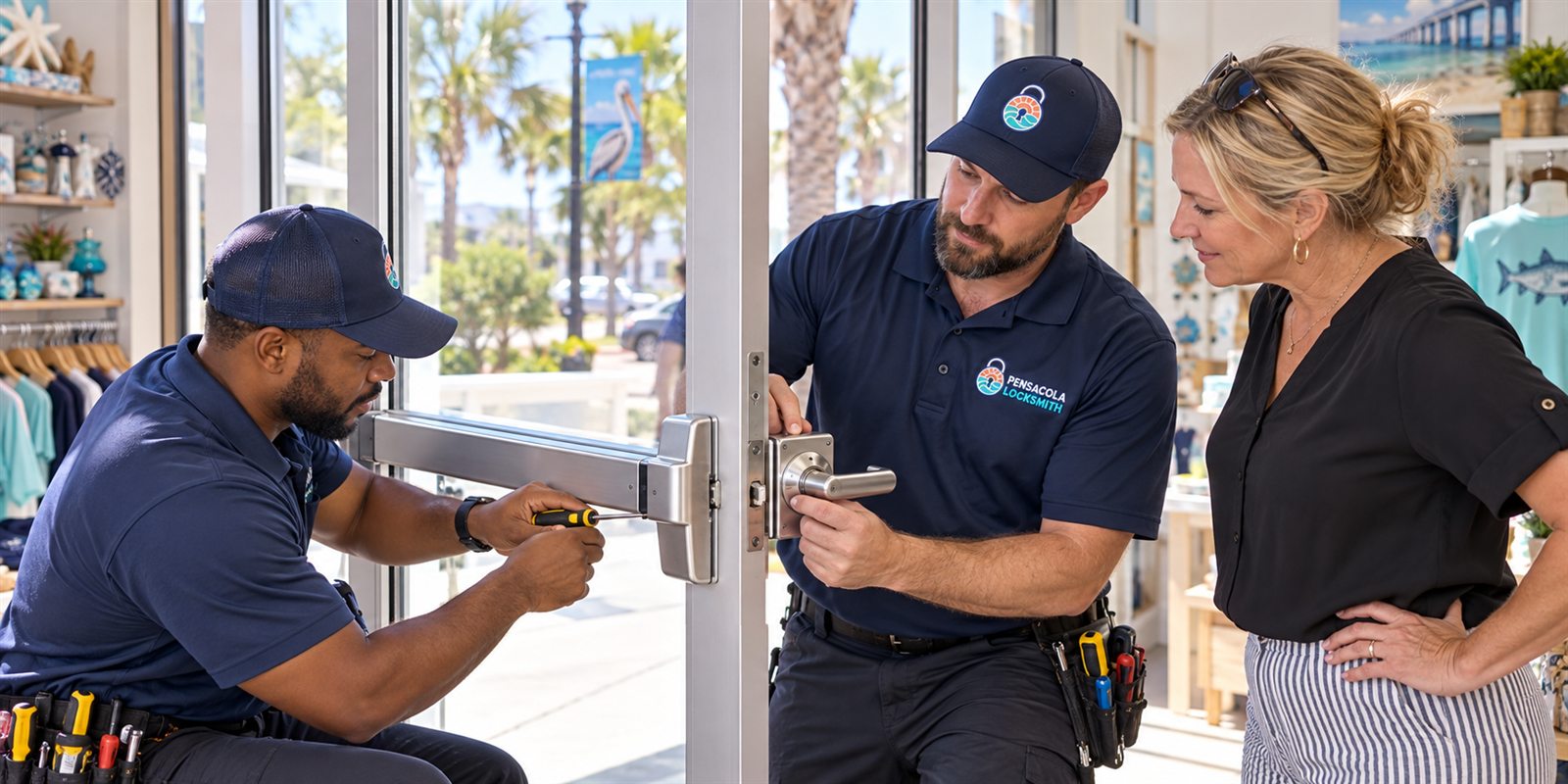
Warehouses also have walk-in doors and dock doors, and these are often the weak links. A walk-in door with a poor deadbolt and a flimsy frame can be forced in seconds. Look for a solid slab, a quality deadbolt with a one-inch throw, a reinforced strike and long screws into the framing. Hinge pins should not be removable from the outside.
Dock doors raise a different concern. They open often, and the staff are busy. Doors left partly open overnight or latches that are not set at closing leave the building exposed. Build a closing checklist, and require a person to walk the building and confirm that each door is closed and locked. Pair it with a manager sign-off.
Emergency exits must remain usable. Do not chain or block them. Panic hardware or an equivalent device lets people leave quickly. Confirm requirements with the local fire authority, and bring their guidance to us. We install hardware that matches it, and we can inspect existing exit devices for wear.
Gates, fences and yard access
Many warehouses have a fenced yard with a sliding or swinging gate. The gate is only as strong as its latch and lock. A chain and padlock is common, but a poorly placed lock can be cut easily. Position the lock so it is hard to reach with tools, and use a shrouded padlock with a hardened chain.
Gate hinges and latches take a beating from vehicles, wind and weather. A sagging gate does not latch properly, which defeats the lock. Adjust or replace hardware that has loosened. Lubricate hinges and locks regularly with products made for the job, and avoid heavy grease that collects grit.
For yards with frequent traffic, consider a keypad or card reader so staff and drivers can enter without keys. Codes can be changed when drivers or contractors change. Keep a mechanical override in case of power loss. Describe your gate when you call, and a quote is given by phone.
Self-storage units and rented storage spaces
If you rent a storage unit, the facility usually requires you to supply your own lock. A disc padlock, which has a shielded shackle, resists cutting better than a standard padlock because very little shackle is exposed. Choose one with a solid body. Avoid cheap models, and keep a spare key in a safe place away from the unit.
If you lose the key, contact the facility first. They may require proof of identity and rental, and in some cases they must cut the lock themselves. A locksmith can help open some locks, but the facility's rules and your rental agreement apply. We check ownership or authority before opening, so bring your rental agreement and identification.
Do not store valuables you cannot replace in a unit without thinking about humidity. Coastal humidity can damage papers, wood and electronics. Lock choices help with theft, not with moisture. Use sealed containers, raise items off the floor and check on the unit periodically.
Key control for staff, drivers and contractors
Warehouses have many people moving through: employees, drivers, temporary workers, vendors and cleaners. Each one may need to open something. Keep the list of key holders short, and assign keys by role. A forklift operator may need the dock door but not the office. A supervisor may need nearly everything.
Write down who holds each key and when it was issued. Number keys and require a signature. Collect keys when someone leaves. If a key goes missing, rekey the affected locks. For padlocks, replacing the lock cylinders is often easier than replacing all the padlocks.
Consider electronic access for staff doors. Cards or codes can be removed without chasing keys. A log can show who entered and when, which helps with questions about missing stock. Plan for power loss and keep a mechanical backup key with a trusted manager.
Inventory rooms, cages and high-value areas
Within a warehouse, certain items are more valuable and more tempting than others. Electronics, tools, medications, liquor and parts all attract theft. A locked cage or room with a solid door, a quality lock and a limited key list protects them. Mesh cages should be properly anchored and have tamper-resistant hasps.
Make sure a cage door cannot be lifted off its hinges or lifted over a low wall. Check the top of the cage if it is open, and close gaps in the mesh. A technician can inspect the structure and suggest fixes that stop the easy methods of entry. Describe your layout when you call.
Pair locks with accountability. A count at the start and end of each shift and a sign-out sheet for high-value items reduce loss. Locks stop outsiders and casual temptation, while records answer questions about what happened and when.
Alarms, cameras and how they work with the locks
Locks slow a thief down, but alarms and cameras tell you something happened. A door contact on each roll-up and man door signals when it opens. A camera pointed at the dock and the gate records who came and went. These tools are most useful when paired with solid hardware, because they give you time and evidence to respond.
Check that the alarm and the lock routine work together. If staff must disarm the alarm and unlock the door in the right order, make sure the process is simple and written down. A complicated routine tends to be skipped, and a skipped alarm protects nothing. Train every person who opens or closes the building.
Do not rely on cameras alone. A camera that records a break-in does not stop it. Visible cameras and clear signs may discourage some people, but a determined thief often moves quickly. Strong doors, good locks and good lighting make the first and most important barrier. Describe your setup when you call and we will talk through what would help most.
Lighting, visibility and the layout around the building
Thieves prefer places where they cannot be seen. Bright lighting at doors, docks and gates removes the shadows they depend on. Motion-activated lights are useful because they surprise anyone approaching, but steady lighting at key entrances works better for cameras and for neighbors who may notice something unusual.
Keep the area around the building tidy. Pallets stacked against a wall can act as a ladder to a roof hatch or a high window. Dumpsters placed against a door can hide someone working on a lock. Trim bushes and remove clutter so that every door can be seen from the street or from a neighboring unit.
Roof hatches, skylights and high windows deserve a look as well. They are easy to forget and sometimes easy to defeat. A technician can inspect them and suggest hardware to secure them from the inside. Walk the building with fresh eyes and ask how someone would get in if the front door were impossible.
Lockouts, broken keys and seized locks
A seized padlock on a roll-up door or gate can halt operations. Humidity, dirt and neglect cause locks to freeze. Spraying a small amount of lock lubricant into the keyway and working the key gently sometimes helps. Do not force the key, which can break it off and make the problem worse.
If a key breaks inside a lock, stop and call. A technician has extractors and can often remove the broken piece and cut a new key. For a seized or damaged padlock, cutting it off and replacing it is sometimes the cleanest answer. Describe the lock and the door when you call, and a quote is given by phone.
Ownership or authority is checked before opening a business or storage space. Bring a lease, a business registration or a letter from the owner. If the warehouse is leased, notify the landlord if the work affects exterior doors or shared areas.
Shipping containers, trailers and outdoor storage
Many businesses use shipping containers or parked trailers for extra storage. These have a particular weak point: the locking bars and their handles. A standard padlock on the bar can be cut or the hasp pried. Shrouded lock boxes that cover the padlock, called container locks, make it much harder to reach the shackle with tools.
Trailers are mobile, so thieves may simply tow them away. A kingpin lock or a wheel lock stops the trailer from being hooked up. Park trailers in a way that blocks access to the doors, such as backing them against a wall or another trailer. Keep a record of serial numbers and photographs in case of loss.
Outdoor storage of equipment, materials and vehicles benefits from a clear gate policy, a well-lit yard and consistent use of locks. Check that every padlock is actually locked at the end of the day. A lock hanging open on a hasp is as good as no lock at all. Build the habit into the closing routine.
Hurricane season and keeping the building ready
Warehouses on the Gulf Coast prepare for storms. Before a storm, secure doors and gates, move stock off floors where possible, and know where spare keys and records are kept. Share access information with a trusted person outside the area. Document the condition of doors and locks with photographs.
After a storm, inspect each door, gate and lock before reopening. Wind can bend roll-up door tracks, and flooding can corrode hardware. A door that does not close properly is a security risk. Do not use a damaged door until it has been checked. Call us to describe the damage.
Availability can be limited after widespread weather because many people need help at once. Call to confirm availability and plan ahead if you can. A quote is given by phone, and larger repairs get a technician visit with the service call charge explained before dispatch.
Forklifts, loading traffic and damage to doors
Busy docks mean regular contact between equipment and doors. A forklift bumping a roll-up door can bend the curtain, jam the track or damage the lock bolt. Often the door seems to work afterward, but the latch no longer seats properly. Inspect doors after any impact, and fix bent parts before the next closing.
Bollards, guard posts and painted guides near doors reduce accidental damage. A little protection around frames and tracks costs far less than replacing a door. Train operators to approach doors slowly and to report any contact, even a light bump. A culture of reporting catches small problems early.
Look for signs of wear such as dents at the bottom edge of a roll-up door, scraped frames, loose hinges and cracked welds. A technician can check alignment, tighten fasteners and replace worn latches. Describe what you see when you call, and a quote is given by phone. Regular inspection is easier on the budget than emergency repair.
Working with a locksmith for warehouse projects
Describe the building: number of roll-up doors, man doors, gates, cages and offices, plus the locks in use. Explain the problems you have noticed, such as seized padlocks, unknown key copies or a past break-in. A quote is given by phone for simple jobs, and a visit is arranged for larger ones.
We check ownership or authority first. Have a lease, deed or business registration ready, plus a note from the owner if you are a manager. If the building has multiple tenants, include the property manager when the work affects shared areas.
Once the work is done, keep a record of keys issued, codes assigned and the layout of locks. Review it every few months, and rekey after staff changes that raise concern. A simple, consistent system is the best protection for a space that holds a lot of value behind a few big doors.
Common questions
How are roll-up doors usually locked?
Most use a slide latch at the bottom or a cylinder lock that slides a bolt into the track. Some rely on a padlock through the bottom bar. A technician can check how well the latch engages and whether the track is aligned.
What padlock should I use outdoors near the coast?
Choose a weather-resistant model with a covered or shrouded shackle and a protected keyway. Stainless or laminated bodies hold up better to salt air. Match it with a strong hasp mounted with through-bolts.
I lost the key to my storage unit lock. What now?
Contact the facility first, since they have rules about proof of rental and identity. A locksmith checks ownership or authority before opening. Bring your rental agreement and identification.
Can a warehouse use keypads on its staff doors?
Yes. Codes can be issued and removed without collecting keys, and some systems keep logs. Plan for power loss with a mechanical backup key held by a trusted manager.
How do I get a quote for several doors and gates?
Call us and describe each door and gate. A quote is given by phone for simple work. If the project is complicated, a technician visits and the service call charge is explained before dispatch.