Content note: this page was written by Claude (AI) for Pensacola Locksmith.
A neighborhood that changes every term
Near a university, the calendar drives everything. Leases start in late summer, end in spring or summer, and in between there are sublets, roommate changes and students who move out mid-year. Each change creates a security question: who still has a key? A rental unit may pass through several tenants in a few years, and every one of them leaves with a copy, or with a copy of a copy. Landlords and property managers know this, and tenants should too.
Locksmith calls from this area tend to follow the same patterns. Lockouts in the first weeks of term, when everyone is learning a new apartment. Lost keys after a busy weekend. Rekey requests between tenants. Requests to replace a lock that was damaged or stuck. Calls from parents helping a student far from home. Each type is routine, and each has a sensible approach that avoids damage and keeps everyone informed.
A mobile locksmith fits this community because it avoids the delays of a shop visit. The work happens at the door of the apartment, house or car. Please call us, describe the situation and location, and confirm availability. Quotes are given by phone. If a job is complicated, a technician visits first and the service call charge is explained before dispatch.
Student lockouts: what happens and what to do
A student lockout is usually simple and usually comes at a bad time. Someone leaves for class, the door latches, the keys are inside. Or the key is lost somewhere between the library and a friend's place. In shared housing, a roommate may have a key, but may be away or unreachable. Before calling a locksmith, it is worth checking whether the property manager or landlord can help, since many have spare keys or a maintenance contact.
If you do call a locksmith, the key point is authority. A locksmith cannot open a door for someone who cannot show they live there. Typically that means an ID with the address, a lease, a utility bill or a message from the landlord that confirms you are a tenant. This might feel inconvenient, but it protects you: it means a stranger cannot walk up and claim your apartment.
Most apartment doors can be opened without damage, using methods suited to the lock. Afterward, the technician can check whether the lock is worn, whether the key is a poor copy or whether the door is misaligned, which are common causes of repeated lockouts. If you rent, remember that you cannot change locks without your landlord's permission, so any replacement or rekey should go through them.
Lease turnover and rekeying between tenants
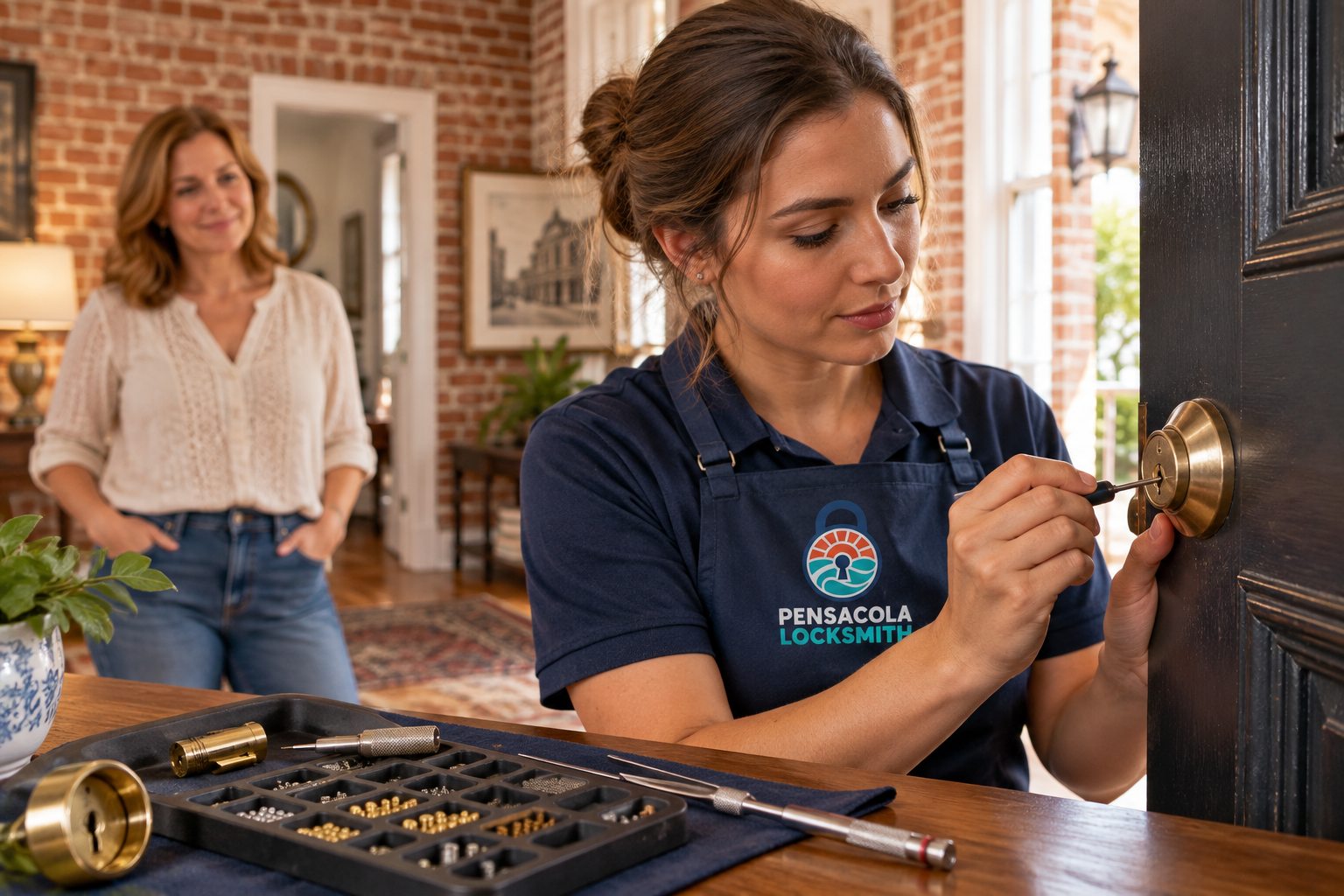
For landlords and property managers, the most valuable lock service is a rekey between tenants. When a lease ends, the departing tenant keeps keys, and so might friends, roommates, family and past guests. Rekeying changes the pins inside the lock cylinders so the old keys no longer work. The locks stay on the doors, the look is unchanged and the new tenant receives fresh keys. It is more economical and faster than replacing locks.
In practice, a rekey for an apartment unit takes a short visit. The technician removes the cylinders from the front door, and from any other keyed locks such as a back door or a bedroom lock, changes the pins, tests the new keys and reinstalls the cylinders. Keys can be cut in the quantity you need, which is useful when roommates each need one. The locksmith confirms authority with the owner or the manager before work, usually by documents or direct contact.
Doing this at every turnover builds a clear record of who holds keys. Combined with a simple log of keys issued and returned, it solves most disputes before they start. There are tradeoffs, as frequent rekeying adds a small cost per turnover, but it is usually much lower than the cost of an incident. A bulk visit to several units is practical for managers, and we can discuss that by phone.
Landlord and manager concerns
Landlords near a campus face a particular mix of demands: keeping units secure, meeting tenant expectations and following local rules on safety and access. Locks are central to this. A unit should have a working deadbolt, secure windows and doors that close properly. Tenants rightly expect that the previous occupant cannot enter. A landlord who rekeys promptly after each tenancy is giving them that.
Master key systems can help managers who oversee many units. With a master system, each tenant's key opens only their door, while a master key opens all. Systems like this require careful design. Too many master levels or poor record keeping can weaken security. If you are considering one, discuss it with the locksmith in detail first. A complicated design may need a visit before pricing, and the service call charge is explained before dispatch.
Whenever a locksmith works in a rental, ownership or authority is verified. A tenant cannot authorize a lock change without the landlord's consent, and a manager must show authority from the owner. This protects everyone, including tenants whose homes are on the line. If you manage properties for an owner, keep a signed authorization on hand, so work can proceed without delay.
Dorm-area apartments and shared spaces
Apartments near campus often have shared areas such as laundry rooms, mailrooms, stairwells, gates and storage closets. Locks on shared spaces are generally the responsibility of the property owner or management, and any work requires their authorization. If a shared door lock fails, tenants should report it to management instead of trying to fix it. A technician will ask who is requesting the work and may need to confirm it with the manager.
Inside a shared unit, individual bedroom locks are a frequent topic. A bedroom lock provides privacy and limited protection, and it works best with a sturdy door. Roommates should agree on whether bedroom locks are allowed, and the lease may have something to say. If the landlord permits, a locksmith can fit or rekey a bedroom lock. Keep in mind that bedroom locks must be easy to open from inside in an emergency.
On-campus housing itself is run by the institution, which has its own rules and procedures for lockouts and key replacement. Students who live on campus should contact housing staff first, not a private locksmith. This page concerns off-campus apartments and rental houses in the surrounding area. If you are unsure whether your building is university-managed or privately owned, ask before calling.
Rental houses and roommates
Many students and young workers live in rental houses, sharing the lease with several roommates. This setting has its own lock issues. Keys multiply as each roommate makes copies for friends and partners. When someone moves out, the key may leave with them. Within a year, nobody knows how many keys exist. The practical answer is a rekey when roommates change, along with a clear understanding about key copies.
Roommates sometimes disagree about security. One wants a keypad lock; another wants a physical key. A keypad is convenient in a house with several occupants, since codes can be changed when someone leaves, and nobody needs to make copies. Check with the landlord, who must approve changes. Choose a model for exterior use and keep a mechanical key override.
Back doors, sliding doors and windows in rental houses deserve a check as well. A deadbolt on the front door is of limited value if the back door has a weak latch. A pin in a sliding door track is a modest measure with good effect. A locksmith can inspect the doors, and the landlord can decide on improvements. Tenants should report problems early, since a failing lock is a landlord concern.
Cars, bikes and campus-area vehicles
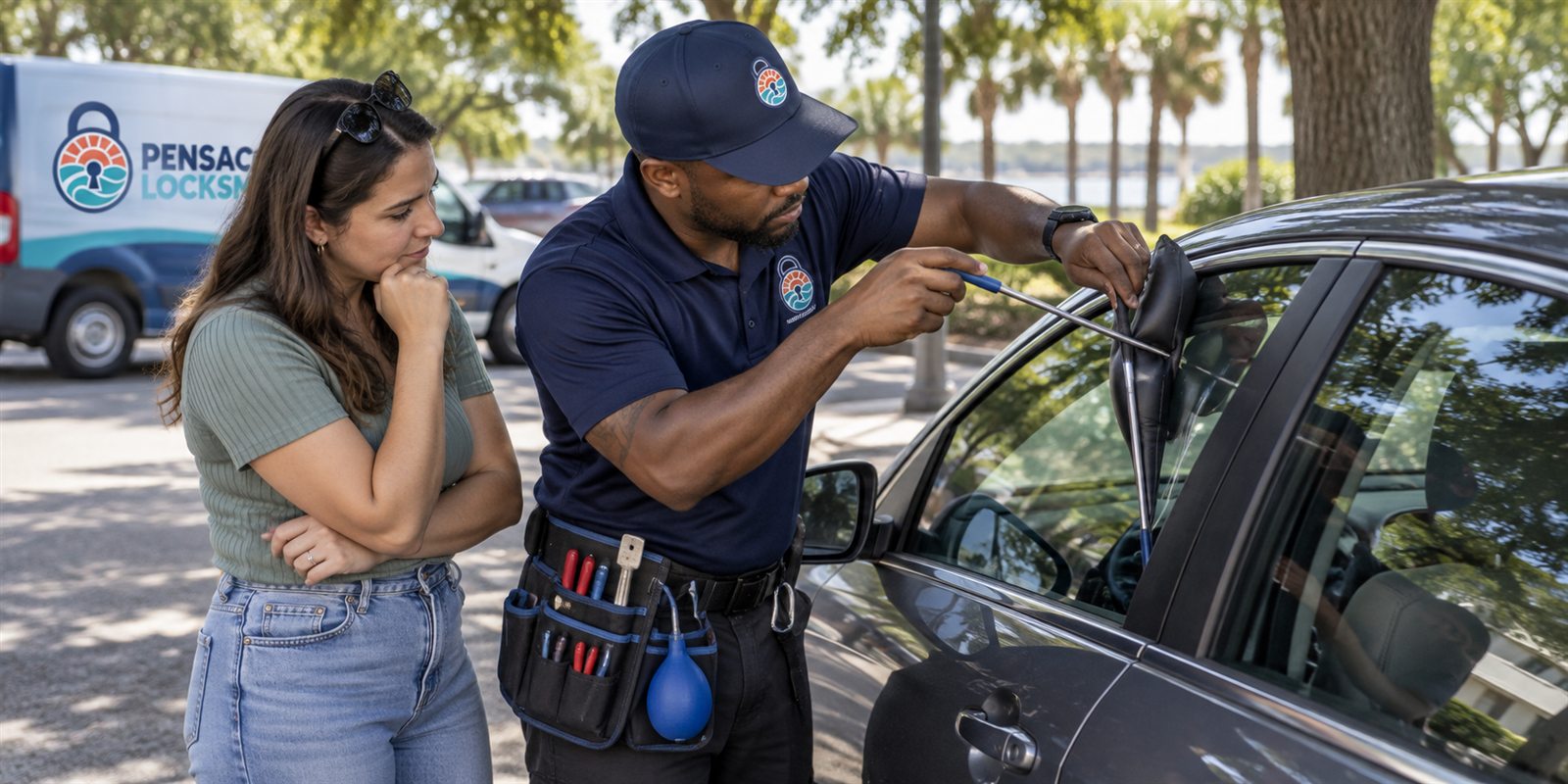
Students and staff rely on cars, and lost keys in parking lots are common. A mobile locksmith can come to the lot, open a locked vehicle and, for many vehicles, cut and program a new key. The process depends on the type of key: metal key, chip key, remote head key or push-button start fob. Tell us what you drive and what kind of key you had, and whether a working spare exists. Many students can get a spare from a parent, which can be simpler than programming a new one.
Ownership or authority must be shown before the vehicle is opened or a key is made. Registration or title and a photo ID are standard. Many student vehicles are registered to a parent, so the owner may need to speak with us or provide documents. This is a normal safeguard and protects the owner. Have the paperwork handy, and if it is in the glove box, tell us so we can discuss alternatives.
Bike locks are a campus fact of life, and a frequent source of lockouts. A lost key to a bike lock or a combination that has been forgotten can often be dealt with by a locksmith, though cutting a cable or chain may be the only option. Prevention helps: record combinations somewhere safe, keep a spare key at home and choose a lock that suits the bike's value.
Smart locks, keypads and short stays
Near a university, short stays are common: visiting parents, summer programs, sublets. Keypad locks make sense in these cases, since codes can be given for the stay and removed afterward. For landlords, they reduce the number of physical keys in circulation. For tenants, they remove the risk of losing a key. As always, check the lease and get landlord approval before changing hardware.
Choose a lock for the conditions. Exterior doors face heat, rain and humidity, and low quality electronics can fail early. Keep a mechanical key as backup, replace batteries on a schedule and test the lock regularly. A tenant who leaves a keypad lock dead and has no key is a repeated lockout. Make sure everyone using the door knows how it works.
Installation requires a well fitting door. The technician checks the bolt, the strike and the swing before installing, because misalignment can drain batteries and wear parts quickly. After installation, the technician sets up codes, tests them and walks the landlord or tenant through changing them. Some landlords prefer simple mechanical rekeys at each turnover, which are also reliable. The best choice depends on the building and the management style.
Break-ins, damaged doors and emergency repairs
Occasionally a lockout or a break-in leaves a door damaged. A forced door may have a split frame, a bent strike plate or a broken latch. If a break-in has occurred, contact the police first, and document the damage with photos before any repair. A locksmith can then secure the door by repairing or replacing hardware, and rekeying the lock so that any stolen keys are useless. Structural carpentry is a separate job, but a locksmith can often make the door lockable again quickly.
For tenants, report the damage to the landlord immediately, as repairs to a rental are typically their responsibility. For landlords, a damaged door should be made secure as soon as possible, because an unsecured unit is a risk to the tenant and the property. Authority is checked as always, and the technician will want to see who is requesting the work.
If a key has been stolen or lost in circumstances that suggest someone could enter, do not wait. A rekey is a straightforward way to cut off the lost key. It is better to rekey as a precaution than to find out later that a lost key was used. Call us to discuss it and to confirm availability.
Move-in, move-out and the key handover
The busiest lock moments near a campus are move-in and move-out days. Cars are full of boxes, doors are propped open, and keys change hands quickly. In the rush, mistakes happen: a key is dropped in a box, a spare is mailed to the wrong place or a code is texted to a group chat. A short plan keeps this under control. Landlords should decide who receives keys, how many are issued and how they are returned, and tenants should confirm the same in writing.
For tenants moving in, the first day is the right time to test every lock. Try the key in each door, check that the deadbolt extends fully and that the door closes without being forced. If a lock is stiff or a key sticks, report it to the landlord at once, so it is on record that the problem existed at move-in. Do not make extra copies without permission, and keep a record of any you do make.
For tenants moving out, return every key and take a photo of the handover if possible. Landlords can then rekey with confidence that no old key is still unaccounted for. If a key has been lost, say so honestly. A rekey solves the problem completely, while an undisclosed lost key leaves a risk behind. Being straightforward at this stage saves argument and keeps the building safer for the next occupant.
Getting ready for your call
Tell us your address and building, including any gate or entry code. Describe what is locked and what you need: entry, a new key, a rekey, a repair or a replacement. If you are a tenant, have your lease, ID or a message from your landlord ready. If you are a landlord or manager, have proof of ownership or written authority from the owner.
For vehicles, have the registration or title and a photo ID. For a student whose parent owns the vehicle, the parent may need to speak with us or provide documents. Describe the key type and whether you still have any working key. A photo of the lock or key helps us prepare.
Quotes are given by phone after you describe the job. If it is complicated, a technician visits first and the service call charge is explained before dispatch. Please call to confirm availability. Ask about options, ask what the technician recommends and why, and make sure you understand before work begins.
Common questions
I am a tenant and locked out. Can you open my apartment?
Yes, if you can show you live there, such as with an ID matching the address, a lease or a message from your landlord. It is also worth asking the property manager first, since they may have a spare. Do not change locks without landlord permission.
Why should a landlord rekey between tenants?
Old tenants and their friends may still hold copies. Rekeying changes the pins so old keys stop working, while the lock stays on the door. It is quick and usually more economical than replacing locks.
Can you help with locks in university housing?
This service covers off-campus apartments, rental houses and vehicles. On-campus housing is run by the institution, so contact housing staff for lockouts or key replacement there.
My car is registered to my parent. Can you still help?
Usually yes. The owner may need to speak with us or provide registration or title, along with photo ID, because ownership or authority is checked before a vehicle is opened or a key is made.
How do quotes work?
Quotes are given by phone after you describe the job. If the job is complicated, a technician visits first and the service call charge is explained before dispatch. Please call to confirm availability.