
Content note: this page was written by Claude (AI) for Pensacola Locksmith.
The school-year rhythm of keys
In family neighborhoods, keys follow the school calendar. In August, children get their own house keys for the first time, backpacks fill up and keys end up in odd places. By October, the first lost key has usually occurred. Having a plan before that happens spares everyone stress. A spare key held by a trusted neighbor or relative is the simplest safeguard.
Think about the key itself. A house key on a long cord around a child's neck advertises what it opens, and a tag with the family address is worse. Use a plain ring, keep it zipped in a bag and teach children not to show it. Many parents prefer a keypad on the front door, because a code can be changed if it is shared too freely.
When a key is lost near the home, decide whether to rekey. If the key has no identifying tag and was lost in a place where it is unlikely to be found, many families wait. If it was lost on a route near home, or has a tag, a rekey is a modest and sensible step. Talk it over with the technician, who can describe the work and let you decide.
A few practical tips for the first weeks of school: practice the routine at home before the first day, with your child unlocking the door in daylight while you watch. Show them how to hold the key, how to feel the bolt move and what to do if it sticks. Children often struggle with a stiff deadbolt, so if the lock is hard to turn, ask a technician to adjust or lubricate it so a small hand can manage.
Rekeying, duplicate keys and the family set
Over the years a household accumulates many keys: for the parents, the older children, a babysitter, the grandparents, the neighbor who feeds the cat. Every extra copy is one more thing to track. A rekey brings order by invalidating all old keys and issuing a new set, which you then distribute deliberately and record.
When you order copies, cut them from the new original and test each in the lock. Mark which key belongs to which person using colored caps, not names. Keep one master set at home in a safe place. If someone moves out or a relationship ends, a rekey is a clean way to ensure their old key no longer works, without any discussion needed at the door.
A technician rekeying a home checks first that you own or are authorized to manage the property. Closing records, deeds or a lease with the owner's permission serve. This applies to a house you rent as well, where the landlord generally decides about locks. The check protects the people who live in the house, and it is part of how we work everywhere.
Think about the lock hardware as well as the keys. Builder-grade deadbolts in suburban homes are often adequate but basic, and after several years they may feel sloppy. If you are rekeying anyway, ask whether the hardware is worth upgrading while the technician is there. Sometimes a new deadbolt costs only a little more than rekeying an old one and gives you a smoother, sturdier lock for the next decade.
Another point on family sets: many households keep a key on a hook by the door for convenience, visible through a window or glass panel. If a key is visible from outside, it is an invitation. Move the hook out of sight, or keep the spare key in a drawer. Small changes like this cost nothing and remove a risk that no lock can address by itself, however well it is made.
Car lockouts on a busy road
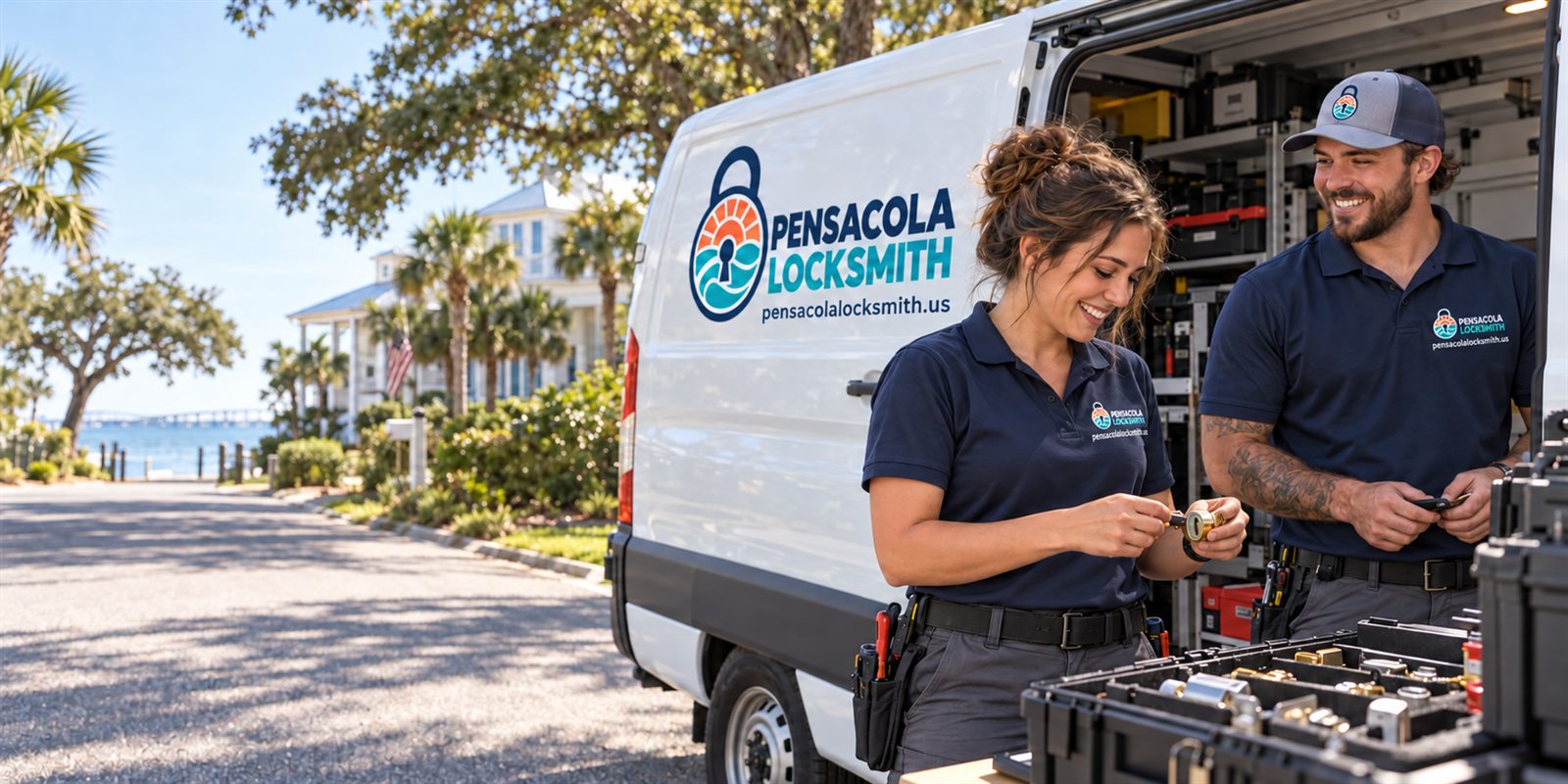
Vehicles are part of daily life in a commuter area, and car lockouts are common. Keys left on the seat, a fob with a dead battery, or a key broken in the ignition can all strand a driver. If you are in a parking lot or on a quiet street, you may be fine to wait. If you are on a busy road, your safety comes first.
If you are stuck at the roadside, move yourself and any passengers somewhere safe, away from traffic, and call us from there. If a child or a pet is locked inside a vehicle, do not wait for a locksmith: call emergency services immediately. For an ordinary lockout, tell us the make and general type of vehicle, whether it has a key or push-button start, and where you are.
Before opening a car, the technician checks that it is yours or that you are authorized to be in it. Registration, insurance paperwork or identification matching the vehicle records are the usual evidence. This is not an insult. It is why a locksmith can open a car in a parking lot without becoming part of someone else's crime. Most vehicles can be opened without damage using careful tools.
For modern cars with push-button start, a dead fob battery is a frequent and fixable issue. Many fobs have a hidden mechanical key, and many cars have a spot where a weak fob can still start the engine when held against it. Check your owner's manual before calling anyone. If those do not work, a technician can help, but a coin cell from a store may be all you need, so try the simple step first.
- Move somewhere safe before calling
- Emergency services first if a child or pet is inside
- Know your vehicle type and key style
- Keep registration or ID within reach
Lost car keys and replacement fobs
Replacing a lost car key is more involved than cutting a house key. Many vehicles use transponder keys, where a chip inside must be recognized by the car, or remote fobs that talk to the vehicle by radio. Cutting the metal blade is only part of the job, because the key or fob must be programmed to the car.
A mobile locksmith can often make and program a replacement on site, which saves towing the car. The process depends on the vehicle type. Some can be programmed through the diagnostic port, others need extra steps. We describe vehicle types only in general categories, because requirements vary, and we tell you honestly if a particular car needs a dealer or a different service.
As always, ownership comes first. For a replacement key, expect to show registration or title and identification. If you have a spare, tell us, since cloning or adding a key from an existing one is usually simpler than starting from nothing. And if you lose your only key, call early. Waiting often leads to a bigger problem, such as a drained battery from leaving a car on, or a stranded family.
If you buy a used car, ask how many keys came with it and whether a spare exists. Keys from earlier owners may still be in circulation. A technician can add a new key and, on many vehicles, erase old ones from the car's memory, so lost keys no longer start it. This is a sensible step for any used vehicle, particularly one whose history you do not know well.
Garage entry, side doors and what children actually use
In many suburban homes, the front door is the one used least. Family members come and go through the garage, the side door or the back slider. Those are the entries that wear, and they are also the ones likely to be left unlocked. Check them as seriously as the front door, because that is how a house is actually used.
Garage entry doors often have the lightest hardware, a basic knob lock with a weak latch. A deadbolt and a good strike plate improve it greatly. For sliders, a track bar or secondary lock helps. If children use these doors, a keypad can save keys, and a lock that engages automatically can prevent the common habit of leaving it open all afternoon.
Think about the habits more than the hardware. A door that is easy to lock will be locked. If a deadbolt is stiff because the strike is misaligned, family members will skip it. A technician who fixes the alignment is making your family safer in a very practical way. Ease of use is a security feature that is easy to underrate.
Teenagers learning to drive add another layer. A new driver locks keys in a car more often than anyone, and a spare in a wallet or a magnetic box hidden carefully on the vehicle can save a call. Avoid obvious spots. Better yet, share a plan with your teen: who to call, where to wait safely and what to say. A little preparation turns an anxious moment into a routine one.
Consider where your family gathers around the home as well. Front porches, driveways and side yards are places where keys get dropped, bags get left and doors get propped. Remind everyone to check before leaving, and keep a small dish or hook for keys near the door they use most. Good habits at the threshold prevent many of the lockouts we are called for, and they cost a family nothing.
Schools, after-school care and shared access
Neighborhoods with schools nearby bring a certain traffic pattern. Parents drop off and pick up, after-school programs run, and extra cars park along residential streets. That does not change how a lock works, but it affects how aware you may be of your surroundings. Good lighting, a visible house number and clear sightlines make a home look attended.
If your children go to an after-school program or a friend's house, they may carry keys more often. Teach them to lock up behind themselves, and consider a keypad if they forget keys. Share codes only with those who need them, and change them occasionally. If a babysitter or relative has a key, treat that key as part of your inventory and record it.
If you run a small business or home daycare from your property, you may want a more deliberate setup, with separate keys for different areas. Talk with a technician about how the space is used. Doors that must be secure from outside but easy to use from inside call for specific hardware, and exit safety should be considered first.
Pets are part of the picture too. Dogs left in a yard can slip through gates with weak latches, and a latch that does not catch is a security issue and a safety one. Check gate hardware, hinges and spring closers, and replace any that sag. A technician can fit a latch that is easy for you to use but difficult for an animal or a stranger to open from the other side.
Hurricane season and a suburban home
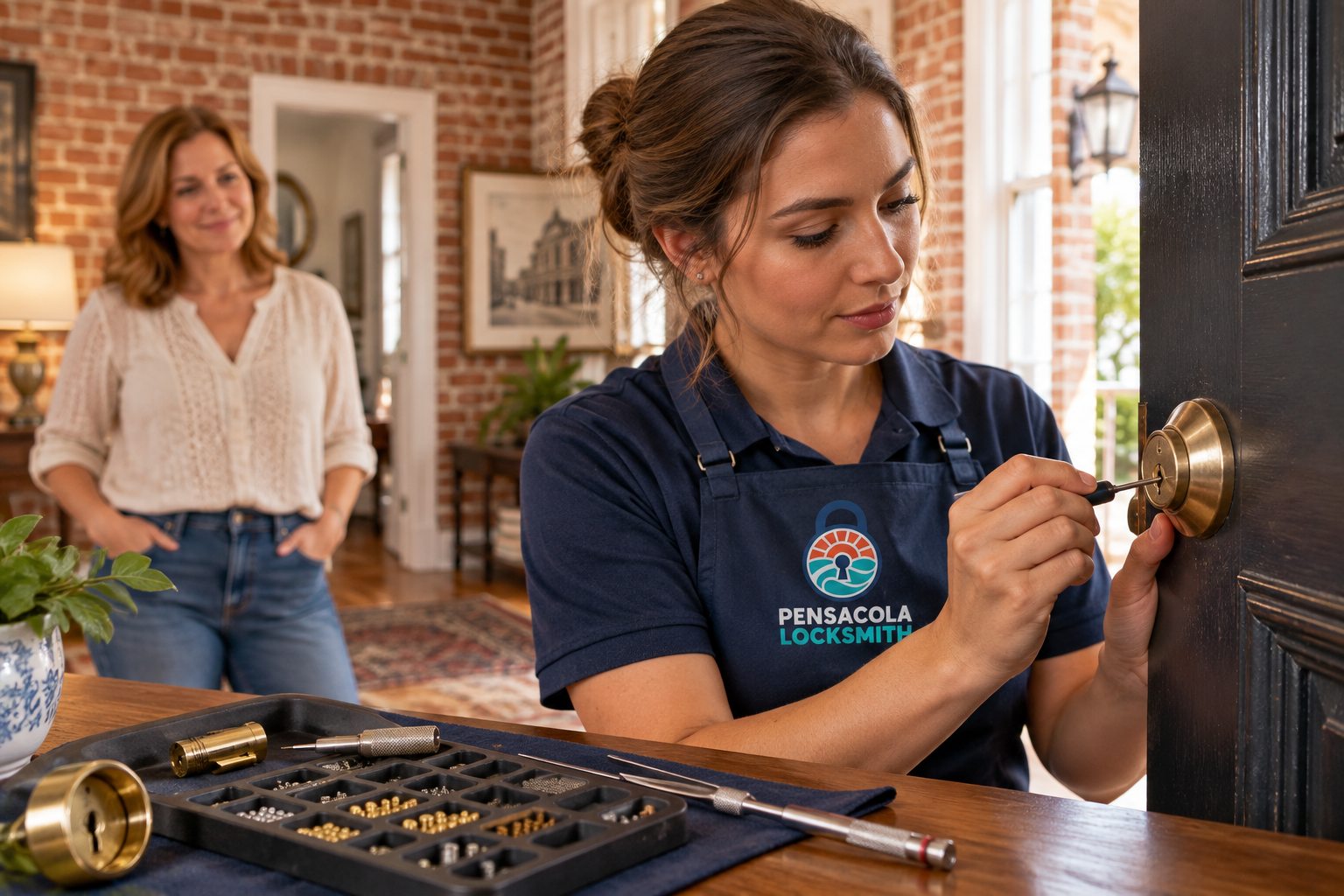
Suburban homes face the same storms as everywhere on the Gulf Coast. Doors are among the first parts to feel the wind. Long screws in hinges and strike plates, a well-fitted deadbolt and a frame in sound condition all help a door stay shut. These are low-cost improvements that make a real difference.
Before a storm, make sure family members know where spare keys are and that the garage entry is in good order. If you evacuate, think about how you will get back in, and keep copies of key documents. After a storm, check your doors. Swollen or misaligned doors can often be adjusted by a technician, and damaged ones may need a temporary measure.
We cannot promise availability during or just after a storm. Demand rises and conditions may be unsafe. Do not take risks to reach a lock. When it is safe, call us and we will tell you what is possible for your area. Preparing ahead, with hardware checked and keys organized, lets you spend less time on locks when you have enough else to think about.
Remember that heavy rain and wind can shift a house slightly, and doors often reveal it first. A door that closed well last year but binds this year may be responding to changes in the soil or frame. A technician can adjust hinges or strikes, but if the movement is large, a carpenter or contractor should look at the structure. We will tell you honestly when a problem is beyond locks.
When a lock does fail, resist the urge to spray it with heavy oil or force it. A gentle approach, cleaning the keyway and trying a dry lubricant, resolves more problems than people expect. If a key breaks, stop trying to turn it, keep the pieces and call. A broken key can usually be extracted cleanly when nobody has pushed it deeper, and the lock can often be kept in service afterward.
How we work and how to prepare for a visit
Start with a call. Tell us what has happened, which door or vehicle is involved and where you are. We give a quote by phone before dispatch. If the work is complicated, a technician visits to assess it, and the service call charge is explained before anyone is sent. You then decide, with the facts in front of you.
At the visit, the technician confirms your authority, looks over the door or vehicle and explains what they find. They offer the options and tradeoffs in plain language. After the work, try every key and operate the lock several times. Ask questions. A good job is one you understand, not just one that is finished.
Keep a small record of what was done, which keys were issued and to whom. Store spare keys safely. If you notice anything unusual in the following days, such as a stiff turn or a door that will not latch, call us and describe it. Please call to confirm availability for your area before planning around a visit.
If your household includes someone who finds locks hard to manage, such as an older relative or a person with limited hand strength, tell us. Levers are easier than knobs, and keypads or large-grip keys can remove frustration. Door hardware should serve the people who live behind it. A short conversation about who uses each door often produces simple changes that make daily life noticeably easier.
Finally, think about the long view. A well-chosen lock and a well-hung door should last many years with modest care. Writing down what hardware you have, who holds keys and when work was done gives you a quiet advantage at every future decision. Whether you stay in the house for decades or sell in a few years, a tidy record of its locks is a small gift to yourself and the next owner.
Common questions
My child lost a house key. Do I need to rekey?
It depends. If the key had no tag and was lost somewhere it is unlikely to be found, some families wait. If it could be traced to your address, a rekey is a modest, sensible step. A technician can explain the work after confirming you own or manage the home.
Can you make a replacement car key on site?
In many cases yes. Modern keys often need programming as well as cutting, and the process varies by vehicle type. We confirm ownership first and tell you honestly if a particular vehicle needs a dealer or another service.
What should I do if I am locked out on a busy road?
Move yourself and any passengers somewhere safe, away from traffic, and call us from there. If a child or pet is locked inside, call emergency services at once rather than waiting for a locksmith.
Is a keypad lock a good idea for kids?
It can be. A code replaces carried keys and can be changed if shared too freely. It needs batteries and some upkeep, so keep a backup key somewhere safe. A technician can check that a model suits your door.
How do I get a quote?
Quotes are given by phone after you describe the job. If it is complicated, a technician visits to assess it and the service call charge is explained before dispatch. Please call to confirm availability for your area.