
Content note: this page was written by Claude (AI) for Pensacola Locksmith.
Why the island is hard on locks
A barrier island is a harsh place for metal. Salt-laden air settles on every exterior surface, wind drives fine sand into every gap and humidity keeps things damp long after the rain stops. A lockset that would last many years on a house inland can show corrosion in a much shorter time on the beach side. Finish flakes, springs stiffen, cylinders gum up with a mix of salt and sand, and keys begin to drag instead of sliding smoothly. Many owners first notice it as a key that suddenly feels rough in the lock.
The cause is chemical and mechanical at once. Salt attracts moisture and accelerates corrosion on steel parts, including the small springs and pins inside a pin tumbler cylinder. Sand acts like a mild abrasive that wears the brass and the key. Over time, the lock loses the tight tolerances that let it work smoothly. Spraying the wrong lubricant can make things worse, because oily products attract more sand and form a paste inside the cylinder.
A locksmith who works on the island learns to expect this and plan accordingly. When we visit, we look at the lock, the strike plate, the screws and the door edge for signs of corrosion before deciding whether to clean and service the lock or replace it. It is much better to catch a stiff lock early than to wait until the key breaks off in the cylinder or the bolt refuses to retract.
Choosing hardware that survives salt and wind
Not all locks are equal when it comes to marine air. Solid brass and stainless steel components resist corrosion better than plated steel, and finishes designed for exterior and coastal use hold up longer than basic decorative coatings. When you replace a lock on an island home, it is worth asking about the materials rather than choosing only by appearance. A handsome finish that fails in two seasons is a poor bargain.
The mounting hardware matters as much as the lock itself. Screws that rust bleed streaks down the door and eventually seize, making future service difficult. Stainless fasteners are the sensible choice. Strike plates should be fastened with long screws that reach the framing behind the jamb, which also helps against wind loads that push and pull on doors during storms. Weatherstripping and door sweeps keep blowing sand and moisture away from the lock body.
There are tradeoffs. Premium materials cost more up front, and some very corrosion resistant locks have a plainer look. Electronic locks are convenient but need to be rated for exposure, as moisture can enter battery compartments and keypads. Your technician will talk through the choices, explaining which features matter at your door and which are marketing. The goal is a lock that keeps working for a long time with simple, regular care.
Short-term rentals and guest turnover
A large share of homes and condominiums on the island are used as vacation rentals. That brings a particular security problem: a stream of guests, each with a key or a code, and no reliable way to know who still has access. A traditional key can be copied or kept after checkout, and a lockbox code that never changes can be shared with people who were never meant to have it. Owners and managers often discover this only after something goes wrong.
Rekeying between stays is one answer, though it is practical only when turnover is infrequent. For frequent turnover, many owners prefer keypad or smart locks that allow a unique code for each reservation, set to expire at checkout. A locksmith can install and set up these locks, explain how to manage codes and make sure there is always a mechanical override in case the electronics fail. It is also wise to rekey whenever a property changes managers or cleaning staff.
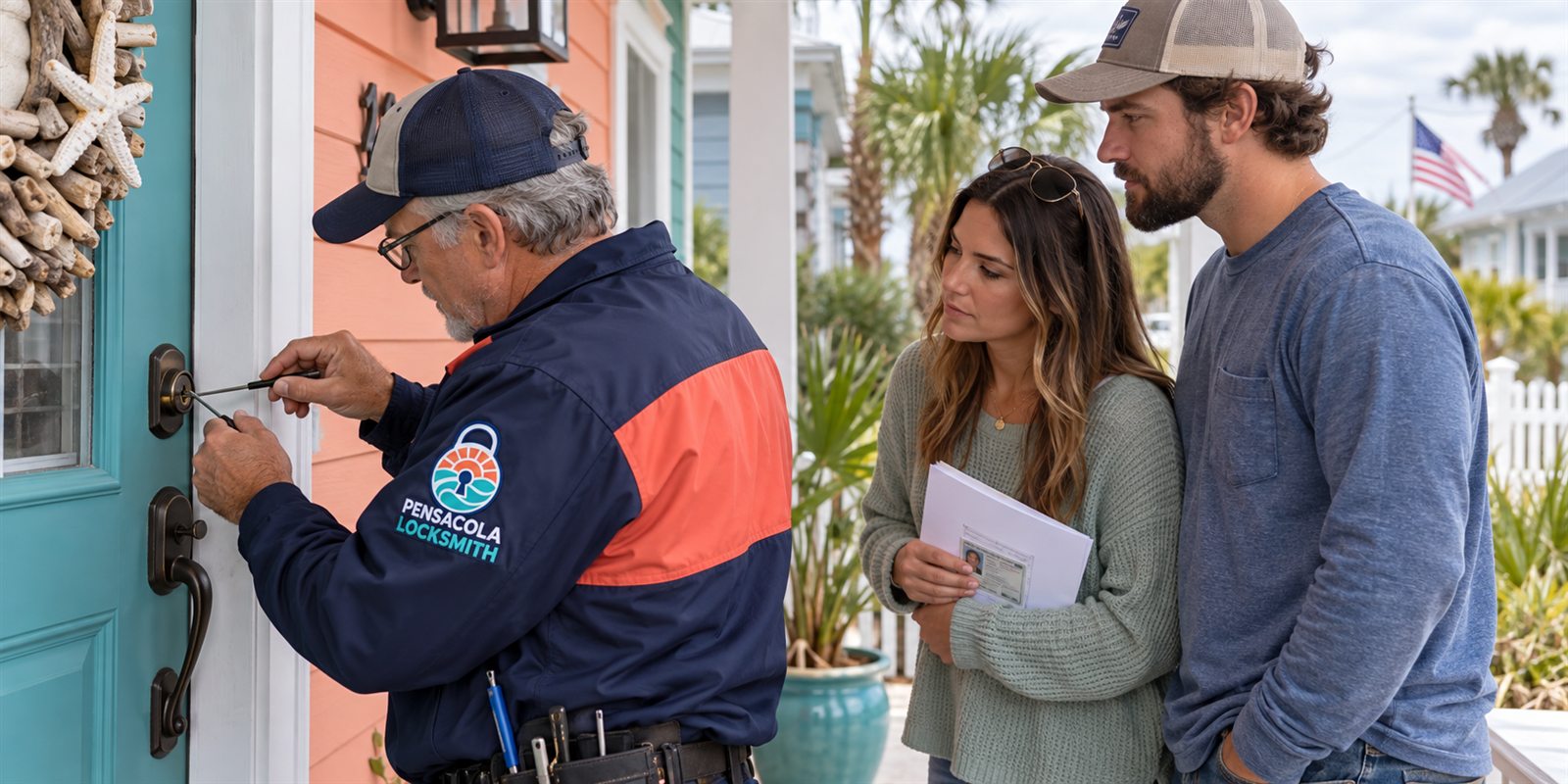
As always, the locksmith checks ownership or authority before rekeying or installing locks. For a rental, that means the owner, or a manager who can show written authority from the owner. This protects owners from unauthorized changes to their property, and it protects guests from being locked out by someone who had no right to alter the locks. Bring whatever shows your role, and we will take it from there.
Condo doors, common areas and association rules
Condominium living adds a layer of rules to locksmith work. The entry door to a unit may belong to the owner, but the building may specify the type of lock, the finish, the keying or who may service it. Some associations require that a copy of every key be held by management, and some limit modifications to the exterior of the door. Before replacing a lock, it is wise to check your documents or ask the association what is permitted.
Common-area locks, such as pool gates, storage rooms, mailroom doors and stairwell doors, are usually the association's responsibility, and work on them requires authorization from the board or its manager. A locksmith will ask who is requesting the work and whether they can approve it. That can feel like extra steps, but it keeps everyone safe and avoids disputes about who changed what.
In multi-story buildings, a locksmith may also be called for balcony sliding doors, which have their own latches and often corrode quickly in salt air. A balcony door lock that fails is both a security gap and a safety concern, since it should always be easy to open from the inside. Tell us about it when you call so the visit is planned for the right parts.
Sliding glass doors and balcony latches
Sliding glass doors are common on the island because they open living spaces to views of the water. They are also among the weakest points of many homes. The latch is often a small hook lock built into the frame, and over time the hook wears, the track fills with sand and the door rides loosely. A door that can be lifted out of its track or jiggled open is not secure, however good the glass looks.
A technician can assess several things: whether the latch engages fully, whether the track is clean and the rollers in good shape, and whether the door can be lifted. Fixes include replacing the latch, adding a secondary lock or pin, or fitting a bar or track insert that blocks the door from sliding open. Some owners also choose a keyed lock so that the door can be secured when they are away, and a quick release from the inside for everyday use.
Cleaning the track regularly is a simple habit that makes a large difference. Sand and salt build up quickly and make the door hard to move, which leads people to leave it unlatched. A vacuum, a small brush and a dry lubricant suitable for tracks are enough. If the rollers are worn, replacing them is often a job for a door specialist, but the locksmith can advise on how the lock itself should be adjusted.
Lockouts at the beach and in parking areas
The island sees many visitors, and lockouts are part of that rhythm. A set of keys left in a beach bag, a key fob dropped in the sand or a vehicle locked with the keys on the seat are all common stories. The first thing to do is stay calm and safe. If a child or pet is inside a locked vehicle, especially in summer heat, call emergency services immediately; do not wait for a locksmith. Heat can build in a closed car very quickly.
For ordinary vehicle lockouts, a mobile locksmith can open the car without damage in most cases using tools designed for the purpose. Before doing so, the technician checks that you are the owner or authorized driver, usually with registration and photo ID. If the keys are lost entirely, a replacement can often be cut and programmed on site, depending on the type of key the vehicle uses. Describe the key type when you call so we can prepare.
For visitors who are staying in a rental, a lockout at the unit is handled differently. If you are a guest, contact the owner or manager first, as they are the ones who can authorize access. A locksmith cannot open a rental unit for someone who cannot show authority, because that would put the owner at risk. This policy protects you as well, since it means no one can simply talk their way into your room.
Storm preparation and storm recovery
Hurricane season is a fact of life on the Gulf Coast, and the island is directly exposed to it. Owners prepare by installing shutters, securing furniture and boarding up if needed. Locks come into this as well. A door that latches loosely can be forced open by wind pressure, and a door with a weak strike plate can fail at the worst moment. Before the season, it is a good time to check that every exterior door closes firmly and that the deadbolt extends fully into a well-fastened strike.
After a storm, doors may be swollen, frames shifted and locks filled with sand and water. Do not force a stuck key. Salt water in a cylinder is especially damaging, and the best response is cleaning and service, or replacement if the lock is badly affected. If entry has been forced during evacuation or looting, a locksmith can repair or replace damaged locks and secure the door until permanent repairs are made.
Demand for services after a major storm can be heavy, and access to the island may be limited by closures. Call to confirm availability and be patient. If you can reach your property safely, take photos of any damage before repairs, as insurers often ask for them. Keep a record of what you had done, and ask the technician what was replaced.
Boat, kayak and beach equipment locks
Many island residents and visitors keep boats, paddleboards, kayaks, bicycles and beach gear. Locking these items is a real concern, since they are valuable and easy to move. Cable locks and chains used near the water corrode quickly, and a lock that seizes at the wrong moment leaves you unable to reach your own equipment. Look for hardened chain and locks designed for marine use, and rinse them with fresh water now and then to wash off salt.
A locksmith can help with storage closets, outdoor shower enclosures and equipment lockers that belong to a home or a condo. These doors often have simple latches that corrode and fail. Replacing them with a corrosion resistant lock and keying it to match the main door means one key serves both. If a padlock key is lost, the lock can be opened and replaced without damaging the shed or locker.
Be careful about using household oil on marine locks, since it can attract grit. A dry lubricant made for locks is better, applied sparingly. If a padlock is already stiff and crusty, a technician can often clean it, but in a coastal setting it may be more economical in the long run to replace it than to keep nursing it along.
Smart locks and keypads in a coastal setting
Electronic locks make sense on the island, where guests, family and service people come and go. Entry codes can be changed instantly and nobody needs to carry or hide a physical key. But electronics and salt air are not natural friends. Choose a lock rated for exterior exposure with sealed keypads and battery compartments, and keep a mechanical key override in a safe place. Replace batteries on a schedule instead of waiting for the low battery warning.
Installation requires careful attention to the door. Humid air can swell a door and cause the bolt to bind, which makes a motorized lock work harder and drains the batteries. A technician checks that the door closes smoothly and that the bolt aligns with the strike before installing. Setting up user codes, learning how to change them and testing the lock with the door open and closed are all part of the visit.
There are limits to what electronic locks can do. They are only as secure as the door and frame they are mounted in, and they depend on batteries and sometimes on a network connection. For some owners, a good mechanical deadbolt is still the more dependable choice. We will explain both sides, answer your questions plainly and leave the decision to you.
How to reach us and what to have ready
When you call, give the exact location: the building, the unit, the nearest landmark and any gate or access code needed to reach it. Island addresses can be confusing, especially in complexes with several buildings. Say what is locked and what you need, such as getting in, a new key, a rekey, a repair or a replacement. A photo of the lock or the key helps us prepare the right parts.
Have proof of ownership or authority ready. For a home, that means ID matching the address, a deed, a lease or a utility bill. For a rental, written authority from the owner. For a vehicle, the registration or title and photo ID. The locksmith checks this before opening, rekeying or programming anything, as it protects owners and renters alike.
Quotes are given by phone based on what you tell us. If the job is complicated, a technician visits first, and the service call charge is explained before dispatch. Please call to confirm availability, particularly during busy visitor seasons or after storms. Ask what your options are, and expect a clear explanation of the work.
Common questions
Why do my locks corrode so quickly near the beach?
Salt in the air attracts moisture and speeds up rust and corrosion, while sand wears the internal parts. Choosing corrosion resistant materials, using stainless screws and cleaning locks with a suitable dry lubricant helps. Replacing a badly corroded lock is often better than repeated repairs.
Can you help me as a guest locked out of a rental?
A locksmith cannot open a rental for someone who cannot show authority. Contact the owner or property manager first, since they can authorize access. This policy protects owners and guests alike.
Are keypad locks a good choice for a vacation rental?
Often yes, because each guest can have a code that expires at checkout. Choose a model rated for exterior exposure, keep a mechanical override and change batteries on a schedule. Your technician can explain the tradeoffs.
Does a condo association affect lock work?
It can. Some associations specify the lock type, finish or keying, or keep copies of keys. Check your documents or ask management before replacing a lock. Common-area locks need authorization from the association.
How do I get a quote?
Call us and describe the lock and the problem. Quotes are given by phone. If the job is complicated, a technician visits and the service call charge is explained before dispatch. Please call to confirm availability.