
Content note: this page was written by Claude (AI) for Pensacola Locksmith.
The kinds of Toyota keys you may be holding
Toyota has used a range of key designs over the years, and the one in your hand tells us a lot about what is needed. Some older vehicles use a plain metal key with no electronics at all. Many others use a key with a plastic head that contains a small transponder chip, which talks to the engine immobilizer.
Newer vehicles often come with a remote head key, where the lock, unlock and panic buttons are built into the head of the key. Others use a separate fob alongside a transponder key. The most advanced group uses a smart key, a fob that stays in your pocket and allows push-button starting without ever inserting a blade.
Because the categories overlap, it helps to describe what you have rather than guess. Does the key have buttons? Does the car start with a button or a turn of the key? Is there a small emergency blade hidden inside the fob? Answers to these questions let us talk through the right replacement before anyone drives out.
How the immobilizer and transponder work
The transponder chip in the key is a small passive device. When the key is near the ignition, the vehicle sends a low-power signal, and the chip answers with a code. If the code matches what the vehicle's computer expects, the engine is allowed to start. If it does not, the engine may crank but never fire.
This is why a key that is cut correctly can still fail to start the car. The metal blade turns the ignition, but unless the chip has been programmed to the vehicle, the immobilizer refuses to cooperate. A copy of a key that skips the chip programming may open the door and turn the switch but leave you stranded.
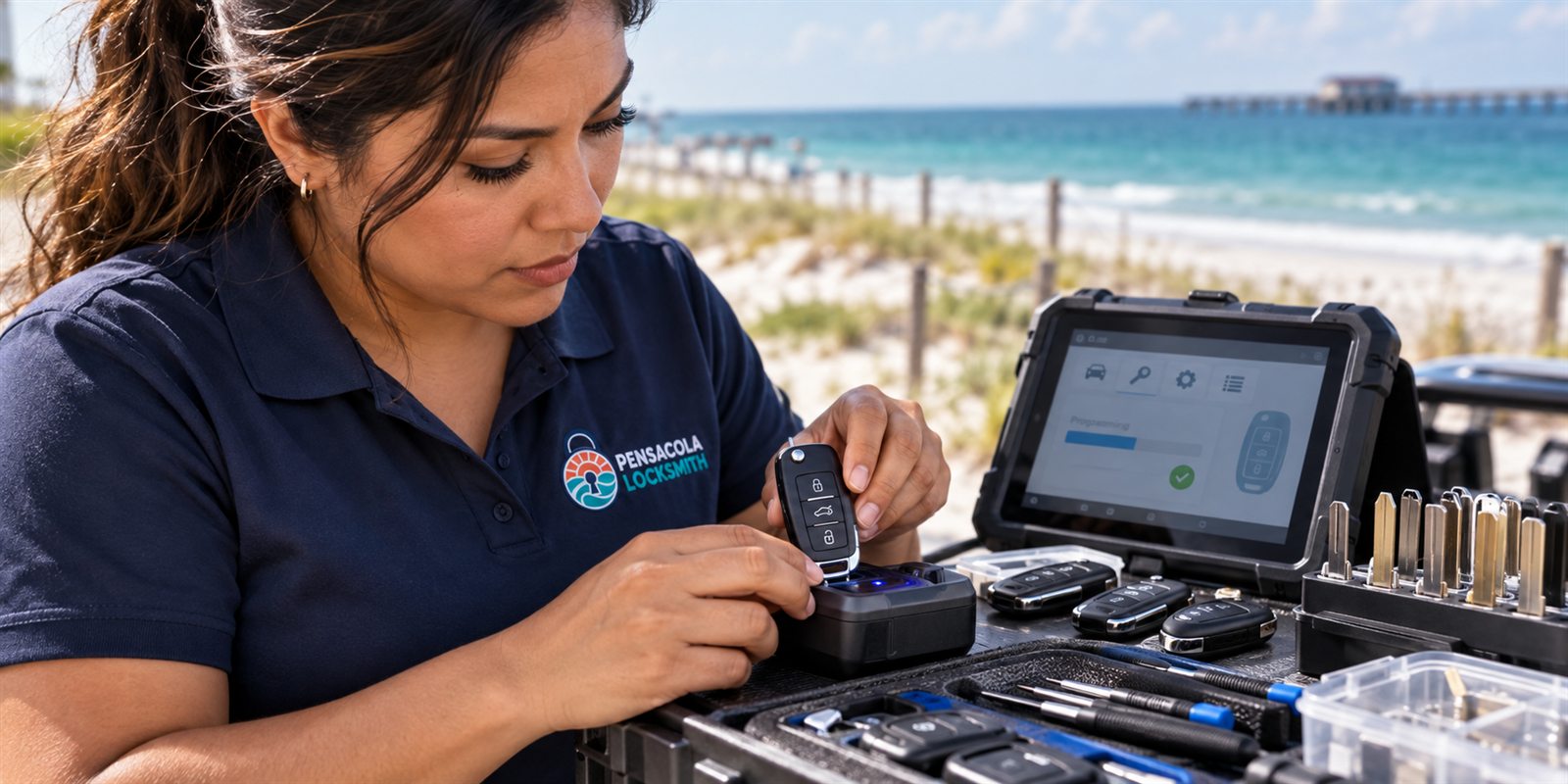
For that reason, a replacement involves two jobs: cutting the blade to the correct pattern and programming the electronics to the vehicle. Smart keys add a third, pairing the fob so the vehicle recognizes it for proximity entry and start. A locksmith with the right equipment can perform these on site.
What happens when all keys are lost
Losing every key is the situation people dread most, but it is a solvable one. Without a working key to copy, the locksmith generates a new key from vehicle information. The process starts with confirming ownership, then identifying the key type, cutting the blade using the vehicle's key code or by reading the lock, and programming the new key.
This takes longer than adding a spare key to a car that already has a working one. The vehicle's computer must accept a new key without an existing one present, which requires specialized diagnostic equipment. Depending on the vehicle, the process can involve entering the immobilizer in a learning mode and registering the new key.
It is also an opportunity to tidy things up. If a lost key may be in the hands of someone else, the locksmith can sometimes erase the old key from the vehicle's memory so it no longer works. Ask about this if your key went missing in a place where you are uneasy about who might have found it.
Adding a spare key before you need one
The easiest time to make a key is when you still have one. Cloning or adding a key with an existing working key is typically quicker and simpler than a full lost-key job. It also avoids the stress of being stranded. If you only have one key, treat a spare as an inexpensive precaution instead of a luxury.
Think about who needs one. A household with two drivers may want a key each. A spare kept in a safe place at home is helpful for a lost or broken key while traveling. If you use a smart key, remember that a fob can lose battery power, and a mechanical backup blade is only useful if you know where it is.
We can discuss adding a second or third key by phone. Tell us the vehicle, the type of key and how many you want. We confirm ownership before the work, and test every key for starting, door locking and the remote functions before we finish.
Smart keys, fobs and battery trouble
Many calls about a key that stopped working turn out to be a weak battery. A fob that suddenly needs to be held closer to the car, or a push-button start that displays a key not detected message, often points to a dying coin cell. Replacing it is simple and inexpensive, and it is the first thing to try before assuming the fob has failed.
If a new battery does not help, the problem may be a cracked fob, a damaged circuit from water or a lost pairing. Fobs that have been through the wash or dropped in the bay are common examples. Salt air and humidity can corrode the contacts inside a fob over time, particularly when kept in a pocket during beach days.
When a fob has genuinely failed, a replacement can be paired to the vehicle. Many vehicles let a technician program a new fob using diagnostic equipment. Some require the existing fob to be present, while others can be done without it. We explain which applies after a short phone conversation about your vehicle.
Information the locksmith will ask for
To help quickly, have the basics ready. The vehicle make, model and approximate year, the vehicle identification number (VIN) from the dashboard or door jamb, and the location of the car. The VIN often lets a technician look up the correct key blank and the key code in an authorized way.
We also need to know what you have and what you need. Do you have one working key, a broken key, or none at all? Is it a basic key, a remote head key or a smart key? Do you want just a replacement for a lost key or additional spares? Photos of the key and the ignition area are helpful.
Proof of ownership is required. A registration or title in your name, matched with a government-issued photo identification, is the usual combination. If the vehicle belongs to a business or a rental company, authorization from the owner may be needed. We cannot make a key without this step, and it protects you.
On-site programming: how the visit goes
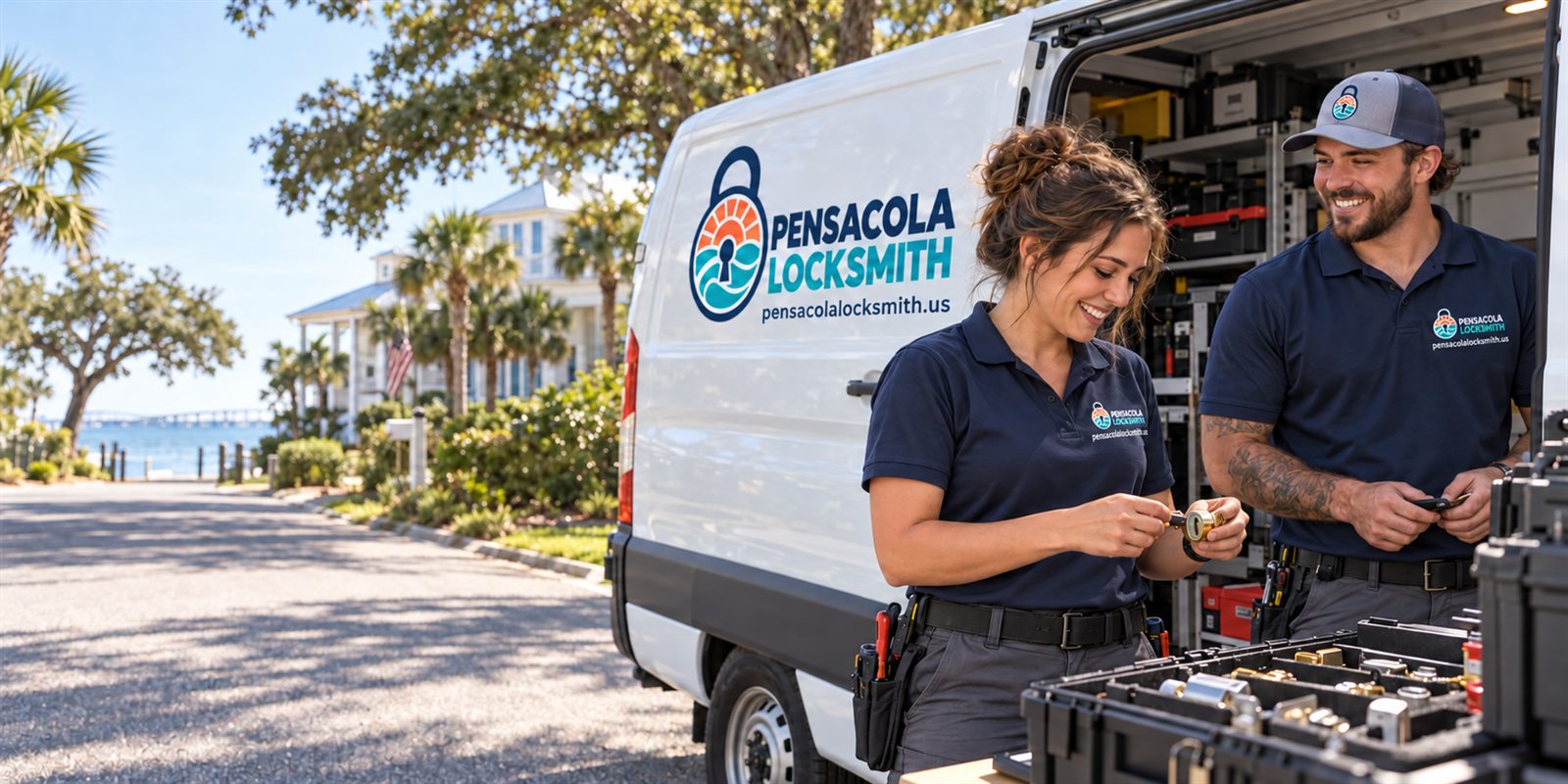
When the technician arrives, the first step is to verify ownership and confirm the vehicle details. Then the technician identifies the lock type, cuts the new key blade on a portable machine and checks that it turns the door and ignition smoothly. A poorly cut blade will wear the lock, so the fit is checked carefully.
Programming follows. The technician connects diagnostic equipment to the vehicle's port, registers the new transponder or smart key with the immobilizer, and verifies that the remote functions work. For a vehicle with several keys, all keys are often programmed at the same time, because some systems require the full set to be registered together.
Finally, every function is tested: door lock and unlock, trunk release, panic button, engine start and, for smart keys, proximity entry. We show you how everything works and answer questions. The vehicle stays where it is parked, which saves a tow in most cases and avoids a trip to a dealership.
Broken keys, worn blades and ignition trouble
Keys do wear. A blade that has been copied several times, or used for years, can feel rough in the ignition and eventually fail to turn. Ignition switches wear as well. If the key needs jiggling to turn, or the steering lock sticks, a worn key and a worn ignition may both be involved.
A broken key snapped off in the ignition or door lock needs careful extraction, using thin extractor tools. Once the piece is removed, we assess the lock for damage. Sometimes a new key is all that is required. In other cases, the ignition cylinder needs servicing or replacement and the new key is matched to it.
Do not keep forcing a sticking key. It can bend or snap, and a damaged ignition is costlier to fix. If your key is sticking, bring it to our attention before it fails. Often, a freshly cut key from the vehicle's code is cleaner than the worn original, and the problem disappears.
Gulf Coast conditions and your keys
Living near the Gulf means salt, sand and moisture, and they affect keys and fobs more than most people realize. A fob carried on the beach collects sand in the buttons. Salt water can short the circuit board. Keys left in a hot car dry out, and the plastic cases crack. Small habits make a real difference.
Keep your fob in a dry pocket or a small pouch when you go to the water. If it gets wet, remove the battery and let it dry before trying again. Avoid leaving keys on a dashboard in summer heat, which damages plastics and batteries. A silicone cover can protect against scratches and moisture.
During storm season, keep a spare key with important documents in a safe place you can reach if you evacuate. Flooded vehicles often have damaged electronics, and recovery may involve more than just a new key. If you suspect water exposure, mention it when you call so we can plan the work properly.
Military families, students and visitors
Pensacola has a transient population. Sailors and aviators stationed at the naval air station, students at the university and college, and visitors on the beaches often arrive with vehicles registered elsewhere. Ownership checks still apply, and we ask for the usual registration and identification, even if the vehicle is from another state.
If you are stationed here and your vehicle is a recent purchase, you may have only one key. Adding a spare early is a smart move, especially before a deployment or long absence. A family member holding a spare can be invaluable if the original is lost or damaged while you are away.
Visitors who lose a key while on vacation face a different problem: limited time. Calling early and having the vehicle documents on hand moves the process along. We can often meet you at your lodging, a beach lot or a parking garage. Please call us to confirm availability for your location.
Getting a quote and starting the job
Call us and describe the vehicle and the situation. Quotes are given by phone based on the vehicle, the key type and whether you have a working key. We will tell you what we need from you and what the visit will involve, without pressure. If something about your vehicle is unusual, we say so.
If the job turns out to be complicated, a technician visits and the service call charge is explained before dispatch. Please call to confirm availability. Have your vehicle details, ownership documents and identification ready, and make sure the vehicle is accessible, with clear space around the doors.
We would rather answer questions than guess. If you are unsure whether you need a replacement, a spare or just a fresh battery, say so and we will help you work out the simplest solution. The goal is a key that works reliably, made at your vehicle, with honest communication from the first call.
Mistakes that make a key job harder
The most common mistake is buying a key or fob online that looks right and turns out to be wrong. Many remote and smart keys look identical but operate on different frequencies or use different chip types. A mismatched part cannot be programmed, and the money spent on it is lost. Ask before buying, and give us the vehicle details so we can confirm what fits.
Another mistake is trying to program a key at home from internet instructions without understanding the vehicle. Some procedures, done wrongly, can erase existing keys or trigger a security lockout. If you have only one key left, an error can leave you with none. When in doubt, stop and call, because recovering from a mistake costs more than doing it correctly.
A third mistake is waiting. A key that is cracked, worn or inconsistent is on its way out, and replacing it while it still works is the easiest route. Waiting until the last key fails turns a modest job into an emergency, perhaps at a bad moment such as a morning commute, an airport trip or a beach evening.
Keeping track of keys after the job
After new keys are made, count them. Know how many exist, where each one lives and who has them. Write it down if that helps. A shared family vehicle often accumulates keys in drawers, bags and cars, and the original owner can lose track. A short written list prevents confusion later.
If a key was lost somewhere that worries you, such as a public place or a rental property, tell the locksmith so the lost key can be removed from the vehicle's memory where the system allows. This means that even if someone finds the old key, it will not start the car. It is a quick extra step during the visit.
When you sell the vehicle, hand over all keys and consider deleting any that are unaccounted for. Many people forget that a spare held by an ex-partner or a former employee still works. Taking control of your keys is as much a part of vehicle security as the lock on the door.
Common questions
Can you make a Toyota key if I have lost every key?
Usually yes. After confirming ownership, the technician cuts a new blade from the vehicle's information and programs the key to the immobilizer using diagnostic equipment. It takes longer than copying from a working key, but the work is done where the vehicle is parked. Call us with your vehicle details.
Why will my new key open the door but not start the car?
The transponder chip has not been programmed to the vehicle. The blade only mechanically operates the lock. The immobilizer needs to recognize the chip before the engine will run. Programming with diagnostic equipment registers the key and solves the problem.
Is my smart key battery really the problem?
Often it is. If the fob works only when held close or the dash shows a key not detected message, try a fresh coin battery first. If that does not help, the fob may be damaged or unpaired, and a technician can test and, if needed, program a replacement.
What do I need to prove I own the vehicle?
Bring the registration or title in your name and a government-issued photo ID. For business or rental vehicles, written authorization from the owner is needed. We check ownership before cutting or programming any vehicle key.
How do I get a quote?
Call us with the make, model, approximate year, key type and whether you have a working key. Quotes are given by phone. If the job is complicated, a technician visits and the service call charge is explained before dispatch. Please call to confirm availability.