
Content note: this page was written by Claude (AI) for Pensacola Locksmith.
A car used for weekends and workdays alike
Subaru drivers around Pensacola tend to use their cars for everything: commuting, hauling kayaks and bikes, trips to the beach and runs to the hardware store. That variety is great for the car, but it is hard on keys. A key that goes in and out of a wet pocket, a gear bag and a sandy cup holder wears out faster than one that stays on a desk.
When a key disappears in the middle of a day like that, the car is usually not where a shop is. It might be at a trailhead, a boat launch or a parking lot near the water. A mobile locksmith comes to the car, which means no tow and no second trip.
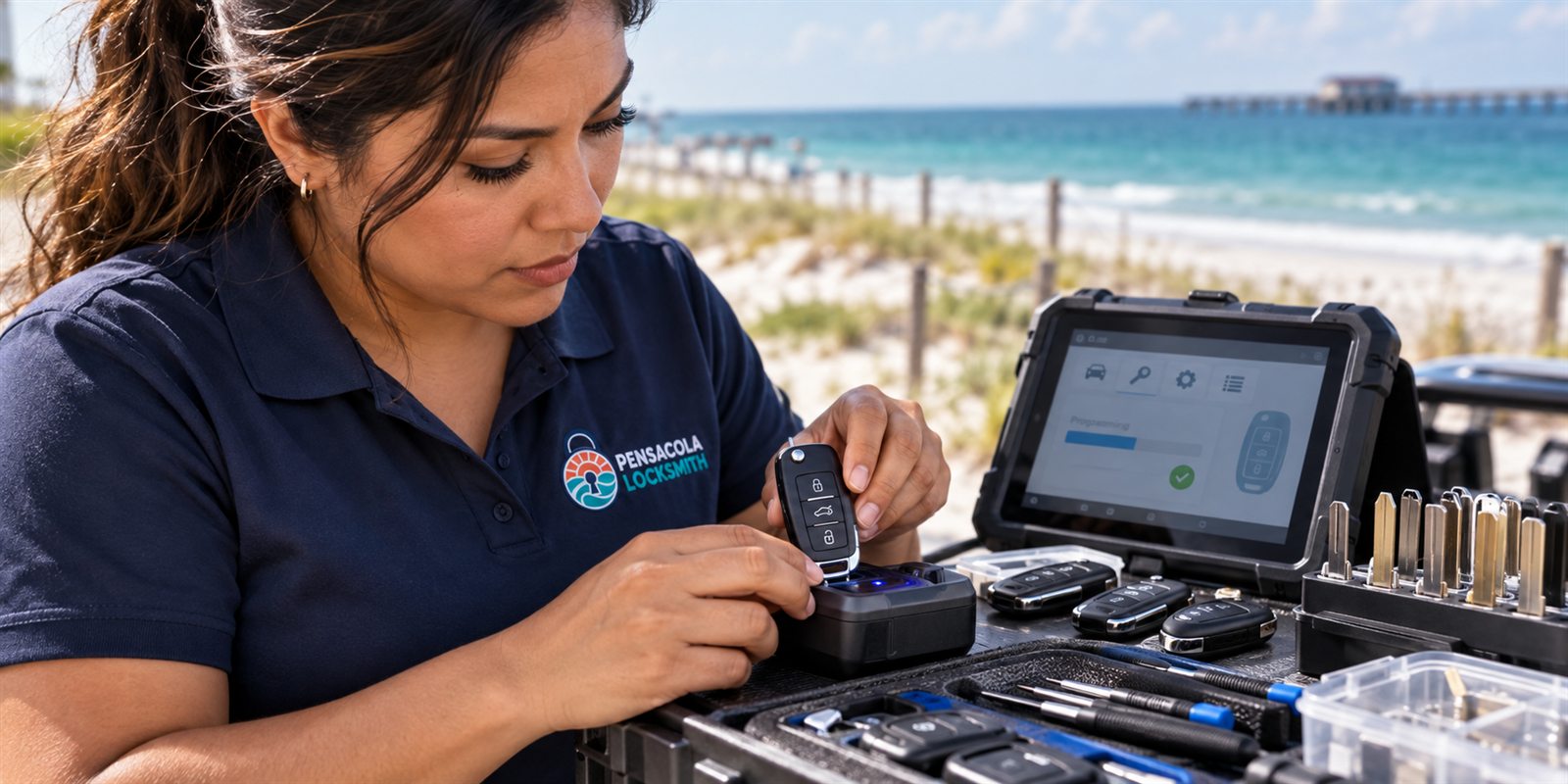
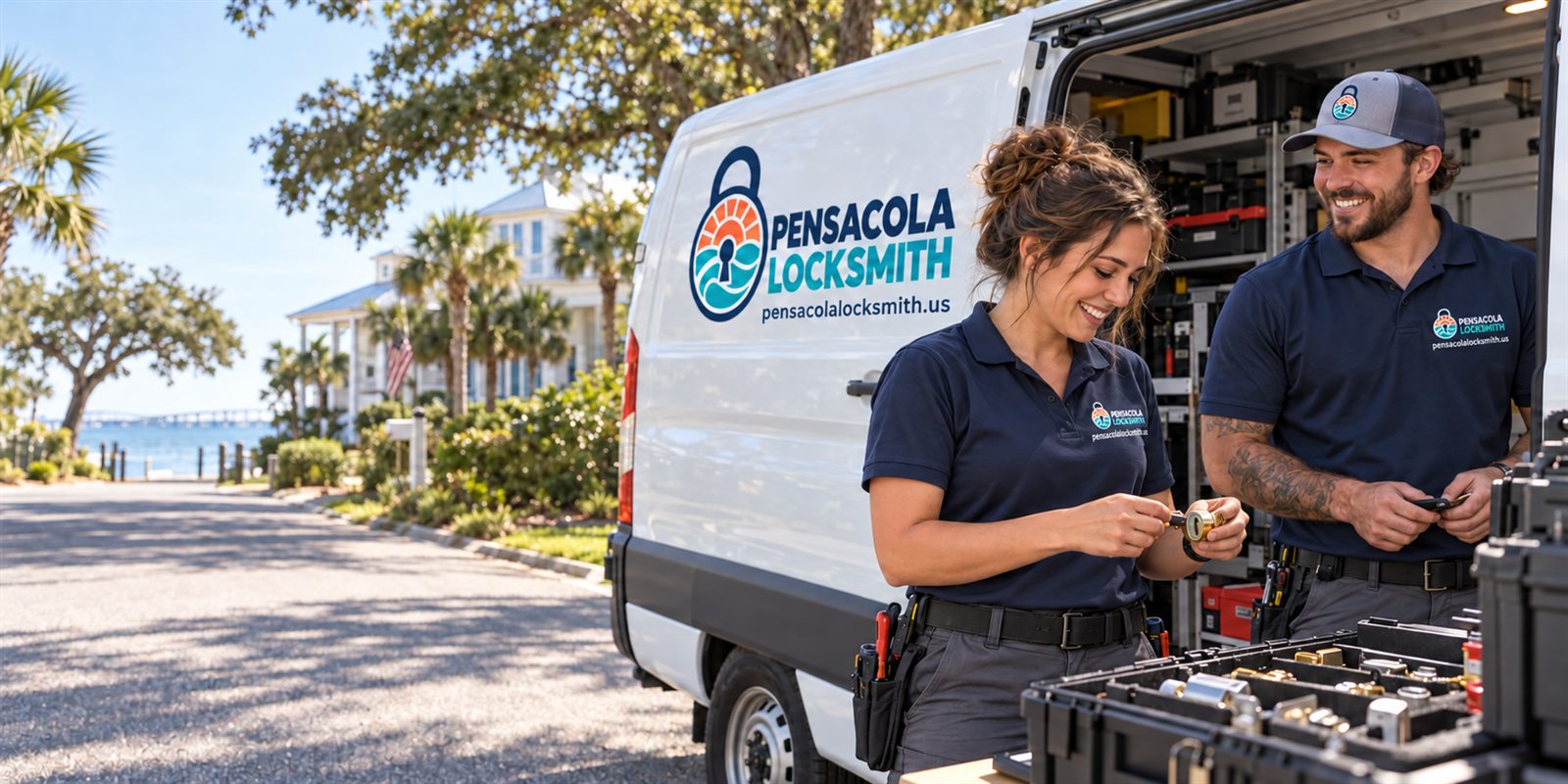
The technician carries a portable key cutter, a stock of blanks and fobs, and the diagnostic gear needed to register a key with the vehicle. Most of what happens in a shop can happen in the driveway or lot, as long as ownership is confirmed and the car can be reached.
Key styles you may encounter
Subaru has used several kinds of keys. Some vehicles use a transponder key, which looks like a regular key with a plastic head containing a chip. Others use a remote head key, where lock, unlock and panic buttons are built into the head. Newer vehicles often use a proximity fob with a push-button start.
The proximity fob stays in a pocket or bag. The car senses it as you approach and allows you to start the engine by pressing a button. A short emergency blade is hidden inside the fob, so a dead battery does not leave you locked out.
The best way to tell which style you have is to look at the ignition. A keyway means a blade and chip system. A round or square button means proximity. If you are not sure, take a photo of the key and the dash and describe it to the technician.
Trim levels and options can change which key is used, so even two cars of the same model may differ. The technician will confirm using the vehicle identification number and an inspection.
How the immobilizer decides who can drive
A Subaru will not start unless its computer recognizes the key. The chip in the key, or the proximity fob, answers a signal from the car. If the answer is right, the engine can run. If not, the car may crank but not fire, or the security light may stay lit.
This system exists to prevent theft, but it also means that a copy made without a chip is only half a key. It may open the door and turn in the ignition, yet the engine will refuse to start. Programming is therefore as important as cutting.
To add a key, the technician connects a diagnostic tool to the car, selects the vehicle and runs a key learning routine. On some models the car must be in a particular state, such as ignition on with doors closed, and the technician follows the procedure for that model.
Where it is supported, lost keys can be removed from the car's memory during the same session. That is a useful step if the missing key could be found by someone else.
Proof that the car is yours
The locksmith checks ownership or authority before opening, cutting or programming. A photo ID that matches the registration or title is the usual standard. If you recently bought the car, a bill of sale along with your ID is often accepted.
This step may seem slow when you are standing outside a locked car with groceries melting. But it protects every owner, including you. Locksmiths who skip it are the reason cars get stolen with duplicated keys.
If the car belongs to a relative or an employer, you will need written authority or a call from the owner. A short message from the registered owner, with a photo of their ID if the technician requests it, is often enough to proceed.
When in doubt, ask during the first call. The technician can tell you what to gather so that nothing slows the visit once they arrive.
What to tell us when you call
Give the model, the approximate year, the number of working keys and whether the car is locked. Say if the key is broken, bent or stuck in the ignition. These details narrow down the plan before the technician leaves.
Read out the vehicle identification number if you can, found on the dash near the windshield and on the door jamb sticker. It helps confirm key type and programming steps for your exact car.
Describe where the car is. Trailheads, boat ramps, campgrounds and beach lots can have soft ground, limited access or poor lighting. The technician needs room beside the driver door and a stable surface for equipment.
If you have the old key, even in pieces, bring it. If you have a spare in a drawer at home, that changes the job a great deal, since copying from a working key is simpler than starting from nothing.
How a Subaru blade gets cut
Many Subaru keys have an edge cut blade, while some use a milled channel on the side. The technician selects the matching blank and cuts it with a portable machine, using a copy source, a code or information read from the lock.
If you have no key, the technician decodes the door or ignition lock to learn the cuts. This takes patience, but it is a regular part of a locksmith's work. Locks that are worn or dirty can be harder to read, and the technician may clean them first.
After cutting, the blade is tested in the door and the ignition. If it drags, binds or sticks, it is recut. A smooth fit matters, because a rough key wears the ignition and eventually fails.
The technician also removes burrs from the edges. A properly finished key feels clean in the hand and slides in without force.
Choosing what to replace: key, case, battery or the whole fob
When a Subaru key stops working, it helps to think in layers. The outer layer is the case and buttons, which wear from daily handling. The middle layer is the battery and circuit board. The inner layer is the chip and the registration with the car. Each layer can fail on its own, and each has a different fix.
A cracked case or worn buttons often mean only a new shell is needed, with the old electronics moved across. A dead remote with a healthy engine start may mean the remote part needs to be re-taught. A fob that no longer starts the car, even with a good battery, points to the chip or the registration, and that needs programming or a new fob.
The technician starts with the simplest explanation and works upward. That order saves you money and time, and it avoids replacing parts that were never broken. Try to describe what changed: did it fail after getting wet, after a drop, or gradually over weeks? Those clues matter more than people expect.
If you are weighing a new fob against a repair, consider how old the fob is and how it has been used. A fob that has been repaired twice and still behaves oddly is probably near the end of its life. A fresh key and a fresh spare, programmed together, may be a calmer choice than a third patch.
Programming the chip and the remote
With the blade ready, the technician plugs the diagnostic tool into the data port under the dash and communicates with the car. The new key is presented and registered, and the engine start is tested. A second key can be added in the same session.
Remote buttons are taught after the engine key. Lock, unlock, panic and rear hatch buttons are tested one by one. On proximity models, the technician checks that the car recognizes the fob inside the cabin and stops when the fob leaves.
If the fob case is cracked or the buttons are worn, the technician may transfer the electronics into a new shell. That extends the life of the fob without replacing it entirely, as long as the circuit board is healthy.
Programming can be interrupted by a weak car battery or an aftermarket device on the data port. The technician may use a power supply to hold voltage steady and will mention anything unusual that appears.
Smart fob batteries and what a dead one looks like
A proximity fob that suddenly stops unlocking the car or starting the engine is often just out of battery. The cell inside is small and can wear out in a year or two, depending on use. Many cars give a warning message on the dash, which people often ignore until it is too late.
If the car says it cannot find the key, hold the fob against the start button. Many Subarus have a backup reader there, and the engine may start even when the fob battery is weak. Then replace the battery as soon as you can.
Opening the fob is usually simple. A small slot allows a tool to pry the halves apart. Notice the orientation of the battery before removing it, and use the same type. If you are uncertain, the technician can swap it while on site.
Moisture inside a fob can mimic a dead battery. If your fob has been wet, remove the battery and let it dry before trying again. Corrosion on the contacts is a sign of water damage.
- Hold a weak fob against the start button as a backup
- Replace the battery before the warning turns into a failure
- Dry any wet fob with the battery removed
- Keep the emergency blade accessible
Beach, trail and kayak habits that protect your keys
If you spend time on the water, a floating key tag or a waterproof pouch is a modest purchase that avoids many problems. Salt water attacks electronics quickly, and a key lost in the surf is gone for good.
Sand is another hazard. Fine grains work into key blades and then into locks. Wipe blades after sandy days and avoid forcing a gritty key into a lock. A dry lubricant now and then keeps the action smooth.
At trailheads, don't hide a spare under the bumper. Those magnetic boxes fall off or get found. A better plan is to leave a spare with a trusted friend or at home, and tell someone where you are going.
Consider a second approach to carrying keys: a small clip inside a bag, rather than a loose pocket. Keys that rattle around in a jacket slip out when you sit or climb, and the car ends up stranded while you retrace your steps.
Gulf Coast weather and key trouble
Pensacola's humidity and salt air corrode metal parts, and summer heat bakes plastic. A fob left on a dash can warp and its battery can weaken. Moisture finds its way into door locks, and the first sign is often a stiff or gritty feel when you insert the key.
After a storm or a flooded driveway, check the fob and the door locks. If the car was in water, have a technician look at electronics before relying on them. Corrosion spreads, and an early look can prevent a failure at a bad time.
Hurricane season is a good reminder to keep spares organized. If you evacuate, you want every key and fob accounted for and dry. Store them with your important documents in a sealed bag.
Students, military families and visitors often have vehicles that move between owners or are borrowed. Keep a note of how many keys exist for each car, and if you buy a used Subaru, consider making a spare early.
How the visit and quote work
Call us and describe the car and situation. Routine jobs are quoted by phone. Please call to confirm availability for your location. If the job is complicated, a technician may need to visit first, and the service call charge is explained before dispatch.
On site, ownership or authority is checked, the car is inspected and the plan is explained. The technician cuts, connects, programs and tests. You can watch and ask questions at any point.
Afterwards, test everything with the technician present. Start the engine twice, press each button and try the emergency blade in the door. Confirm that no warning light remains on the dash.
If you want a spare, add it in the same visit. It is easier than a second call, and it gives you a backup. Store the spare somewhere safe, away from the car.
When the key is not the real problem
Sometimes a Subaru that will not start has a weak battery, a corroded terminal or a faulty starter. The symptoms can look like key trouble, especially when the dash flickers or the car clicks without cranking. The technician can help sort out which it is.
If one key starts the car and another does not, the second key is the problem. If neither key works and the dash lights up normally, the immobilizer antenna or module may be at fault. A technician can test the signal path before replacing any keys.
A technician who says a new key will not solve the issue is saving you money, not turning down work. Expect plain explanations and recommendations for the right kind of repair.
Avoid repeated cranking when the car refuses to start. Several tries are enough. More can drain the battery and trigger longer security delays on some systems. Note what the dash shows and call.
Common questions
My Subaru smart key stopped working. Do I need a new one?
Not necessarily. A weak coin battery is the most common cause. Try holding the fob against the start button to start the car, then replace the battery. If that does not help, the fob may need to be re-registered or may have water damage. The technician can check it on site.
Can a lost Subaru key be erased from the car?
On many models, yes. During programming the technician can clear stored keys and add back only the ones you hold, so a lost key can no longer start the car. Support depends on the model and its system. Ask about it when you call if security matters to you.
Can you cut a key if the lock is worn or sandy?
Usually. The technician cleans the lock and decodes it to determine the cuts, or uses a code if available. A very worn lock can make decoding harder, and the technician will say so. A cleaning and dry lubricant often improves how the new key feels.
Do you need my registration?
A photo ID and a registration, title or similar proof are checked before opening, cutting or programming. For cars owned by someone else, written authority or a call from the owner is needed. This keeps keys in the right hands.
How do I find out the cost?
Costs depend on the key type, whether any key remains and the programming needed. Quotes are given by phone for routine jobs. For complicated jobs a technician may visit first, and the service call charge is explained before dispatch. Call us to confirm availability.