
Content note: this page was written by Claude (AI) for Pensacola Locksmith.
How the two models work day to day
A shop locksmith operates from a fixed location. Customers walk in with keys to copy, locks to repair, safes to service or small jobs that can be done at a counter. The shop has benches, key machines and stock on hand. Because the work happens in one place, tools are always close and many tasks can be done while you wait.
A mobile locksmith carries a selection of tools, key blanks, lock parts and programming equipment in a vehicle and travels to the job. The work happens where the problem is: at a front door, in a parking lot, at a business or next to a car. This suits situations in which the lock, the door or the vehicle cannot be moved.
Some businesses combine both. They keep a shop for walk-in work and send technicians on mobile calls. The label matters less than what the provider can actually do for your particular situation. Describe the problem, ask what is possible, and judge the answer on clarity. A good provider explains honestly which setup suits your job, even if that means sending you elsewhere.
Jobs that suit a mobile locksmith
Lockouts are the obvious case. If you are outside your home, car or office, you cannot go to a shop, so help must come to you. The technician verifies ownership, then opens the door or vehicle with proper tools, aiming to avoid damage. This is the situation most people associate with a mobile locksmith.
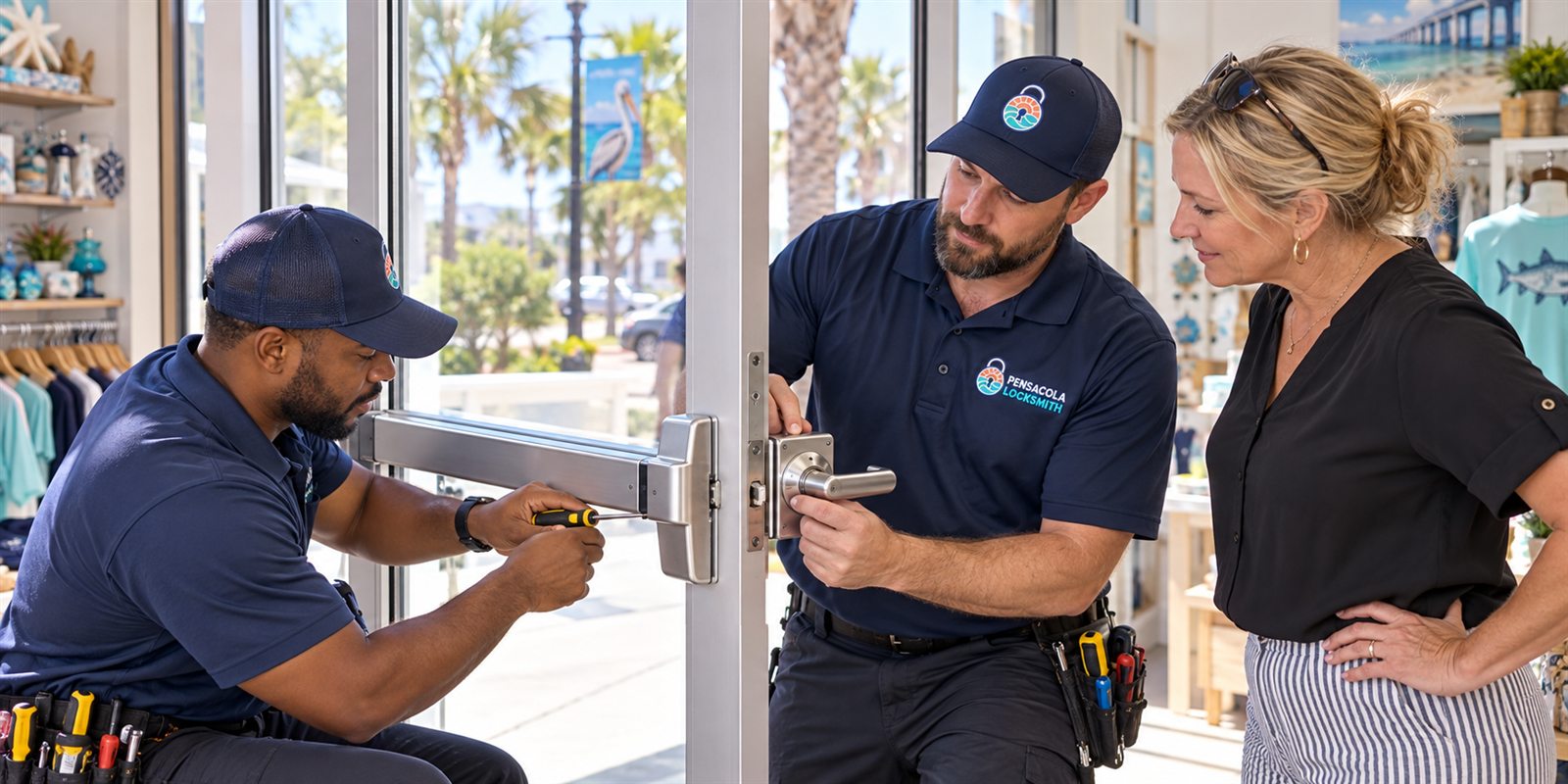
Work on fixed hardware is also mobile territory. Rekeying a front door, installing a deadbolt, replacing a lock set, repairing a strike plate, fitting a keypad or adjusting a sticking door all happen on site. The door cannot be carried to a shop, and the technician needs to see the door and frame in place to do the job properly.
Automotive key work often falls here too. Making a key for a car that cannot be driven, extracting a broken key from a door or ignition, and programming a transponder key can be done at the vehicle. The technician needs the car, so bringing the equipment to it makes sense. Business visits for gates, cabinets, offices and storage rooms also suit mobile service.
- Lockouts at a home, vehicle or business
- Rekeying and lock replacement on installed doors
- Automotive key cutting, programming and extraction
- Gate, cabinet and office lock repair
Jobs that suit a shop
Simple key duplication is a classic shop task. Bring a key, and a machine cuts a copy at the counter. If your key is an ordinary one and you have time, this is often quick and uncomplicated. Shops also handle some specialty keys, restricted keys that require authorization, and key engraving or ID.
Bench work, such as repairing a lock removed from a door, rebuilding a cylinder, servicing a safe that can be transported, or refurbishing antique hardware, belongs at a shop. These jobs need a clean workspace, specialized tools and sometimes extended time. If the item can be carried in, a shop may be the better place for careful work.
Buying hardware is another shop strength. You can see locks, handle them, compare finishes and ask questions in person. For people who like to look before choosing, that is useful. A shop may also stock unusual parts or older models. Call ahead to confirm what is in stock and whether the type of job you have is handled there.
Convenience, travel and your time
Time is a major difference. Visiting a shop costs travel time and waiting time, and shop hours limit when you can go. If you work during the day, finding the opening hours can be a problem. A mobile service can often arrange around your schedule, though availability varies, so call to confirm availability instead of assuming.
Mobile service saves effort when moving the item is hard. A heavy door, a vehicle, a gate or a building cannot be carried to a counter. Even when moving is possible, it may cost more in time than a service call does. For busy families and businesses, having the work done on site can be the more practical way.
On the other hand, mobile service means the technician must travel, and the travel is part of the cost. Quotes are given by phone. If a job is complicated, a technician visits and the service call charge is explained before dispatch. If you can easily visit a shop and the job is simple, such as a basic key copy, the shop may be the more direct route.
Tools and capability: what each can bring
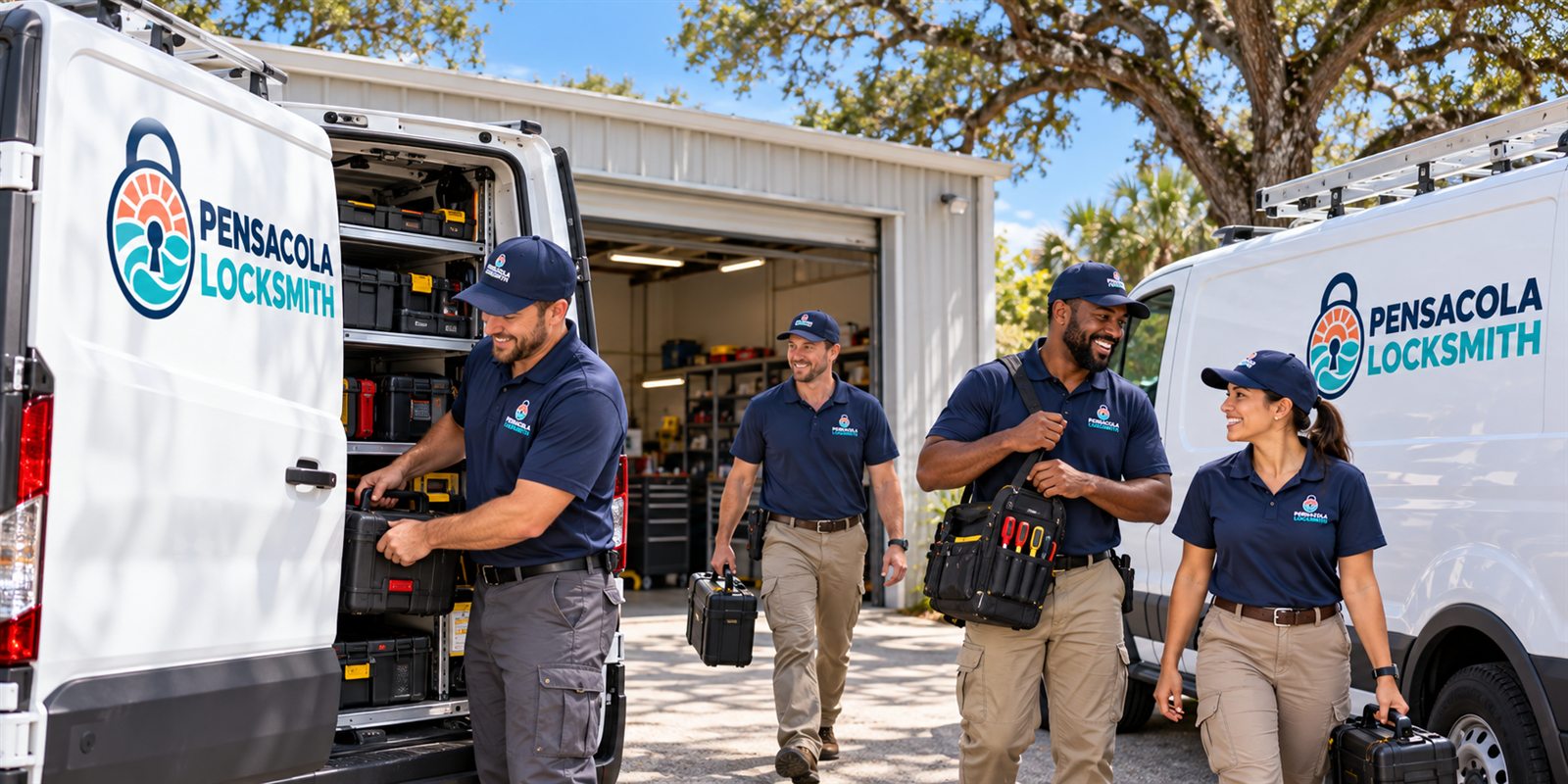
A well equipped mobile locksmith carries a wide range: lock picks and opening tools, key cutting machines or code cutters, programming devices for vehicle transponders, drills, hardware, common parts and basic door repair supplies. The vehicle is a workshop on wheels. The limit is space, so very large or unusual items may not be available on every call.
A shop has more room. It can hold large inventories, heavier machines and a wider selection of blanks and parts. It can leave a job on the bench while it waits for a part. Complex repairs, safe work and unusual keys may be easier here. If the shop is part of a larger operation, it may also offer extra services.
Skill matters more than either setting. A skilled technician in a van can do a great deal, and an unskilled one in a shop cannot. Ask about experience with your specific job type, such as your vehicle brand or your lock model. Listen for specific, confident answers. If a provider says they cannot do a job, that honesty should be taken as a point in their favor.
Trust, identity and avoiding unreliable providers
Whether mobile or shop, a responsible locksmith asks you to prove ownership or authority before opening, rekeying or programming. They ask for photo identification and something linking you to the property or vehicle. A provider who skips this is not protecting you. It should make you cautious, since the same carelessness could help someone else enter your property.
Be wary of vague advertising and of quotes that change after arrival. A reputable provider gives a clear explanation by phone, and if the job turns out to be more complicated, explains the situation and any added charge before work begins. Ask how the quote works, what is included, and whether there is a separate service call charge. Clear answers are a good sign.
Check basic signs of a real local operation. Do they answer the phone with a name you can understand? Can they describe how the job will be done? Do they speak plainly, without pressure? A hurried, evasive or pushy call is a signal to try someone else. Taking a couple of minutes to ask questions before committing usually saves much more time than it costs.
Emergencies versus planned work
Emergencies, such as being locked out at night, a broken key in a door or a lock that fails during a storm, call for a provider who can come to you. A mobile locksmith is built for this. Availability depends on the time and demand, so call to confirm availability and describe your situation clearly. Have identification ready and be prepared to show proof of ownership.
Planned work gives you more choices. If you are replacing locks before a move, copying keys, upgrading hardware or preparing a rental, you can compare options, visit a shop to see products, and schedule a mobile visit for installation. Planning also allows you to gather the documents and information that speed up the job.
In a coastal region, plan for seasonal events. Before hurricane season or before a long trip, check locks and spare keys. Making a spare key or fixing a sticky lock is far easier on a calm day than during a rush. A provider is more able to give you time and attention when you are not in a crisis, and you will make better decisions.
Questions to ask before you choose
Start with whether they can do your job and where. Do they come to you, or do you bring the item in? What is needed from you, such as documents, a vehicle or a key? How will the price be set, and is there a service call charge? Is there anything about my vehicle or lock that makes the job unusual?
Ask about the process too. Will the technician test everything before leaving? Will the old keys be disabled after a rekey? What are your options if the first approach does not work? A provider who has clear, honest answers is likelier to do a careful job. If answers are vague or inconsistent, trust your instincts and keep looking.
Finally, think about the relationship. A locksmith you trust is a useful contact to have before you need one. Saving a number and knowing what they do saves time in a crisis. Whether you pick a shop, a mobile service or a provider that offers both, choose one that explains clearly, treats ownership checks seriously and does not make promises it cannot keep.
Putting it together
For lockouts, installed hardware, vehicle keys and business visits, mobile service is usually the practical choice. For simple key copies, bench repairs and browsing hardware, a shop can be handy. For many people, the best answer is a provider who can do either, or who tells you honestly which suits the job. The goal is the right help at the right place.
If you are unsure, describe the problem by phone. A knowledgeable person can tell within a few minutes whether the job can be done on site, whether you need to bring something in, or whether a dealer or another specialist is the right call. This short conversation prevents wasted trips and mismatched expectations.
We serve Pensacola and Escambia County as a mobile locksmith, coming to the home, vehicle or business. Call us to describe your situation and confirm availability. We will tell you plainly whether mobile service fits your job, how the quote works, and what we need from you, including proof that you own the property or have authority over it.
What happens on a typical mobile visit
A mobile visit follows a pattern. You call, describe the problem and location, and hear how the work and the quote will go. If the job is simple, the quote is given by phone. If it is complicated, a technician visits and the service call charge is explained before dispatch. On arrival, the technician confirms who you are and your connection to the property or vehicle before touching anything.
Then comes the work itself. For a lockout, the technician chooses the least damaging method for your door or vehicle. For a lock replacement, the old hardware comes off, the door and strike are checked, and the new lock is fitted and tested. For a car key, the technician cuts, programs and tests every function. Each step should be explained as it happens, and questions are welcome.
At the end, the technician tests everything with you present, hands over keys or codes, explains what was done and tells you what to watch for. You receive clear information about what was charged and why. If anything needs follow up, such as a worn door frame or a lock that is near the end of its life, an honest technician says so without pressure.
Local context: coastal conditions and seasonal demand
Pensacola is a place where humidity, salt air and storms shape how locks age. Exterior hardware near the bay and the beaches corrodes faster, doors swell in wet months and gates stiffen. A technician who works across the area sees these patterns daily and can recommend hardware suited to the local weather, instead of the generic choice that fails in two summers.
The area also has a mix of housing: older homes with original hardware, newer builds, beach rentals, apartments near the university and college, and households connected to the naval air station. Each brings different lock types and different needs. Rentals need turnover rekeying, older homes may need careful work on unusual hardware, and commuters need reliable vehicle keys.
Demand is seasonal as well. Tourism, storms and move-in periods can all affect how busy providers are. That is one more reason to call and confirm availability and to handle planned work ahead of the rush. If you manage a rental, schedule lock checks before peak season, and keep spare keys organized so a lockout does not become a crisis.
When a mobile locksmith cannot help and what to do then
No provider can do everything. Some vehicles need dealer authorization for keys. Some high security safes and vaults require specialized firms. Some damaged doors need a carpenter before a lock can work. An honest mobile locksmith tells you when a job is beyond what can be done on site, and points you toward the right next step.
If a locksmith says your job needs another kind of help, ask why and what the alternatives are. A clear explanation, such as a vehicle that needs manufacturer data or a frame that needs repair, shows real expertise. Vague refusals or sudden changes in the story deserve a second opinion from another provider, which is perfectly reasonable.
Keep in mind that a quick phone conversation usually reveals this before a visit is needed. Describe the make and model, the symptoms and what you have tried. The more precise the description, the more accurate the answer. This saves you the cost and time of a visit that cannot solve the problem, and lets you start down the right path immediately.
Common questions
Is a mobile locksmith more expensive than a shop?
It depends on the job. Mobile service includes travel, so a service call charge may apply, while a simple key copy at a shop can be straightforward. Quotes are given by phone, and the service call charge is explained before dispatch if a visit is needed.
Can a mobile locksmith make car keys on site?
For many vehicles, yes. The technician brings cutting and programming equipment to the car after verifying ownership. Some vehicles need manufacturer involvement, and a good locksmith will say so honestly. Call us with the vehicle details.
What should I have ready when I call?
Describe the problem, the location, and the vehicle or lock type. Have photo identification and something showing you own the property or vehicle, such as a lease, registration or utility bill. The technician checks this before opening, rekeying or programming.
Can I bring a lock to a shop instead?
For lock repair or a key copy, that can work well. For anything installed on a door or in a vehicle, mobile service is usually easier. A phone call will clear up which route suits your job, and whether availability allows it.
How do I know a locksmith is trustworthy?
Look for clear explanations, a quote given by phone, a request for proof of ownership, and no pressure. Be wary of vague answers or prices that change on arrival. Honest providers also tell you when a job is outside what they can do.