
Content note: this page was written by Claude (AI) for Pensacola Locksmith.
Stay calm before you leave the lot
The first few minutes after you notice missing keys matter more than most people expect. Resist the urge to retrace your steps in a panic. Stop where you are, put down anything you are carrying, and check every pocket twice, including the small coin pocket on jeans and the inside pockets of a jacket. Check your bag, the bottom of a purse, and any folded blanket or stadium seat cushion you brought along. Keys hide in the strangest places when you have been standing, dancing, or climbing bleacher steps for hours.
Next, look at the car itself before assuming the worst. Walk around it slowly and look through each window with a phone flashlight. Keys are often sitting on a seat, in a cup holder, or still in the ignition of a vehicle that was left unlocked. If you can see them inside, you have a lockout rather than a lost key, and that is a much easier problem to solve. A locksmith can open most vehicles without damage, so there is no reason to force anything.
Finally, tell the person you came with what you are doing. A second set of eyes helps, and a friend can hold a light while you check the ground. If you are alone, move to a well lit spot near the lot entrance or a staffed gate, because standing in a dark corner of a parking area for a long time is not wise. Safety comes before the keys, and the keys can always be dealt with in daylight if the situation feels uncomfortable.
Where keys tend to end up at big events
Events create a particular pattern of lost keys. People arrive early, tailgate, walk long distances, sit in tight rows, and stand in crowds where a pocket can be bumped and emptied without anyone noticing. Keys slip out when you sit down in a stadium seat or lean over a railing. They fall when you pull out a phone or a ticket. A lanyard that was looped around a wrist at the gate may be gone by the time the encore ends. Knowing these habits helps you think about where to look.
Start with the places closest to the moment you last remember having them. If you paid for parking, did you pull keys out at the booth? If you bought food, did you set them on a counter? Check the area around your seat, the ground near the entrance gate, and the path you walked. Event venues usually have a guest services desk or a security office where found items are turned in, and staff there can tell you whether anything was handed over. Ask politely and describe the key fob or key ring in detail.
Weather plays a role along the Gulf Coast, too. A summer evening shower or heavy humidity can make pockets damp and slippery, and sandy ground near a beach event can swallow a small key ring. If your event was outdoors near the water, take a moment to sweep the ground with a light and look for the glint of metal. If you still cannot find them after a careful, calm search, it is time to stop searching and start planning how to get home safely.
- Check every pocket, bag, and jacket twice
- Look through the car windows with a flashlight
- Ask the guest services desk or security office about found items
- Retrace the path from the gate to your seat
- Ask your companions to check their own pockets and bags
Locked out versus truly lost
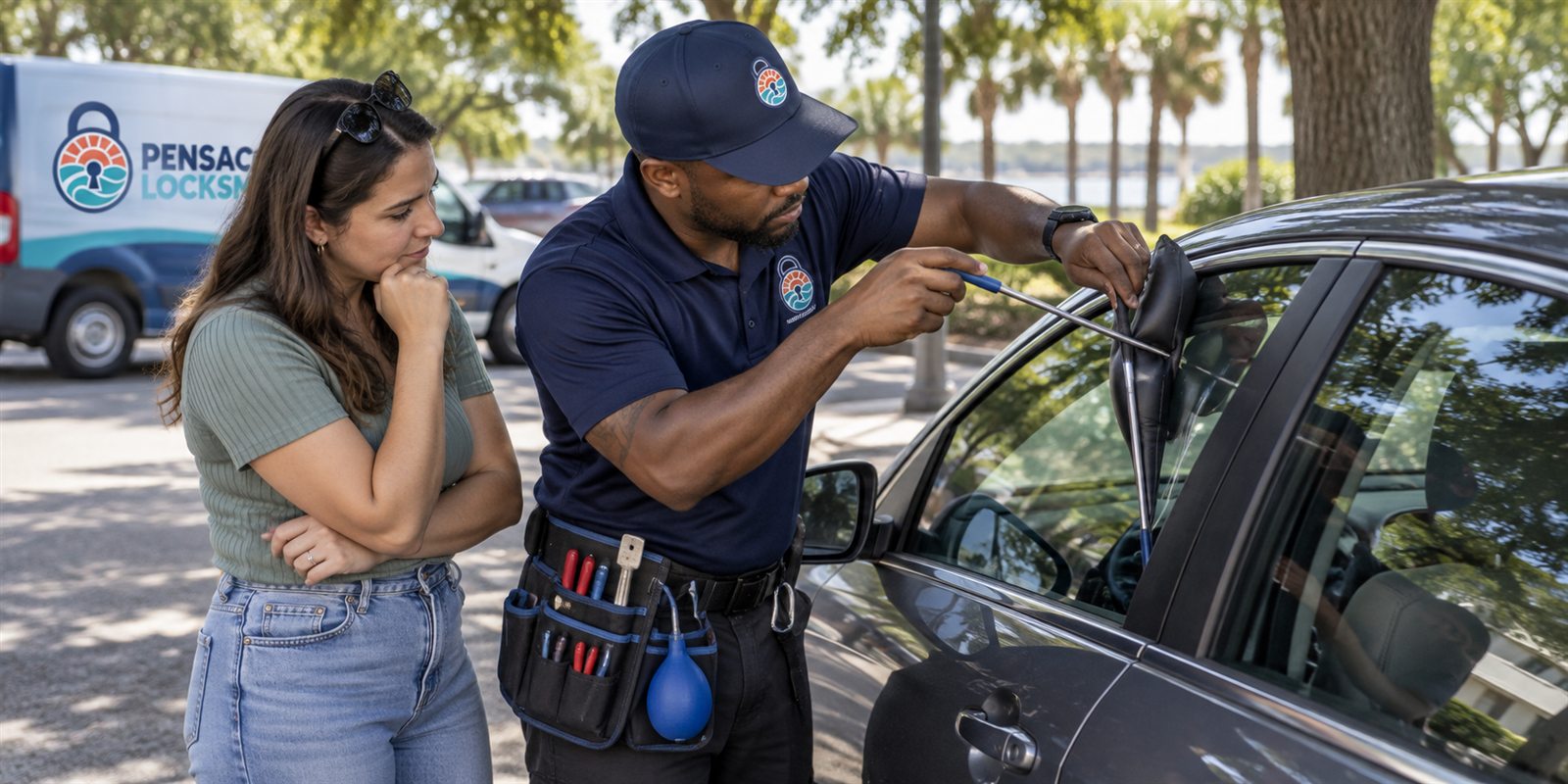
There are two different situations hiding under the phrase lost keys, and a locksmith treats them very differently. In a lockout, the keys exist and you know where they are, usually inside the vehicle. The solution is to open the door without damaging the car, and that is typically a quick job for a technician with the right tools. Nothing needs to be cut or programmed, and you drive away with the keys you already own.
In a truly lost key situation, the key is somewhere you cannot recover it. That changes the plan. If the car has an older mechanical ignition, a locksmith can often cut a new key from the lock itself, using the vehicle identification number and the ownership paperwork to work out the correct cut. If the car uses a transponder chip or a smart fob, the new key must also be programmed so the car recognizes it. That is more involved but is still routine for a mobile technician who carries the equipment.
It also matters whether anyone else could now be holding your key. If the keys fell out in a crowd, a stranger might find them, and if the key ring includes a house key or a tag with your address, you have a larger concern than the car. Think honestly about whether the keys can be traced to you. If they can, the safer path later on is to replace or rekey the locks that those keys operated, even if the car problem is solved tonight.
What a mobile locksmith needs to know when you call
When you call, have a few details ready so the conversation is short and useful. Tell the locksmith exactly where you are, including the lot name, the nearest gate or landmark, and which row or section you parked in. Large lots can be confusing at night, and clear directions save time. Describe the vehicle by make, model, and color, and say whether you remember if it uses a metal key, a key with a plastic head, a push button start, or a card style fob.
Be honest about what you know. If you are not sure whether the keys are locked inside or lost entirely, say so. The technician will ask a few questions to decide what to bring. Quotes are given by phone, and if the job turns out to be complicated, a technician visits and the service call charge is explained before dispatch, so you are never surprised by what happens next. Please call to confirm availability, since evenings after big events can be busy for anyone in this trade.
Keep the vehicle registration or proof of ownership within reach if you can, although it may be inside the car. The locksmith will check ownership or authority before opening the vehicle or making a key, and that is a protective step for you, not an obstacle. If your paperwork is locked inside, other proof such as a photo identification matching the registered owner, or a message from the owner confirming you have permission, can sometimes be discussed with the technician by phone.
Why ownership checks matter more at night
A locksmith who opens cars in a parking lot at night has to be careful, because the same service that helps you could also help a thief. For that reason a responsible technician checks that the person asking for help is the owner or someone with real authority over the vehicle. This usually means looking at photo identification and comparing it with the registration or the title, or matching the name to the vehicle's records.
It can feel awkward to be asked for papers when you are tired and just want to go home. Try to see it from the other side. If someone claimed to own a car that was not theirs and the locksmith opened it without checking, the real owner would be the one who suffered. The check is the same one you would want applied if someone tried to open your car in a lot while you were away from it.
If you cannot show proof right away, do not take it personally. There are practical options. A family member can bring documents, or you can retrieve a spare key from home if someone can deliver it. Some people simply wait until morning to sort things out calmly. A good locksmith will tell you plainly what is needed and will not pressure you into a quick decision, because an unrushed job is a safer job for everyone involved.
Key types and what each one means for your night
The kind of key your vehicle uses shapes how the evening goes. A traditional all metal key is the simplest case, since it can be cut to match the lock without any electronics. Many vehicles also use a key with a plastic head that contains a small transponder chip. The chip talks to the car when the key is turned, and without a matching chip the engine will not start even if the metal part turns the ignition cylinder.
Newer vehicles often use a smart fob, which lets you start the engine with a button while the fob stays in your pocket. These are convenient but more complex when one is lost. The replacement must be programmed to the car, and in some cases the older fobs must be cleared so a lost one cannot be used. A mobile locksmith with the proper equipment can do this at the scene, though the specifics depend on the vehicle, so describing it clearly on the phone helps a great deal.
Some vehicles require special software access or a security code that only certain tools can read. That does not mean the job is impossible. It simply means the technician needs to know the vehicle category before arriving so the right equipment comes along. If the job proves complicated, a technician visits and the service call charge is explained before dispatch. Whatever your key type, the earlier you share details, the less time you spend waiting in the lot.
Practical options when you cannot get a new key tonight
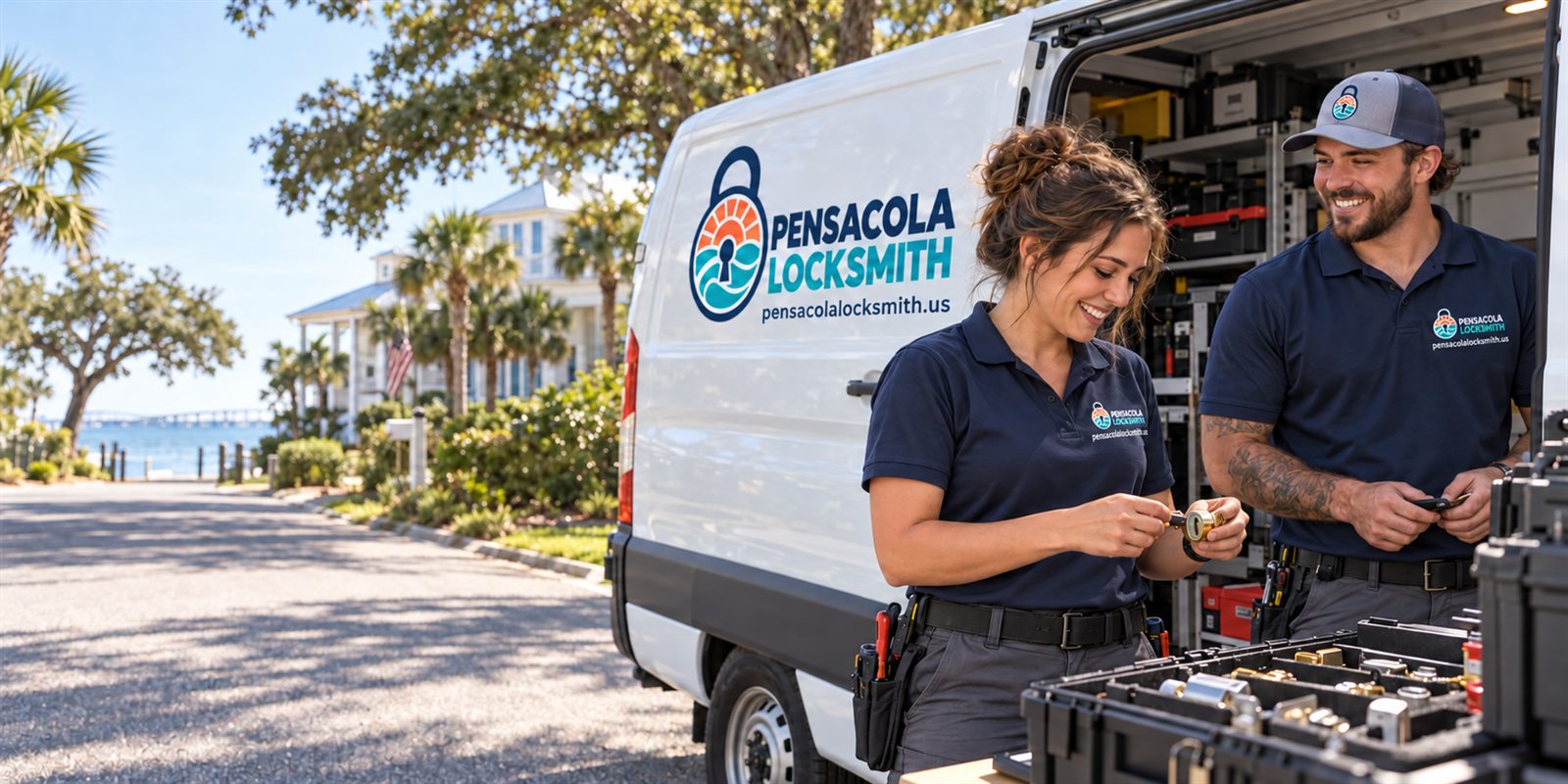
Sometimes the best answer is to go home and fix the car later. If your vehicle is parked in a monitored lot or a public garage, ask the venue whether overnight parking is allowed and what the rules are. Some lots clear out after an event, and a car left alone may be ticketed or towed. Confirm the policy with staff before you leave so you are not hit with a second problem on top of the first.
If you have a spare key at home, a trusted friend or family member can bring it, which is often the simplest fix. Make sure that person can reach you and knows exactly where the car is parked. If you use a rideshare or taxi to get home, take a photo of the car and its location, plus the nearest signs or gate numbers, so you can return without hunting around the lot.
Whichever route you choose, think about your house and any other locks that share a ring with the missing key. If there is any chance the key is in someone else's hands, a locksmith can rekey the affected locks so the old key no longer works. This is usually a straightforward job and is often wiser than waiting and hoping nobody finds the ring. Call us to talk through the options, and we will help you decide what makes sense.
Protecting yourself from the next lost key
Once the stress has passed, spend a few minutes on prevention. The most reliable habit is to keep your car key separate from your house key when you go to an event. If you only carry the vehicle key and leave the rest at home, a loss is much less dangerous. Consider a small zippered pocket inside a bag or jacket for keys, rather than a loose pants pocket that empties itself when you sit down.
A spare key is the simplest protection in the lock trade, in the sense of effort rather than anything else. Make a spare while you still have a working original, because duplicating a key is much easier than creating one from nothing. Keep the spare somewhere safe at home, not hidden under the bumper or in a magnetic box on the car, since thieves know those tricks very well.
Think about a tracker tag that attaches to your key ring. These small devices can help you find keys that fall in a lot or a stadium, and they can reduce the number of nights spent in a parking area. They are not a substitute for a spare key, but they are a helpful extra layer. Pair both with a habit of checking your pockets before leaving your seat, and you will rarely repeat this experience.
Local factors that shape event nights around Pensacola
Pensacola hosts many gatherings, from outdoor concerts and festivals to ball games and beach events, and the area's geography affects lost key situations. Salt air and humidity are hard on pockets, lanyards, and electronics, so key fobs can wear faster here than in drier places. A fob that has gotten damp too many times may start to act up, which is another reason to keep a working spare nearby.
Tourism adds another layer. Visitors in town for a weekend often rent cars or arrive in vehicles they do not know well, and a lost key on a rental creates extra steps, since the rental company has its own rules about replacements. If you are in that position, contact the rental provider first, then call us if you need help opening the vehicle or if they authorize a replacement through a locksmith.
Parking near busy waterfront and downtown event spaces can fill up quickly, and the walk back to the car can be long. Plan for that by noting your parking location before you head in. Take a photo of the nearest sign or marker. If you do end up locked out or without keys, call to confirm availability and share your location clearly. A local mobile locksmith knows the common lots and approaches, and that makes finding you easier and quicker in practice.
Common questions
Can a locksmith make a new car key if I lost every key I had?
In most cases, yes. A mobile locksmith can cut a key from the lock or the vehicle information and, if your car uses a chip or smart fob, program it so the car accepts it. The technician will check ownership or authority first. Quotes are given by phone, so call us with your vehicle details and we will explain what is involved.
What if my keys are locked inside the car at a crowded lot?
That is a lockout, and it is usually simpler than a lost key. A technician can open most vehicles without damage. Give your exact location, the vehicle make and color, and be ready to show proof that the car is yours. Please call to confirm availability, especially on busy event nights.
Should I rekey my house if I lost keys at an event?
If your house key was on the same ring and there is a chance someone could trace the ring to your address, rekeying is a sensible precaution. It makes the lost key useless without replacing the hardware. If you are unsure, call us and describe what was on the ring, and we can talk it through.
Do I need my registration to get a new key made?
A locksmith needs to confirm that you own the vehicle or have authority over it. Registration, a title, or matching photo identification all help. If your paperwork is locked inside the car, other proof can sometimes be discussed by phone. The technician will tell you plainly what is acceptable before beginning any work.
Is it safe to wait in the lot for a locksmith?
Choose a well lit spot near a staffed gate or the entrance, and stay with a friend if you can. Share your location clearly when you call. If the lot feels unsafe or empty, consider heading home and handling the car in daylight. Your safety matters more than getting the car started tonight.