
Content note: this page was written by Claude (AI) for Pensacola Locksmith.
Start by working out where the problem lives
A lock that will not turn can have three very different sources. The first is the key, which may be worn, bent or a poor copy. The second is the lock mechanism, where pins, springs and the plug may be dirty, worn or damaged. The third is the door itself, where the latch or bolt is pressing against the frame and refusing to move.
You can narrow it down with simple observations. Does the key go in fully and smoothly? Does it turn a little and stop, or does it not turn at all? Does the problem happen on every door in the house, or just this one? Does it happen only when the door is closed, or also when the door is open?
The last question is the most revealing. If the lock turns freely when the door is open but sticks when it is closed, the problem is almost certainly alignment between the bolt and the strike. If it sticks even with the door open, look at the key and the cylinder instead. Telling the technician what you noticed saves time and often points straight at the fix.
The key itself is a frequent suspect
Keys wear out. Each time a key slides in and out, it rubs against the pins, and over the years the ridges soften. A worn key may still lift some pins to the right height but not all of them, so the plug refuses to turn. If your key worked a year ago and works poorly now, the key is a good first suspect.
Copies are often a problem too. A key cut on a machine that is slightly out of calibration, or cut from an already worn copy, can be off by a tiny amount. That tiny amount is enough to leave one pin a hair too high or too low. Try your original key, or a spare, in the same lock. If another key works smoothly, the answer is clear.
Look closely at the key under good light. A bend along the blade, a rounded tip or a bright polished area where the edges have worn away all tell the story. Do not bend it back by hand, since the metal will likely crack. A new key cut properly from the lock's own information is the better fix.
Worn or sticking pins inside the lock
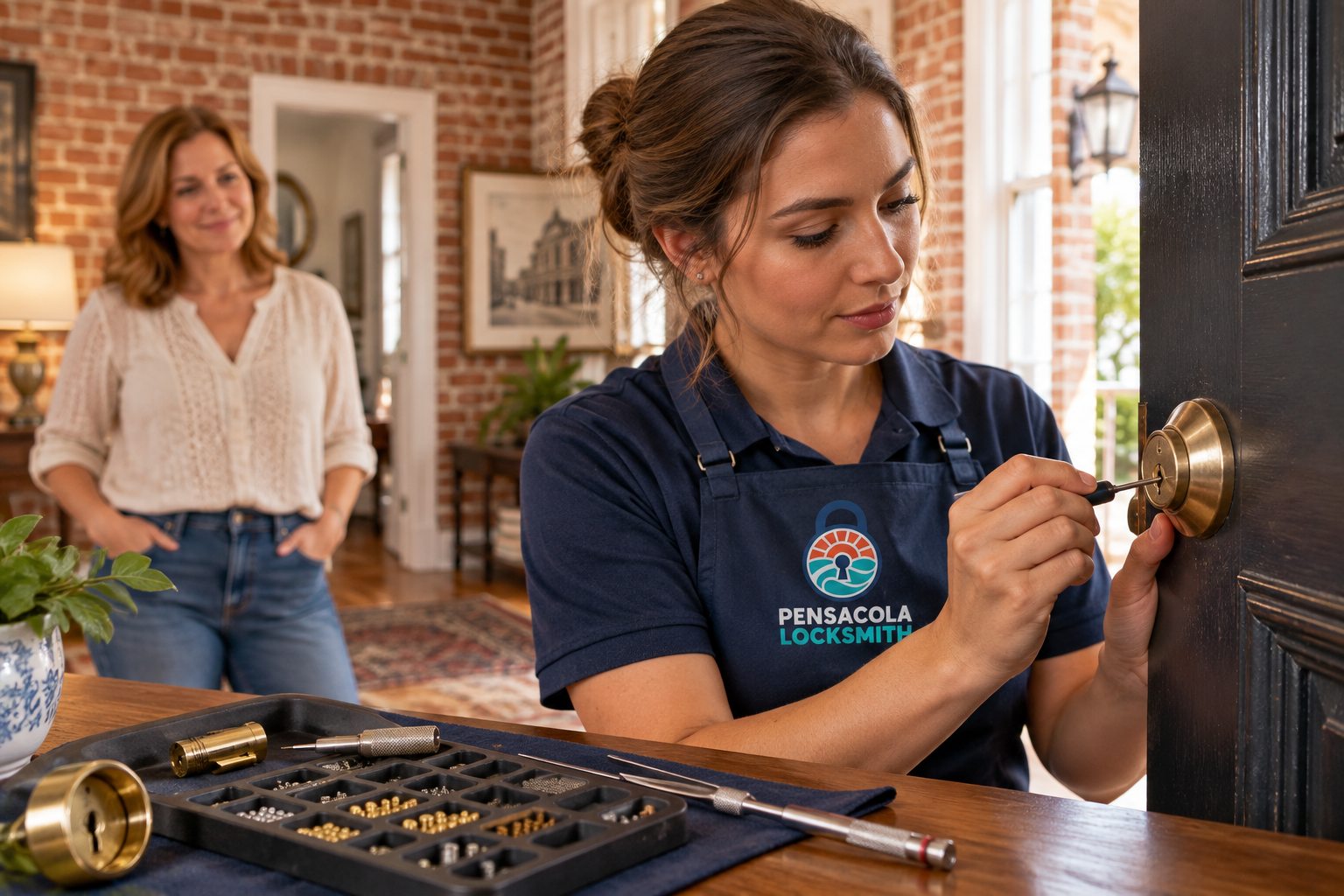
Inside a standard cylinder, a row of small pins sits in chambers, pressed down by springs. When the correct key is inserted, each pin is lifted to exactly the height where the gap between its parts lines up with the edge of the plug. Only then can the plug rotate. If any pin sticks, wears or breaks, the plug stays locked.
Pins can stick for several reasons. Dust and lint get into the chambers and mix with old lubricant to make a gummy film. Tiny bits of corrosion build up in damp climates. Springs can weaken and fail to push pins back down after the key is removed. Any of these can leave one pin out of position when the key goes in.
A technician diagnoses this by feel. They insert a key, apply light turning pressure, and watch how the plug moves. They may remove the cylinder to clean and re-pin it. If the pins are badly worn, replacing the cylinder is often more sensible than repeated repairs. Locks that serve a busy door for many years often need this.
When the door and frame are fighting the bolt
Doors move. Wood swells with humidity and shrinks when the air dries out. Hinges loosen with use. Frames shift as a house settles. When the door sags even slightly, the bolt no longer lines up with the hole in the strike plate, and it presses against the metal instead of sliding in. The key still turns the cylinder, but the bolt will not move.
A common test is to open the door and turn the key. If the bolt extends and retracts freely with the door open, the lock mechanism is working and the door is the issue. Another test is to push or pull the door toward its closed position while turning the key. If the key suddenly turns, you have found the binding.
Fixes depend on how bad the shift is. Tightening hinge screws can lift a sagging door. Adjusting or repositioning the strike plate may line things back up. In some cases, the hole in the frame needs to be enlarged slightly. These are carpentry tasks as much as lock tasks, and a locksmith will often handle them when the lock is the reason for the visit.
Frozen parts, salt and the coastal effect
People often assume that frozen locks are only a northern problem, and in Pensacola true ice is rare. But the idea of a lock being frozen in place has a coastal cousin: corrosion. Salt-laden air and constant humidity turn small amounts of moisture inside a lock into rust, and rust locks moving parts together as stubbornly as ice does.
The signs are gritty turning, reddish or greenish residue on the key, and a lock that is stiffer in the morning than at night. Outdoor locks on gates, sheds and rear doors are the first to show it. Brass parts resist corrosion better than steel, but pins and springs inside the cylinder are often steel and can rust over time.
What helps is regular, light maintenance. A small amount of dry lubricant designed for locks, applied sparingly, can restore movement. Heavy oils and general-purpose sprays can attract grime and make things worse. If the lock is already seized, a technician can clean it, replace the parts that have corroded, or replace the cylinder altogether.
Simple checks you can safely try
Before calling anyone, a few gentle checks are reasonable. First, try the key several times, lifting or pressing the door slightly while turning. If the door is under pressure from the frame, relieving that pressure may let the bolt move. Do this without force. If the key does not turn with light pressure, stop.
Second, make sure you are using the right key. It sounds silly, but many households hold several similar keys, and the wrong one will go in part way and refuse to turn. Third, check the thumb turn or the knob on the inside, if the door has one. A mechanism that is half engaged can block the cylinder from outside.
Do not use pliers on the key, do not hammer it, and do not pour oil into the lock. If the key will not turn with gentle pressure, it will not turn with strong pressure either, and strong pressure is how keys snap inside locks. A snapped key turns a simple problem into a longer one, so be patient and call for help.
- Try a spare key if you have one
- Lift or press the door slightly while turning
- Check that the inside thumb turn is fully released
- Stop if you feel any hard resistance
What a technician checks during the visit
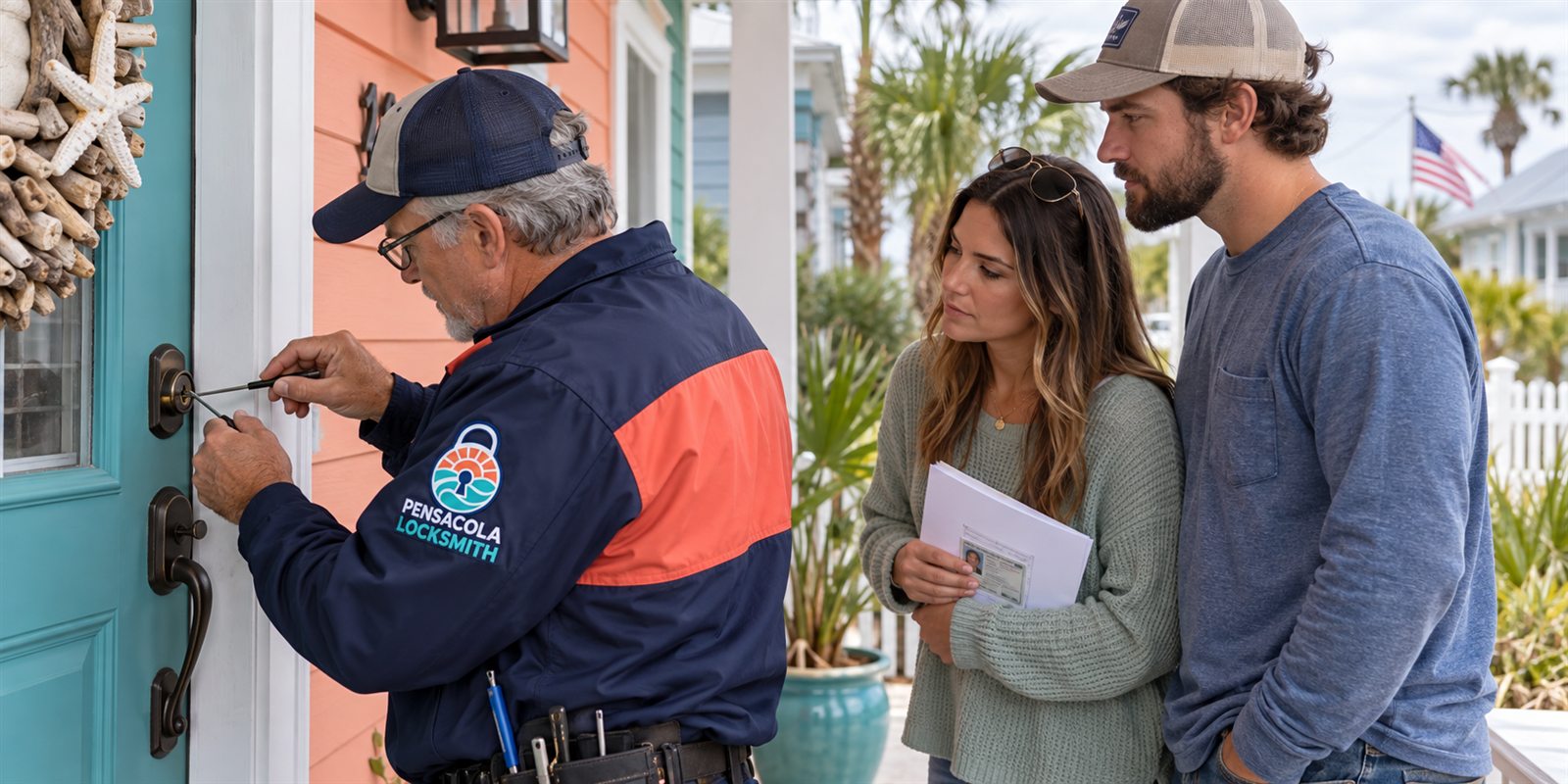
The technician begins with questions, then with the door. They will watch how the key enters, check for bends or wear, and test the key in the lock under light pressure. They will operate the lock with the door open to see whether the mechanism moves freely, and then close the door to check alignment of the bolt and strike.
If the cylinder is the problem, the technician may remove it and inspect the pins, springs and plug. They check for debris, corrosion and wear, clean what can be cleaned, and replace what has failed. They also check that the cam or tailpiece at the back of the cylinder engages the bolt correctly, since a damaged tailpiece can make the key turn without moving the bolt.
If the door is the problem, the technician checks hinges, strike plate, and the position of the latch. They may adjust the strike, tighten or shim hinges, or recommend carpentry work if the frame has moved significantly. Throughout, the goal is to find the actual cause, not simply to replace parts until something works.
Repair or replace: how the decision is made
Not every lock deserves rescue. A lock in good overall condition with one worn pin is a reasonable repair. A lock with a corroded body, damaged plug, or many worn components is a candidate for replacement. The age of the lock, the quality of the hardware, and how the lock is used all matter to the decision.
Security also plays a role. An older lock that has been rekeyed or repaired repeatedly may not give you the level of protection you want. If you are already paying for a visit, upgrading to a better-quality deadbolt or a more pick-resistant cylinder can be sensible. The technician will explain options without pressure and let you decide.
Some people prefer to match all the locks on a property to one key. If the lock needs replacement anyway, it can be keyed to match your other doors, which means one less key on the ring. Quotes are given by phone after we know the lock type, and if the job is complicated, a technician visits and the service call charge is explained before dispatch.
Rental homes, older houses and shared doors
Pensacola has many older homes with original hardware, plus a steady stream of rentals and vacation properties. Historic doors can be thick, heavy and slightly out of square, and their locks may be mortise style rather than the common bored deadbolt. These locks are repairable, but they need a technician who understands the older design.
Rental properties add another layer. Doors are used by many hands, and keys are copied and recopied. Locks in these properties often wear faster and are often rekeyed between guests or tenants. A lock that stiffens in a rental should be looked at promptly, since a guest locked out of a vacation stay is a bad experience.
If you are a tenant, tell the landlord or manager before arranging work, because the lock belongs to the property. Either way, we check ownership or authority before opening, rekeying or changing a lock. That check protects the property owner and the occupant, and it keeps everyone on the right side of the door.
Keeping a lock turning smoothly
Good habits go a long way. Use the key gently and avoid leaning on it. Keep a spare key in good condition and swap it into use now and then, so you notice early if one key is wearing faster than the other. Replace keys that look rounded or bent before they fail at the worst moment.
Maintain the lock lightly. A short puff of dry lock lubricant once or twice a year is usually enough in our climate, and wiping the key clean before inserting it keeps debris out of the cylinder. Avoid household oils. If you rinse down a porch or entry with a hose, avoid aiming water directly at the lock.
Check the door too. Open it and look at how it hangs. If it rubs, drags or leaves a gap at the top corner, correct the hinges before they put extra stress on the lock. A small adjustment now prevents a stuck bolt later. If anything feels wrong, call, describe what happens, and confirm availability for a visit.
When to call right away
Some situations should not wait. If the lock will not turn and the door is currently unlocked, your property is open and you should arrange for security as soon as possible. If the lock will not turn and the door is locked, you may be unable to enter your home or business, and an unsafe wait is not worth it.
If you hear a snap, feel the key give way, or see a piece of the key missing, stop immediately and tell the technician. If the lock has been forced or damaged by an attempted break-in, consider contacting the police first, and keep the area as it is until they have seen it. A locksmith can then secure the door afterward.
For ordinary stiff locks that still work, you have time. Book a visit when it suits you, and tell us what you have tried. The more detail you offer, the more accurately we can prepare. Please call to confirm availability, describe the door and the lock, and we will explain the next steps in plain language.
Different doors, different reasons
Front doors, back doors and patio doors do not fail in the same ways. A front door usually carries a deadbolt plus a knob or handle set, and either can be the one that will not turn. Be sure to note which one is stiff, since the fixes differ. A sliding patio door has a hook latch that behaves quite differently from a cylinder deadbolt.
Garage entry doors and side doors often see the most abuse. They are used with arms full of groceries or gear, slammed shut, and exposed to rain blowing in from the Gulf. Their locks tend to be the cheaper ones on a property, and they tend to wear sooner. If one of them sticks, check the weatherstripping and the threshold too.
Interior locks, such as a bedroom or an office, rarely face the same wear, but they fail when a latch spring weakens or a screw backs out. These are usually inexpensive repairs. Describe the door, say whether it is inside or outside, and note when the problem began. That detail helps the technician bring the right parts on the first visit.
Common questions
Why does my key go in but not turn?
The usual reasons are a worn or poorly cut key, dirty or sticking pins inside the lock, or a door that has shifted so the bolt presses on the frame. Trying a spare key and testing the lock with the door open helps separate these causes. Tell us what you notice when you call and we will advise what to expect.
Is it safe to force the key a little harder?
No. Extra force is the most common reason keys snap inside a lock. If light pressure does not turn it, stop. Lifting or pressing the door slightly while turning is fine, but anything that feels hard should be left for a technician. A broken key makes a simple problem longer to fix.
Could humidity and salt air be the cause?
Yes. Coastal air can corrode small steel parts inside a lock, and swollen wood can push a door out of alignment. Both lead to sticking. Light dry lubricant, careful cleaning and checking the door fit can help. If the parts are already corroded, they may need to be replaced.
Will you need to prove I own the place?
We check ownership or authority before opening, rekeying or replacing a lock. A lease, bill, registration or the owner's confirmation can work. If you rent, tell us who the owner is. This protects the property and the people who live or work there.
How are quotes and availability handled?
Call us, describe the lock and what happens, and we give a quote by phone. If the job is complicated, a technician visits and the service call charge is explained before dispatch. Please call to confirm availability for the day and time you need.