
Content note: this page was written by Claude (AI) for Pensacola Locksmith.
How the two options actually differ
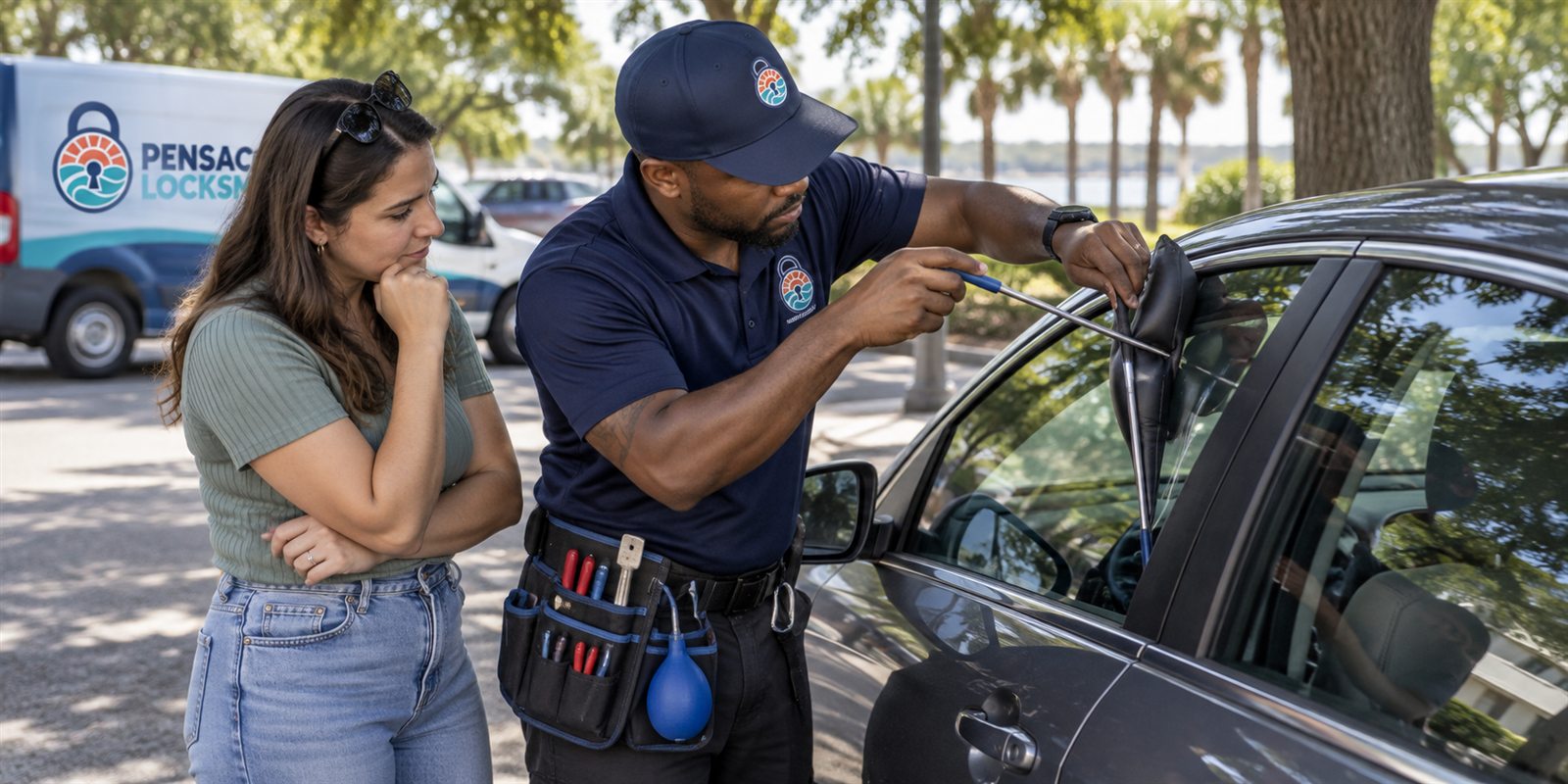
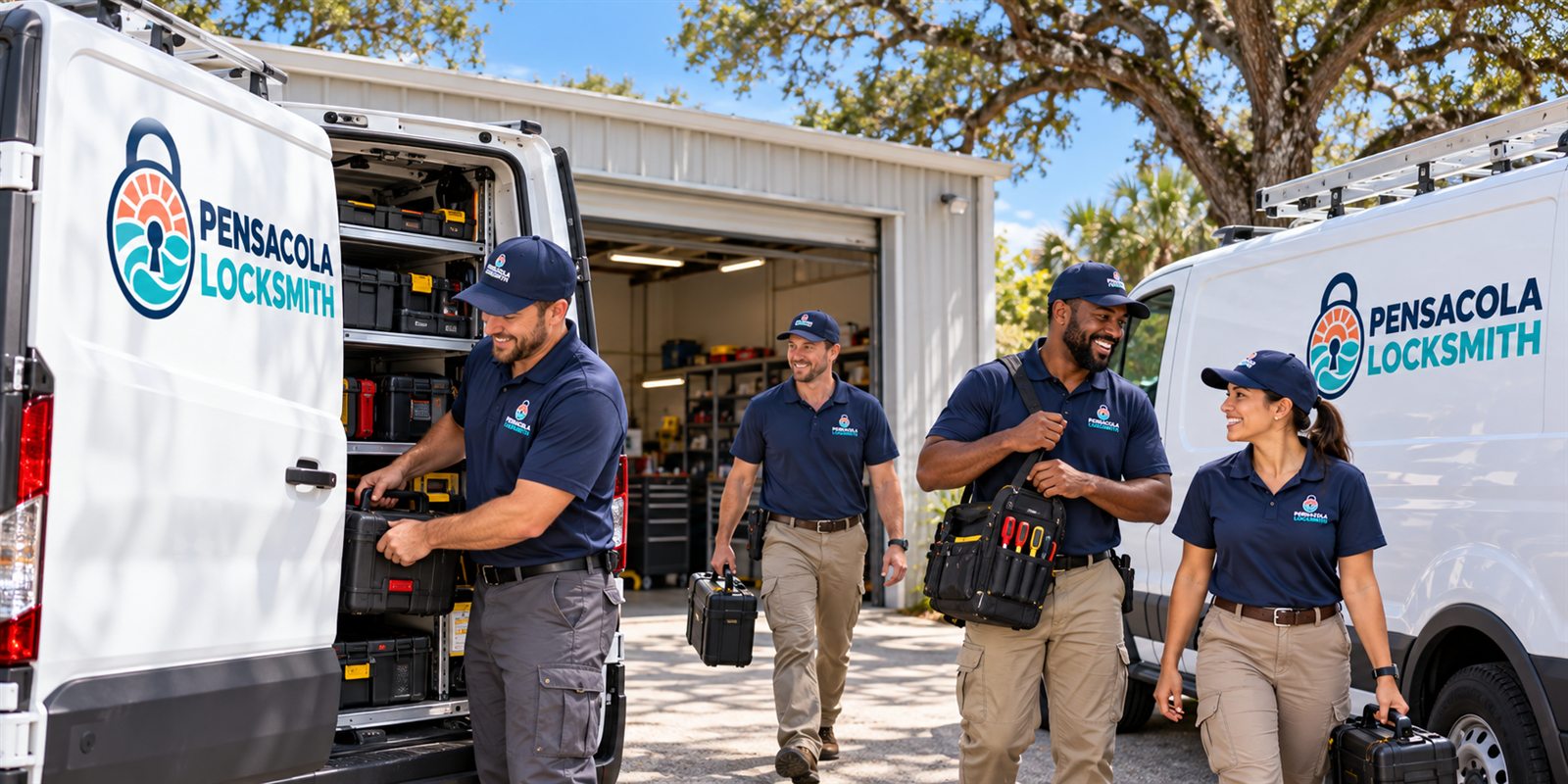
A dealer is tied to one vehicle brand. It has access to the manufacturer's systems, parts and key data for that brand, and it normally works from a service department with appointments. A locksmith is not tied to a brand and works across many makes with tools made for cutting and programming keys. A mobile locksmith brings that equipment to your vehicle, which matters when the car cannot be driven or you are stranded.
The differences show up in the process more than the outcome. With a dealer, the car often needs to be brought to the lot, sometimes towed, and the work happens when the service department can fit it in. With a mobile locksmith, the work usually happens where the vehicle sits, at a home, a parking lot or a workplace. In both cases, the end result is a working key that starts the car.
Neither choice is automatically superior. The right one depends on the vehicle, the key type, how quickly you need to drive, and whether anything unusual is involved. Some vehicles are simple to handle in the field. Others, especially certain newer or higher security models, may need manufacturer authorization that only a dealer can provide. Knowing which group your vehicle falls into is the first step.
Where a mobile locksmith has the edge
Convenience is the clearest advantage. If you have lost your only key, your car is not going anywhere on its own, and towing to a dealer adds time and effort. A mobile locksmith comes to the vehicle, checks ownership, and makes a key on site. For many common key types, the whole job happens in the driveway or the parking space without moving the car.
Flexibility is the second advantage. A locksmith works with a range of makes, so a household with several different vehicles can use one provider. Locksmiths often handle older keys, standard transponder keys, remotes and many push button systems. They can also repair or replace a broken key, extract a snapped key from an ignition or door, and rekey locks when needed, which a dealer may handle differently.
Communication is the third. A call to a locksmith usually gets a clear explanation of what is needed, and quotes are given by phone. If the job is complicated, a technician visits and the service call charge is explained before dispatch. You can describe the vehicle and key type and learn whether the job is suitable for mobile service. Call us to confirm availability and to talk through the car before you decide.
Where a dealer is the right or only choice
There are real cases in which the dealer is the only option. Some vehicles use security systems where key data and programming authorization are held by the manufacturer and released only to the dealer network. In those cases, an independent shop cannot complete the job no matter how good its equipment is. A locksmith who knows this will tell you plainly instead of attempting something that will fail.
Newer models can also involve encrypted communication between the key and the car, requiring a secure online connection to the manufacturer. Not every locksmith has access to every brand's service, and access can change over time. If a technician says your car needs a dealer, that is useful information, not a sales dodge. It saves you a wasted visit and lets you start the right process sooner.
A dealer may also be the practical choice if the vehicle is still under manufacturer coverage and the key issue is related to a fault in the vehicle itself, such as a failing immobilizer module. A dealer can diagnose the vehicle's electronics and may handle the repair under whatever coverage applies. Ask the dealer what is covered. In ordinary key replacement for a lost or broken key, coverage is rarely the deciding factor, but it is worth asking.
Proof of ownership is required either way
Whoever makes the key, a reputable provider will ask you to prove you own the vehicle or have authority over it. This protects you. A key is access to a valuable asset, and handing one to someone who is not the owner is how thefts happen. Expect to show a photo identification and documents such as a registration or title that match the vehicle.
The vehicle identification number, usually visible through the windshield, is often used to look up key data. A dealer and a locksmith both use it, and both will want to confirm that the identification and registration agree. If you are buying a used car without a title in hand, or if the registration is in someone else's name, sort out the paperwork first. A provider that skips this check is not working responsibly.
Some situations require extra care: a vehicle held by a lender, a company car, a rental, a car belonging to a deceased relative, or a vehicle under dispute. In these cases, bring whatever shows your authority, such as a letter from the owner or estate documents. A locksmith or dealer can tell you what is acceptable. Planning for this before the visit avoids delays and keeps the process honest for everyone.
Time, towing and logistics
Think about the practical side. A dealer visit usually means getting the car to the lot. If you have no working key, that can mean arranging a tow, which adds effort. Dealers also keep business hours and may need to order parts or key blanks, which can stretch the timeline. If the car is your only transport, the delay can be a real burden.
A mobile locksmith reduces some of this friction because the work goes to the car. Still, do not assume that every job is quick. Some keys need to be cut and programmed in several steps, and some vehicles need extra preparation. Call to confirm availability and ask for a realistic description of what the work involves. Be wary of anyone who promises specific arrival times without knowing your location and situation.
In a coastal area with heavy tourism, beach traffic and weather events, logistics can change quickly. During hurricane season, service demand and road conditions may affect both dealers and locksmiths. Having a spare key made before a storm or a trip is a much calmer way to handle the situation. If you are stuck, speak to both options and compare how soon each can realistically do the job.
Understanding cost without guessing at numbers
Cost depends on several factors, and no honest article can name a price that fits every car. Key type is the biggest one: a plain metal key, a transponder key, a remote head key, and a smart proximity key involve different parts and labor. Whether you have a working key to copy matters a great deal, because making a first key from nothing is more involved than duplicating an existing one.
Other factors include the vehicle brand, the need for special programming equipment, the time of day, the distance traveled, and whether the job involves more than keys, such as a damaged ignition. Dealers and locksmiths both price these differently. The only reliable way to compare is to describe your exact vehicle and key to each and ask for a quote that covers everything, including any service call charge.
Ask what is included. Does the quote cover cutting, programming, testing and a spare? Is a service charge separate? Is the key an original manufacturer part or an aftermarket one? Aftermarket keys can work well, but quality varies. A clear quote given by phone, followed by an explanation of any extra charge before dispatch if the job turns out more complicated, is a good sign of an honest provider.
Key quality: original, aftermarket and everything between
Keys come in different grades. Original equipment keys come from the manufacturer or its supply chain and match the factory design. Aftermarket keys are made by other companies and are designed to work with the same vehicle. Many aftermarket keys work reliably, but fit, remote range and battery life can differ. A reputable provider will tell you which type they are supplying.
Programming quality matters as much as the key itself. A key that is cut well but programmed poorly may start the car intermittently or fail to lock and unlock with the remote. Ask whether the provider tests all functions: the door lock and unlock buttons, the trunk release, the panic button and the engine start. A thorough job includes confirming each one before the technician leaves.
For a dealer, key quality is usually uniform but the process may be rigid. For a locksmith, quality depends on the specific supplier and technician. Neither is certain to be better in every case. Ask questions, listen to how clearly each explains the work, and choose the one that is transparent about parts and process. If anything seems vague, ask again until it is clear.
Spare keys, all keys lost, and the difference between them
Making an extra key when you still have a working one is relatively simple for most vehicles. The existing key can be read and the new one cut and programmed to match. This is the calmest moment to prepare, and it is the best time to compare providers, because you have no pressure and can take your time. Many people only think about it after a loss.
All keys lost is a more involved situation. The key must be created from the vehicle's data, and the car's computer may need to be reprogrammed to accept it and to forget the lost one. Some vehicles allow this in the field. Others require the manufacturer's involvement. A locksmith can tell you after a few questions whether your vehicle falls into the easier group.
Once a new key is made, ask about removing lost keys from the car's memory so they no longer start the vehicle. This is especially important if the lost key could be in the wrong hands. Not every vehicle allows this equally, but it is a standard question to ask. A careful technician will explain what is possible for your car and what the process involves.
Lockouts and other problems besides keys
Not every call is about making a new key. If you are locked out with the key inside, a locksmith can usually open the vehicle without damage, after verifying ownership. This is often a different job from key replacement and may not need any programming at all. Dealers generally do not offer on-the-spot lockout service, which is another reason a mobile locksmith is the usual call in that case.
Broken keys in a lock or ignition are also a locksmith specialty. Extraction requires careful tools to avoid damaging the cylinder, and the job can be done where the vehicle sits. A worn ignition that no longer turns smoothly may need repair or replacement, and the locksmith can often rebuild or replace it and cut a key to match.
If the problem seems electrical, such as a car that does not recognize a perfectly good key, a dealer or a repair shop with diagnostic tools may be the right stop. A low battery in the key, a weak car battery, or a failing control module can look like a key problem. A good provider will help you figure out which it is before you spend on a new key.
A simple way to decide
Start by gathering facts: the vehicle make, model and year, whether you have any working key, the key type, and your location. Then call a locksmith and ask whether your car can be handled in the field. If yes, ask for a quote and an explanation of the steps. If no, you have learned that the dealer is the path, and you saved time.
If you prefer the dealer for any reason, such as questions about manufacturer coverage on the vehicle, call and ask the same things: what proof is needed, how long it takes, whether towing is required and what is included in the quote. Compare the answers on clarity and fit. The better provider is the one that explains openly and fits your timing.
Whichever you pick, keep a spare in a safe place once the work is done. A second key made while the first still works is the simplest way to avoid repeating the whole process. We are glad to talk through your situation. Call us, tell us about the vehicle, and we will say honestly whether mobile service fits or whether the dealer is the better route.
Questions worth asking whoever you call
A short list of questions reveals a great deal about a provider. Can you make this key for my exact vehicle, or will it need the manufacturer? What proof of ownership do you need? What is the full quote, including any service call charge? Will every function of the key be tested before you leave? Can the lost key be removed from the car's memory? The answers should be direct and specific.
Listen for vagueness. If a provider cannot say what the job involves, or quotes a surprisingly low figure that later grows, be cautious. Honest providers explain that the final cost depends on the vehicle and key, and they tell you what could change it. They also say when they cannot do a job. That honesty is worth more than any promise made in a hurry.
Have the facts ready when you call: make, model, approximate year, the key type if you know it, whether you have any working key, and where the vehicle is. With that information, a knowledgeable person can usually tell you within a few minutes whether mobile service fits, what the steps will be, and whether a dealer visit is likely to be necessary.
Common questions
Can a locksmith make a key for any car?
Not every car. Many common vehicles can be handled in the field, but some models need manufacturer authorization that only a dealer can provide. A good locksmith tells you this up front after asking about the make, model and key type, so you do not waste time.
Do I need to prove I own the car?
Yes, either way. Expect to show photo identification and documents that match the vehicle, such as a registration or title. The provider checks ownership or authority before making a key. This protects you from anyone trying to get access to your vehicle.
Is a key from a locksmith as good as one from the dealer?
It can be. Quality depends on the key type and the supplier. Ask whether the key is original or aftermarket and whether all functions will be tested. A clear answer and a thorough test before the technician leaves are good signs.
What if I have lost every key to the car?
It is more involved than copying an existing key, but many vehicles can still be handled by a mobile locksmith. Some need the dealer. Call us with the vehicle details and we will say which route fits. Ask about erasing the lost keys from the car's memory too.
Should I call a locksmith or the dealer first?
Calling a locksmith first costs little and often settles the question quickly, since they can tell you whether the car can be done in the field. If it needs a dealer, you will know straight away. Call to confirm availability and get a quote by phone.