
Content note: this page was written by Claude (AI) for Pensacola Locksmith.
The short version: two keys in one
A modern car key is really two things combined. One is the metal blade, which does the old fashioned job of lining up pins or discs in the lock so the cylinder can turn. The other is a small electronic chip, called a transponder, hidden inside the plastic head of the key. The chip holds a code that the car must recognize before the engine is allowed to run.
When you copy a key at a simple counter, the blade is cut by tracing the original, so the metal part works. But the new blank may have no chip, or it may have a chip that has never been introduced to your car. The ignition will turn, the dash may light up and the starter may even crank, yet the engine shuts off after a second or two, or does not fire at all.
That behavior is the system doing exactly what it was designed to do. The car checked for the right code, did not find it and refused to run. It is a security feature, and understanding it removes most of the mystery about why a cheap-looking copy does not work. A key that opens the door and fails to start is half a key.
How the immobilizer actually works
The immobilizer is a system built into the vehicle's computer network. Near the ignition is a small antenna ring, sometimes called a coil. When you insert the key and turn it to the on position, the car sends out a weak radio signal through that ring. The chip in the key is powered by this signal, even though it has no battery of its own, and answers with its stored code.
The car's computer compares the response with the codes it has stored as authorized. If they match, the engine control unit allows the fuel system and ignition to operate. If not, it blocks the start, usually by cutting fuel or spark. The check happens in a fraction of a second, so you never notice it when everything is working.
Different manufacturers use different methods of communication, and some systems are more elaborate than a fixed code. Many use a changing code that is different each time, which makes it harder for someone to record and replay. The general idea is the same across all of them: the key must prove it belongs to this car, or the car will not run.
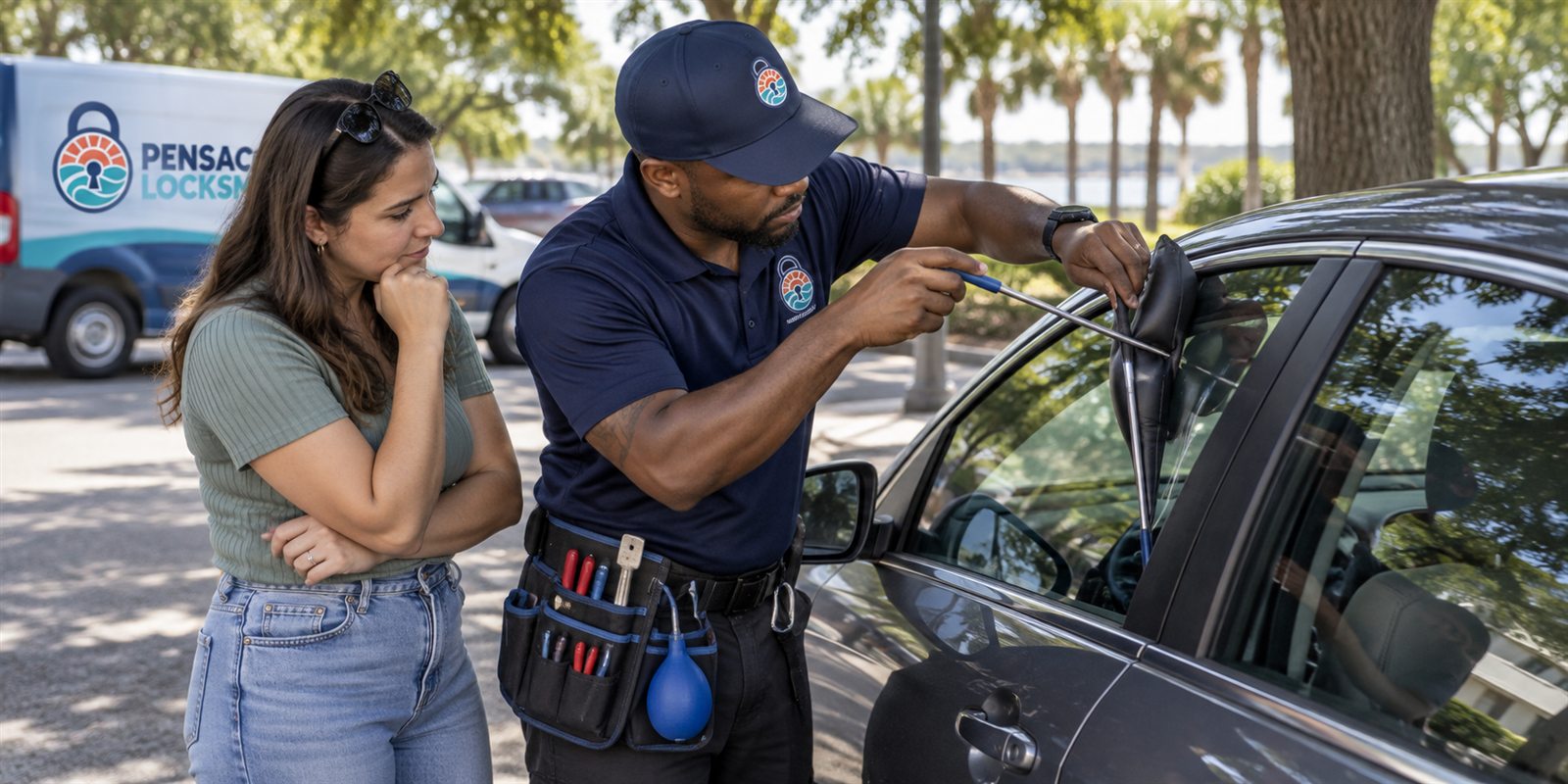
Types of keys you may be holding
Keys fall into a few broad categories. A basic metal key has no electronics at all and is found on older vehicles. A transponder key looks like a normal key with a thick plastic head and contains a chip. A remote head key adds buttons for locking and unlocking to the same head. A smart key or proximity fob lets you start the car with a push button while the fob stays in your pocket.
Each type has its own copying rules. A basic key is cut like any other. A transponder key must be cut and then have its chip programmed to the car, or a pre-programmed chip must be matched. A remote head key often needs both steps, plus separate programming of the remote buttons. A smart fob must be paired to the vehicle's computer using special equipment.
Some vehicles also use a laser-cut or high security key, with a milled groove on the blade instead of a notched edge. These need specific cutting machines and cannot be duplicated on the simple equipment found at many counters. If your key has a thick shaft with a wavy track down the middle, expect a different process than for a flat, notched key.
- Basic metal key: cut only
- Transponder key: cut and chip programmed
- Remote head key: cut, chip and remote buttons
- Smart key or fob: paired to the vehicle with special equipment
Why a plain copy fails
Several things can go wrong with a copy. The most common is that the blank has no chip at all, because it was a plain metal blank. It will turn the lock but cannot answer the car's check. The second is that the blank has a chip but of the wrong type, which the car cannot read. The third is that the right chip type is present but was never programmed to your vehicle.
Even a chip cloned from the original sometimes fails. Some systems expect a certain type of code, or a changing code, which a simple copy cannot reproduce. Others recognize that two keys with the same identity are present and reject both. Cloning works for certain systems and not for others, and the technician decides which method applies.
Finally, a cut that is slightly off will cause the key to turn poorly or not at all. This is easy to confuse with the electronic problem. A good technician checks both parts: first that the blade operates the lock smoothly, then that the chip is accepted by the car. Solving the wrong problem wastes time, so testing each part separately helps.
What it takes to make a copy that works
A working copy needs the right blank, an accurate cut and a successful programming step. The technician identifies the correct blank by the vehicle make, model and year, and by examining the original key if you have it. The blank must contain a compatible chip, since a mismatched one can never be taught to the car.
Programming connects the chip to the vehicle. In many cases, the technician uses a diagnostic tool plugged into the car's data port to add the new key to the computer's list of authorized keys. Some vehicles require a waiting period or a set sequence of steps. Others need a security code or special access to the immobilizer module.
With the original key in hand, the process is usually simpler, because the system can be told to accept another key while an existing one is present. If every key is lost, the process is more involved, because the car must be put into a learning state without an authorized key. That is possible for many vehicles with proper equipment, though some models are more demanding than others.
Ownership checks and why they matter
Because a programmed key lets someone start and drive a car, a responsible locksmith checks ownership or authority before cutting or programming anything. That usually means identification, plus a registration or title that matches the vehicle and the person asking. If something does not match, the technician will not proceed.
This step protects you. It prevents a stranger from making a key to your car and driving it away. It can feel like an inconvenience if your documents are inside the locked vehicle, but it is a normal and important part of the work. Having your documents ready or finding another way to show authorization smooths things along.
For fleet vehicles, company cars and leased cars, the authorization may come from the business or the leasing party. If you are not the registered owner, bring written permission from the owner. The same goes for vehicles being sold or inherited, where paperwork may take more time. Call us to describe your situation and we will explain what proof is needed.
Dead remotes versus dead chips
Sometimes the problem is not a copy at all. A remote with a dead battery will fail to lock or unlock the doors but may still start the car, because the transponder chip needs no battery. Replacing a small coin cell is often all a remote needs. Check the owner's manual for the correct battery and the method for opening the case.
A key that once worked and now does not may have a damaged chip. Dropping a key repeatedly, getting it wet or exposing it to heavy impact can damage the chip. Salty air does not typically harm the chip itself, but corrosion on the blade or inside the ignition can create poor contact and a sticky turn.
If the key worked yesterday and fails today, check obvious causes first: a weak car battery, a heavy keychain stressing the ignition, a different key from the ring in the cylinder or a hidden dash warning light. Try your spare key. If the spare works and the main key does not, the main key probably has a chip or cut problem. A technician can test the chip and tell you if it needs replacement.
Cloning, programming and what the difference means
You may hear two terms used for making a working key: cloning and programming. Cloning copies the identity of an existing chip onto a new one, so the car sees the new key as the same as the old. It works only on certain systems and requires the original key to be present. The advantage is that the car does not need to be touched at all.
Programming, by contrast, teaches the car to accept a new key with its own identity. The vehicle's computer stores the new code in its list. This is the more common method for modern vehicles, and it lets you add keys without relying on the original chip. It also means a lost key can be removed from the list, so it can no longer start the car.
That removal step is worth asking about. If a key is stolen or lost, having it erased from the vehicle's memory is a real security gain, because the missing key stops working for engine start. A clone cannot be erased this way, since the car cannot tell it apart from the original. This is one reason many technicians prefer programming where the vehicle allows it.
Whichever method is used, test the key thoroughly afterward and ask the technician what was done. Knowing how your key was made helps if you ever need another one.
Dealer visits, mobile service and your options
For many people the default idea is that a dealership must handle any new key. That route works and may be needed for some vehicles, particularly those with very restricted systems. It generally means getting the car to the dealer, which can involve towing if every key is lost, and waiting for an appointment.
A mobile locksmith with the right tools can often handle the same job where the car sits. This is helpful if you are at work, on a trip or unable to drive. The technician cuts the blade, programs the chip and tests everything before leaving. Not every vehicle is possible on site, and an honest technician will tell you when a dealer is the better route.
To find out which applies, call with your vehicle's make, model and year and say how many keys you have left. Quotes for straightforward work are given by phone, and for anything complicated a technician visit comes first, with the service call charge explained before dispatch. Please call to confirm availability.
Tourism, rentals and borrowed cars
Pensacola sees plenty of visitors, and with them come rental cars, borrowed vehicles and shared family cars. Key trouble in these situations has extra wrinkles. A rental car belongs to the rental company, so a lost key is handled through their process. A borrowed car belongs to a friend or relative, and a locksmith will want the registered owner's authorization before making a key.
If you are traveling and a key stops working, keep calm and gather your details: the vehicle make, model and year, where it is parked and who owns it. A quick call can tell you whether help is possible on site. Having the owner on the phone to confirm permission speeds things along.
For residents with seasonal or shared vehicles, such as a boat tow truck or a second family car, consider making spares before the busy summer months, when schedules are tight and delays are more annoying. A planned appointment is nearly always smoother than an emergency, and the technician can test each key fully before you rely on it.
Safe spare key habits
The best time to make a spare is while you still have a working key. Duplicating with the original present is simpler and often more affordable than creating one from scratch after losing all keys. If you only have one key, treat getting a second as a priority rather than a someday task.
Store the spare somewhere separate from your daily set, such as with a trusted relative or in a secure place at home. A spare locked inside the car is not a spare. Avoid hiding a key on the vehicle itself, since thieves look in the usual spots.
Test the new key fully before you need it. Start the engine, let it run, turn it off and start again. Check the remote buttons, the trunk release and the door locks. Test the physical blade in the door lock too. If anything behaves oddly, return to the technician right away instead of waiting. Call us to confirm availability for a spare key appointment.
What to do when a copied key will not start the car
Do not keep cranking the engine. Repeated attempts can drain the battery without solving the problem. Remove the key, wait a minute and try once more. If the dashboard shows a key or lock warning light that flashes, that is the immobilizer telling you it does not recognize the key.
Try the original key if you have it. If the original starts the car, the copy is the issue. Bring both to the technician or describe the symptoms by phone. Let them know where the copy was made and what kind of key it is, because that helps decide whether it can be reprogrammed or needs replacing.
If you cannot start the car and it is somewhere inconvenient, a mobile locksmith can come to you. Quotes are given by phone for straightforward cases. If the problem looks more complicated, a technician visit may be needed, and the service call charge is explained before dispatch.
Common questions
Why does my copied key open the door but not start the engine?
The metal blade works, but the key either has no transponder chip or has a chip the car does not recognize. The immobilizer blocks the engine until it receives the correct code. Programming the chip to the car, or using a compatible programmed blank, is the usual fix.
Can any locksmith program a car key on site?
Many can, depending on the vehicle. It requires the right blank, cutting equipment and programming tools for that make. A short call with the make, model and year tells you whether it can be done at your location or needs another route.
Do I need the original key to make a working copy?
It makes things simpler, but it is not always required. If all keys are lost, many vehicles can still be handled with proper equipment, though the process takes more steps. Ownership must be shown either way before the key is made.
Can I program the key myself?
Some vehicles allow a self-programming sequence with a working key, and instructions may be in the owner's manual. Many require a diagnostic tool. A failed attempt can lock you out of programming for a time, so be careful and consider calling a professional.
What proof do I need to get a key made?
Bring identification and a registration or title that matches the vehicle. The locksmith checks ownership or authority before cutting or programming. If you are not the owner, bring written permission. Call us to confirm what to have ready and to check availability.