
Content note: this page was written by Claude (AI) for Pensacola Locksmith.
Start with the three jobs a door must do
Before buying anything, write down what the door actually has to accomplish in your household. Job one is keeping unwanted people out. Job two is letting every person inside leave fast without a key, a code, or a puzzle to solve, because a fire or a smell of gas does not leave time for fumbling. Job three, when children are small, is slowing a toddler down long enough for an adult to notice. These jobs conflict, and most bad door advice comes from solving one job while ignoring the other two.
A useful way to think about it is layers. The outer layer is the lock set that protects against people outside. The inner layer is a child-level barrier that a small hand cannot defeat but an adult hand can use without thinking. When these layers are separate, you do not have to weaken your real security to stop a three year old from opening the door. Mixing them, for example by removing a deadbolt thumb turn so a child cannot work it, is where trouble begins.
A locksmith visiting a family home will usually ask who lives there, how old the children are, whether anyone has mobility limits, and which door the family really uses every day. Those answers change the recommendation. A door that leads to a fenced yard has a different risk than one that opens onto a street or a parking lot. Spend ten minutes walking through your own routine with these questions before you spend a dollar on hardware.
Why the thumb turn matters more than the keyed side
On a standard single cylinder deadbolt, the inside has a thumb turn that anyone can rotate without a key. This is a safety feature, not a weakness. In an emergency a panicked adult or an older child can unlock the door with one motion and leave. Some families are tempted to swap it for a keyed cylinder on both sides so toddlers cannot escape. The trouble is that a key kept on a hook near the door gets lost, and a key kept in a pocket is useless when you are running down the hall.
If a toddler can reach the thumb turn, the better answer is usually to add a second device higher on the door rather than change the one you already have. A latch or barrier mounted well above a child's reach costs little, does not require a key, and any adult can release it in half a second. It also leaves the main deadbolt exactly as designed, which matters if your insurance or a rental agreement expects certain hardware to stay in place.
Check the thumb turn itself for smooth operation. Gulf Coast humidity and salt in the air can make interior hardware stiff over time, and a stiff thumb turn is a hazard because people stop using it or force it. A technician can clean, lubricate with a product suited to the mechanism, and adjust the bolt alignment so the turn moves with one finger. If the door has dropped slightly in the frame, the bolt drags and that alone can turn a safe lock into a stubborn one.
Child-level barriers that adults can still release
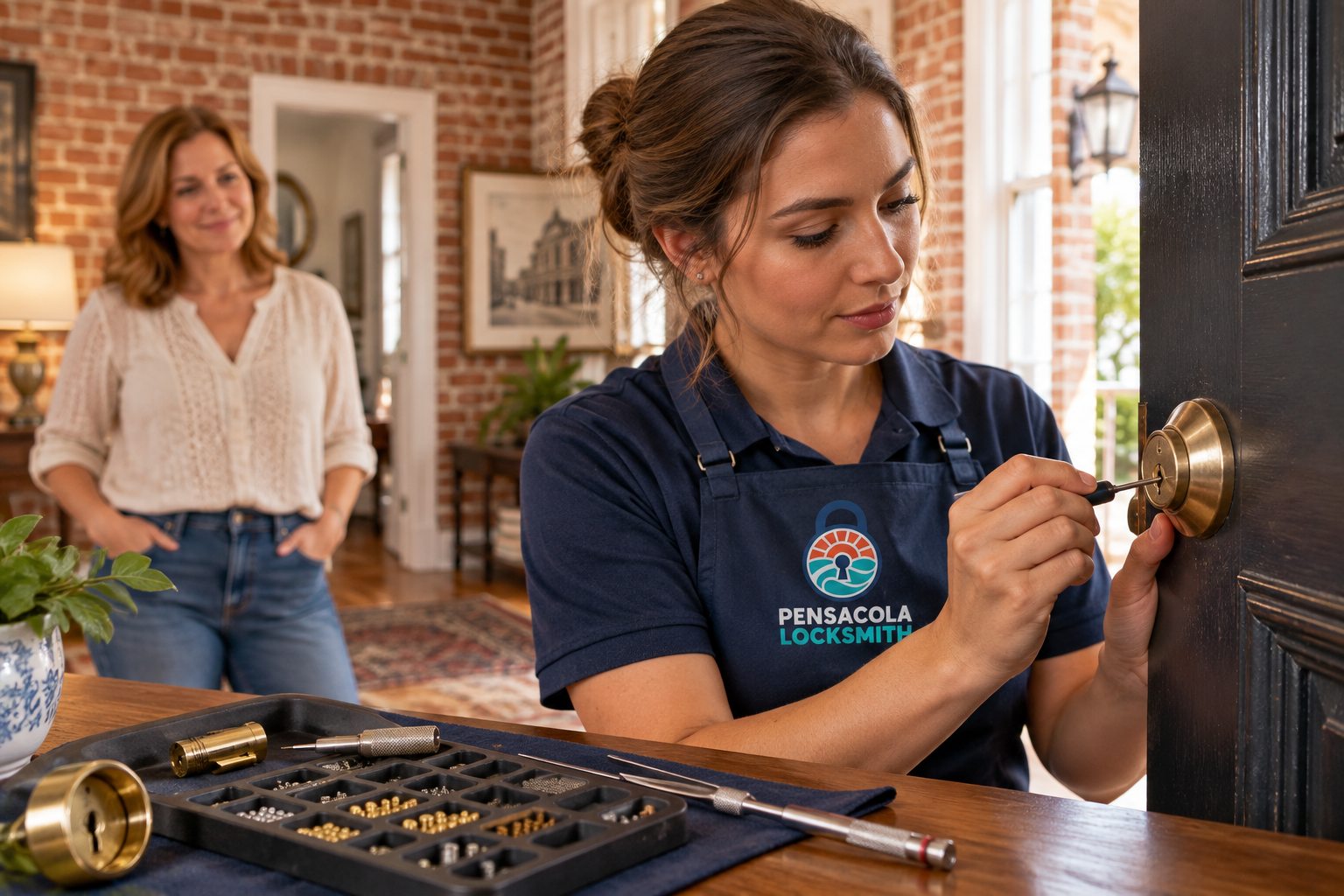
Several categories of add-on devices exist, and they differ in how they behave under stress. A high-mounted slide bolt or chain-style latch sits above a young child's reach and lets adults open the door fully by sliding it back. A knob cover that fits over a round doorknob makes it hard for small hands to grip and turn, but adults squeeze and twist it with some effort, so it is best on interior doors such as a pool-facing patio or a basement stair rather than a primary exit.
Door alarms are another useful layer. A small chime that sounds when a door opens tells you a child has gone through, which is the real risk. The weakness is that alarms depend on batteries and on someone being within earshot, so test them on a schedule. Some families combine a high latch with a chime on the same door, so a toddler is slowed and an adult is alerted even if the child somehow reaches the latch.
Avoid anything that needs a tool, a key or a code to release from the inside during normal use. Avoid improvised fixes such as tying a cord or wedging a chair under the handle, because those fail in exactly the moments when speed matters. When in doubt, ask yourself whether a guest who has never been in your house could understand how to leave in the dark. If the answer is no, the device is probably too clever for its own good.
- High-mounted slide bolts and latches that sit above a child's reach
- Chimes or alarms that sound when a door opens
- Handle covers for interior doors that are not emergency exits
- Storm door or screen door latches placed high on the frame
Keeping real security strong while you adapt for kids
Child safety work should never lower the door's resistance to forced entry. The two parts of a door that matter most for security are the strike plate and the door frame. A deadbolt is only as strong as the wood it screws into. Many homes have a strike plate held by short screws that bite only into the thin trim. Replacing them with long screws that reach the framing stud is one of the simplest and most effective improvements a household can make, and it has nothing to do with children.
The next layer is the lock itself. Deadbolts come in grades, and a technician can tell you whether yours is a basic residential unit or a sturdier one. A bolt that extends a full inch into the frame resists kicking better than a short one. A reinforced strike box and a solid core door add more. None of these changes interfere with a thumb turn on the inside, so you can raise security and keep the emergency exit simple.
Think also about who has keys. Families with children often hand keys to babysitters, relatives, neighbors and cleaners over several years. If you cannot name everyone who holds a working copy, rekeying the lock makes every old key useless without replacing the hardware. When a locksmith rekeys or changes a lock, they check that the person asking lives there or has authority over the property, since the work changes who can enter the home.
Sliding doors, patio doors and back entrances
Parents often secure the front door and forget the sliding glass door, which is the easiest exit for a toddler and the easiest entry for a burglar. A sliding door has a small latch that is easy to lift, and the panel can sometimes be lifted out of its track. A simple fix is a bar or a wooden dowel cut to length in the track, which blocks the panel from sliding. For children, a high-mounted pin lock above reach adds a second barrier that adults can undo easily.
Back doors deserve the same attention as front doors. They often have weaker hardware, a thinner frame, and less light. Because they open onto yards, they are also where young children are most likely to wander toward a pool, a canal, or a drainage ditch, which are real hazards in a coastal region. If your yard has water on or near the property, treat the back door as the most important door for child safety and combine a high latch, a chime and a fence gate lock.
Garage-to-house doors are another weak point. They should have a deadbolt, and the door should close and latch on its own if possible. A child who wanders into a garage faces vehicles, tools and chemicals. A self-closing hinge or spring helps, as does a high latch on the garage side. Keep spare keys away from the area, and remind everyone in the house that this door is a fire exit too, so it must always open from the inside.
Smart locks and keypads in a house with children
Keypad and smart locks can help a family because there is no key to lose and a code can be changed when a babysitter leaves. They also let a teenager get home without a key. The tradeoff is that a code can be learned by a child, and a child who has learned it can open the door. If a young child is old enough to reach the keypad, a high-mounted latch is still wise, and the code should not be a birthday or an address that guests could guess.
Battery management becomes a family responsibility. A lock that fails when batteries run low is a problem at midnight, and many models give warnings that are easy to ignore. Pick a recurring date to check batteries and keep a physical key in a safe place away from the door. A good installation also includes a way to open the door from inside with a simple turn, so that a dead battery never traps anyone in the house.
Be careful with models that auto-lock after a delay. They are convenient but can lock a toddler or a pet outside, or lock an adult out while taking out the trash. Think about how your household moves in and out before turning this feature on. During hurricane season, remember that power loss and network loss can affect connected devices, so choose hardware that still works by hand and by key when everything else is down.
Emergency exits, hurricane season and practice
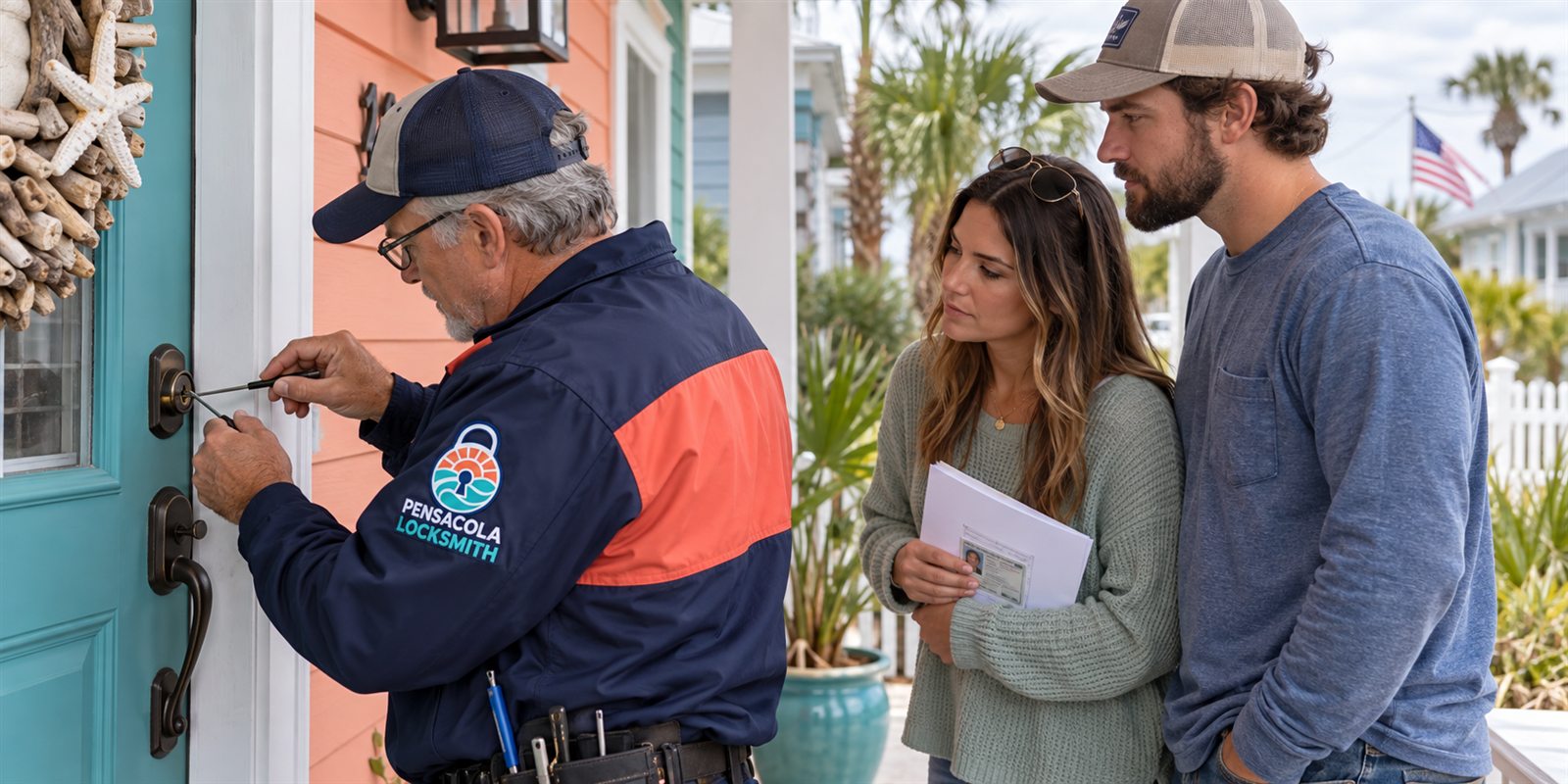
Every member of the household old enough to walk should know how to open the main exit. Practice it, the way you practice a fire drill. Show older children how the thumb turn works and how to lift or slide the high latch. Make sure they understand that this door is for emergencies and for adults, and that they should not open it when strangers knock. The point is that safety and security both depend on habit, not on the cleverness of the hardware.
Coastal weather adds its own wrinkles. Storm shutters, extra bolts and temporary bars installed ahead of a hurricane can block exits if they are not designed to open from the inside. If you add any extra bracing, plan an exit route that can be opened quickly, and teach everyone how it works before the storm, not during it. After a storm, doors can swell or shift and lock operation can change, so test every lock when conditions settle.
If a home has older residents, someone with limited hand strength, or a person who uses a mobility aid, hardware choices change. Lever handles are easier than round knobs, and a lock that needs two hands may be a poor choice. A locksmith can suggest options that balance strength with ease, and the right answer often involves a small adjustment rather than a complete new set. Call us to talk through your household, and we can recommend a setup that fits the people who actually live there.
What to check yourself before calling a locksmith
Walk around the house at the child's eye level and then at your own. Look at every exterior door, the sliding door, the garage entry and any gate. Note which ones a child could open, which have no deadbolt, and which have a loose strike plate or a wobbly handle. Try each lock from inside with your eyes closed, to see whether you can operate it by feel. This simple test shows which doors are slow and which are quick in an emergency.
Gather information about keys. Count how many copies exist and who holds them. Find out whether the locks are all keyed alike or all different, because a household with five different keys for five doors is more likely to lose track. Note any doors that stick in humid weather. Having this list ready lets a technician work faster and give a clearer recommendation, and it helps you ask the right questions about which work is a quick adjustment and which needs new parts.
When you contact us, describe the door type, the age of the children and the main worry. Quotes are given by phone. If the job is complicated, a technician visits and the service call charge is explained before dispatch. The locksmith will also confirm that you live at the address or have authority over it before changing or rekeying locks. Call to confirm availability, and have your questions ready, because a good conversation up front prevents a wasted visit.
Common mistakes that look safe and are not
The most dangerous mistake is the keyed-both-sides deadbolt left locked while people are home. Many fire safety professionals warn against it because a key is needed to leave, and keys vanish in smoke and darkness. If you must have this type of lock for a glass panel door where a burglar could break the glass and reach the thumb turn, keep the key in a fixed, known spot right by the door, and make sure every adult knows where it is.
The second mistake is relying on a chain or a flimsy latch as a security device. A chain stops a child, which is fine, but it offers almost no protection against a push. The third is disabling or removing hardware because it is inconvenient, such as taking out a screen door latch or leaving a deadbolt unlocked all day. Each shortcut removes a layer that was there for a reason, and the reason usually shows up at the worst moment.
A fourth mistake is waiting for a problem. Many families install child barriers only after a toddler escapes once. A quick review while the child is still crawling costs little and prevents the frightening moment. Doors do not need to look like a fortress. A tidy, well-adjusted lock set, a solid strike plate, one high latch and a chime will serve most homes, and a locksmith can set it up in a single visit without making the house feel like a bunker.
Common questions
Is it safe to use a deadbolt that needs a key on the inside?
It can be risky. If the key is not in the lock or in a known spot, escape in a fire is slowed. Many households prefer a standard thumb turn on the inside and add a high latch for toddlers. If a keyed inside cylinder is truly needed, keep the key in a fixed place by the door and make sure every adult knows it.
How high should a child latch be mounted?
Place it well above the reach of the youngest child, typically near the top of the door, and adjust as children grow. A technician can mount it so it does not weaken the door or frame. It should be easy for any adult to release without a tool, a key or a code.
Can a rekey stop an old babysitter from entering?
Yes. Rekeying changes the internal pins so old keys no longer work, and new keys are cut. The locksmith checks that you live at the property or have authority over it before doing the work. It is a practical step after any change in who holds keys.
Do smart locks work for families with small children?
They can, with care. Choose codes that are not easy to guess, check batteries on a schedule and make sure the door can be opened by hand from inside. A high latch is still wise if a toddler can reach the keypad. Call us to talk through your door and household.
What should I do about a sliding glass door?
Place a bar or dowel in the track and add a high pin lock that adults can reach but a toddler cannot. Check that the panel cannot be lifted out of the track from outside. A technician can inspect the latch and suggest a fix suited to your door.