
Content note: this page was written by Claude (AI) for Pensacola Locksmith.
Customer keys are someone else's property
When a customer drops off a car, the shop becomes responsible for the keys. A key left on a counter, hanging on a hook near the door or tossed in a drawer can disappear in seconds. Modern keys with chips and remotes are costly to replace, and a missing key can mean a vehicle that cannot be started or delivered on time.
A good system starts at the front desk. Every key gets a tag with a work order number, and the tag goes with the key into a lockable cabinet or box. Keys never sit loose on a counter. When the work is complete and the customer picks up the vehicle, the key is signed out and the cabinet is updated. This takes seconds and prevents most problems.
Think about who can reach the cabinet. Technicians need keys during work, but the lot, the customer area and the front office do not all need the same access. A cabinet with separate compartments or an electronic key box that logs who removed which key gives the shop a record. Call us to describe your setup and a quote is given by phone.
Key cabinets, lockboxes and electronic key control
A basic wall-mounted key cabinet with a lock is a good start for a small shop. Choose a sturdy metal model, mount it into studs or masonry with proper fasteners, and place it out of sight from the customer area. A cabinet that can be pried off the wall offers little protection, so installation matters as much as the box itself.
Larger shops and dealerships often use electronic key control. Each key sits in a slot, and technicians use a PIN or card to remove it. The system records who took which key and when, and it can alert managers if a key is overdue. This reduces lost keys, shows patterns and discourages casual misuse.
Whichever system you choose, plan for the day it fails. A mechanical override key stored securely, a written backup list of key locations and a trained second person keep the shop running. Test the override on a schedule. Ask the installer what happens during a power outage, and keep that answer written near the cabinet.
Lot, gate and fence security
Cars parked overnight on a lot are visible and tempting. A fence with a gate that closes and locks is the first line of defense. Choose a heavy-duty gate latch and a padlock designed for outdoor use. Cheap padlocks fail quickly in humidity and salt air, and a corroded lock can leave you unable to open the gate in the morning.
A chain and padlock is a common choice for sliding or swinging gates. Use a hardened chain, a shrouded padlock that protects the shackle, and a hasp that cannot be unscrewed from the outside. Position the lock so it is difficult to reach with bolt cutters. A technician can suggest placement and hardware that fits your gate.
Lighting, cameras and clear sight lines add to physical locks. A well-lit lot that neighbors can see discourages trouble. Keep the area clear of tall clutter where someone could hide. Walk the fence line regularly and repair gaps. Consider how staff will open and close the lot, and who is responsible for securing it at night.
Shop doors, bay doors and the building envelope
A repair shop usually has overhead bay doors, a customer entrance, a back door and an office. Overhead doors are often secured only by the opener, which can be defeated. A slide bolt or a lock on the track, installed on the inside, adds a mechanical layer that does not depend on power. Make it a habit to use it at closing.
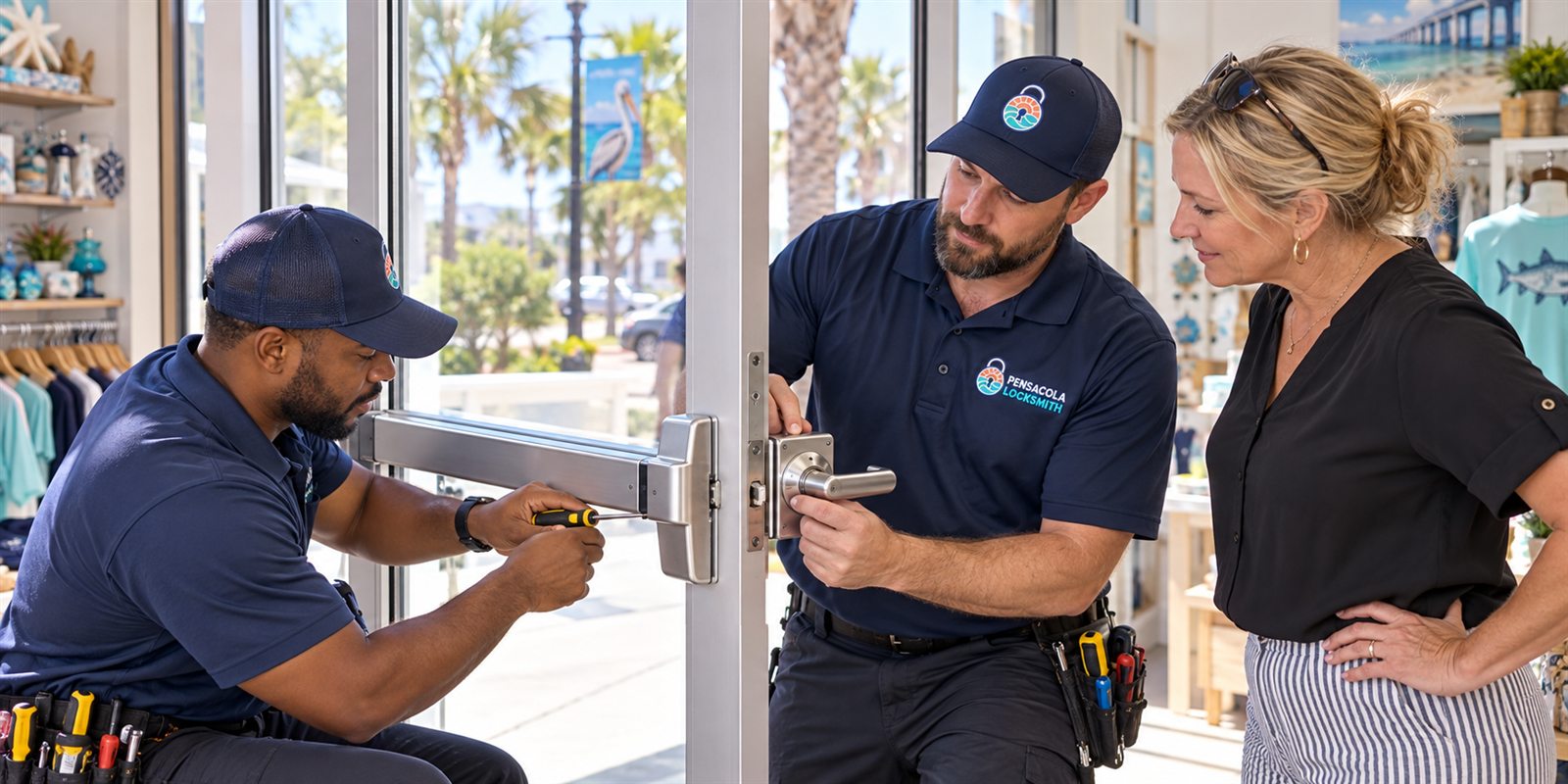
The customer door and the office should have strong locks and solid frames. The glass in a customer door can be a weak point, so check how the lock engages and consider adding a second point or a protective plate. The back door deserves a quality deadbolt and a reinforced strike, since it is less visible from the street.
Interior doors matter too. The parts room, the tool room and the office with the safe should each have their own lock. A thief who gets into the shop should still face more barriers. Limit keys to people who need them, and track them in a log. Call us to discuss your building and what each room holds.
Tools, parts and equipment storage
Tools and parts are valuable and easy to resell. Toolboxes, rolling cabinets and parts cages should lock, and employees should know who is responsible for each. A cage for high-value parts like catalytic converters, wheels and electronics deserves a stronger lock and a smaller list of people who can open it.
Pay attention to personal tools too. Technicians often own their own sets, and these can be worth thousands. Locks on personal boxes are the technician's responsibility, but the shop can provide a secure space. Clear rules about borrowing and returning tools avoid arguments and loss.
Keep an inventory list and review it regularly. Locks are a deterrent, but accountability stops internal loss. When something is missing, a log of who had access narrows things down. The goal is not to distrust staff, it is to give honest people a clear record that protects them as well.
Lockouts, broken keys and customer vehicles
Shops sometimes deal with locked vehicles, broken keys and missing key sets. A technician who opens a customer vehicle needs the right tools, and forcing a door can damage the weather seal, bend the frame or trigger an alarm. For an unfamiliar vehicle, calling a locksmith is often quicker and safer than trying to force it.
Ownership matters. When we open a vehicle, we check that it belongs to the person asking or that they have authority, such as a work order and an owner's authorization for a shop. For customer cars, the shop should keep a signed work order. This protects the shop, the customer and the technician who does the work.
Keys for newer vehicles may need programming. Fobs, transponder chips and smart keys require equipment and procedures that depend on the vehicle. Describe the type of key and the vehicle category when you call, and we explain what is involved. A quote is given by phone, and complicated jobs get a technician visit with the service call charge explained before dispatch.
Dealerships and small lots with inventory keys
A lot with inventory has a different problem: every car on the lot has a key, and many have duplicates. Keys for sale vehicles should be stored in a locked cabinet with a clear system that links each key to its stock number. A salesperson who takes a key for a test drive signs it out and signs it back in.
Lock boxes on vehicles are not a good idea if they hold a key in plain view. Instead, use a controlled system and a trained team. Keep spare fobs and duplicate keys in a separate, more secure location. A missing spare is easier to notice when records are in order.
Plan for the physical lot too. Gates, lighting and cameras reduce theft. Know who closes the lot and how the gate is secured. A written routine for opening and closing, followed daily, is worth more than expensive hardware used inconsistently.
Fleet accounts and company vehicles
Shops that service fleets receive many keys from the same customer. A fleet manager may drop off a ring of keys for several vehicles. Tag each key with the vehicle and work order, and keep the group together in a secure place. Confirm with the fleet manager who is authorized to pick up each vehicle.
Fleet customers may ask about rekeying, additional copies or key programming. Ownership or authority is checked for each vehicle, and the fleet manager should provide a written list of authorized drivers or a company letter. This avoids confusion and protects the shop from releasing a vehicle to the wrong person.
Think about your own company vehicles too. Tow trucks, parts runners and loaner cars each have keys. A simple log showing who has which vehicle and key at any time prevents the usual morning scramble. Consider keyed-alike locks for equipment on your own trucks, so a driver carries fewer keys.
Opening and closing routines that prevent mistakes
Most losses at a shop do not come from clever thieves. They come from a bay door left unlatched, a gate not chained or a key cabinet left open during a rush. A written opening and closing routine, posted near the door and followed every day, catches these slips. Assign the routine to named people and rotate the duty so that more than one employee knows how it works.
A closing walk should cover the bay doors, the customer entrance, the back door, the office, the parts room, the key cabinet and the lot gate. Check that each lock is engaged by pulling on it, not just by looking. Confirm that customer vehicles are locked and that no keys are left in them. A second person initialing the checklist adds a layer of accountability.
Opening is equally important. The person who arrives first should check that doors and locks look undisturbed before going inside. If anything looks forced, they should stay outside and call for help rather than entering. Make that policy clear to everyone, and tell staff what to do and whom to call. Safety for people always matters more than property.
Weather, humidity and outdoor hardware
Pensacola's humidity and salt air are tough on locks, gate latches and hasps. Hardware that looks sturdy can corrode within a season. Choose stainless steel or coated components for outdoor use, and lubricate padlocks and hinges with a product made for locks. A quick check every few weeks avoids surprise failures.
Hurricane season requires planning for the lot. Secure or move vehicles when possible, lock the shop and take key cabinets or key records off site if the building may flood. Keep copies of work orders and key logs somewhere safe. After a storm, check gates, doors and locks before reopening.
If a gate lock freezes or a key breaks off, do not force it. Forcing can ruin the lock and make the repair harder. Call us and describe the problem. Availability varies after storms, so call to confirm availability, and a quote is given by phone.
Programming, spare keys and what a shop can offer customers
Customers sometimes ask a repair shop about spare keys, and a shop that can point them to the right help builds trust. Vehicles differ widely in what a spare requires. Some keys are simply cut, some contain a chip that must be programmed, and some are proximity fobs that need equipment and a security procedure. Knowing the general category helps you give a sensible answer.
A shop should avoid promising what it cannot deliver. If a customer has lost every key, the vehicle owner must usually show proof of ownership, and the work may involve more than cutting metal. A locksmith can explain what is possible for a given vehicle category. Send customers our way by letting them call and describe the vehicle, and a quote is given by phone.
Inside the shop, protect the information that comes with a key. Key codes, VIN records and programming data are sensitive. Keep work orders and key records in a locked cabinet or secure system. Limit who can see them, and dispose of old paperwork properly. A tidy, careful shop earns customer confidence.
Loaner cars, test drives and after-hours drop boxes
Many shops offer after-hours drop boxes so customers can leave a key overnight. A drop box should be a steel unit, bolted to a wall or set in concrete, with a slot that does not allow someone to fish keys back out. A flimsy mailbox on a post is an invitation. Collect keys first thing each morning and log them against the work orders.
Loaner vehicles and test drives add risk because the key leaves the building. Record the driver, the time out and the expected return, and take a copy of the license. Keep spare keys for loaners in the locked cabinet, not in the car. A short signed form removes any doubt about responsibility if something goes wrong.
Remote keyless fobs deserve extra care, since a fob left in a vehicle makes it easy to start. Train staff to remove fobs from vehicles on the lot and store them in the cabinet. A quick walk through the lot at closing to look for fobs left on seats or dashboards prevents the sort of loss that is hard to explain to a customer.
Working with a locksmith for your shop or lot
Tell us about your property: bay doors, customer door, back door, office, gates and any key cabinets. Explain what is working and what is not. A quote is given by phone for simple jobs, and larger projects get a visit, with the service call charge explained before dispatch.
Ownership or authority is checked first. A shop owner can show a business registration, a lease or a letter from the owner. If the property is leased, involve the landlord when changing exterior doors or gates. Having this ready speeds the process.
Set up a simple record of keys, cabinets and gate codes once the work is done. Review it every few months. Good habits matter more than any single piece of hardware, and a locksmith can help you build a system that your whole team can follow.
Common questions
How should a shop store customer keys?
Tag each key with a work order number and keep it in a lockable cabinet that is out of sight of the customer area. Sign keys out and back in, and limit who can open the cabinet.
Can you help secure a gate that keeps rusting shut?
Yes. Weather-resistant padlocks with covered shackles, stainless or coated hasps and regular lubrication help in coastal conditions. Call us and describe the gate, and a quote is given by phone.
Do you check ownership before opening a customer vehicle?
Yes. A locksmith checks ownership or authority before opening, rekeying or programming. For a shop, a signed work order and the owner's authorization usually work, along with identification.
Is electronic key control worth it for a small shop?
It depends on volume. A sturdy locked cabinet with a sign-out routine is enough for many small shops. Electronic systems add logs and alerts, and they suit larger shops and dealerships with many keys.
What if my shop is in a rented building?
Involve the landlord before changing exterior doors or gates, and bring a lease or note from the owner. A quote is given by phone, and complicated jobs get a technician visit with the service call charge explained before dispatch.